
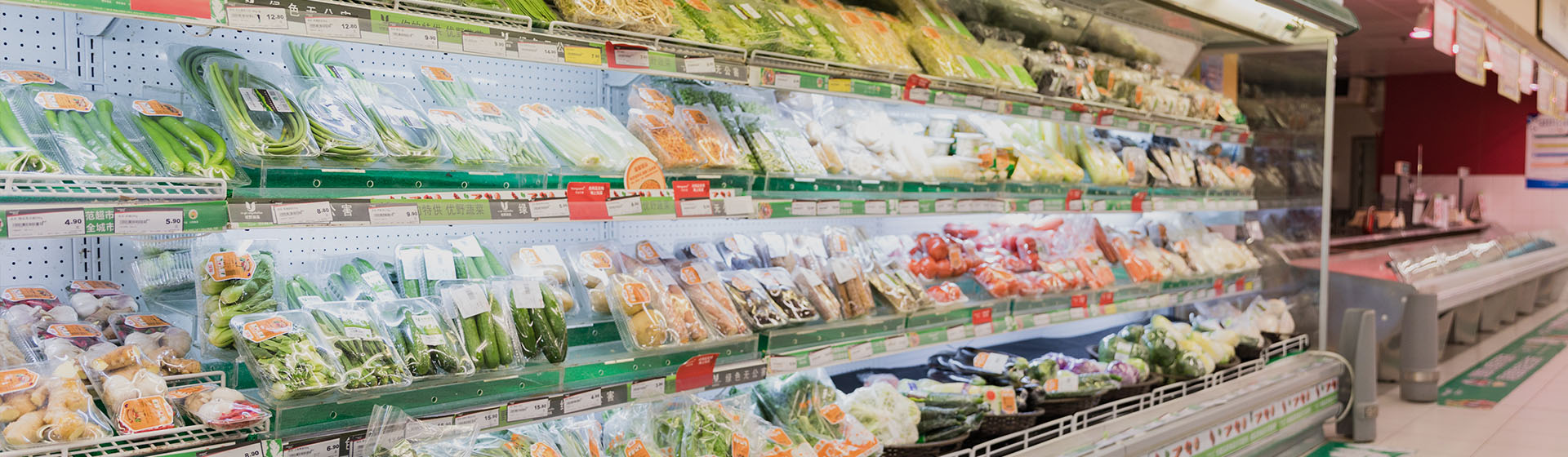
Supermarkets today operate in an environment where product freshness, energy efficiency, and visual merchandising all directly influence customer trust and sales performance. As consumer expectations continue to rise, refrigeration is no longer just a background utility system but a core infrastructure that determines how effectively a store can compete in the fresh food market.
Supermarket refrigeration equipment plays a central role in maintaining product safety, extending shelf life, reducing waste, and improving the overall shopping experience. From chilled display cabinets to deep freezers and multi-deck systems, every refrigeration unit contributes to a carefully controlled ecosystem that supports both operational efficiency and commercial performance.
What Defines Modern Supermarket Refrigeration Equipment Systems?
Modern supermarket refrigeration equipment is not a single machine but an integrated system designed to manage different temperature zones across various product categories. These systems must balance cooling performance, energy consumption, product visibility, and ease of maintenance in a continuous retail environment.
Unlike traditional cooling solutions that focus only on storage, modern systems are built for both preservation and presentation, ensuring that food products remain attractive while staying within safe temperature ranges.
● Multi-temperature zone systems support chilled, frozen, and fresh product categories within one store layout
● High-efficiency compressors ensure stable cooling performance under continuous operation conditions
● Transparent display structures improve product visibility and customer engagement
● Advanced airflow management systems maintain uniform temperature distribution across shelves
● Modular refrigeration design allows flexible store layout planning and equipment expansion
These characteristics make supermarket refrigeration systems a foundational part of retail infrastructure rather than simple cooling devices.
How Does Supermarket Refrigeration Equipment Improve Food Safety and Product Freshness?
Food safety is one of the most important responsibilities in any supermarket environment, especially when dealing with perishable products such as dairy, meat, seafood, and prepared meals. Proper refrigeration ensures that these products remain within safe temperature ranges throughout storage and display.
Modern supermarket refrigeration equipment is engineered to maintain consistent environmental conditions that reduce the risk of spoilage and bacterial growth.
● Continuous temperature control prevents fluctuations that can accelerate food degradation
● Uniform cooling systems ensure all products are stored under consistent safety conditions
● Humidity regulation helps preserve texture, appearance, and nutritional quality
● Stable airflow reduces hotspots that could compromise sensitive food items
● Extended freshness cycles help reduce waste and improve inventory turnover efficiency
By maintaining strict control over temperature and humidity, supermarkets can significantly improve both food safety compliance and product quality.
Why Is Energy Efficiency Becoming a Key Factor in Refrigeration System Design?
Energy consumption is one of the highest operational costs in supermarket operations, and refrigeration systems are typically responsible for a significant portion of total electricity usage. As a result, energy efficiency has become a major focus in equipment design and selection.
Modern supermarket refrigeration equipment integrates advanced technologies that reduce energy usage without compromising performance.
● High-efficiency compressors reduce power consumption during continuous operation
● Smart defrosting systems minimize unnecessary energy loss
● LED lighting systems reduce heat output and electricity usage simultaneously
● Improved insulation materials reduce thermal leakage from refrigerated zones
● Intelligent temperature control systems optimize cooling cycles based on real-time demand
These innovations help supermarkets reduce long-term operating costs while supporting environmental sustainability goals.
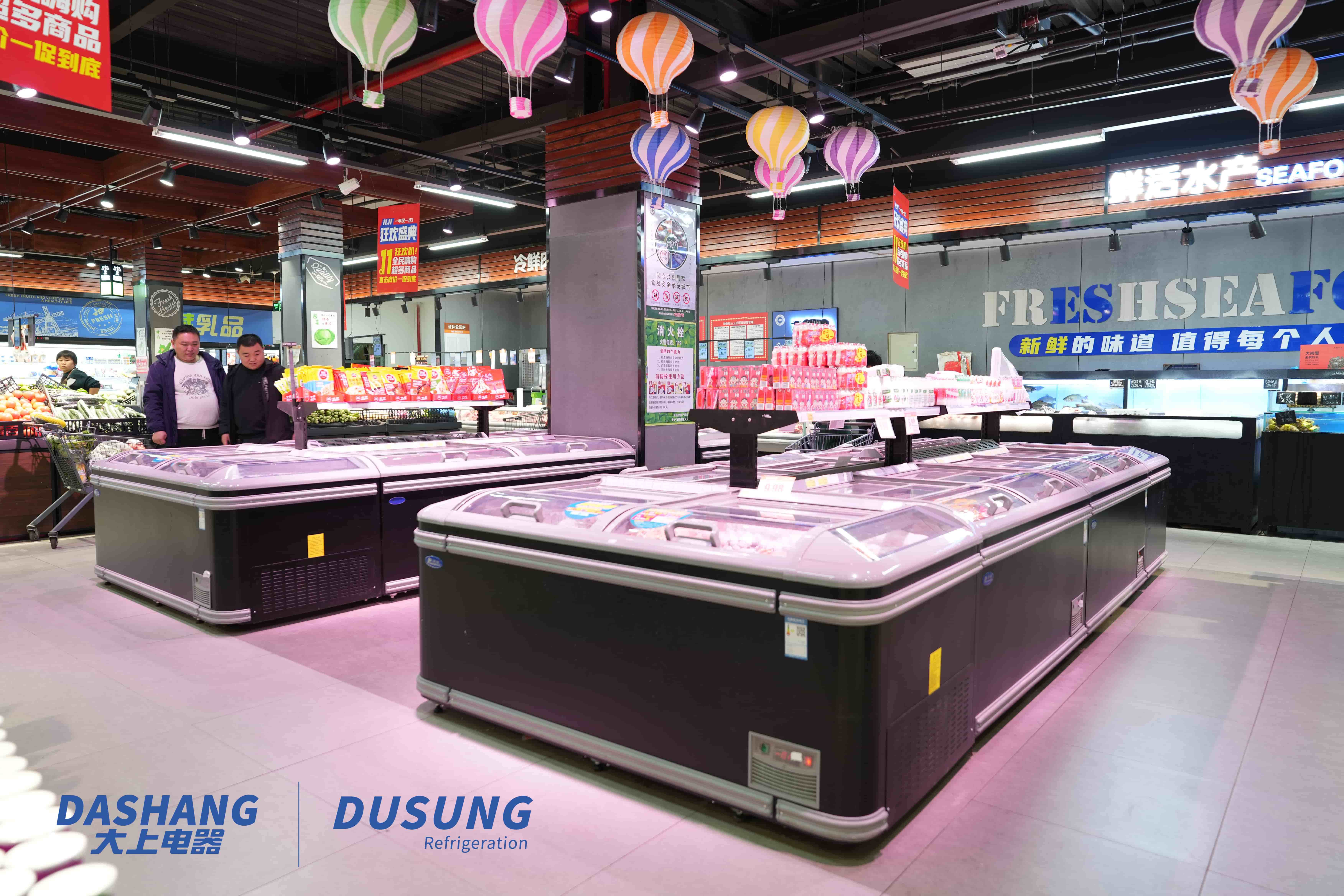
How Does Refrigeration Equipment Influence Customer Buying Behavior?
Although refrigeration systems are primarily designed for food preservation, they also play a significant role in shaping customer perception and purchasing decisions. In a supermarket environment, visual presentation and product accessibility are closely linked to sales performance.
Well-designed refrigeration equipment enhances the shopping experience by making products more visible, appealing, and easier to select.
● Transparent glass displays allow customers to quickly evaluate product quality and freshness
● Bright and evenly distributed lighting improves visual appeal of packaged and fresh foods
● Organized shelving layouts make it easier for customers to compare product options
● Open and accessible designs encourage browsing and impulse purchasing behavior
● Clean and structured display environments build trust in store hygiene and quality standards
These factors combine to create a shopping environment that naturally encourages higher customer engagement and increased sales volume.
What Types of Supermarket Refrigeration Equipment Are Commonly Used?
Supermarkets rely on multiple types of refrigeration equipment, each designed for specific product categories and temperature requirements. A well-balanced system ensures that all food types are properly stored and displayed under optimal conditions.
● Vertical display refrigerators for beverages, dairy, and packaged fresh foods
● Island freezer units for frozen food, ice cream, and bulk frozen goods
● Deli display counters for prepared meals and ready-to-eat products
● Back storage refrigeration rooms for bulk inventory and stock management
● Open multi-deck chillers for high-visibility fresh food merchandising
Each type plays a specific role in maintaining product quality and supporting efficient store operations.
Why Is System Reliability More Important Than Advanced Features?
In supermarket environments, refrigeration equipment must operate continuously for long hours without interruption. Reliability is therefore more important than complex features that may increase maintenance risks or operational instability.
Stable performance ensures that food safety and store operations are never compromised.
● Reliable systems reduce the risk of unexpected product loss due to equipment failure
● Simplified mechanical structures improve long-term durability and maintenance efficiency
● Standardized components make repairs faster and more cost-effective
● Stable cooling performance ensures consistent product quality throughout the day
● Reduced downtime improves overall store operational continuity
This focus on reliability allows supermarkets to maintain consistent service quality even under high operational pressure.
Conclusion
Supermarket refrigeration equipment is a critical foundation of modern retail operations, directly impacting food safety, energy consumption, customer experience, and sales performance. As supermarkets continue to evolve, the role of refrigeration systems extends beyond simple cooling to become a strategic tool for business optimization.
By combining reliable temperature control, energy-efficient technology, and visually optimized display design, modern refrigeration systems help retailers maintain product quality, reduce operational costs, and enhance customer satisfaction. In a highly competitive retail environment, investing in the right refrigeration infrastructure is essential for long-term success and sustainable growth.
FAQ
1. What is supermarket refrigeration equipment used for?
It is used to store, preserve, and display perishable food products such as meat, dairy, frozen goods, beverages, and fresh produce under controlled temperature conditions.
2. How does supermarket refrigeration equipment reduce food waste?
By maintaining stable temperature and humidity levels, it slows down spoilage and extends product shelf life, which reduces unnecessary waste and inventory loss.
3. Is supermarket refrigeration equipment energy efficient?
Modern systems are designed with energy-saving compressors, LED lighting, improved insulation, and intelligent temperature control systems that significantly reduce electricity consumption.
4. What is the most important factor when choosing supermarket refrigeration equipment?
The most important factors include reliability, temperature stability, energy efficiency, maintenance cost, and suitability for different product categories and store layouts.
Post time: Jun-04-2026


