
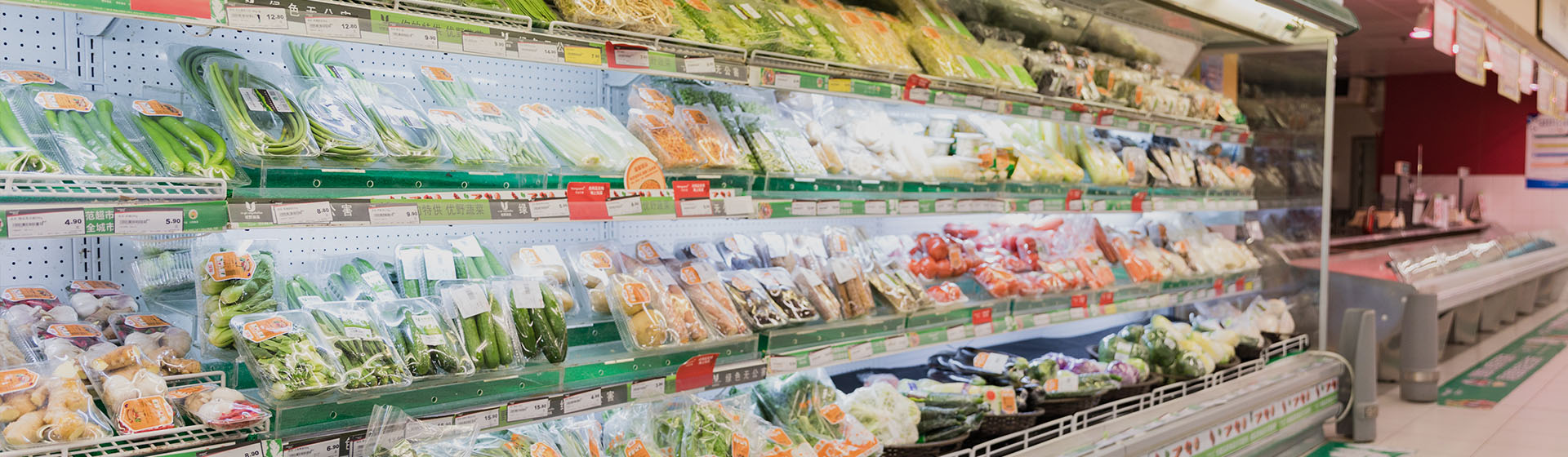
A Sliding Door Freezer is designed for commercial frozen-food areas where products must remain clearly visible, easy to reach, and consistently frozen during long daily operating hours. The sliding glass door is more than a cover. It changes how the cabinet is opened, how much aisle space is needed, how warm air enters the freezer, and how products can be organized inside.
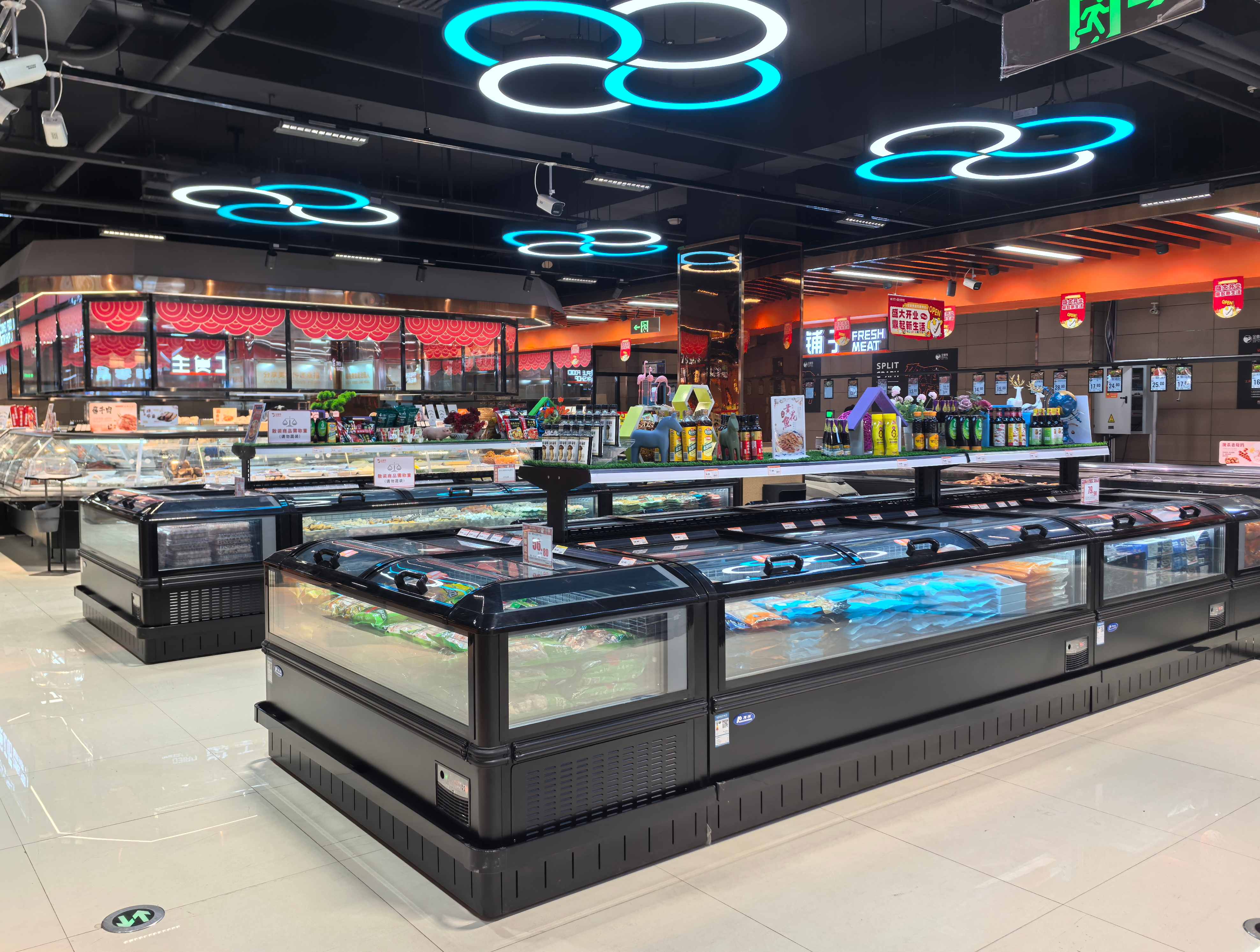
For supermarkets, frozen-food stores, convenience formats, and specialty food areas, a well-designed Sliding Glass Door Freezer can combine display, storage, and energy control in one cabinet. Frozen vegetables, seafood, meat, dumplings, prepared meals, ice cream, and other packaged products can be arranged in separate zones while the transparent top keeps the assortment visible.
The Door Is Not a Small Detail—It Changes How the Freezer Works
A traditional hinged lid needs clearance above or around the cabinet. A sliding door moves horizontally, so the user opens only the section that is needed. This is especially useful when several people are selecting products from the same Island Freezer line.
Top Access without Blocking the Aisle
Sliding doors do not swing outward into the aisle. This makes the cabinet easier to position in high-traffic areas and allows multiple units to be combined into a longer island display. Staff can also restock one section without fully exposing the rest of the cabinet.
Clear Glass Improves Product Recognition
A large transparent cover lets customers identify packaging, product type, and available stock before opening the freezer. Better visibility can shorten selection time and reduce repeated opening. Low-emissivity glass, insulated glass, or anti-condensation solutions can also be selected according to ambient humidity and store conditions.
A Better Freezer Starts with the Internal Product Map
The useful capacity of a Sliding Door Freezer is not determined by cabinet volume alone. Internal baskets, dividers, loading height, and product dimensions decide how much of that volume can actually be used.
A practical display plan may separate products by:
- frozen meat and seafood;
- vegetables and fruit;
- ready-to-cook meals;
- dumplings and noodles;
- ice cream and desserts;
- promotional or seasonal products.
Adjustable baskets and dividers make it easier to reorganize the interior when package sizes change. Deep sections can hold larger bags or family packs, while smaller compartments keep compact items from disappearing underneath bulkier products.
The loading line should always remain visible. Stacking products above the recommended level can interfere with cold-air circulation and reduce the effectiveness of the glass cover area.
How the Cabinet Structure Protects Frozen Products
Stable frozen storage depends on more than compressor capacity. The cabinet body, insulation, glass, seals, refrigeration layout, and defrost control must work together.
Insulation Reduces Heat Gain
High-density insulation helps slow heat transfer through the cabinet walls. This reduces the refrigeration load and supports stable internal conditions during long operating periods.
Glass and Seals Limit Warm-Air Infiltration
The sliding glass panels should overlap correctly and move smoothly along the track. Worn seals, damaged rollers, or gaps between panels allow warm, humid air to enter. That can increase frost on the cabinet walls and packaging.
For humid environments, glass with anti-condensation performance helps maintain a clearer display surface. The exact glass structure can be configured according to climate conditions and cabinet design.
Cold Recovery Matters after Every Opening
Every time a sliding panel is opened, some cold air is disturbed and warmer room air enters. A correctly matched refrigeration system should recover efficiently without creating large temperature differences between the center and edges of the cabinet.
Airflow paths and evaporator design should therefore match the cabinet dimensions. Products should not cover air outlets or return-air areas.
From a Single Cabinet to a Complete Island Freezer Line
One of the strongest advantages of the Sliding Door Freezer is layout flexibility. A single cabinet can serve a compact frozen-food area, while multiple cabinets can be connected into a long island. End cabinets can be added to close the line and create an additional display position.
This makes the format useful for:
- central supermarket aisles;
- frozen-food zones beside wall freezers;
- promotional islands;
- compact convenience-store layouts;
- large food halls with category-based sections.
Different cabinet lengths and widths allow the freezer line to follow the available floor plan. When the transparent top design is consistent across the line, the entire display appears more organized.
Which Product Details Matter Most in Real Projects?
Several details have a direct effect on daily use.
Sliding Track Quality
The door should move smoothly after repeated opening and closing. A stable track also helps the panels remain aligned and sealed.
Basket Strength
Frozen meat, seafood, and large packaged foods can create considerable load. Basket structure and support points should match the intended product weight.
Interior Surface
Smooth inner walls are easier to clean and reduce places where packaging fragments and ice can collect.
Drainage and Defrost
Defrost water needs a controlled drainage path. Good access to drainage points makes routine cleaning easier.
Lighting
Some configurations can include integrated LED lighting to improve product visibility, especially in deeper cabinets or areas with limited overhead light.
Bumper and Exterior Protection
Island cabinets are exposed to trolleys and frequent traffic. Exterior protection helps reduce damage to cabinet panels and corners.
Why Product Configuration Matters More Than a Standard Size
Two stores may use the same keyword when searching for a Sliding Door Freezer but need very different cabinets. One may display mostly small frozen vegetable bags, while another needs large seafood boxes or mixed family packs. A freezer that works well for one product mix may waste space in another.
For this reason, the most useful configuration starts with actual package dimensions, target temperature, expected product categories, available floor space, ambient conditions, and required refrigeration method.
Dashang can configure cabinet dimensions, sliding glass structure, basket arrangement, refrigeration mode, lighting, exterior finish, and electrical specifications according to the project. Matching these elements helps the Supermarket Chest Freezer provide clear product display, practical access, and stable frozen storage without relying on oversized capacity.
FAQ
1. What products can be displayed in a Sliding Door Freezer?
It can be used for packaged frozen meat, seafood, vegetables, fruit, dumplings, ready meals, ice cream, and many other frozen products, provided the required storage temperature is compatible with the cabinet.
2. Is a sliding glass door better than a hinged lid?
It is especially practical where aisle space is limited or several people may access the freezer at the same time. The best choice still depends on layout and operating habits.
3. Can several sliding door freezers be connected together?
Yes. Multiple cabinets can be arranged into a continuous island line, and compatible end cabinets can be added to complete the layout.
4. What should be confirmed before selecting the cabinet size?
Check package dimensions, daily product volume, loading height, floor space, refrigeration method, ambient temperature, voltage, and the required internal organization.
Post time: Aug-07-2026


