
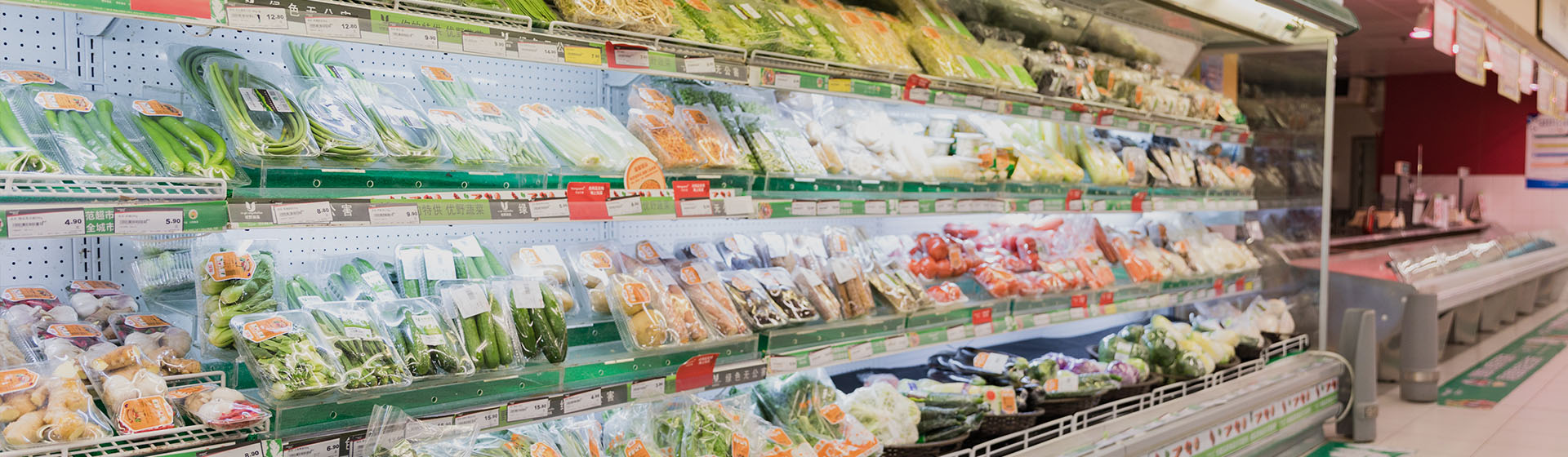
A vertical glass door fridge for vegetables helps fresh food retailers keep selected produce visible, organized, and properly chilled during daily sales. For supermarkets, convenience stores, grocery shops, and fresh produce stores, vegetable refrigeration is not only about storage; it is also about creating a clean display that makes products look fresh and easy to choose.
Vegetables can lose moisture, change color, soften, or become less attractive when they are exposed to unsuitable temperatures or poor display conditions. A well-designed upright glass door refrigerator gives stores a practical way to improve product presentation while supporting better freshness management.
Why Use a Vertical Glass Door Fridge for Vegetables?
Unlike open refrigerated cases, a vertical glass door fridge creates a more enclosed cooling environment. The transparent door allows customers to see the vegetables clearly without constantly opening the cabinet, which helps reduce cold air loss and supports more stable internal temperatures.
For vegetable retail, this matters because many products are sensitive to temperature changes and airflow conditions. Leafy greens, salad vegetables, mushrooms, fresh-cut vegetables, and packaged vegetables often need a cleaner and more controlled display space than ordinary room-temperature shelves can provide.
A vertical structure also makes better use of limited floor space. Instead of spreading products across a wide display area, stores can use multiple shelves to present different vegetable categories in an orderly way. This is especially useful for compact convenience stores, community grocery shops, and fresh food corners inside supermarkets.
Better Visibility for Fresh Produce Sales
Vegetables depend heavily on visual appeal. Customers often judge freshness by color, shape, packaging condition, and overall display cleanliness. A glass door fridge improves visibility by keeping products clearly displayed behind transparent doors, while internal lighting can make the display area brighter and easier to browse.
A neat display also helps customers make decisions faster. When vegetables are separated by type and placed in fixed areas, shoppers do not need to search through mixed products. This improves the buying experience and makes the fresh produce section look more professional.
For packaged vegetables, clear visibility is especially important because customers want to check labels, product size, cutting style, and freshness before purchasing. With a glass door design, these details can be seen without unnecessary product handling.
Suitable Vegetable Products for Glass Door Refrigeration
A vertical glass door fridge can be used for many vegetable products, especially those that require chilled display or organized refrigerated presentation.
● Leafy greens
Lettuce, spinach, romaine lettuce, kale, bok choy, and similar products are commonly displayed in refrigerated environments because they can wilt easily when exposed to unsuitable conditions.
● Salad vegetables
Ready-to-use salad greens, arugula, mixed leaves, and baby vegetables benefit from clear display and stable refrigeration, especially when sold as premium or healthy food products.
● Packaged vegetables
Bagged greens, boxed broccoli, carrot sticks, baby corn, and mixed vegetable packs can be arranged neatly on shelves, helping customers compare options quickly.
● Fresh-cut vegetables
Sliced cucumbers, shredded carrots, diced pumpkin, vegetable platters, and other prepared vegetables need refrigerated display to maintain a suitable selling condition.
● Mushroom products
Mushrooms are often sold in trays or bags, and a vertical fridge helps keep these packages organized, visible, and easier to manage.
● Selected root vegetables
Carrots, beets, celery root, and similar products may be displayed in a chilled cabinet when packaging, store layout, or product freshness requirements make refrigerated presentation suitable.
Not every vegetable is suitable for long-term cold storage, so stores should arrange display time and temperature settings according to the specific product type.
How Multi-Layer Shelving Improves Vegetable Organization
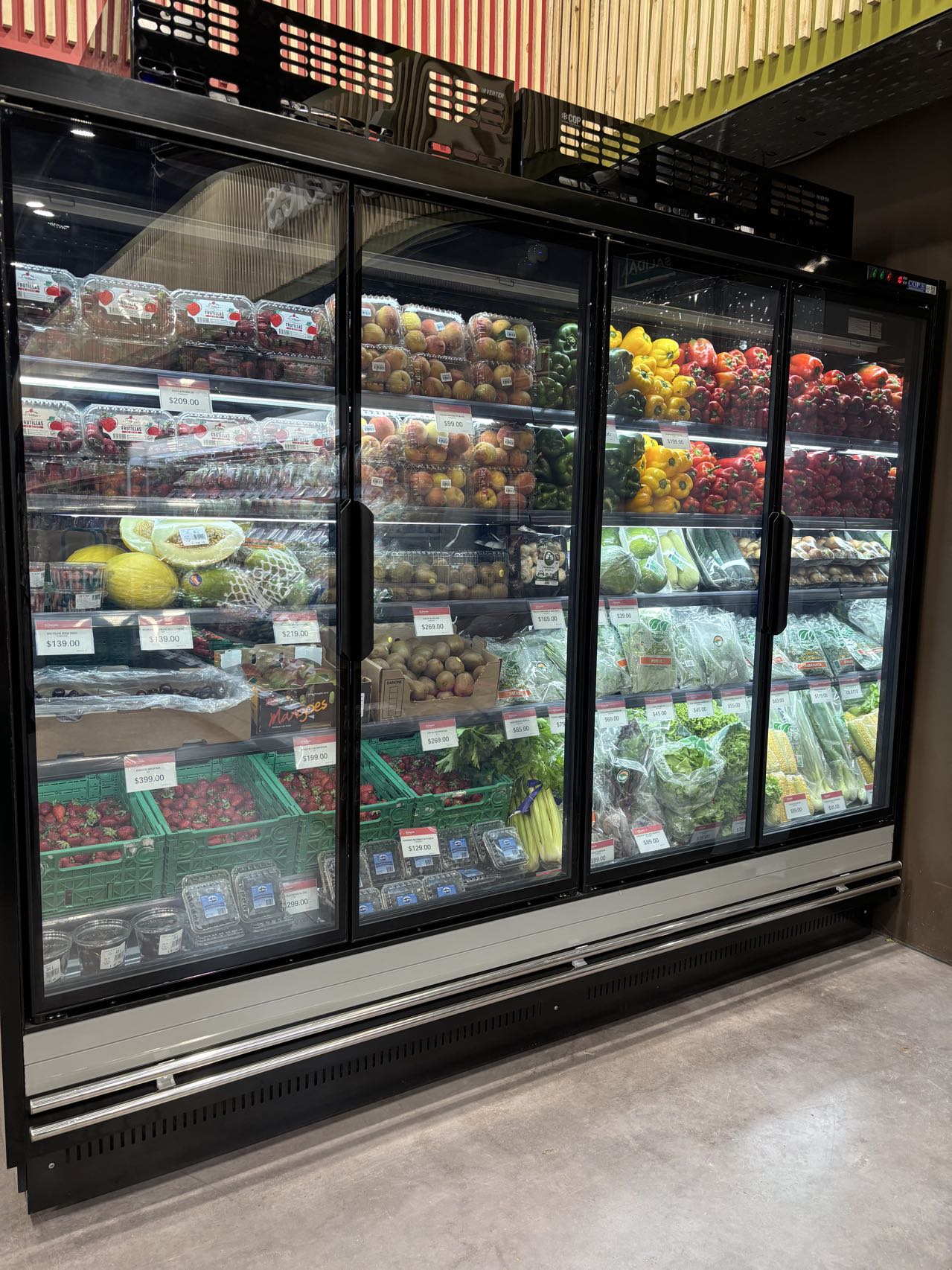
The shelving system is one of the biggest advantages of an upright glass door refrigerator. Vegetables vary in weight, shape, package size, and display requirements, so a clear shelf layout can greatly improve both appearance and operation.
Upper shelves can be used for light packaged vegetables, salad products, and smaller premium items. Middle shelves are suitable for high-frequency products such as leafy greens or fresh-cut vegetables because they are closer to the customer’s eye level. Lower shelves can hold heavier products, larger packages, or items with stronger packaging.
This type of arrangement helps prevent overcrowding and reduces the risk of product damage. It also makes restocking easier because staff can quickly identify empty positions, rotate older stock forward, and keep the display consistent throughout the day.
Temperature Control and Airflow Matter
For vegetable display, stable refrigeration is more important than simply making the cabinet cold. If the temperature is too high, vegetables may lose freshness faster. If the temperature is too low, some products may suffer from chilling damage or quality changes. A suitable vertical glass door fridge should support balanced cooling and reasonable airflow distribution.
Even airflow helps reduce temperature differences between shelves. This is important because vegetables placed on the top, middle, and bottom levels should remain in a consistent display condition. Good airflow also helps avoid areas that are too warm or too cold.
For fresh-cut and packaged vegetables, stable cooling is even more important because these products often have higher freshness and hygiene requirements. A reliable refrigerated display environment helps maintain appearance, supports daily sales, and reduces product waste caused by poor storage conditions.
Practical Display Tips for Vegetable Retailers
A vertical glass door fridge works best when the store combines the equipment with proper display management. Good product arrangement can improve freshness, visibility, and daily operating efficiency.
● Do not overfill the shelves
Vegetables need enough space for airflow. Overloading the cabinet can block cooling circulation and make the display look crowded.
● Keep similar products together
Leafy greens, salad vegetables, mushrooms, fresh-cut vegetables, and packaged vegetables should be grouped clearly so customers can find products more easily.
● Place high-demand items at eye level
Fast-moving vegetables or promotional products can be placed in the most visible shelf areas to improve customer attention.
● Keep product labels facing forward
For packaged vegetables, labels should face the glass door so customers can see product names, specifications, and freshness information clearly.
● Restock in smaller batches
Instead of filling the fridge too heavily at one time, stores can restock more frequently to keep the display fresh and reduce long display periods.
● Clean the glass door regularly
Fingerprints, water marks, and fog can reduce product visibility, so clean glass is important for maintaining a professional display.
Where Can This Fridge Be Used?
A vertical glass door fridge for vegetables is suitable for many commercial environments where fresh produce needs to be displayed neatly and kept chilled.
In supermarkets, it can be used in fresh produce areas for packaged vegetables, salads, mushrooms, and organic products. In convenience stores, it is suitable for small-pack vegetables, healthy meal ingredients, and ready-to-eat salad products. In fruit and vegetable shops, it helps display premium vegetables, imported produce, and prepared vegetable packs in a cleaner and more visible way.
Restaurants, cafés, and food service spaces can also use this type of fridge for front-of-house display, especially when they want customers to see chilled ingredients, salad items, or ready-to-use vegetable products.
How It Helps Reduce Vegetable Waste
Vegetable waste often comes from poor temperature control, excessive handling, messy display, overstocking, and delayed product rotation. A glass door fridge helps reduce these problems by creating a more organized and controlled display environment.
The glass door reduces unnecessary customer contact with products, while the shelving system makes it easier to see which items are selling and which need rotation. Because products are more visible, staff can identify slow-moving items earlier and adjust display positions or restocking plans.
Stable refrigeration also helps maintain a better product condition during the sales period. For stores that manage fresh produce every day, this can help reduce unnecessary losses and improve the overall efficiency of the fresh food section.
Conclusion
A vertical glass door fridge for vegetables is a useful commercial refrigeration solution for stores that want to improve fresh produce display, reduce handling, and organize refrigerated vegetable products more professionally. With transparent glass doors, multi-layer shelving, stable cooling, and better product visibility, it supports both customer experience and daily store operation.
For supermarkets, convenience stores, grocery shops, fresh produce stores, and food service spaces, this type of fridge can make vegetable presentation cleaner, product selection easier, and freshness management more efficient.
FAQ
What vegetables are suitable for a vertical glass door fridge?
It is suitable for leafy greens, salad vegetables, packaged vegetables, fresh-cut vegetables, mushrooms, and selected root vegetables, depending on product characteristics and display requirements.
Why use a glass door fridge instead of an open vegetable display?
A glass door fridge helps reduce cold air loss, limits unnecessary product handling, improves visibility, and supports a more stable refrigerated display environment.
Can fresh-cut vegetables be displayed in a vertical glass door fridge?
Yes. Fresh-cut vegetables usually require refrigerated display and clean presentation, making them suitable for a glass door fridge with organized shelving.
How can stores keep vegetables fresh in a glass door fridge?
Stores should avoid overloading shelves, keep airflow clear, group products by category, clean the glass door regularly, and rotate stock based on sales speed and product condition.
Post time: May-12-2026


