
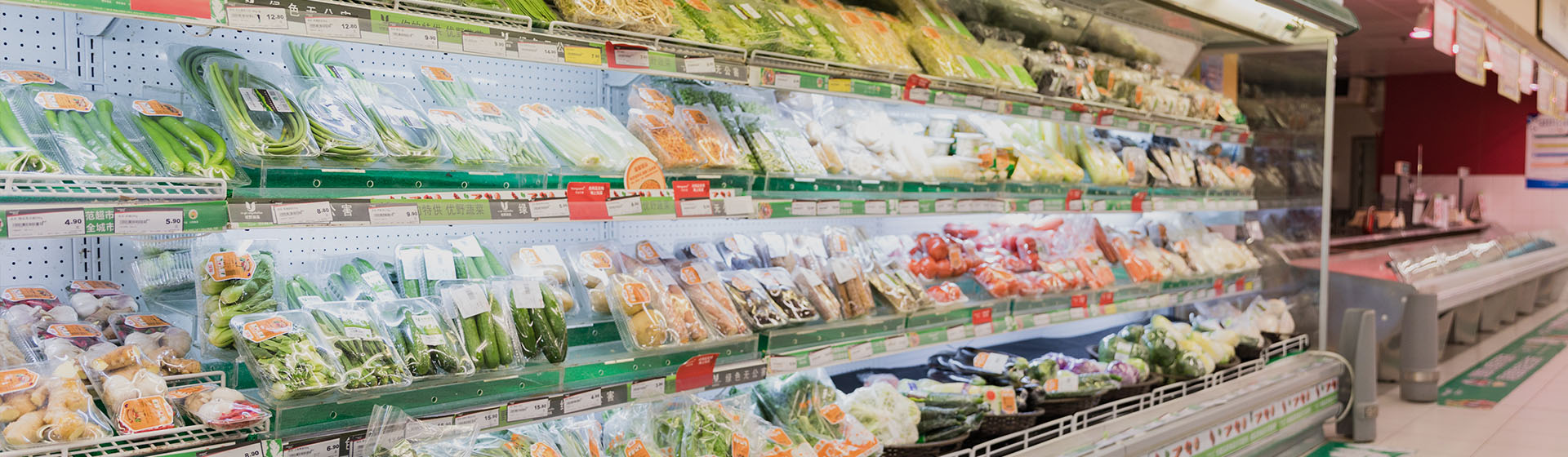
A Plug-in Glass Door Cooler combines refrigeration, transparent display, and adjustable storage in one cabinet. The compressor, condenser, evaporator, controls, and lighting are integrated, so the unit can operate after correct positioning and connection to the required power supply. This self-contained structure suits projects that need practical installation without a separate machine room or long refrigerant piping.
The product can display bottled drinks, dairy products, packaged food, desserts, sandwiches, fruit, prepared meals, and other chilled goods. Unlike a back-room refrigerator, it makes products visible from the aisle while maintaining a refrigerated environment. The glass door, lighting, shelf layout, and cabinet proportions therefore matter as much as the cooling system.
A Self-Contained System Changes Installation
A remote cabinet depends on an external condensing unit and site-installed pipework. A plug-in cooler keeps the main refrigeration components inside its own structure. This reduces site connections and makes the unit easier to position in convenience stores, cafés, food service areas, specialty shops, hotel service points, and temporary display zones.
The cabinet still needs a suitable electrical supply, level floor, adequate ventilation, and clearance for doors and service panels. The integrated system releases condenser heat near the cabinet, so the area must allow that heat to escape.
Main advantages include:
- No external condensing unit for a standard cabinet
- Reduced refrigerant piping at the site
- Easier relocation when the layout changes
- Individual temperature control
- Independent operation from other cabinets
- Simple addition to an existing space
These advantages are most useful when cabinet capacity and ambient conditions match the integrated system.
Glass Doors Make the Cabinet Part of the Display
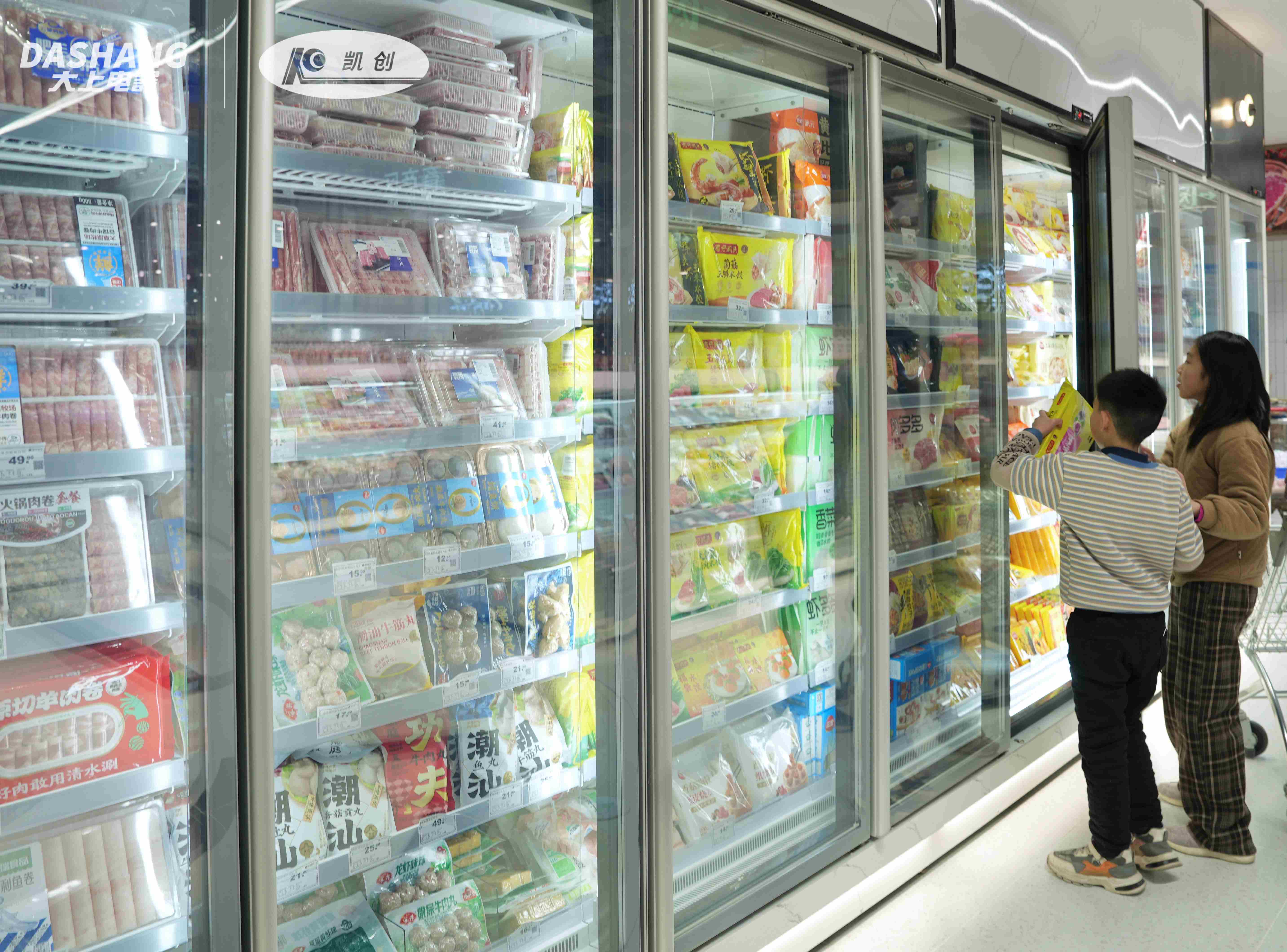
The transparent front turns storage into a visible product wall. A glass door display cooler allows people to identify package sizes, flavors, and categories before opening the door. This shortens search time and limits warm-air entry.
The door system may include insulated glass, heated frames or glass, magnetic gaskets, self-closing hinges, and ergonomic handles. Each detail affects visibility and temperature stability.
The glass should remain clear under expected humidity. Fogging can hide products and lead to longer openings, so anti-condensation design should match room conditions, opening frequency, and temperature range.
Door alignment is equally important. Uneven closing creates continuous air leakage, increasing compressor run time and frost. Strong hinges, replaceable gaskets, and a rigid cabinet frame support reliable operation.
Shelf Configuration Shapes Product Capacity
Gross volume does not show how effectively products can be displayed. Adjustable shelves allow the interior to match bottles, cans, cartons, containers, and packages of different heights.
A practical shelf plan can separate:
1. High-turnover drinks at eye level
2. Taller bottles with increased clearance
3. Dairy products in defined sections
4. Prepared meals and desserts on wider shelves
5. Reserve packages in the lower zone
Shelf depth should keep products stable without placing them too close to the glass. The front edge may include label strips or retainers, while the shelf must support the required load without bending.
For a multi-door cabinet, each section can serve a different group. This reduces searching and allows only the relevant door to be opened. Door quantity, shelf spacing, and internal width should be selected together.
Airflow Must Protect Every Shelf
A self-contained refrigerated display cabinet commonly uses fan-assisted cooling to distribute cold air through the product zone. The airflow path must reach upper, middle, and lower shelves and return freely to the intake.
Products should not block supply or return-air openings. Excessive loading can create warm pockets near the shelf front or around tightly packed containers. Loading limits should remain visible, with enough space for circulation.
Door opening also affects temperature. When a door opens, cold air leaves and warmer air enters. A matched system restores conditions efficiently, but frequently selected products should remain easy to reach, and restocking should be prepared before opening.
Lighting Supports Recognition Without Excess Heat
Internal lighting keeps products visible through the glass, especially in areas with uneven ambient light. Vertical LED strips or top lighting can illuminate several shelf levels.
Lighting should present package colors clearly without strong reflections or excessive heat. Shelf position, labels, and products need to work with the lighting so lower sections do not remain dark.
Switches, timers, or project controls may be used. When several cabinets are installed together, their lighting appearance should remain consistent.
Integrated Refrigeration Requires Ventilation
Because the condensing unit is built in, ventilation around the machinery compartment is essential. Dust, blocked grilles, or insufficient clearance can raise condensing temperature and energy use.
The cabinet should not be installed tightly against a wall where clearance is required. It should remain away from ovens, heating equipment, direct sunlight, and warm-air outlets.
Routine care includes:
- Cleaning condenser surfaces
- Keeping ventilation grilles open
- Checking door gaskets
- Confirming fan operation
- Removing packaging debris
- Monitoring unusual noise or temperature changes
- Keeping drains and defrost areas clear
These tasks help the system operate under its intended conditions.
One, Two, or Three Doors Serve Different Layouts
A one-door cabinet fits limited spaces and focused ranges. Two doors provide more width and category separation, while three-door or multi-door versions create a larger chilled display wall.
The best format depends on installation width, product mix, loading volume, and aisle circulation. A wider cabinet is not useful if space restricts door opening or service access.
Several units can also be positioned side by side. Cabinet height, frame color, handle style, lighting, and base design should be coordinated. Independent operation allows each unit to maintain its own setting, but power capacity, ventilation, and heat release must be planned for the group.
FAQ
What is the difference between a plug-in cooler and a remote cooler?
A plug-in cooler contains its refrigeration system inside the cabinet. A remote cooler connects to a separate condensing unit through site-installed piping.
What products can be stored in a Plug-in Glass Door Cooler?
It can hold bottled drinks, dairy products, packaged food, fruit, desserts, sandwiches, prepared meals, and other chilled products within its temperature range.
Does the cabinet need ventilation space?
Yes. The integrated condenser must release heat, so ventilation grilles and required surrounding clearance should remain open.
Can several plug-in glass door coolers be installed together?
Yes. They can form a coordinated line if electrical capacity, heat release, ventilation, door clearance, and service access are planned for the full installation.
Post time: Aug-06-2026


