
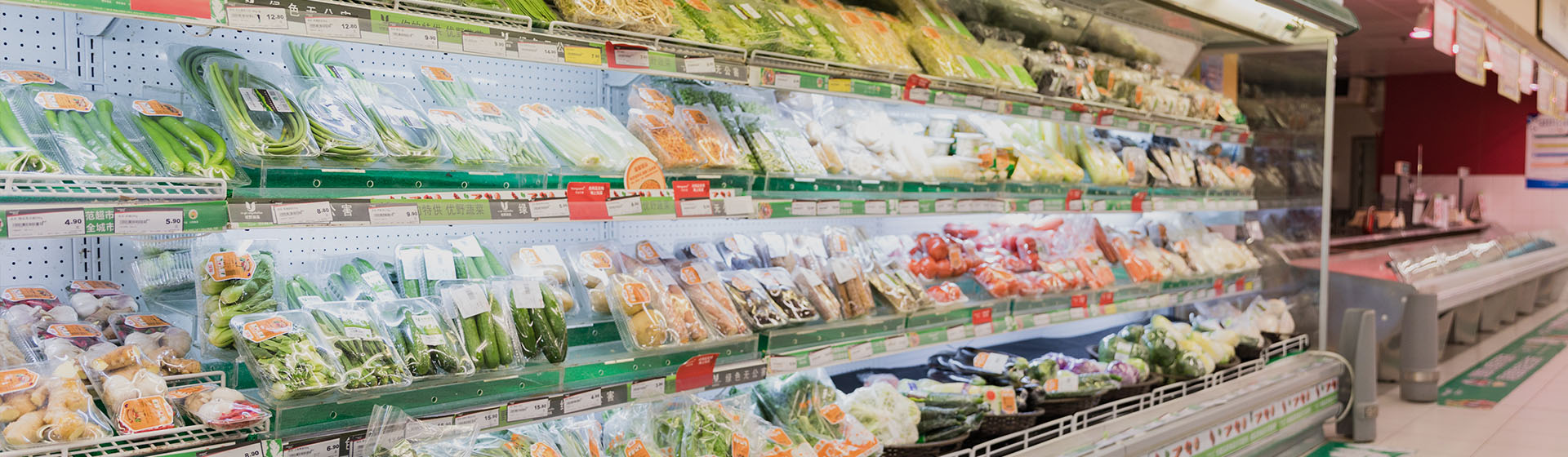
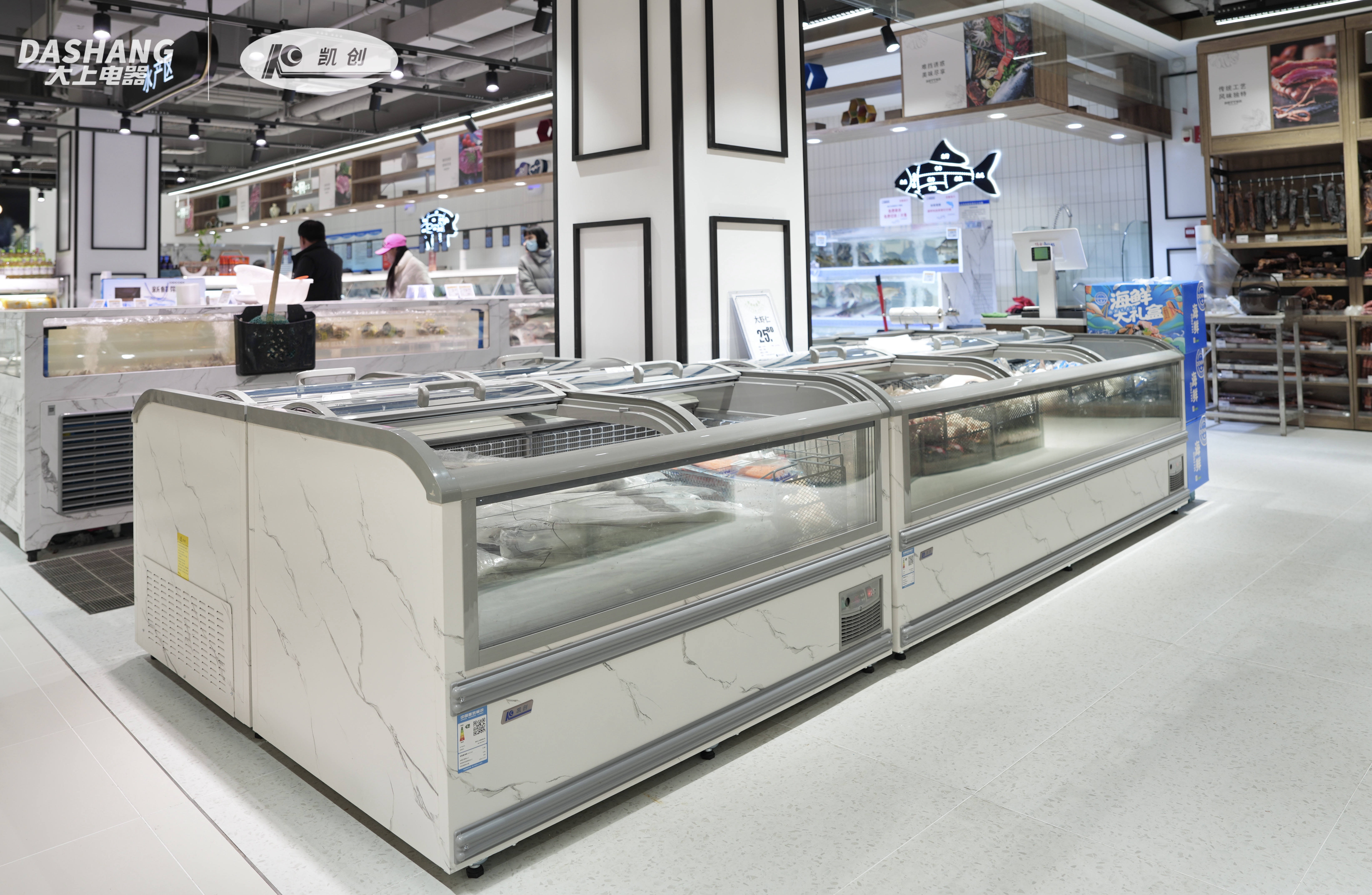
A Glass Top Combined Island Freezer is designed for commercial spaces that need both large frozen storage capacity and clear product presentation. Instead of treating every freezer as an isolated cabinet, a combined island layout connects several sections into one continuous frozen display zone. Sliding glass tops keep products visible while limiting the direct exchange between cold internal air and warm room air.
This format can support frozen meat, seafood, vegetables, prepared foods, ice cream, and packaged desserts. Its value comes from matching cabinet dimensions, customer movement, refrigeration performance, and restocking. A cabinet may fit the floor plan but still perform poorly if loading depth, glass opening, airflow, or end-section design does not match the operation.
A Combined Layout Uses Floor Space as a Complete Display System
A conventional single freezer creates one independent display point. A combined island freezer can form a long row, a back-to-back arrangement, or a central island with matching end cabinets. This creates a continuous product zone that uses the center of the room rather than relying only on wall space.
The layout is particularly useful when several frozen categories need to remain together but still require clear separation. Main cabinet sections can hold high-volume products, while end sections can be used for seasonal items, promotional combinations, or smaller packages that would otherwise become hidden.
- · Continuous display length without unnecessary gaps between cabinets
- · Flexible combinations for different room dimensions and traffic routes
- · Clear division between meat, seafood, vegetables, desserts, and prepared food
- · Better use of end positions that are visible from several directions
- · Easier expansion when the frozen product range changes over time
The best arrangement is not always the longest one. Aisle width, turning space, access to nearby shelves, emergency routes, and restocking paths must remain practical. The cabinet should improve the room layout rather than simply fill available floor area.
Why the Glass Top Matters for Product Presentation
The glass top is not only a cover. It is the main viewing surface and an important part of the thermal barrier. Customers should be able to identify products, package sizes, and remaining stock before sliding the lid. This reduces unnecessary opening and shortens the time that a section remains exposed to room air.
Viewing Angle and Glass Shape
Curved or inclined glass can improve visibility from a standing position, while flatter glass may support a cleaner cabinet profile. The right shape depends on cabinet height, aisle width, lighting, and the depth at which products are placed. If the deepest products cannot be seen, the display loses part of its commercial function even when storage capacity is high.
Sliding Direction and Opening Width
Glass panels should open far enough for safe loading and product selection without requiring the whole top to remain uncovered. Multiple sliding sections can reduce cold loss because only the required area is opened. Handles, tracks, and panel overlap should also be easy to clean and durable under repeated use.
Condensation and Reflection Control
High humidity, warm room air, and frequent opening may cause fogging or condensation. Insulated glass and suitable anti-condensation design help maintain a clear view. Lighting must also be planned carefully, because strong ceiling reflections on the glass can hide labels even when the glass itself is clean.
Internal Depth Should Match the Product Mix
A deep cabinet increases theoretical capacity, but excessive depth may make products difficult to see and rotate. Small packages can disappear beneath larger cartons, while staff may need to reach too far during restocking. For this reason, internal baskets and dividers are as important as the external dimensions.
A practical frozen food display freezer should create visible product layers rather than one deep, unstructured storage area. Basket height, divider position, and maximum loading line should be selected according to the actual package sizes.
- · Use shallow upper baskets for small cups, bars, or compact packages
- · Keep large bags and family-size products in deeper sections
- · Separate fast-moving products from slower seasonal stock
- · Leave air passages around product groups instead of packing every gap
- · Keep labels facing the main viewing direction whenever possible
Stable Temperature Depends on Airflow and Loading Discipline
A commercial island freezer must maintain low temperatures across a wide horizontal storage area. This requires balanced refrigeration, effective insulation, and an unobstructed internal airflow path. Products placed above the loading line or tightly pressed against air channels can create warmer zones even when the controller shows the correct temperature.
Temperature recovery after opening is also important. During busy periods, several glass panels may be opened repeatedly. The refrigeration system should restore conditions without causing large differences between the center, corners, and end sections. Temperature checks should therefore be made in representative product zones rather than at only one sensor location.
End Cabinets Require Special Attention
End cabinets often receive more surrounding air because they are exposed on several sides. Their airflow and refrigeration connection must be coordinated with the main island sections. If end cabinets are used for high-turnover products, frequent opening should also be considered when setting the loading plan and checking temperature performance.
Energy Performance Comes from the Complete Installation
Energy use is influenced by insulation thickness, glass construction, compressor matching, fan operation, defrost frequency, ambient temperature, and daily opening habits. A cabinet placed beside direct sunlight, heating equipment, or strong cross-drafts will operate under a higher load than the same model in a controlled location.
Capacity should match normal stock levels with reasonable reserve for peak periods. Unused volume still requires cooling, while overloading can block airflow and force the system to run continuously.
Planning the Right Glass Top Combined Island Freezer
Before finalizing a Glass Top Combined Island Freezer, define product categories, package sizes, stock levels, floor dimensions, aisle direction, refrigeration configuration, cleaning access, customer approach, and staff restocking routes.
A well-planned combined island freezer does more than provide frozen storage. It turns the center of a commercial food space into an organized, visible, and temperature-controlled display zone. When cabinet depth, glass design, airflow, end sections, and loading rules are coordinated, the equipment can remain practical even as the product range changes.
FAQ
1. What products can be placed in a glass top combined island freezer?
It can hold packaged frozen meat, seafood, vegetables, prepared meals, ice cream, desserts, and other products that require a similar frozen temperature range.
2. Why combine several island freezer sections?
Combining sections creates a continuous display area, improves use of central floor space, and allows the layout to be adapted to different product categories and room dimensions.
3. Should products be stacked up to the glass top?
No. Products should remain below the specified loading line so that cold air can circulate and the glass panels can open and close correctly.
4. What causes condensation on the glass top?
Condensation may be caused by high humidity, frequent opening, warm air infiltration, glass temperature, or insufficient anti-condensation performance. Installation conditions and glass sealing should be checked together.
Post time: Jul-30-2026


