
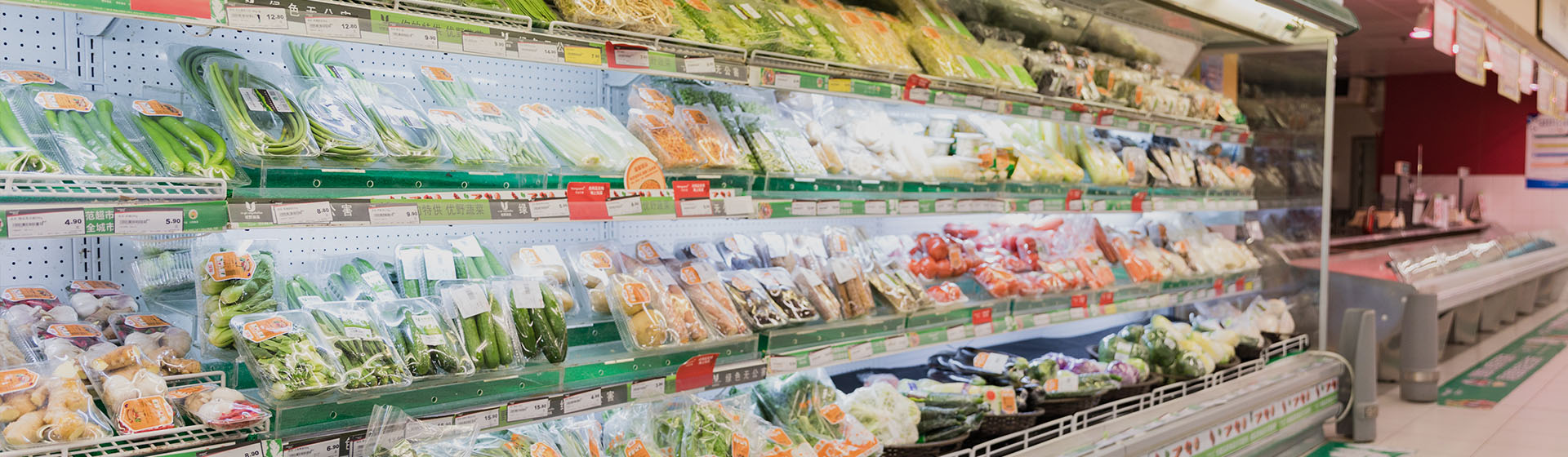
Air-curtain upright fridges have become a critical component in modern commercial refrigeration, especially in supermarkets, convenience stores, and food retail environments where product visibility and accessibility directly impact sales. As consumer expectations continue to rise, businesses increasingly rely on efficient, open-display refrigeration systems that balance performance, energy efficiency, and merchandising appeal.
What Is an Air-Curtain Upright Fridge and How Does It Work
An air-curtain upright fridge is an open-front refrigerated display cabinet that uses a continuous stream of cold air, often referred to as an “air curtain,” to maintain a stable internal temperature without requiring physical doors. This design allows customers to easily access products while ensuring that chilled air remains inside the unit.
The system works by circulating cold air from the evaporator through strategically placed vents, creating a barrier between the refrigerated interior and the ambient environment. This airflow reduces temperature fluctuation and helps preserve product freshness even in high-traffic retail settings.
Key Advantages of Air-Curtain Upright Fridges in Commercial Applications
Air-curtain upright fridges are widely used because they offer a combination of operational efficiency and strong merchandising capability, which is essential for B2B buyers in the food retail and hospitality sectors.
● Enhanced Product Visibility
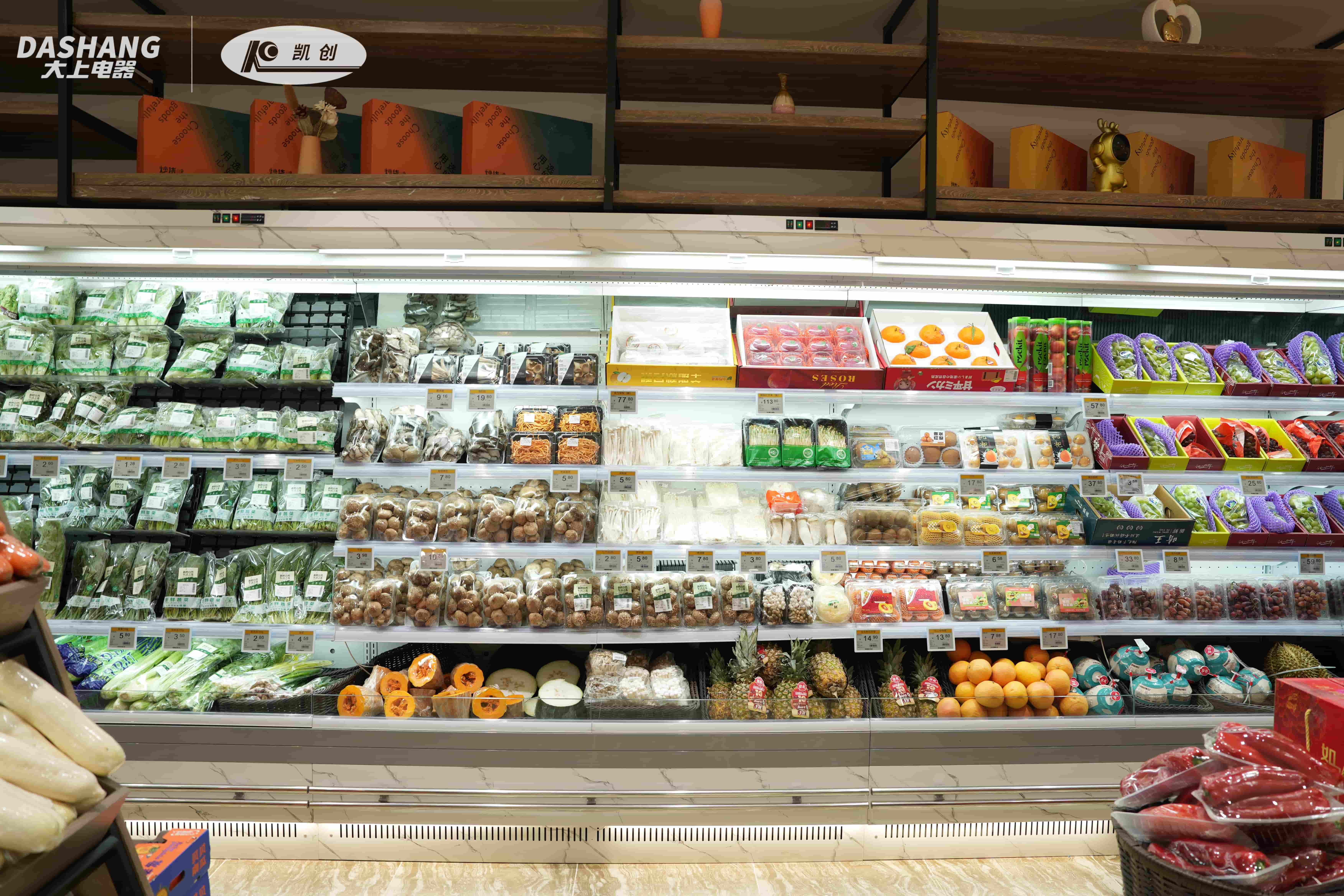
The open-front design eliminates barriers between customers and products, allowing full visibility of beverages, dairy items, fresh produce, and ready-to-eat foods, which directly encourages impulse purchases and increases sales conversion rates.
● Improved Customer Convenience
Without doors to open or close, customers can quickly grab items, making these units ideal for high-traffic environments such as supermarkets, gas stations, and convenience stores where speed and accessibility are crucial.
● Efficient Temperature Control
Advanced airflow systems maintain consistent internal temperatures, minimizing the impact of external heat and reducing the risk of product spoilage, even during peak shopping hours.
● Energy Optimization with Modern Technology
Although open-front refrigeration traditionally consumes more energy than closed systems, modern air-curtain upright fridges incorporate features such as night curtains, inverter compressors, and optimized airflow designs to significantly reduce energy consumption.
● Flexible Merchandising Options
Adjustable shelving, LED lighting, and modular designs allow businesses to customize product layouts, making it easier to highlight high-margin items or promotional products.
Common Applications Across Different Industries
Air-curtain upright fridges are not limited to a single industry, and their versatility makes them suitable for a wide range of commercial environments.
● Supermarkets and Hypermarkets
Used for displaying dairy products, beverages, packaged foods, and fresh produce, helping retailers maximize shelf exposure and improve product turnover.
● Convenience Stores
Ideal for grab-and-go items such as drinks, sandwiches, and snacks, where quick access and visibility are essential for customer satisfaction.
● Food Service and Catering
Restaurants, cafés, and cafeterias use these fridges to store and display ready-to-eat meals, desserts, and beverages in a visually appealing way.
● Retail Chains and Specialty Stores
From organic food shops to bakery chains, air-curtain upright fridges support brand presentation while maintaining strict temperature control requirements.
Technical Features That Define Performance
When evaluating an air-curtain upright fridge for commercial use, several technical factors play a crucial role in determining overall performance and reliability.
● Airflow Design
A well-engineered air curtain ensures uniform cooling throughout the cabinet while minimizing cold air loss, which is essential for maintaining consistent product quality.
● Refrigeration System
High-efficiency compressors and optimized evaporator designs contribute to stable cooling performance and reduced energy consumption over time.
● Temperature Range and Stability
Precise temperature control is critical for preserving different types of products, particularly perishable goods such as dairy, meat, and fresh produce.
● Defrost System
Automatic defrost functions prevent ice buildup on the evaporator, ensuring continuous operation and reducing maintenance requirements.
● Build Materials and Insulation
High-quality insulation and durable materials improve thermal efficiency and extend the lifespan of the equipment in demanding commercial environments.
Energy Efficiency and Operational Considerations
Energy consumption remains a key concern for businesses operating multiple refrigeration units, and air-curtain upright fridges are no exception. However, advancements in design and technology have significantly improved their efficiency.
● Night Curtains for Energy Saving
Pull-down night curtains reduce cold air loss during non-operational hours, helping lower electricity costs without affecting product storage conditions.
● LED Lighting Systems
Energy-efficient LED lighting not only enhances product visibility but also reduces heat generation inside the cabinet, contributing to better cooling performance.
● Inverter Technology
Variable-speed compressors adjust cooling output based on real-time demand, improving energy efficiency and reducing operational costs.
● Optimized Airflow Management
Modern designs minimize turbulence and improve air circulation, ensuring that the air curtain effectively maintains internal temperature stability.
Why Air-Curtain Upright Fridges Support Sales Growth
From a business perspective, refrigeration is not just about storage; it is also a powerful sales tool. Air-curtain upright fridges play a direct role in driving revenue by improving product presentation and accessibility.
● Increased Product Exposure
More visible products lead to higher customer engagement and greater purchase likelihood.
● Faster Shopping Experience
Open access reduces waiting time and improves overall customer flow, especially in busy retail environments.
● Strategic Product Placement
Retailers can easily organize items by category, brand, or promotion, enhancing cross-selling opportunities.
● Better Inventory Rotation
Clear visibility helps staff monitor stock levels more efficiently, reducing waste and ensuring timely replenishment.
Conclusion
Air-curtain upright fridges represent a highly effective solution for modern commercial refrigeration, combining open accessibility, efficient cooling, and strong merchandising capabilities. Their ability to maintain product freshness while enhancing visibility makes them an essential asset for businesses aiming to improve both operational efficiency and sales performance. As technology continues to evolve, these systems are becoming more energy-efficient and adaptable, making them an increasingly valuable investment for a wide range of industries.
FAQ
- What products are best suited for an air-curtain upright fridge?
Air-curtain upright fridges are ideal for beverages, dairy products, packaged foods, fresh produce, and ready-to-eat meals that benefit from high visibility and easy customer access. - How does an air-curtain system maintain temperature without doors?
The unit creates a continuous flow of cold air across the open front, forming a barrier that reduces heat exchange with the surrounding environment and keeps the internal temperature stable. - Are air-curtain upright fridges energy efficient?
Modern models are designed with energy-saving features such as night curtains, inverter compressors, and optimized airflow systems, which significantly improve efficiency compared to older designs. - Where are air-curtain upright fridges most commonly used?
They are widely used in supermarkets, convenience stores, food service outlets, and retail chains where product visibility and accessibility are essential for customer experience and sales growth.
Post time: Apr-21-2026


