
In modern supermarket and retail environments, frozen food presentation and accessibility play a critical role in driving customer engagement and increasing sales performance. An island freezer has become one of the most widely used refrigeration solutions for frozen food merchandising because it combines open-top visibility, centralized product access, and efficient temperature control in a single system designed specifically for high-traffic retail spaces.
Unlike vertical freezers or enclosed refrigeration cabinets, island freezers are designed to maximize product exposure from multiple directions, making them ideal for supermarkets that aim to improve impulse purchases while maintaining stable frozen storage conditions across large product categories.
Understanding the Role of Island Freezers in Modern Retail Layouts
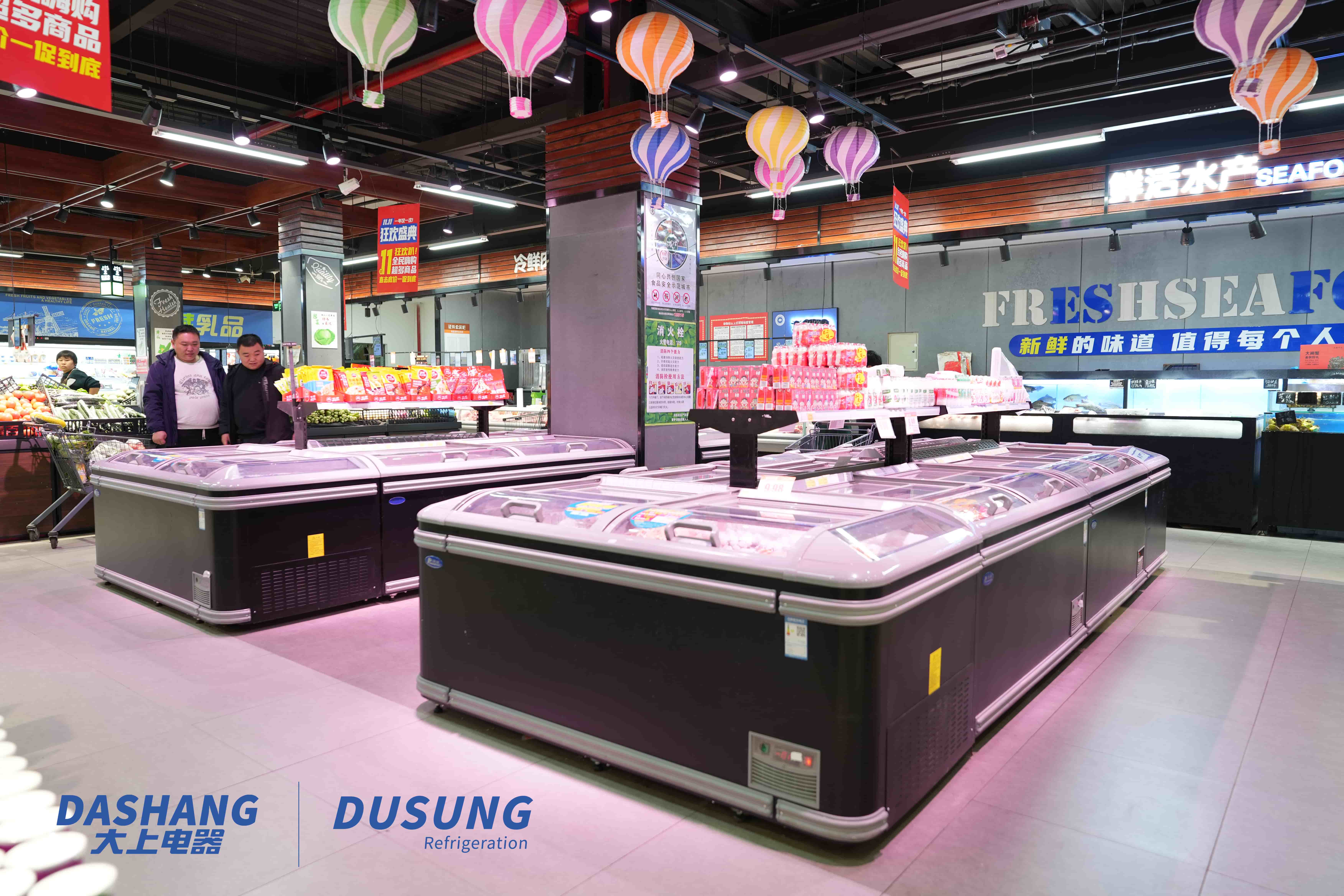
An island freezer is a horizontal, open-top or sliding-lid refrigeration unit typically placed in the center of supermarket aisles or frozen food sections. Its main purpose is to display frozen products such as ice cream, frozen meat, seafood, vegetables, and ready-to-cook meals in a way that allows customers to access items easily from multiple sides.
This layout is particularly effective in large retail environments where customer flow is high and product visibility directly influences purchasing behavior. By positioning frozen goods in a centralized display format, retailers can encourage browsing behavior and improve overall product turnover.
Why Island Freezers Improve Frozen Food Merchandising Efficiency
The design of island freezers is based on optimizing both visibility and accessibility while maintaining strict temperature control to preserve frozen product quality. This balance between marketing presentation and refrigeration performance is what makes them essential in modern supermarket operations.
● 360-degree or multi-side access design that allows customers to reach products easily from different directions, improving shopping convenience and reducing congestion in frozen food aisles
● Transparent sliding glass lids that enhance product visibility while minimizing cold air loss during customer access, ensuring stable internal temperature conditions
● Large-capacity storage configuration that supports bulk frozen product display, making it suitable for high-volume retail environments and promotional campaigns
● Deep storage structure that allows efficient organization of frozen goods based on category, brand, or seasonal demand patterns
● High-efficiency compressor systems designed to maintain consistent freezing temperatures even during frequent lid openings in busy retail hours
● Reinforced insulation layers that reduce external heat transfer and improve energy efficiency in continuous operation environments
● LED lighting systems that enhance product visibility while minimizing heat generation inside the freezer compartment
● Low-noise operational design that ensures comfortable shopping environments even in densely packed supermarket layouts
These features collectively ensure that island freezers deliver both commercial visibility and reliable freezing performance.
How Island Freezers Maintain Stable Freezing Conditions
Maintaining consistent low temperatures is essential for preserving frozen food quality, preventing ice crystal degradation, and ensuring long-term product safety. Island freezers achieve this through a combination of advanced refrigeration technology and structural insulation design.
The system continuously monitors internal temperature conditions and adjusts compressor activity accordingly to prevent fluctuations that could compromise product integrity.
Air circulation is carefully controlled to ensure that cold air is evenly distributed throughout the storage compartment, avoiding warm zones that could lead to partial thawing or freezer burn.
Additionally, insulated glass lids or sliding covers help reduce cold air escape while still allowing customers to view products clearly.
Energy Efficiency Considerations in Island Freezer Systems
Energy consumption is a major concern in large supermarket refrigeration systems due to continuous operation and high load demands. Modern island freezers are designed with energy optimization technologies that reduce operational costs while maintaining stable freezing performance.
● High-efficiency compressors that adjust output based on real-time cooling demand rather than constant full-power operation
● Advanced insulation materials that minimize heat exchange and reduce cooling loss during peak usage hours
● Smart defrost systems that operate only when necessary to prevent unnecessary energy consumption
● LED lighting systems that improve visibility without generating additional heat load inside the freezer
● Optimized airflow engineering that reduces compressor strain and improves cooling distribution efficiency
● Low-energy standby modes that reduce power consumption during low-traffic periods in retail environments
● Eco-friendly refrigerant systems designed to improve environmental sustainability while maintaining performance standards
● Intelligent temperature monitoring systems that ensure consistent freezing conditions with minimal energy waste
These energy-saving technologies allow retailers to operate island freezers efficiently even in large-scale supermarket environments.
Retail Advantages of Using Island Freezers
Beyond refrigeration performance, island freezers provide several strategic advantages that directly impact retail sales and customer experience.
● Increased product visibility that encourages impulse buying behavior and improves overall sales conversion rates
● Improved product accessibility that allows customers to quickly browse and select frozen goods without delays
● Enhanced promotional flexibility for seasonal or discounted frozen products displayed in centralized high-traffic areas
● Better space utilization in supermarket layouts by using central aisle zones for high-density frozen product display
● Simplified inventory management due to large-capacity storage and clear product organization
● Faster product rotation driven by high visibility and easy customer access
● Reduced congestion in vertical freezer aisles due to distributed product placement strategies
● Improved customer shopping experience through intuitive and open-access product presentation
These advantages make island freezers a key component of modern frozen food merchandising strategies.
Application Scenarios in Supermarkets and Retail Chains
Island freezers are widely used in various commercial environments due to their versatility and high storage capacity. They are especially effective in locations where frozen food sales represent a significant portion of total retail revenue.
● Large supermarkets for frozen meat, seafood, vegetables, and ready-to-cook meals
● Hypermarkets requiring centralized frozen food promotional displays
● Convenience stores with compact frozen food sections requiring efficient space utilization
● Wholesale retail stores offering bulk frozen product sales
● Seasonal promotional zones for ice cream and frozen desserts
● Urban retail chains with high customer traffic and fast-moving inventory needs
In all these environments, island freezers serve as both storage systems and high-impact merchandising tools.
Key Design Factors That Influence Performance
The efficiency and reliability of an island freezer depend on several engineering and design factors that determine long-term operational stability.
Insulation quality plays a major role in maintaining internal freezing conditions, especially during frequent customer access. Glass lid design also affects both visibility and thermal retention, requiring a balance between transparency and insulation efficiency.
Compressor performance is another critical factor, as it determines how quickly the system can recover temperature after repeated openings during peak hours.
Internal layout design must also support flexible product organization to accommodate different frozen food categories and seasonal inventory changes.
FAQ
1. What products are typically stored in an island freezer?
Island freezers are commonly used for frozen meat, seafood, vegetables, ice cream, frozen desserts, ready-to-cook meals, and other packaged frozen food products.
2. Why are island freezers more effective for supermarket display?
They provide multi-side access and high product visibility, allowing customers to browse more easily and increasing the likelihood of impulse purchases in high-traffic retail areas.
3. Do island freezers consume a lot of electricity?
Modern island freezers are designed with energy-efficient compressors, improved insulation, and smart defrost systems that significantly reduce energy consumption compared to older models.
Post time: May-29-2026


