

A Remote Double Air Curtain Display Fridge is designed for commercial spaces that need a wide, open refrigerated display area without placing the main refrigeration condensing unit inside the cabinet. It combines remote refrigeration with two controlled layers of cold airflow across the open front.
This structure helps reduce the exchange of cold internal air and warm room air. At the same time, the open-front design allows products to remain visible and easy to access.
The equipment is commonly used for beverages, dairy products, packaged food, fruit, vegetables, prepared meals, and other chilled goods. Its value comes from the way the cabinet, airflow system, remote refrigeration system, and installation environment work together.
The Double Air Curtain Is the Main Protective Barrier
An open refrigerated cabinet does not use doors to separate the cold interior from the surrounding room. Instead, it relies on a controlled air curtain.
In a double air curtain design, two layers of airflow move across the open front. One layer helps contain the cold air inside the cabinet, while the second provides additional separation from warmer ambient air.
The air curtain helps to:
- Reduce cold-air escape
- Limit warm-air infiltration
- Maintain more consistent product temperatures
- Reduce condensation around the display opening
- Improve temperature recovery after customer interaction
- Support open access without glass doors
The effectiveness of the air curtain depends on fan performance, outlet design, return-air position, cabinet height, and surrounding air movement.
Why Remote Refrigeration Changes the Cabinet Design
In a remote refrigeration system, the main condensing unit is installed separately from the display cabinet. Refrigerant lines connect the cabinet to the remote system.
This arrangement offers several practical advantages in large commercial installations.
Less Heat Released Near the Display Area
A self-contained cabinet releases condenser heat into the room. In a large space with many refrigerated cabinets, this additional heat can increase the load on the building’s air-conditioning system.
A remote system moves much of this heat away from the display area.
Lower Operating Noise Near Products
Because major refrigeration components are located elsewhere, the display area may experience less mechanical noise. This can improve the environment in customer-facing or food service spaces.
Centralized Refrigeration Management
Multiple cabinets may be connected to a central refrigeration system. This can simplify system-level control, maintenance planning, and heat management in larger installations.
However, remote refrigeration requires professional design. Pipe length, refrigerant selection, system capacity, pressure loss, drainage, and control settings must be matched correctly.
Open Access Supports High-Frequency Product Selection
The open front allows products to be reached without opening a door. This is useful where chilled items are selected frequently or where uninterrupted visibility is important.
Typical applications include:
- Bottled and canned drinks
- Dairy products
- Packaged sandwiches
- Salads and prepared meals
- Fresh fruit
- Packaged vegetables
- Desserts
- Chilled convenience foods
The absence of doors reduces the physical barrier between the product and the surrounding space. However, it also means the air curtain must remain stable throughout operation.
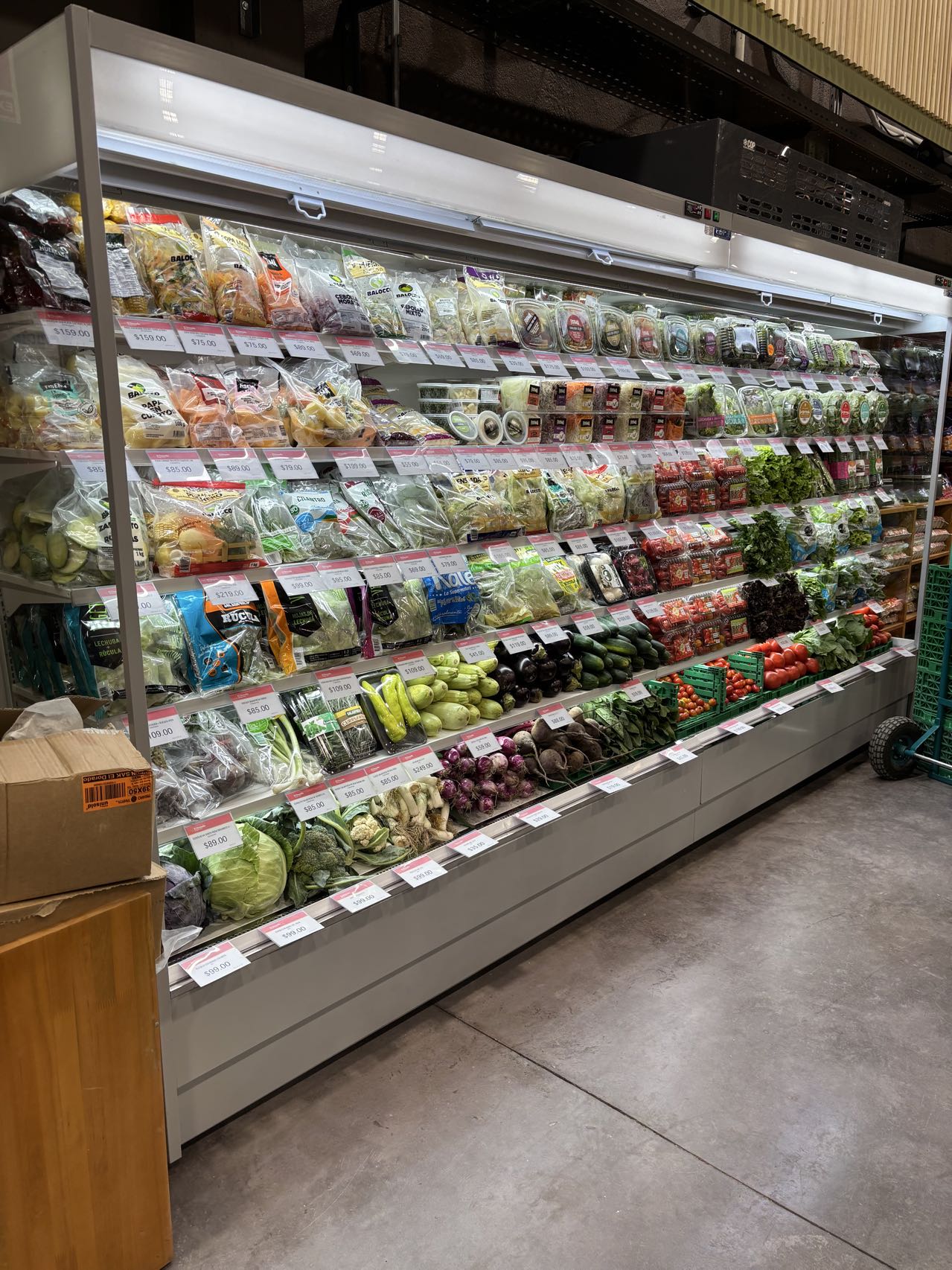
Shelf Layout and Airflow Must Be Planned Together
A Remote Double Air Curtain Display Fridge often includes several adjustable shelves. These shelves increase display capacity, but incorrect positioning can interfere with airflow.
Cold air usually travels from the upper section toward the return-air opening near the lower front area. Products, labels, shelf edges, or decorations should not block this path.
Shelf planning should consider:
- Product height
- Package depth
- Shelf load
- Air outlet position
- Return-air location
- Lighting arrangement
- Visibility from the aisle
- Restocking access
Products should remain within the recommended loading line. Items extending too far toward the open front may enter warmer air and experience temperature variation.
Ambient Conditions Affect the Air Curtain
The performance of an open display cabinet depends heavily on the surrounding environment. Air-conditioning outlets, entrance doors, fans, and strong cross-drafts can disturb the air curtain.
A cabinet installed directly opposite a building entrance may be exposed to warm outdoor air whenever the door opens. Similarly, ceiling air-conditioning vents can push the air curtain away from the cabinet.
Before installation, evaluate:
- Room temperature
- Relative humidity
- Air-conditioning direction
- Distance from exterior doors
- Nearby exhaust fans
- Sunlight exposure
- Available ventilation
- Customer traffic patterns
A technically suitable cabinet may still perform poorly if it is placed in an unsuitable location.
Product Temperature Is More Important Than Air Temperature Alone
The temperature shown on the cabinet controller does not always represent the temperature of every product. Air temperature changes quickly, while product temperature changes more slowly.
For accurate evaluation, temperature should be checked at different shelf levels and in different parts of the cabinet. Products near the open edge may experience different conditions from those close to the back panel.
Temperature control should include:
- Measuring representative product zones
- Checking upper, middle, and lower shelves
- Monitoring high-traffic periods
- Confirming temperature after restocking
- Recording unusual changes
- Avoiding warm product loading
Products should already be chilled before being placed in the display. The cabinet is intended to maintain product temperature, not rapidly cool large quantities of warm goods.
Night Covers Can Reduce Cold Loss
During periods when the cabinet is not in active use, a night cover can help reduce air exchange through the open front. This may improve temperature stability and reduce energy consumption.
The cover should be used according to the operating instructions. It should not block essential ventilation areas or interfere with the refrigeration cycle.
Before reopening the display, the cover should be removed properly so that the air curtain can return to normal operation.
Defrost and Drainage Need Careful Control
Moisture entering the cabinet can freeze on the evaporator. As frost builds up, airflow decreases and refrigeration efficiency falls.
Automatic defrost helps remove frost, but the cycle must be matched to the operating environment. High humidity and frequent access may require different settings from a dry, temperature-controlled room.
Drainage is equally important. Defrost water must flow away without leaking, freezing, or creating hygiene problems.
Regular checks should include:
- Evaporator frost condition
- Drain outlet cleanliness
- Drainpipe slope
- Water leakage
- Fan operation
- Unusual ice buildup
- Control alarms
Poor drainage can damage surrounding floors and create unstable operating conditions.
Energy Performance Depends on System Coordination
A remote open display fridge can support large-scale refrigeration planning, but energy efficiency depends on the complete system.
Important factors include:
- Cabinet insulation
- Air curtain stability
- Fan control
- Refrigeration system capacity
- Refrigerant pipe design
- Defrost frequency
- Lighting efficiency
- Night cover use
- Ambient temperature
- Product loading
A refrigeration system that is too small may run continuously without maintaining the required temperature. An oversized system may cycle inefficiently and create control problems.
The cabinet and remote refrigeration unit should therefore be selected as one coordinated system rather than as separate components.
When Is a Remote Double Air Curtain Display Fridge the Right Choice?
A Remote Double Air Curtain Display Fridge is suitable when a commercial space needs a large open chilled display, frequent product access, and remote refrigeration management.
It is especially practical when:
- Several refrigerated cabinets are installed together
- Heat and noise should be moved away from the display area
- Products require constant visibility
- Open access is important
- A central refrigeration system is available
- Professional installation and maintenance can be provided
It may be less suitable for small sites without remote refrigeration infrastructure or environments with uncontrolled temperature, humidity, and airflow.
FAQ
1. What does “remote” mean in a Remote Double Air Curtain Display Fridge?
It means the main condensing unit is installed separately from the display cabinet and connected through refrigerant piping.
2. Why are two air curtains used?
Two controlled airflow layers provide stronger separation between the refrigerated interior and the warmer surrounding air than a single airflow layer.
3. Can warm products be placed directly into the cabinet?
It is not recommended. Products should be pre-chilled because the cabinet is designed mainly to maintain temperature rather than rapidly cool warm products.
4. Why does the cabinet temperature rise near an entrance?
Warm air, humidity, and drafts from the entrance can disturb the air curtain. Installation position and surrounding airflow should be reviewed.
Post time: Jul-29-2026


