
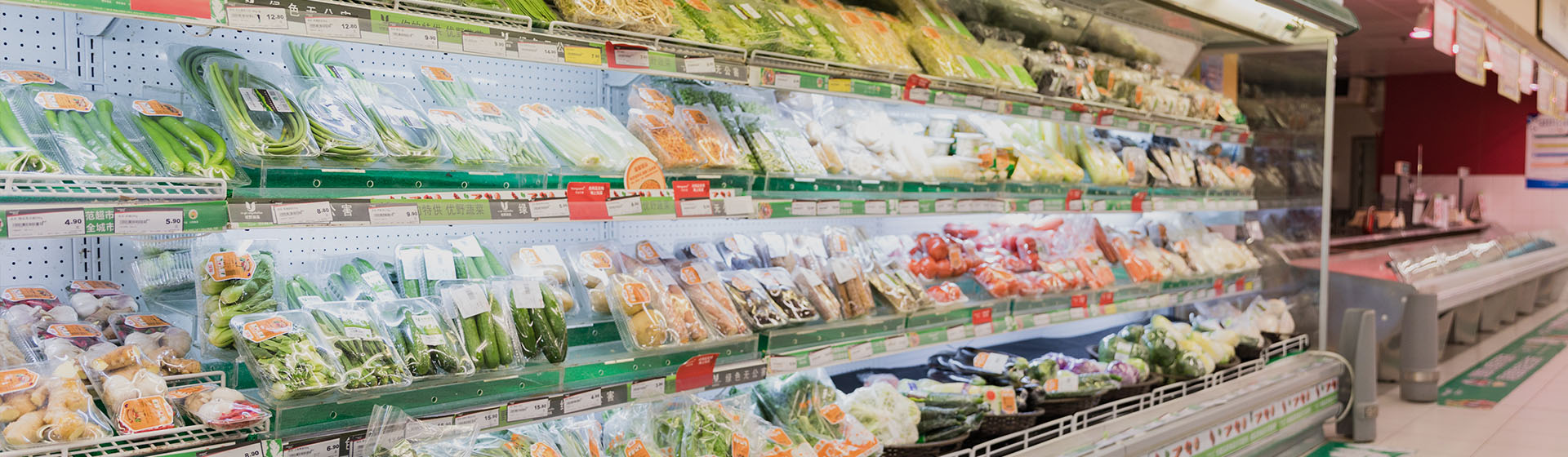
In today’s competitive retail and food service environment, refrigeration equipment is no longer evaluated only by cooling performance. Supermarkets, convenience stores, cafés, and food service operators now require solutions that combine energy efficiency, product visibility, durability, and flexible merchandising capability.
The Glass-Door Upright Fridge Remote Refrigerator has become an increasingly popular solution because it integrates remote cooling technology with a high-visibility display structure. Unlike traditional plug-in refrigerators, the remote system separates the compressor unit from the display cabinet, allowing quieter operation, better heat management, and improved in-store layout flexibility.
This combination of performance and design makes it especially suitable for high-traffic commercial environments where product presentation and long-term operational stability are equally important.
What Is a Glass-Door Upright Remote Refrigerator and How Does It Work?
A Glass-Door Upright Remote Refrigerator is a vertical commercial refrigeration unit connected to an external condensing system. Instead of housing the compressor inside the cabinet, the cooling system is installed remotely, often in a machine room or external space.
This structure improves efficiency, reduces heat inside the store, and allows multiple display units to share a centralized cooling system.
● Remote compressor system reduces noise inside retail environments
● Vertical glass-door structure enhances product visibility and organization
● Continuous airflow cooling maintains stable internal temperature
● Multi-shelf design supports high-density product merchandising
● External refrigeration system improves maintenance accessibility
This design is widely used in supermarkets, beverage sections, dairy zones, and large-scale retail stores.
Why Are Retailers Switching to Remote Refrigeration Systems?
Traditional plug-in refrigerators generate heat and noise inside the store environment, which can negatively affect both customer experience and energy efficiency. Remote refrigeration systems solve these issues by separating heat-generating components.
Retailers are increasingly adopting glass-door upright remote refrigerators due to operational and commercial advantages.
● Reduced indoor heat load improves store comfort and stability
● Lower noise levels create a better shopping environment
● Centralized cooling improves energy efficiency across multiple units
● Easier maintenance due to external compressor access
● Better layout flexibility for store design optimization
This makes remote systems ideal for modern large-scale retail operations.
How Does a Glass-Door Upright Remote Refrigerator Improve Product Display?
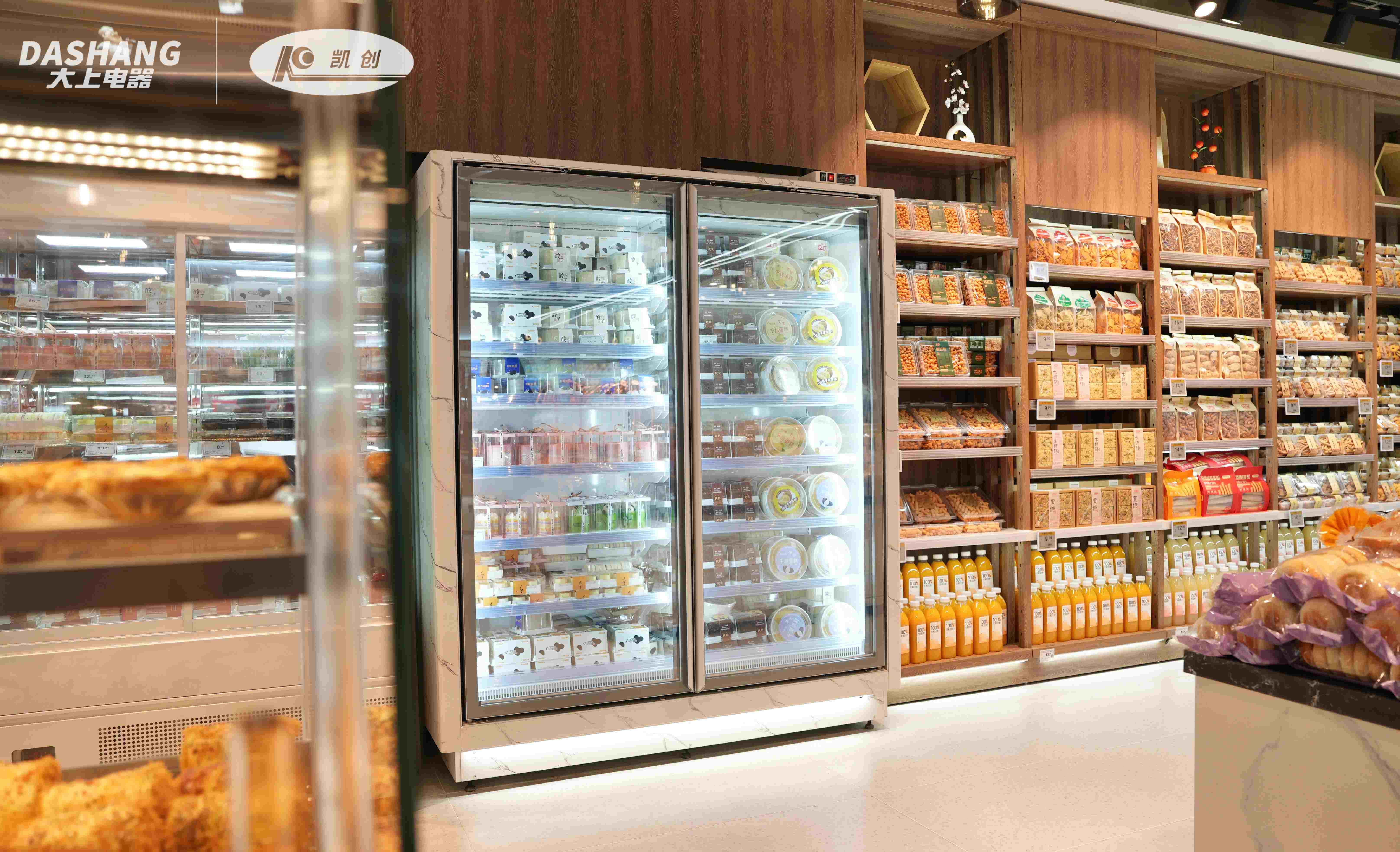
Product visibility is a key factor influencing customer purchasing behavior, especially in beverage, dairy, and chilled food categories. A glass-door upright design enhances visibility while maintaining strict temperature control.
● Transparent glass doors provide full product visibility
● LED lighting highlights product color and freshness perception
● Vertical shelving improves category organization and clarity
● Clean, structured display increases customer trust
● Consistent lighting enhances brand presentation quality
The result is a refrigeration system that functions as both storage and merchandising equipment.
Why Is Stainless Steel Bumper Important for Durability?
In high-traffic retail environments, refrigeration equipment is frequently exposed to carts, cleaning equipment, and daily operational impact. Stainless steel bumpers are essential for protecting the structure and extending equipment lifespan.
● Protects cabinet base from physical impact and damage
● Enhances overall durability in busy retail environments
● Prevents scratches and surface wear over time
● Improves professional and premium appearance
● Reduces long-term maintenance and repair costs
This feature is especially important in supermarkets and warehouse-style stores.
How Does Flexible Shelving Improve Merchandising Efficiency?
Retail demand is constantly changing, and product sizes vary significantly across beverage, dairy, and packaged food categories. Flexible shelving systems allow operators to adapt quickly.
● Adjustable shelves support different product heights and packaging types
● Improves product categorization and display efficiency
● Maximizes use of vertical storage space
● Enables seasonal or promotional layout changes
● Reduces time required for restocking and reorganization
This flexibility directly improves operational efficiency and sales performance.
Why Is LED Lighting on the Door Frame So Important?
Lighting plays a critical role in retail refrigeration because it directly affects how customers perceive product freshness and quality. Integrated LED lighting enhances visibility without increasing energy consumption.
● Energy-efficient LED reduces electricity usage
● Uniform illumination improves product presentation
● Enhances color vibrancy of beverages and fresh products
● Integrated design eliminates shadow areas inside cabinet
● Improves overall store aesthetics and branding
Lighting turns the refrigerator into a visual merchandising tool rather than just storage equipment.
How Do Double-Layer Low-E Glass Doors Improve Energy Efficiency?
Energy consumption is one of the biggest operational costs in commercial refrigeration. Double-layer Low-E glass doors are designed to reduce heat transfer while maintaining clear product visibility.
● Double glazing improves thermal insulation performance
● Low-emissivity coating reduces heat exchange between inside and outside
● Minimizes condensation on glass surface
● Maintains stable internal temperature with lower energy consumption
● Ensures clear product visibility without fogging
This technology significantly improves long-term operational efficiency.
How Does Remote Refrigeration Improve Store Layout Design?
One of the biggest advantages of remote refrigeration systems is the flexibility they provide in store design. By removing compressors from individual units, retailers can optimize space and reduce heat load.
● Frees up floor space inside store for better product layout
● Allows centralized cooling system management
● Reduces heat generation in customer-facing areas
● Enables cleaner and more modern store aesthetics
● Supports large-scale refrigeration network integration
This makes it especially suitable for modern supermarket chains and large retail environments.
Where Is the Glass-Door Upright Remote Refrigerator Commonly Used?
Due to its efficiency and visibility, this refrigeration system is widely used in various commercial environments.
● Supermarkets for beverages, dairy, and chilled packaged foods
● Convenience stores requiring compact yet high-visibility refrigeration
● Hypermarkets with centralized cooling systems
● Hotels and catering services for beverage display
● Food retail chains focusing on premium product presentation
Its adaptability makes it a standard choice in modern retail refrigeration planning.
Conclusion
The Glass-Door Upright Fridge Remote Refrigerator represents a modern evolution in commercial refrigeration technology, combining remote cooling efficiency with advanced display design. It improves energy efficiency, enhances product visibility, and supports flexible store layout planning.
With features such as stainless steel protection, flexible shelving, integrated LED lighting, and Low-E insulated glass doors, it delivers a complete solution for high-performance retail environments.
In today’s competitive retail landscape, where customer experience and operational efficiency directly impact profitability, this type of refrigeration system is becoming an essential investment for supermarkets, convenience stores, and large-scale food retail operations.
FAQ
1. What is a Glass-Door Upright Remote Refrigerator used for?
It is used for displaying and storing chilled products such as beverages, dairy, and packaged foods in retail environments with centralized cooling systems.
2. What is the advantage of a remote refrigeration system?
It reduces noise and heat inside the store while improving energy efficiency and allowing better layout flexibility.
3. Does Low-E glass improve energy efficiency?
Yes, Low-E double glass reduces heat transfer and helps maintain stable internal temperatures while reducing energy consumption.
4. Where is this refrigerator commonly installed?
It is commonly used in supermarkets, convenience stores, hypermarkets, and food retail chains.
Post time: Jun-15-2026


