
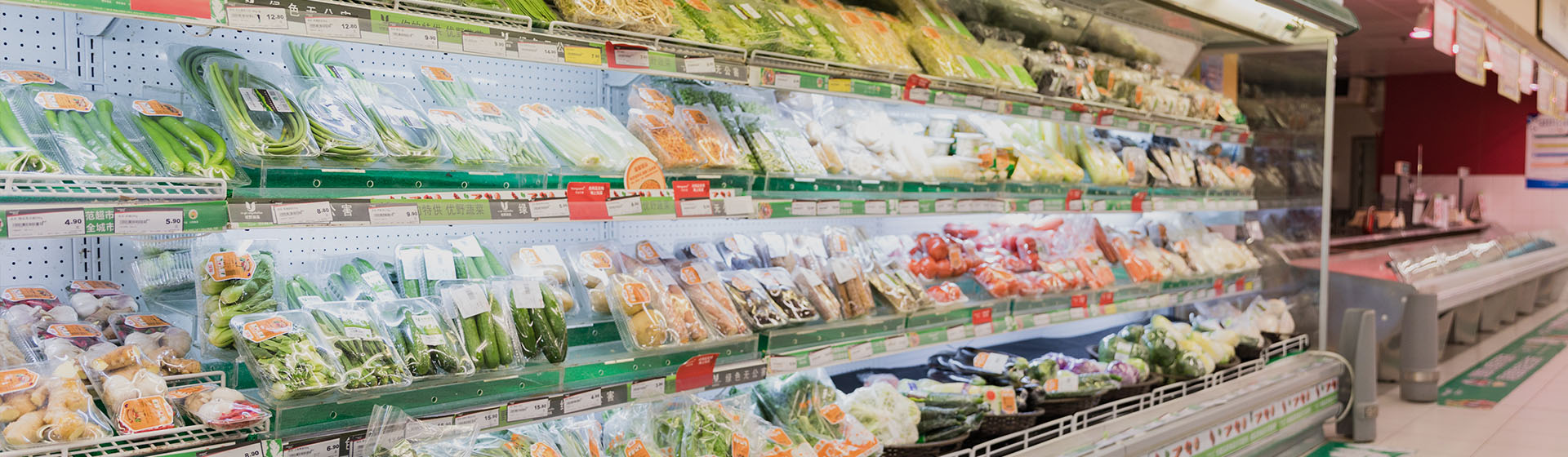
In modern supermarket and fresh food retail environments, vegetables are among the most sensitive and fast-changing product categories. Unlike packaged goods, fresh vegetables continuously lose moisture, texture, and nutritional value after harvest, which makes temperature control, humidity balance, and airflow management critical factors in maintaining commercial quality.
As consumer expectations for freshness continue to rise, retailers are increasingly adopting specialized fresh vegetable refrigeration display systems designed not only for cooling but also for preserving visual appeal, reducing waste, and improving sales performance. These systems have become an essential part of produce sections in supermarkets, grocery stores, and fresh food markets where product turnover is high and quality perception directly influences purchasing decisions.
What Makes Vegetable Storage So Challenging in Retail Environments?
Fresh vegetables are biologically active products that continue to respire after harvesting, which means they gradually lose water and nutrients even under refrigeration. This natural process becomes more complex in retail environments where temperature fluctuations, frequent customer interaction, and inconsistent airflow can accelerate deterioration.
The main challenge is not only keeping vegetables cold but maintaining a stable micro-environment that slows down degradation without affecting appearance.
● Continuous respiration leads to gradual moisture loss and wilting
● Temperature instability accelerates enzymatic breakdown of freshness
● Poor airflow causes uneven dehydration across different vegetable layers
● Low humidity environments result in leaf curling and texture damage
● Excess handling in open displays increases contamination risk
Because of these factors, standard refrigeration equipment is often insufficient for maintaining optimal vegetable quality over extended display periods.
Why Do Vegetables Lose Freshness Even When Stored in Refrigeration Units?
Many retailers assume that simply placing vegetables in a refrigerated environment is enough to preserve freshness. However, in real retail conditions, cooling alone does not guarantee quality retention.
Fresh vegetables require a carefully balanced combination of temperature, humidity, and airflow stability to maintain their natural condition.
● Excessive cold airflow removes surface moisture too quickly, causing dehydration
● Inconsistent temperature zones create uneven freshness levels within the same batch
● Poor humidity control leads to leaf shrinkage and loss of crisp texture
● Strong direct airflow damages delicate leafy vegetables
● Frequent customer access disrupts internal environmental stability
As a result, vegetables may appear refrigerated but still lose visual and edible quality before they are sold.
How Does a Fresh Vegetable Display Refrigeration System Solve These Problems?
A dedicated fresh vegetable refrigeration display system is designed specifically to maintain a controlled preservation environment that supports both product longevity and visual merchandising.
Instead of focusing only on low temperature, it integrates humidity control, gentle airflow distribution, and structured display design.
● Stable temperature regulation prevents rapid moisture loss and wilting
● High-humidity preservation zones help maintain natural vegetable hydration
● Gentle airflow systems reduce direct impact on delicate leafy products
● Multi-layer shelving design ensures even cooling across all product levels
● Transparent display structure enhances visibility while maintaining protection
This balanced environment helps vegetables remain fresh, crisp, and visually appealing for longer periods.
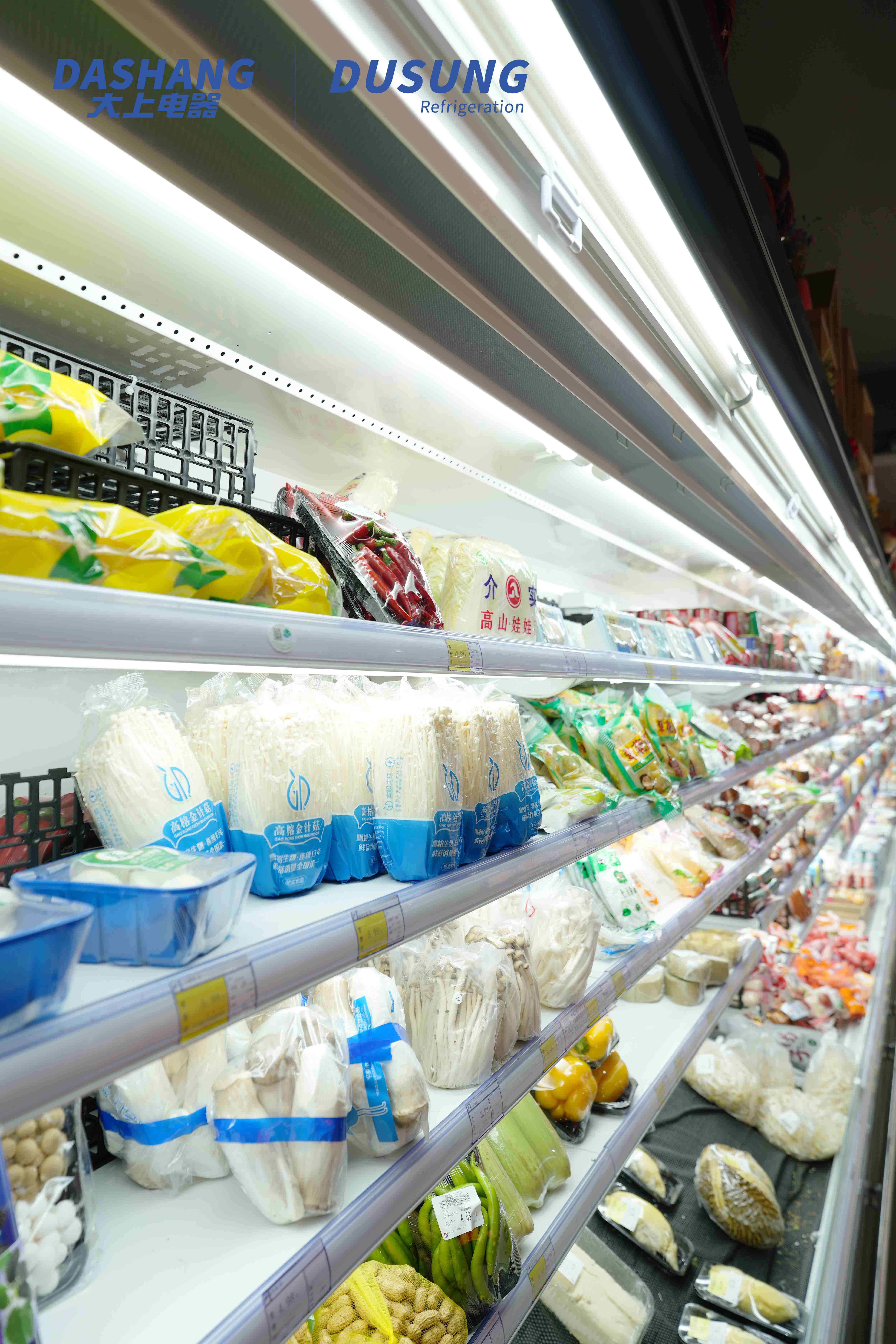
Why Is Humidity Control More Important Than Temperature Alone for Vegetables?
Unlike meat or dairy products, vegetables are highly sensitive to humidity changes. Even if temperature remains stable, low humidity can cause significant quality degradation.
Proper humidity control ensures that vegetables retain their natural moisture content and structural integrity.
● Controlled humidity prevents leaf dehydration and curling
● Balanced moisture levels maintain crisp texture and natural color
● Reduced water loss extends shelf life and display duration
● Stable humidity prevents weight loss caused by evaporation
● Improved freshness perception increases customer trust
This makes humidity regulation one of the most important design features in vegetable refrigeration systems.
How Does Proper Airflow Design Improve Vegetable Preservation?
Airflow design plays a critical role in maintaining consistent freshness across all display layers. Poor airflow can create “hot spots” or overly dry zones that damage product quality unevenly.
Modern vegetable refrigeration systems use controlled, indirect airflow to protect delicate produce.
● Diffused airflow prevents direct cold wind damage to leafy vegetables
● Even circulation ensures uniform cooling across all shelves
● Air distribution systems reduce condensation buildup on packaging
● Controlled movement of air minimizes dehydration risk
● Stable airflow improves overall display consistency and quality
This engineering approach ensures that all vegetables, regardless of placement, maintain similar freshness levels.
How Does It Improve Sales Performance in Produce Sections?
Fresh vegetables are highly visual products, and customer purchasing decisions are strongly influenced by appearance. A well-designed display system directly improves perceived freshness and encourages higher sales conversion.
Retail psychology shows that visually fresh and organized produce sells significantly faster.
● Bright and natural lighting enhances color vibrancy and freshness perception
● Organized category separation improves shopping efficiency
● Clear visibility increases customer confidence in product quality
● Structured displays reduce decision time and encourage larger purchases
● Fresh appearance directly influences impulse buying behavior
By improving both presentation and preservation, the system increases revenue potential in produce sections.
Why Is Waste Reduction a Major Benefit of Vegetable Refrigeration Systems?
Food waste is one of the biggest operational challenges in fresh produce retailing. Vegetables that lose freshness quickly must be discounted or discarded, directly affecting profit margins.
A stable refrigeration environment significantly reduces spoilage rates.
● Extended freshness cycles reduce early product deterioration
● Stable humidity minimizes shrinkage and weight loss
● Improved visibility helps staff manage rotation more effectively
● Reduced spoilage lowers inventory replacement frequency
● Better preservation reduces financial loss from unsold produce
This makes vegetable refrigeration systems not only a display tool but also a cost-control solution.
Where Are Fresh Vegetable Refrigeration Systems Commonly Used?
Due to their specialized preservation capabilities, these systems are widely used in multiple retail and food service environments.
● Supermarkets produce sections for leafy greens and seasonal vegetables
● Fresh food markets focusing on high turnover vegetable sales
● Organic grocery stores requiring premium freshness display
● Restaurant supply areas for pre-prepared vegetable storage
● Farm-to-retail distribution points for short-chain fresh produce
Their adaptability makes them essential wherever fresh vegetables are sold in volume.
Conclusion
A fresh vegetable refrigeration display system is an essential solution for modern retail environments where product freshness, visual appeal, and waste reduction are equally important. Vegetables require more than simple cooling; they require controlled humidity, stable airflow, and structured presentation to maintain their natural quality.
By combining preservation technology with visual merchandising design, these systems help retailers extend shelf life, reduce operational losses, and improve customer trust. In today’s competitive fresh food market, maintaining vegetable quality is not just a storage requirement but a direct driver of sales performance and business sustainability.
Post time: Jun-10-2026


