
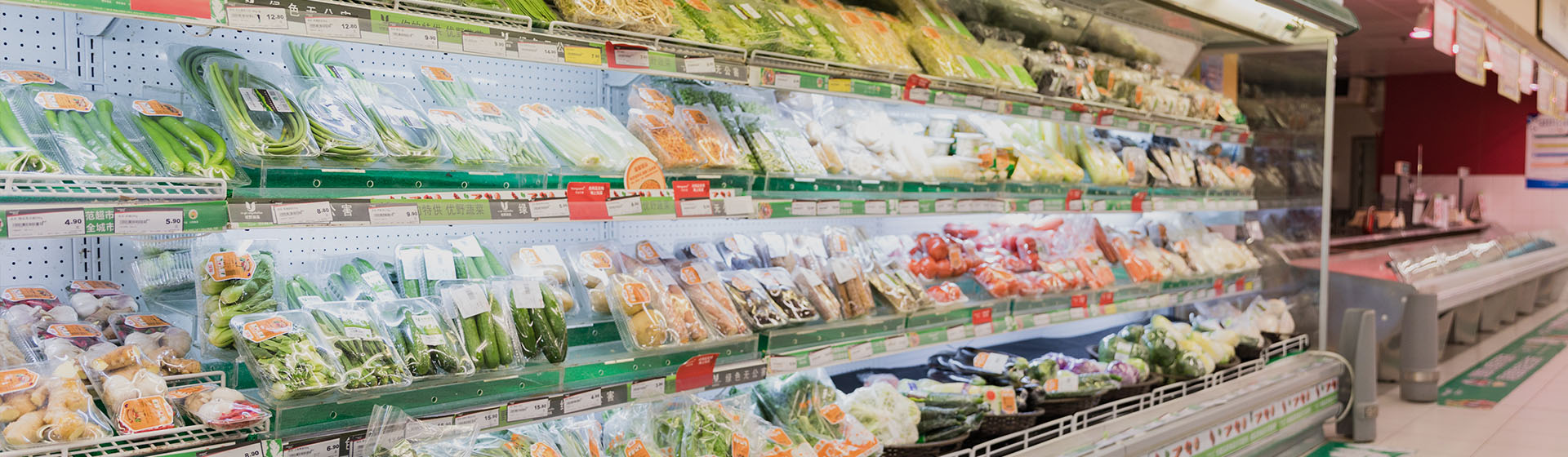
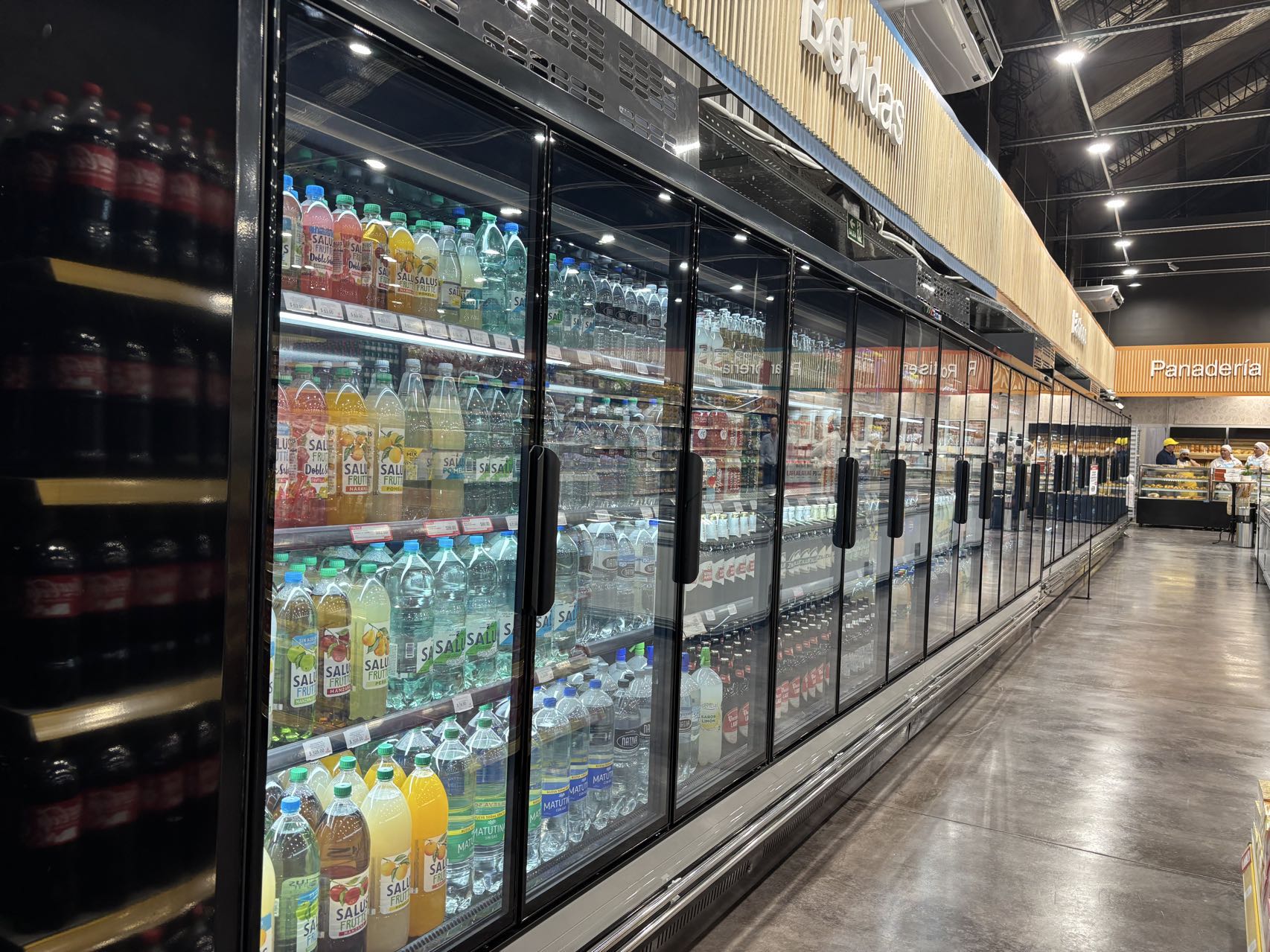
A Triple Up and Down Glass Door Freezer is a large vertical frozen display cabinet arranged as three side-by-side sections, with each section divided into an upper and lower glass door. The six-door front gives the cabinet a clear visual grid, allowing different frozen categories to be displayed along one wall without turning the interior into a single oversized compartment.
The product is designed for supermarkets, frozen-food stores, convenience stores, food halls, and commercial display areas that need substantial frozen capacity together with clear product visibility. Compared with a cabinet using three full-height doors, the upper-and-lower door arrangement creates smaller access zones. This can help keep product categories more clearly separated and limit the opening area during product selection or restocking.
The Six-Door Front Is the Main Product Feature
The most recognizable feature of the cabinet is its three-column, two-level glass-door structure. Each column forms a vertical display section, while the upper and lower doors divide that section into two access areas.
This layout can be used in several ways. Upper zones may present light packages, smaller boxes, frozen desserts, vegetables, or frequently viewed products. Lower zones can hold heavier cartons, family packs, bulk packages, meat, seafood, or slower-moving categories. The exact arrangement depends on shelf height, package dimensions, and product turnover.
The six-door structure provides several practical benefits:
- each category can occupy a clearly defined section;
- only the required part of the cabinet needs to be opened;
- upper and lower shelves can follow different loading patterns;
- products remain visible before the door is opened;
- one section can be restocked while the others remain closed;
- the cabinet creates a strong, continuous frozen display wall.
Glass Design Determines How the Products Are Seen
A commercial glass door freezer should allow labels, package colors, product shapes, and stock levels to remain visible from the aisle. The glass door therefore becomes an important part of the product rather than only a barrier between the cold interior and the room.
Depending on the cabinet design and local climate, the doors may use insulated glass, heated glass, low-emissivity glass, or anti-condensation control. These options help reduce fogging and edge condensation when indoor humidity is high.
Door frames and lighting should be planned together so the six zones remain clear without strong glare on glossy packaging.
Other important glass-door details include:
- self-closing or controlled-closing hinges;
- strong handles positioned for repeated use;
- flexible magnetic gaskets;
- door frames that remain aligned across all six zones;
- glass heating or anti-fog control suited to the environment;
- easy access for cleaning the inner and outer surfaces.
Internal Shelving Turns the Cabinet into a Frozen Product Wall
Behind the six doors, the shelf layout determines how much of the vertical space can be used effectively. Adjustable shelves allow the cabinet to handle pizza boxes, frozen vegetables, ice cream tubs, dessert cups, meat packs, seafood cartons, and other package formats.
Each door can open onto a defined group of shelves, creating clearer category boundaries than a wide undivided cabinet.
A practical shelf system may include:
- adjustable shelf heights;
- reinforced lower shelves for heavier packages;
- price-label strips;
- front retainers to prevent products sliding toward the door;
- shelf depths matched to common package sizes;
- lighting that reaches both the front and rear of each section.
Usable capacity should be assessed by shelf area and package fit, not only by gross cabinet volume.
Airflow and Refrigeration Must Cover All Six Zones
Although the doors divide the front into six areas, the refrigeration system must maintain stable temperatures throughout the entire cabinet. Upper shelves, lower shelves, corners, and areas near the doors can experience different heat loads.
Fan-assisted circulation is commonly used to distribute cold air through a tall cabinet. The air outlets and return channels should remain clear after shelves are loaded. If one section is packed too tightly, it may disturb the shared airflow and affect nearby zones.
A suitable refrigeration design should provide:
- consistent cold-air delivery from top to bottom;
- temperature recovery after individual door openings;
- evaporator capacity matched to cabinet size;
- controlled defrost to prevent airflow restriction;
- insulation suited to the ambient temperature;
- door-frame heating or anti-condensation control where required;
- a control system that supports stable frozen storage.
The cabinet may use plug-in or remote refrigeration. The correct choice depends on cabinet size, heat management, noise requirements, maintenance planning, and site infrastructure.
Different Door Zones Can Support Different Product Categories
A multi-door glass freezer becomes more useful when its six access zones follow a clear category plan. The cabinet can be organized by food type, package size, storage priority, or visual theme.
One possible arrangement is:
1. Upper left: frozen vegetables and fruit.
2. Lower left: large vegetable bags and family packs.
3. Upper center: prepared meals and pizza boxes.
4. Lower center: multipacks and heavier cartons.
5. Upper right: ice cream, desserts, and smaller packages.
6. Lower right: frozen meat, seafood, or bulk products.
The final plan should connect package size, product weight, viewing height, and access frequency.
Cabinet Dimensions and Exterior Design Matter
The product should fit the wall, aisle, ceiling height, and surrounding display equipment. A cabinet that is too deep may narrow the aisle, while doors that open into a busy traffic route can interrupt movement.
Configuration may include:
- cabinet width and height;
- three-section module dimensions;
- door size and opening direction;
- shelf quantity and load capacity;
- interior lighting layout;
- exterior color and finish;
- end-panel design;
- top signage or branding area;
- wheel, foot, or base arrangement;
- plug-in or remote refrigeration;
- voltage and electrical specification.
Product Quality Is Reflected in Everyday Details
With six doors, the quality of hinges, seals, frames, handles, and shelf supports directly affects daily performance. Door edges, air grilles, drainage areas, and lighting covers should also remain accessible for inspection and cleaning.
Dashang Configuration for Frozen Display Projects
Dashang can configure the Triple Up and Down Glass Door Freezer around the required cabinet dimensions, frozen product categories, shelf layout, glass-door design, refrigeration arrangement, voltage, ambient conditions, and exterior finish. The six-door structure can be planned to suit different package heights and loading patterns, while the interior shelf spacing can be adjusted around the main product range.
Providing wall dimensions, aisle width, product package sizes, target temperature, local humidity, preferred refrigeration type, and installation conditions helps determine a more suitable cabinet configuration. The goal is to create a structured frozen display that combines capacity, visibility, practical access, and stable temperature control.
FAQ
1. What does “triple up and down” mean?
It means the freezer has three side-by-side vertical sections, and each section has one upper glass door and one lower glass door, creating six access zones in total.
2. Can the shelf height be adjusted for different frozen products?
Yes. Adjustable shelving can be configured to suit boxes, bags, tubs, cartons, multipacks, and other package formats, subject to the cabinet design and shelf load.
3. Can this freezer use a remote refrigeration system?
Yes. Both plug-in and remote configurations may be considered. The appropriate option depends on the cabinet size, installation environment, heat management, noise requirements, and available refrigeration infrastructure.
4. Which information is useful before configuring the cabinet?
Useful details include wall and aisle dimensions, package sizes, frozen product categories, target temperature, shelf load, ambient temperature and humidity, voltage, exterior finish, and preferred refrigeration arrangement.
Post time: Aug-05-2026


