
A Glass Door Freezer becomes especially useful when a frozen-food section has to display many products without turning the cabinet into a hard-to-read storage space. Frozen meals, seafood boxes, meat packs, vegetables, desserts and ice cream may share a low-temperature environment, but they do not use shelf space in the same way. The practical question is therefore not simply how many liters the cabinet holds, but how much of that volume can become visible, reachable and clearly separated product positions.
That is where the glass-door format changes the role of the freezer. An upright cabinet lets the product map be read from the aisle before a door is opened. Shelves create vertical layers, glass creates a viewing surface, and separate doors divide a long cabinet into smaller access zones. As variety grows, these elements can make the difference between “more capacity” and “more usable display capacity.”
The Real Constraint Is Product Decisions per Meter
Nominal volume says little about how clearly products can be presented. A deep shelf may hide small boxes behind larger packs. Closely spaced shelves increase shelf count but may leave no room for tall bags. One very wide door can look clean but expose a large section whenever a single product is accessed.
For a high-variety assortment, four questions are more useful than total liters:
- · How many package formats must remain visible at the same time?
- · Which products need eye-level positions?
- · Which categories need several front-facing rows?
- · How much of the cabinet needs to open for one selection?
A Glass Door Freezer works best when door modules, shelf pitch and usable depth answer these questions together.
Package Shape Should Decide Shelf Geometry
Frozen foods arrive in very different shapes. Pizza cartons are wide and flat. Vegetable bags can slump. Ice cream tubs need more vertical clearance. Meat and seafood packs may be dense and heavy. Ready-meal boxes front-face well but can waste depth if shelves are too deep.
A practical shelf map can therefore place flat boxes in moderate-depth rows, soft bags behind dividers, tubs on closer-spaced shelves, heavy packs on reinforced lower levels, and family cartons where wider spacing does not block smaller products. Adjustable shelves matter because seasonal products and package sizes change.
Glass Changes the Selection Sequence
The most important display benefit is simple: the product can be identified before the cold space is opened. Labels, package colors, categories and stock levels can be checked through the glass, shortening unnecessary search time.
This only works when the view remains useful. Door frames should not hide too much of the shelf. Lighting should illuminate labels without strong reflections. Glass should remain clear under the expected humidity conditions, and shelves should align logically with each door rather than leaving important products hidden behind frames.
Door Modules Create Access Zones
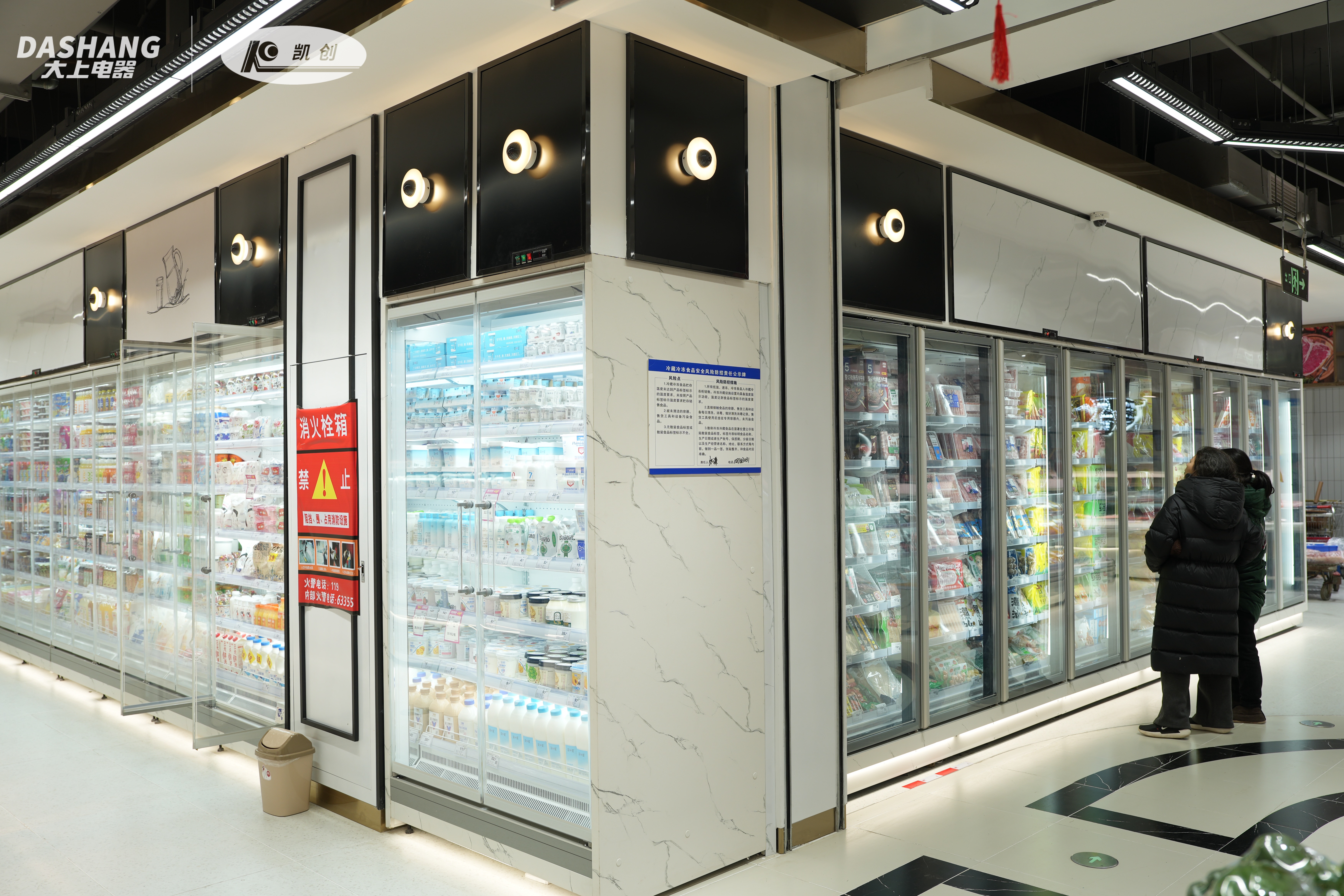
As cabinet width increases, door design becomes more important. Several narrower doors create controlled access but add more frames, gaskets and hinges. The right balance depends on the frozen-food map.
A three-door cabinet, for example, can assign separate zones to vegetables and prepared meals, meat and seafood, and ice cream or desserts. Another application may divide doors by package size or access frequency. The useful principle is that each door should correspond to a logical product zone.
When the relationship is clear, users can open the correct section immediately, and restocking can be completed one zone at a time while adjacent doors remain closed. Multi-door structure therefore adds organization as well as thermal separation.
Vertical Freezing Has a Different Temperature Challenge
An upright cabinet converts wall height into frozen display space, but that height must remain thermally useful from top to bottom. One controller reading cannot describe every shelf. Package density, fan distribution, air outlets, return paths, shelf position and door-opening patterns all influence the temperature map.
Products packed against rear air channels can disturb circulation. Oversized cartons can create local obstruction. A shelf moved only to fit a package may reduce airflow around that level.
This is why shelving and airflow should be designed together. The loading boundary and air paths need to stay open. “Maximum physical fill” is not the same as usable frozen capacity; the better figure is how much product can be displayed while the intended airflow still works.
Frost and Condensation Are Visibility Problems Too
Warm humid air enters whenever a freezer door opens. Moisture can become frost on cold surfaces, while temperature differences create condensation risk. In a display freezer, these are not only maintenance issues. They can remove the main benefit of the glass front.
Fogged glass hides products. Frost around door edges can prevent full closing. Ice near gaskets can create small gaps that admit even more humid air.
Performance therefore depends on the complete door system: insulated glass, frame design, gasket contact, closing action, anti-condensation measures where required, defrost control and room conditions. Stronger glass heating is not automatically the answer; high humidity, cross-drafts or poor door alignment may be the real cause.
Plug-In or Remote Refrigeration Changes the Layout
A Glass Door Freezer may use self-contained or remote refrigeration, depending on the model and project. A plug-in format integrates the main refrigeration components with the cabinet, supporting independent placement but requiring condenser ventilation, heat rejection and service clearance around the unit.
A remote format can suit longer fixed lines where major condensing equipment is handled away from the display area. It changes piping, commissioning and service planning, and can coordinate several cabinets as one continuous frozen wall.
A Better Product Brief Starts with the Frozen Assortment
Instead of asking only for “a three-door freezer,” a stronger brief records package sizes, heavy shelf loads, number of categories, high-turnover items, wall length, aisle clearance, ambient conditions, refrigeration preference and service access.
Dashang’s upright glass-door freezer range includes single-, double- and triple-door configurations, freezer versions with triple-layer glass, and plug-in or remote refrigeration options depending on the model. These options are most useful when selected around the real frozen-food map rather than treated as isolated specifications.
A Glass Door Freezer becomes more valuable as variety grows because it turns vertical refrigerated space into a readable product wall. Glass provides visibility, doors create access zones, shelves create category layers, and the refrigeration system protects the whole structure.
FAQ
1. Is a Glass Door Freezer better than a chest freezer for every frozen product?
No. Upright glass-door freezers are strong when many SKUs need front-facing organization. Chest or island freezers can be more practical for large bags, bulk packs or deep-volume storage.
2. Why should shelf layout match the door modules?
If shelves and doors do not align logically, products can sit behind frames or require the wrong door to be opened. Matching them makes categories easier to read and access.
3. What causes fog or frost around freezer glass doors?
High humidity, frequent opening, damaged or misaligned gaskets, warm-air infiltration, unsuitable anti-condensation performance and operation outside rated conditions are common causes.
4. Can a Glass Door Freezer use plug-in or remote refrigeration?
Yes, depending on the model. The suitable format depends on cabinet quantity, line length, ventilation, heat management, existing infrastructure and service planning.
Post time: Aug-13-2026


