
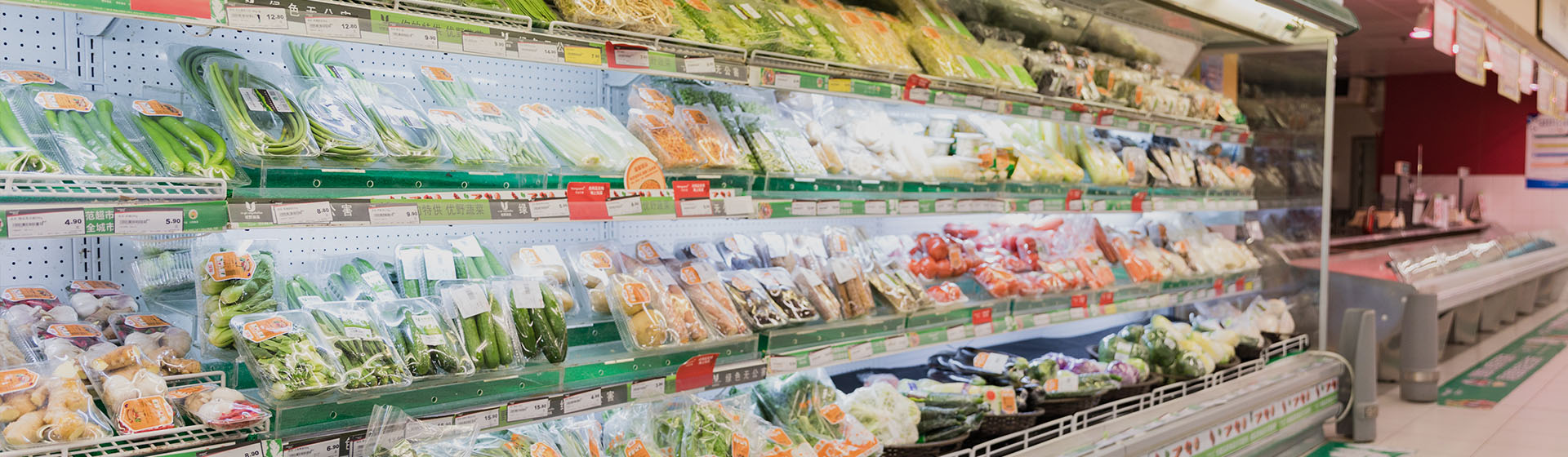
A Double-deck Fresh Food Cabinet is designed to create two visible chilled presentation levels within one service-counter footprint. Instead of placing every fresh-food tray on a single deep horizontal surface, the cabinet separates the display into a main lower deck and an upper level. This changes the way products are seen, grouped, reached, and refrigerated.
The two-level structure is especially useful for fresh meat, prepared foods, deli items, packaged chilled foods, and other products that benefit from clear category separation. The product is not simply a standard fresh-food cabinet with an extra shelf added. The upper deck changes sightlines, loading height, airflow, lighting, and service access, so the complete cabinet must be designed around both levels.
Two Levels Create Two Different Display Roles
The lower deck of a Double-deck Fresh Food Cabinet usually provides the largest presentation area. It can carry larger trays, heavier packs, or products that need more front-to-back depth. Because it sits lower, customers can see the entire deck from above and from the front.
The upper level has a different visual function. It brings selected products closer to eye level and can create a second horizontal line of presentation without making the cabinet wider.
This separation can be used in several ways:
- Large fresh-food trays on the lower deck and smaller packs above.
- Everyday products below and higher-value selections on the upper level.
- Raw or minimally processed products separated visually from prepared items.
- Large family packs below and smaller single-serve packs above.
- Fast-moving items positioned where staff can replenish them most easily.
The cabinet becomes more readable when each level has a defined role.
The Upper Level Must Not Hide the Lower Display
Adding a second deck only helps if it improves visibility. If the upper structure is too deep, too low, or overloaded, it can hide the products below and make the cabinet feel crowded.
The Double-deck Fresh Food Cabinet therefore depends on proportion. Upper shelf depth, support structure, lighting position, glass height, and the angle from which customers approach all influence what remains visible.
A good arrangement leaves a clear sightline to the lower deck while allowing the upper level to carry a meaningful amount of product. The upper shelf should look like part of the original cabinet design, not like a storage rack placed above the food.
Product height matters as well. Tall packs on the upper deck may block lighting or glass visibility, while large items on the lower deck can hide behind the front edge. The actual packaging should therefore guide shelf use.
Airflow Has to Reach Both Display Levels
Cooling a single horizontal deck is already a controlled airflow task. With a Double-deck Fresh Food Cabinet, the air pattern must support two levels without creating a warm shadow behind the upper shelf or an excessively cold draft on one product group.
The exact airflow system varies by cabinet design, but the operating principle is consistent: supply and return paths must remain open, products must stay within their intended loading boundaries, and shelf structures should not interrupt circulation.
This is why overfilling the upper level can affect more than the products on that shelf. A large pack or liner may redirect air away from the lower deck. Similarly, tall trays below can disturb the air path that was intended to pass under or around the upper structure.
Useful loading discipline includes:
- Keeping products clear of supply and return-air openings.
- Avoiding decorative material that covers vents.
- Leaving adequate space above packages for circulation.
- Checking temperatures on both decks rather than relying on one cabinet sensor.
- Reorganizing product height if one zone repeatedly recovers more slowly.
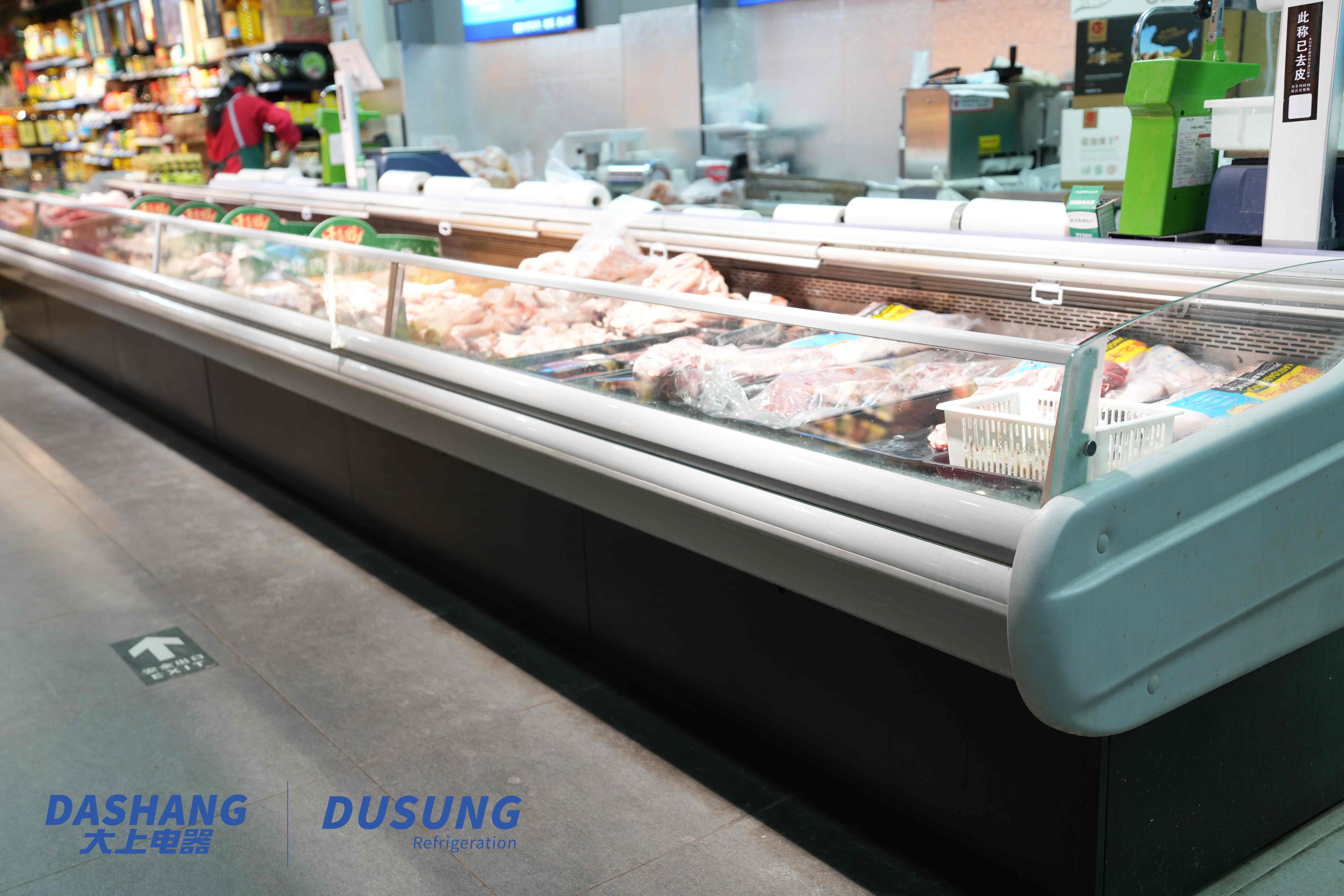
Stainless Surfaces Support Fresh-food Handling
Fresh-food cabinets often use stainless steel in shelves, back plates, or display areas because the material suits repeated contact and cleaning. In a two-level cabinet, clean structural surfaces are even more visible because customers can see both the lower deck and the raised upper section.
Durable, smooth surfaces help the cabinet remain visually consistent after repeated tray movement. They also make it easier to remove food residue and moisture from the areas around the display.
The product should be cleaned with both levels fully accessible. Upper shelf supports, lower deck corners, glass edges, air grilles, and the rear surface should all be included. If cleaning requires the upper section to be removed or lifted, it must be returned to the correct position so the original airflow and sightline are restored.
Lighting Should Separate the Levels Without Creating Shadows
One light source at the top of the cabinet may not be enough for a double-deck arrangement. The upper level can cast a shadow across the lower display, especially when products are tall or tightly packed.
Lighting should therefore be planned around the two-level geometry. The goal is not dramatic brightness but consistent visibility. Customers should be able to read packaging and see product color on both decks.
The upper shelf edge can also be used for labels or category identification if it does not block the view. This turns the extra level into a clear visual divider rather than a source of clutter.
The Cabinet Can Increase Display Area without Increasing Floor Width
The strongest structural advantage of the Double-deck Fresh Food Cabinet is vertical use of space. A single-deck counter may need to become wider or deeper to add more visible products. A two-level design can increase presentation area while keeping approximately the same aisle frontage.
This matters where a fresh-food department needs more assortment but cannot extend the counter line indefinitely. The second deck adds usable display height while retaining the service-counter format.
However, more display area should not be confused with unlimited capacity. The cabinet still has a defined refrigeration load, loading boundary, shelf strength, and product visibility limit. The most successful use is controlled expansion: more presentation area, but still enough space for airflow, lighting, labels, and staff access.
Two Levels Should Make the Product Range Easier to Understand
A Double-deck Fresh Food Cabinet works best when the second level simplifies the product presentation. If both levels carry the same mixed assortment without a clear reason, the cabinet gains physical shelf area but not much communication value.
The product should use its structure to separate categories that customers can recognize quickly. The lower and upper decks then become part of the visual logic of the counter.
That is the main difference between a purpose-built two-level fresh-food cabinet and a single deck with extra items stacked above it. The cabinet is designed so two display planes, refrigeration, glass, lighting, and service access operate as one product.
FAQ
1. What is the purpose of the second level in a Double-deck Fresh Food Cabinet?
It increases visible presentation area and can separate product groups without requiring a wider cabinet footprint.
2. Can the upper shelf affect the temperature below?
Yes. If the upper level is overloaded or airflow is blocked, circulation to the lower deck can be affected. Both levels should be loaded within the cabinet’s intended boundaries.
3. What products are suitable for a double-deck cabinet?
Suitable chilled fresh foods may include meat, deli products, prepared foods, and packaged chilled items, depending on the cabinet’s approved operating range.
4. Why is lighting more important in a two-level cabinet?
The upper deck can create shadows on the lower display. Lighting needs to support both levels so products remain visible and labels remain readable.
Post time: Sep-02-2026


