
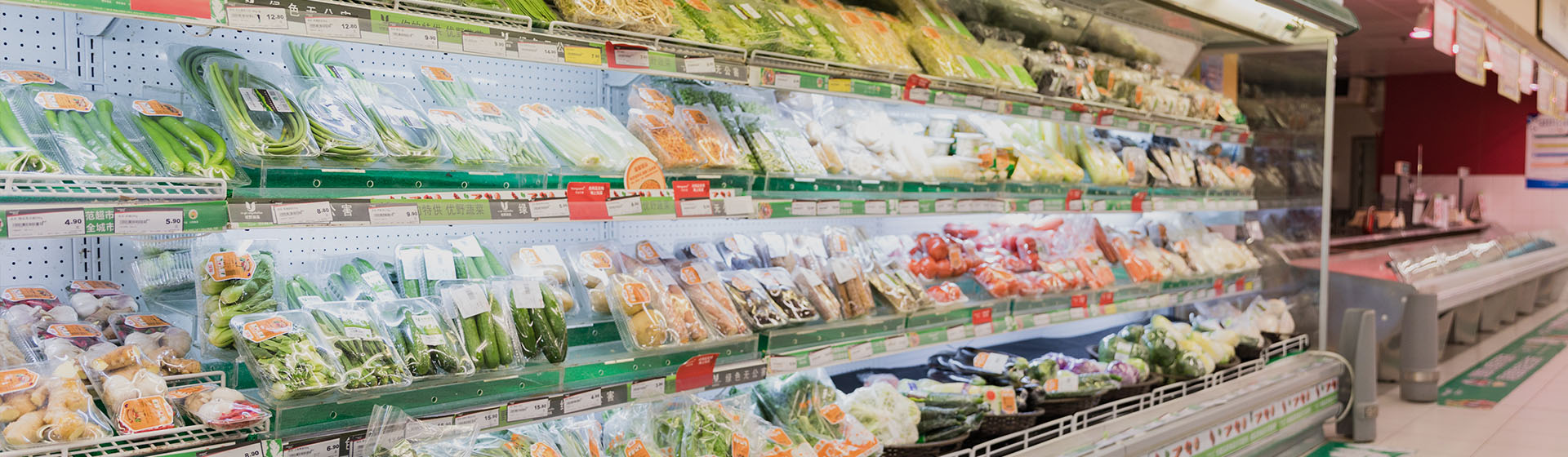
A Bottle Display Cooler is designed around two tasks that must happen at the same time: bottled drinks need to stay properly refrigerated, and the products need to remain clearly visible and easy to reach. That combination makes the product different from a closed storage refrigerator. A Bottle Display Cooler is part cold-storage equipment and part display equipment, so glass, shelves, bottle weight, airflow, and replenishment all affect how well it works.
In a supermarket, convenience store, cafe, restaurant, or other beverage area, the cooler is rarely filled once and left untouched. Bottles are removed continuously, new stock is added, different package sizes are mixed, and the front display changes throughout the day. The cabinet has to keep working through that movement while preserving a clean, organized presentation.
Three Jobs Happen Behind One Glass Door
The easiest way to understand a Bottle Display Cooler is to look at the three jobs happening inside the same cabinet.
Cold holding keeps beverages at a suitable refrigerated condition.
Product presentation allows labels, bottle shapes, colors, and brand blocks to remain visible from outside the cabinet.
Fast access lets users open the door, remove a bottle, and close it without searching through deep storage.
A product that performs only one of these jobs well is incomplete. Strong refrigeration with poor visibility turns the cabinet into storage. Good visibility with weak temperature control defeats the purpose of refrigeration. Large capacity with difficult access creates a cabinet that looks efficient on paper but works poorly in practice.
The Bottle Display Cooler therefore has to balance refrigeration, merchandising, and access as one product system.
The Glass Door Is a Working Part of the Cooler
In a Bottle Display Cooler, the glass door is not only a barrier between cold air and room air. It is also the main viewing surface. If the door becomes heavily fogged, reflects too much surrounding light, or is divided by bulky frames, product visibility is reduced even though the beverages remain cold.
The door must also tolerate frequent opening. Every opening exchanges some cold cabinet air with warmer surrounding air. The refrigerator then has to remove the added heat and return the interior toward its normal condition. Because beverage coolers may be opened repeatedly during busy periods, door sealing and recovery performance matter over many small cycles.
Door width affects the display as well. A wide door creates a large viewing area but exposes a larger opening when used. Multiple narrower doors divide the cabinet into zones and can limit the amount of cold air disturbed during one access event.
Bottle Weight Changes the Meaning of Shelf Capacity
A shelf filled with bottles carries a different load from a shelf filled with lightweight packaged food. Water, soft drinks, juice, beer, and other bottled beverages can create substantial weight, especially when several rows are loaded front to back.
Shelf design is therefore not only about how many positions are available. The shelf has to remain stable under real beverage loads and keep its usable shape. Excessive deflection can make bottles lean, reduce spacing between levels, or make front-facing alignment difficult.
Bottle height matters too. Tall bottles may require fewer shelf levels, while smaller bottles or cans can use tighter spacing. Adjustable shelving allows the same Bottle Display Cooler to respond to different beverage formats over time.
A practical shelf arrangement should support:
- stable loading across the shelf width;
- enough vertical clearance for the intended bottle height;
- clear front-facing labels;
- room for cold air to move around the load;
- easy removal without knocking adjacent bottles forward.
This is why usable bottle capacity is more meaningful than empty cabinet volume.
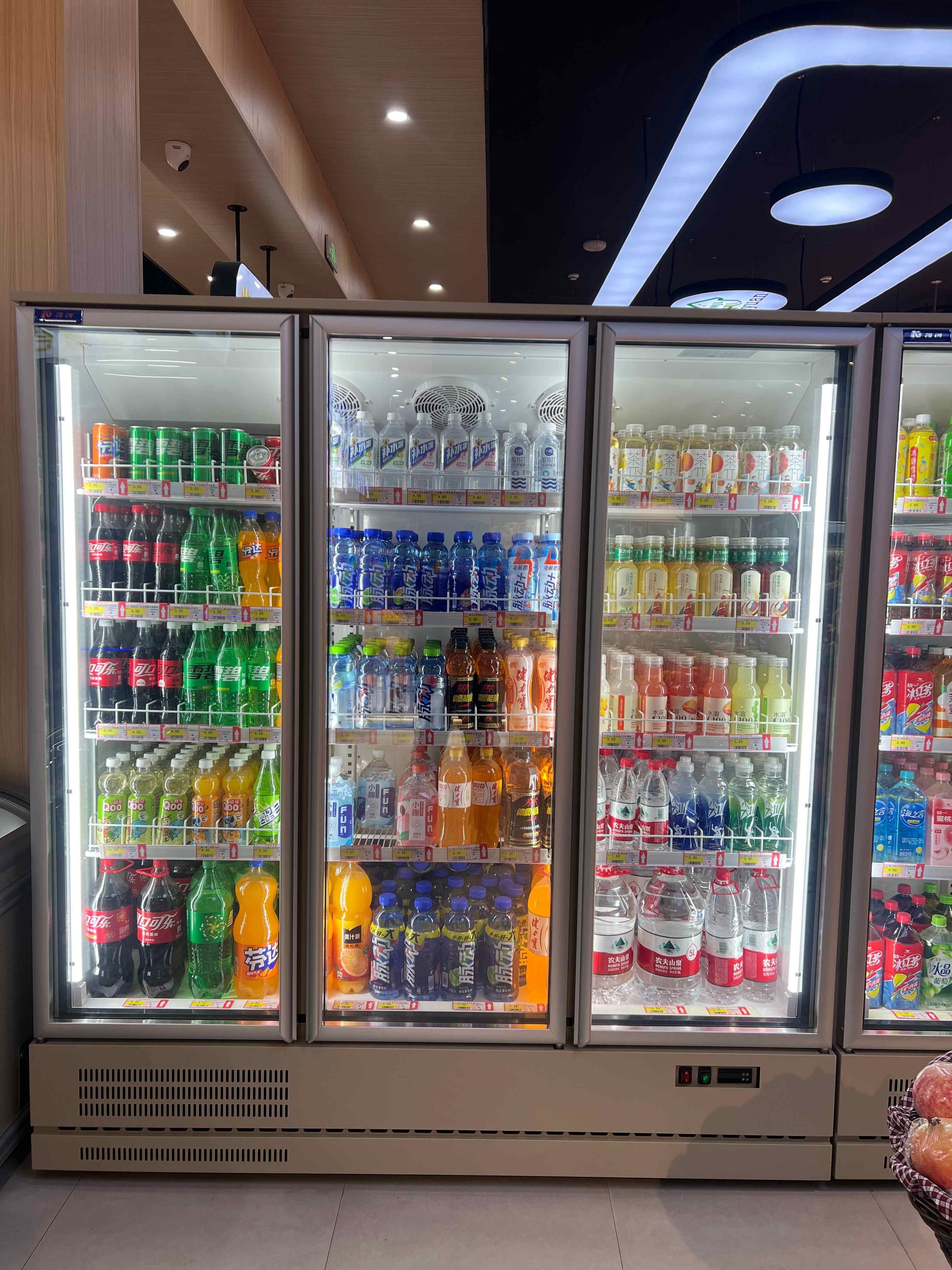
The Display Changes as Bottles Are Removed
A fully stocked Bottle Display Cooler often looks neat because every shelf is aligned and labels face forward. The real challenge appears after customers begin removing products.
Gaps develop, bottles shift, and some labels rotate away from the glass. The front row becomes uneven while reserve bottles remain at the rear. The cabinet can quickly look disorganized even though it still contains plenty of stock.
Shelf depth therefore affects more than capacity. Deep shelves hold more reserve bottles but can make the front display harder to maintain. Shallow shelves reduce reserve capacity but make the presentation easier to control. The product has to balance the visible front row with the reserve stock behind it.
Cooling Has to Work Around Dense Beverage Loads
Bottle shapes create small air gaps, but dense beverage loading can still restrict circulation. When shelves are filled completely, cold air must move around rows of containers with different heights and diameters. If bottles are pushed tightly against the rear wall or air outlets, temperature distribution can become less even.
The challenge becomes more noticeable after replenishment. Newly loaded drinks may enter the cabinet warmer than the existing stock. The refrigeration system then has to cool the new load while maintaining already chilled beverages.
Perfectly packed rows with no space around air passages can therefore work against the cooling system. A Bottle Display Cooler needs a loading pattern that preserves the visual block while respecting its internal airflow path.
One Cabinet May Hold Several Beverage Formats
A Bottle Display Cooler may be used for tall glass bottles, PET bottles, cans, or larger containers. These formats do not use shelf space in the same way.
Tall bottles need vertical clearance and stable support. Smaller bottles can allow more shelf levels. Cans need close spacing and reliable retention. Large bottles create heavier loads and fewer front-facing positions per shelf.
This is why a flexible interior is useful. Adjustable shelf height and practical front retainers help the same Bottle Display Cooler adapt when beverage assortments change without turning the cabinet into a fixed layout for one package size.
Long-Term Display Quality Depends on Small Details
A Bottle Display Cooler operates in a repetitive environment. Doors open, shelves carry heavy loads, bottles touch retainers, and the front glass is cleaned frequently. Long-term usefulness therefore depends on details that may not stand out in a product photograph.
Door hinges need to remain aligned so the seal closes correctly. Gaskets need to stay clean and flexible. Shelves need to retain their shape under beverage weight. Interior surfaces should allow regular cleaning. Condenser airflow needs enough space to release heat if the unit is self-contained.
These details are connected to display quality. A door that no longer closes correctly affects refrigeration. A bent shelf affects bottle alignment. Dirty glass affects visibility. Restricted heat rejection affects cooling recovery. The Bottle Display Cooler works as one connected product system.
Conclusion
A Bottle Display Cooler has a more demanding job than simply keeping drinks cold. It has to protect beverage temperature while turning bottles into a clear, organized, continuously changing display.
Glass-door visibility, shelf strength, bottle spacing, airflow, access, and replenishment all influence the final result. When these elements are balanced, the cooler supports refrigeration and presentation without forcing one function to compromise the other.
That is what makes a Bottle Display Cooler a distinct commercial refrigeration product: the bottle is not only stored inside the cabinet; it is part of what the cabinet is designed to show.
FAQ
1. What is a Bottle Display Cooler designed for?
A Bottle Display Cooler is designed to refrigerate bottled beverages while keeping them visible and easy to access through a glass-front display.
2. Why is shelf strength important in a Bottle Display Cooler?
Bottled beverages create significant weight when shelves are fully loaded. Strong, stable shelves help keep bottles upright, preserve spacing, and maintain a neat front-facing display.
3. Can different bottle sizes be stored in the same Bottle Display Cooler?
Yes, provided the interior layout allows suitable shelf spacing and safe loading. Adjustable shelves make it easier to accommodate tall bottles, short bottles, cans, and mixed beverage formats.
4. Why should bottles not block internal air passages?
Blocked air passages can reduce circulation and create uneven cooling. Leaving the designed airflow paths open helps the Bottle Display Cooler recover more consistently after door openings and replenishment.
Post time: Sep-08-2026


