
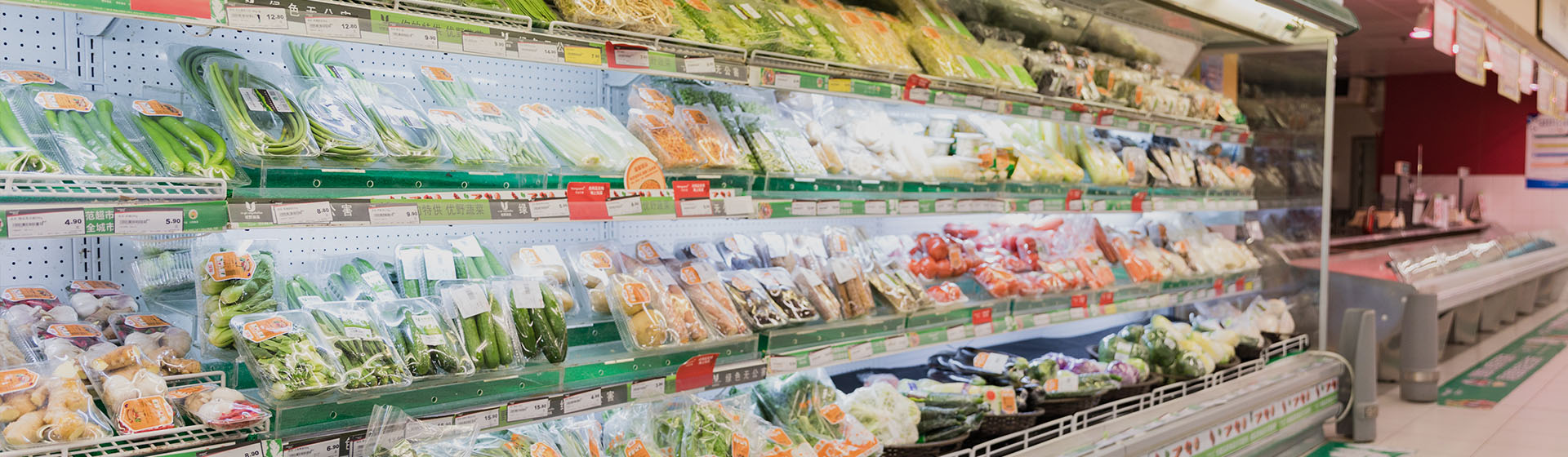
A Commercial Upright Freezer with Glass Doors combines frozen storage, product display, and efficient use of floor space in one unit. Its vertical structure creates several display levels without requiring the wide footprint of a horizontal freezer. This makes it suitable for convenience stores, frozen food shops, cafés, restaurants, hotel kitchens, and specialty retailers.
The glass doors allow customers or staff to check products before opening the cabinet. This shortens access time, reduces cold-air loss, and makes stock levels easier to monitor. However, the value of an upright freezer depends on more than appearance. Shelf loading, airflow, door sealing, lighting, defrost control, and installation conditions all affect daily performance.
Vertical Design Uses Wall Space More Efficiently
Many commercial spaces have limited floor area but available wall height. An upright freezer uses this vertical space to create multiple product levels. Compared with a deep chest freezer, it makes products easier to reach and reduces searching through stacked packages.
The layout suits several frozen categories in a narrow area. Different shelves can be assigned to frozen meals, meat, seafood, vegetables, desserts, or packaged ingredients.
Main advantages include:
- More display levels within a smaller footprint
- Eye-level placement for priority products
- Easier separation of product categories
- Faster stock inspection
- Simpler first-in, first-out rotation
- Less bending during loading and selection
These benefits depend on matching shelf spacing and cabinet depth to the actual package sizes.
Glass Doors Reduce Unnecessary Opening
A major advantage of a Commercial Upright Freezer with Glass Doors is that users can see the interior before opening the cabinet. With a solid door, staff or customers may open several sections or spend longer searching. Each unnecessary opening introduces warm, humid air.
Transparent doors help shorten the access process and allow staff to identify empty shelves from outside. For reliable visibility, the door system should address three issues.
Condensation Control
When warm room air meets cold glass, moisture can form. Insulated glass, heated glass, or anti-condensation structures help keep the viewing area clear. The right solution depends on local humidity and ambient temperature.
Reflection and Lighting
Strong overhead light may reflect on the glass and make labels difficult to read. Interior lighting and cabinet placement should be planned together so products remain visible from normal viewing angles.
Door Closing
Self-closing or well-balanced hinges help prevent doors from being left partly open. Even a small gap can cause continuous cold loss, frost buildup, and higher energy use.
Choosing the Right Number of Doors
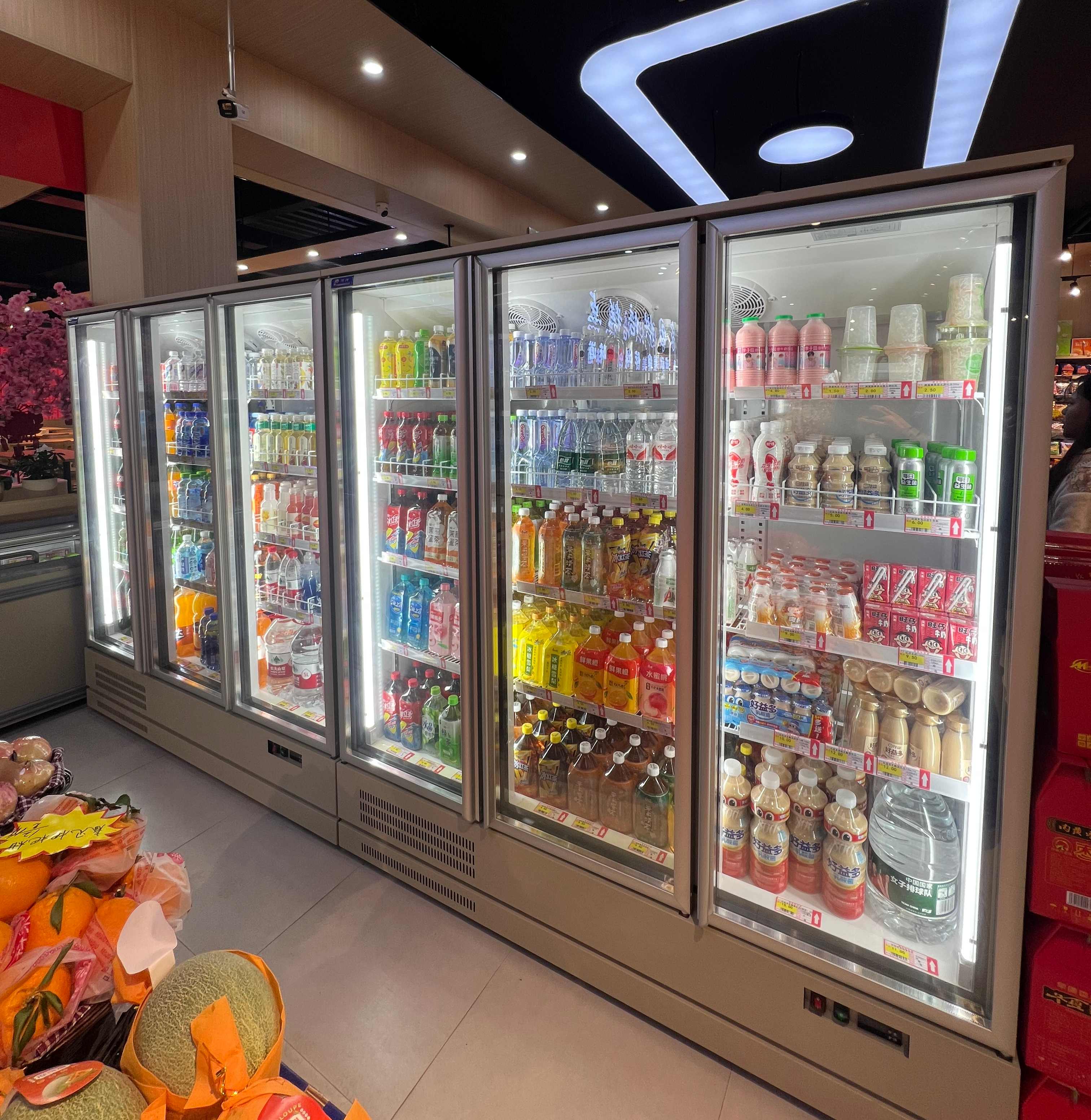
Upright freezers are available with one, two, three, or more doors. More doors do not automatically mean better performance. The correct configuration depends on product variety, traffic, and available wall space.
A single-door model may suit a café, compact store, or small food service area. Two-door models provide more capacity while allowing categories to remain separated. Three-door or multi-door cabinets work well for larger displays, but they require careful planning so high-turnover products stay easy to reach.
Before choosing, evaluate:
- Total frozen product volume
- Number of categories
- Daily access frequency
- Width of the installation area
- Restocking method
- Customer flow in front of the cabinet
The door configuration should support real operating needs rather than simply maximize cabinet width.
Shelf Planning Affects Capacity and Temperature
A tall cabinet may appear to offer large capacity, but usable capacity depends on shelf arrangement. Packages should not block air outlets or press tightly against the back wall. Overloading restricts airflow and may create uneven temperatures.
Adjustable shelves make it easier to handle different package heights. Strong shelf supports are important for dense products such as frozen meat or bulk ingredients. Shelf edges should also help prevent packages from sliding toward the door.
A practical loading plan includes:
- Measuring the largest package before setting shelf height
- Keeping air outlets clear
- Avoiding excessive stacking near the door
- Separating fast-moving and slow-moving products
- Leaving enough room for safe restocking
- Checking shelf weight capacity
Products should be arranged with small spaces for cold-air circulation, and labels should face forward to improve visibility.
Refrigeration Performance Must Match Frequent Access
A freezer in a customer-facing area may experience repeated door openings. The refrigeration system must recover after each access cycle without creating large temperature differences between shelves.
Fan-assisted circulation is often used to distribute cold air through the cabinet. The airflow path should reach both upper and lower sections. Defrost control is also important because frost on the evaporator reduces airflow and forces the system to work harder.
Automatic defrost can simplify operation, but the cycle should be controlled so the product area does not warm unnecessarily. Temperature monitoring should not rely only on the control panel. An independent thermometer or data logger can help confirm actual conditions at different shelf levels.
Installation Conditions Matter
Even a well-designed freezer may perform poorly if it is installed near heat, direct sunlight, or blocked ventilation. An uneven floor can also affect door alignment and sealing.
Before installation, confirm:
- Sufficient clearance around ventilation areas
- A level and stable floor
- Correct electrical supply
- Distance from ovens, heaters, and sunny windows
- Enough space for doors to open fully
- Suitable aisle width
- Easy access for cleaning and service
The cabinet should be allowed to stabilize after placement before it is fully loaded, according to the operating instructions.
Practical Ways to Reduce Energy Use
Glass doors can reduce unnecessary access, but operating habits still matter. Staff should prepare products before restocking and avoid holding doors open. Damaged gaskets should be replaced, and condenser surfaces should be kept free from dust.
Other useful measures include:
- Avoiding overloading
- Keeping ventilation areas clear
- Maintaining the correct temperature setting
- Checking that doors close evenly
- Organizing products to shorten search time
- Using lighting controls where appropriate
Setting the freezer colder than necessary does not always improve protection. It may increase electricity use and place more stress on the refrigeration system.
When Is This Freezer the Right Choice?
A Commercial Upright Freezer with Glass Doors is especially useful where products must be stored and identified quickly. Customer-facing stores benefit from clear display, while food service operations benefit from faster stock checks and organized ingredients.
It is a suitable choice when floor space is limited, multiple frozen categories must be separated, wall space is available, and stock rotation needs to be simple. It may be less suitable for very large bulk packages that require deep horizontal storage.
Before selecting a model, confirm the external size, internal usable space, number of doors, shelf load, temperature range, defrost method, glass type, lighting, refrigeration configuration, and maintenance access.
The correct cabinet should not only fit the room. It should make products easier to display, reduce unnecessary door opening, support stable temperatures, and simplify daily stock management.
FAQ
1. Can a Commercial Upright Freezer with Glass Doors store meat and seafood?
Yes, provided the cabinet maintains the required temperature and the products are properly packaged. Categories should be clearly separated to support hygiene and stock rotation.
2. Why is the glass door fogging?
Fogging may result from high humidity, frequent opening, damaged seals, or insufficient anti-condensation performance. Installation conditions should also be checked.
3. How much space should be left around the freezer?
Clearance varies by refrigeration design. The ventilation inlet and outlet must remain unobstructed, and the installation guide should be followed.
4. Should products be packed tightly to increase capacity?
No. Tight packing can block airflow and create uneven temperatures. Products should be arranged with enough space for cold-air circulation.
Post time: Jul-28-2026


