
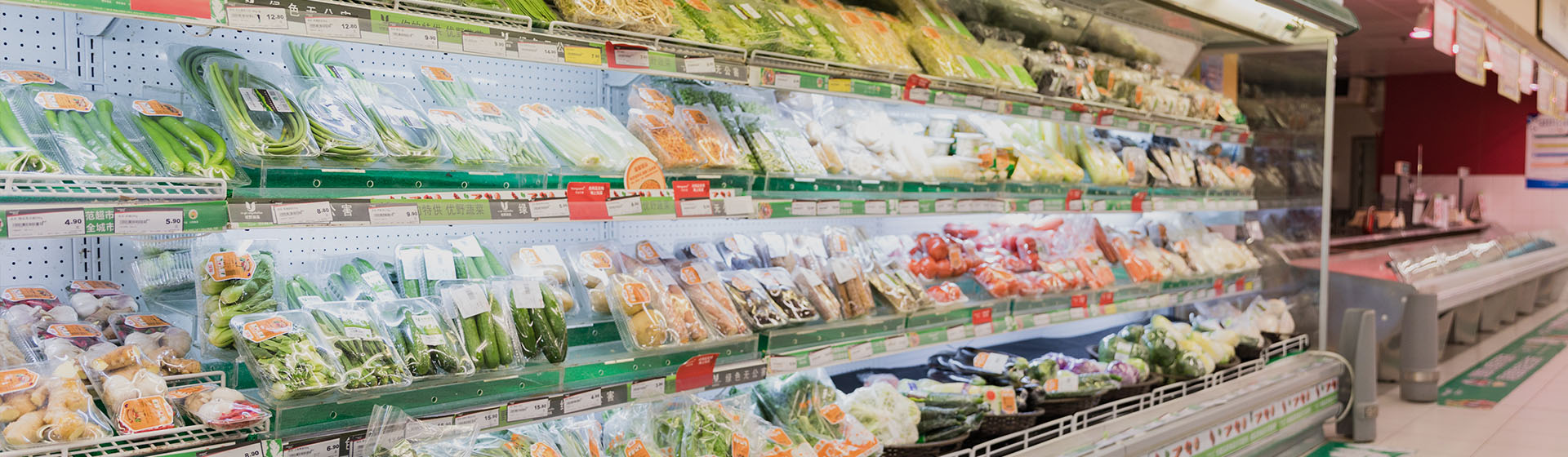
In modern retail environments where speed, visibility, and product turnover define profitability, refrigeration systems are no longer just storage equipment but an essential part of merchandising strategy. Air curtain cabinets have rapidly become a preferred solution for supermarkets and convenience stores because they combine open-access convenience with engineered cooling protection, allowing retailers to display fresh and chilled products in a way that directly supports sales performance.
Unlike traditional enclosed refrigeration units, air curtain systems are designed around customer behavior rather than mechanical restriction, making them highly effective in environments where constant interaction between shoppers and products is expected.
How Retail Behavior Is Reshaping Refrigeration System Design
The evolution of retail has shifted significantly toward self-service and fast decision-making, where customers prefer direct product access rather than waiting for door-based refrigeration systems to stabilize or be opened repeatedly. This behavioral change has forced refrigeration technology to adapt toward more open and responsive designs.
Air curtain cabinets respond directly to this trend by eliminating physical barriers while still maintaining a controlled internal cooling environment through engineered airflow systems, allowing retailers to maintain both operational speed and product freshness at the same time.
The Engineering Logic Behind Air Curtain Refrigeration Performance
The effectiveness of an air curtain cabinet is not based on physical insulation alone but on continuous airflow control that dynamically separates warm and cold air layers in real time, creating a functional thermal barrier without physical doors.
● Continuous vertical airflow design that stabilizes a cold air barrier across the open front display zone, reducing direct thermal exchange between store environment and refrigerated interior
● High-performance refrigeration cycle that compensates for predictable cold air loss through adaptive cooling output rather than constant maximum power operation
● Multi-layer air stabilization structure that minimizes turbulence caused by customer movement, ensuring consistent cooling distribution across shelves
● Precision evaporator configuration that enhances cooling recovery speed after repeated product access during peak hours
● Intelligent airflow modulation system that adjusts air curtain intensity according to ambient temperature and customer traffic levels
● Reinforced thermal insulation panels on non-display surfaces that reduce external heat penetration and improve system efficiency
● Integrated humidity and frost management system that maintains clear airflow channels and prevents condensation-related performance loss
● Multi-point thermal sensing network that continuously monitors temperature variations across different storage zones
This engineering approach allows air curtain cabinets to maintain functional refrigeration performance even in fully open display conditions.
Why Air Curtain Cabinets Improve Sales Performance Beyond Cooling Function
Unlike traditional refrigeration systems that focus purely on preservation, air curtain cabinets are designed to actively influence purchasing behavior by enhancing visibility and accessibility. The absence of doors removes psychological and physical barriers, making products feel more immediately available to customers.
This open presentation style significantly reduces decision-making time, increases impulse purchase behavior, and improves product rotation speed, especially in high-traffic retail environments where customers make rapid selections.
Retail operators also benefit from faster replenishment workflows, since staff can restock products without interrupting cooling cycles or managing door-based access limitations.
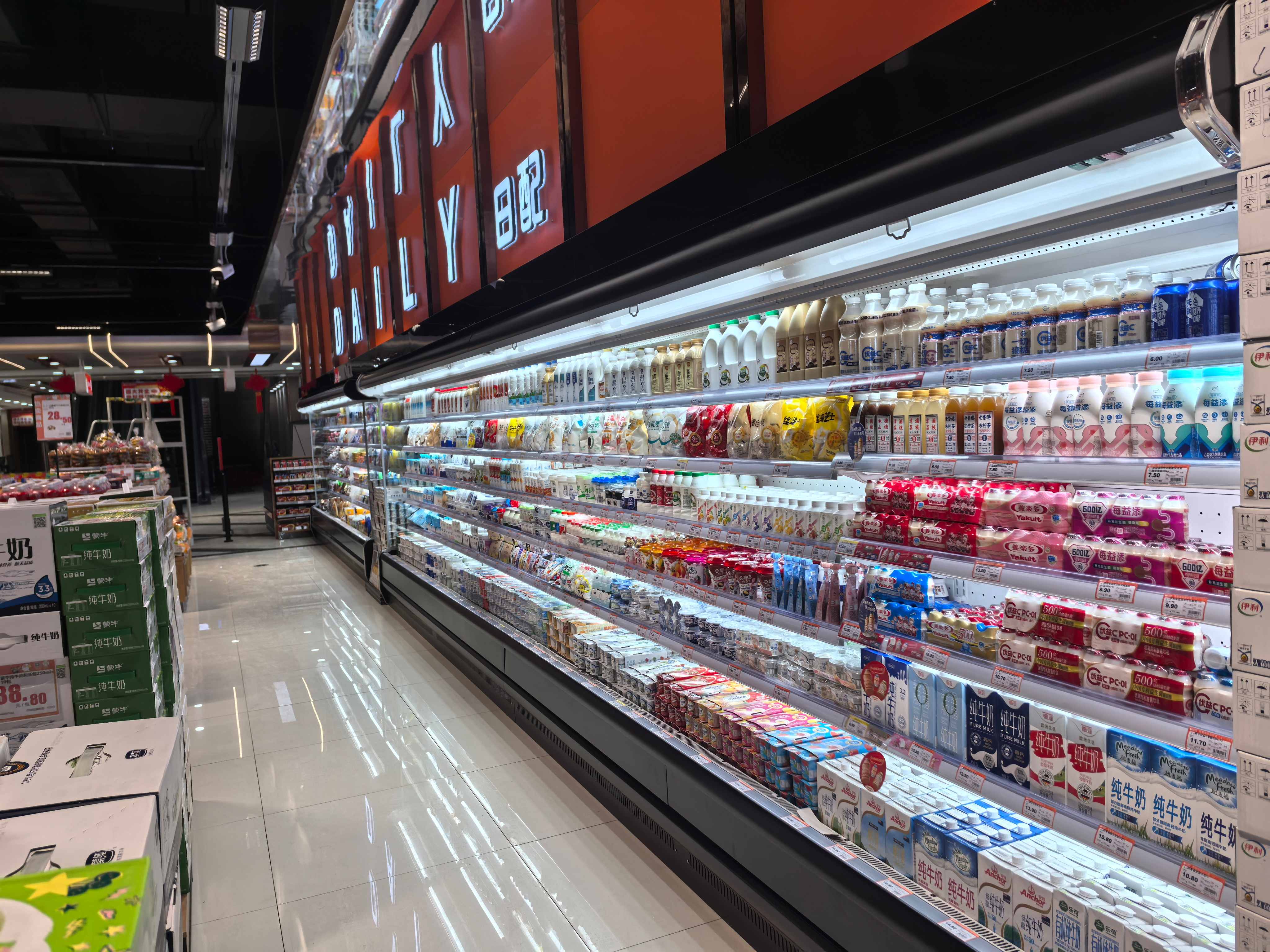
Energy Optimization Strategies in Modern Air Curtain Systems
While open refrigeration systems are often perceived as less energy efficient, modern air curtain cabinets incorporate multiple engineering improvements that significantly reduce unnecessary energy consumption and improve operational balance.
● High-precision airflow control that minimizes unnecessary cold air escape while maintaining effective thermal separation
● Variable-speed compressor systems that adjust output based on real-time cooling demand rather than fixed-load operation
● Intelligent standby and night mode functions that reduce airflow intensity during low customer traffic periods
● Advanced insulation structures that reduce external heat infiltration into non-display areas of the cabinet
● Low-heat LED lighting systems that enhance product visibility without adding thermal load to the refrigeration cycle
● Automated defrost control systems that optimize energy usage while maintaining evaporator efficiency
● Adaptive cooling logic that responds dynamically to store temperature fluctuations and customer activity levels
● Optimized airflow channel geometry that reduces turbulence and improves cold air retention efficiency
These systems work together to ensure that energy usage remains controlled even under continuous open-access conditions.
Application Scenarios Across Modern Retail Ecosystems
Air curtain cabinets are widely deployed across multiple retail formats due to their ability to combine accessibility, visibility, and refrigeration performance in a single system.
● Large supermarkets for chilled dairy products, beverages, prepared meals, and fresh packaged foods
● Convenience stores that prioritize fast customer access and high product turnover rates
● Self-service food areas in cafeterias and food courts where speed of service is essential
● Quick-service restaurant environments requiring grab-and-go chilled food display systems
● Bakery and deli sections where visual appeal directly influences customer purchase decisions
● Urban retail stores with limited space requiring vertical high-density product display solutions
Across all these environments, the primary value of air curtain systems lies in their ability to support both operational efficiency and customer experience simultaneously.
Key Technical Factors That Influence Long-Term System Stability
Selecting an air curtain cabinet requires careful evaluation of multiple technical parameters that directly impact long-term performance and food safety reliability.
Airflow stability is one of the most critical factors because inconsistent air curtain performance can lead to uneven temperature distribution and reduced product shelf life. In addition, evaporator efficiency, compressor reliability, and sensor calibration accuracy all contribute to system consistency over time.
Structural design also plays an important role, particularly in ensuring that non-display surfaces are properly insulated to reduce unnecessary heat exchange with the surrounding environment.
Proper store placement further influences system efficiency, as exposure to direct sunlight, HVAC outlets, or high ambient heat zones can significantly increase energy consumption and reduce cooling effectiveness.
Maintenance Strategy and Long-Term Operational Efficiency
To maintain optimal performance, air curtain cabinets require structured maintenance that focuses on airflow integrity and refrigeration system cleanliness.
Regular cleaning of air discharge and return channels is essential to prevent dust accumulation that can disrupt airflow patterns. Evaporator coil inspection ensures that cooling performance remains consistent over time, while temperature sensor calibration guarantees accurate environmental control.
Preventive maintenance not only extends equipment lifespan but also helps stabilize energy consumption and reduces the risk of unexpected system downtime that could lead to product spoilage.
Business Value for Modern Retail Operators
Beyond refrigeration functionality, air curtain cabinets provide a range of strategic advantages that directly contribute to retail competitiveness and profitability.
● Stronger product visibility that increases customer engagement and impulse purchase behavior
● Faster customer interaction flow that improves overall store efficiency and reduces congestion
● Greater merchandising flexibility allowing rapid layout adjustments based on sales performance
● Reduced operational labor requirements due to simplified restocking procedures
● Enhanced modern retail aesthetics that improve brand perception and store environment quality
● Higher product turnover rates driven by improved accessibility and visibility
● Flexible scalability suitable for different retail formats from small stores to large chains
● Improved performance in high-traffic environments where speed and accessibility are critical
FAQ
1. What types of products are best suited for air curtain cabinets?
Air curtain cabinets are most suitable for chilled products such as dairy items, bottled beverages, fresh salads, prepared meals, bakery goods, and ready-to-eat refrigerated foods that require high visibility and frequent customer access.
2. How does an air curtain system maintain cooling without doors?
It uses a continuous vertical stream of cold air that forms an invisible barrier at the front opening, which reduces the mixing of warm external air with the refrigerated internal environment and helps maintain stable temperatures.
3. Are air curtain cabinets suitable for energy-efficient operations?
Yes, although they are open systems, modern designs use variable airflow control, smart compressors, insulation improvements, and adaptive temperature regulation to significantly improve energy efficiency, especially in high-traffic retail environments.
Post time: May-27-2026


