
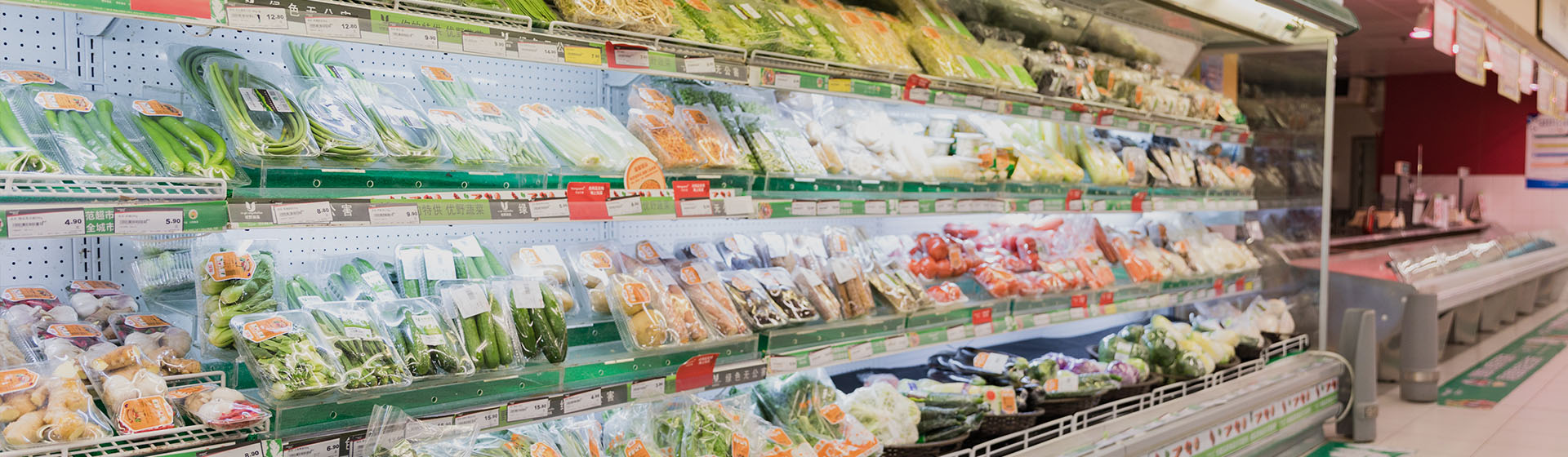
A Supermarket Meat Showcase fridge is a refrigerated display counter for fresh meat, poultry, processed meat, deli products, and other temperature-sensitive food. It is different from a standard refrigerator because it works in front of customers and must combine safe chilling, clear presentation, and convenient staff operation. The equipment helps supermarkets show meat in an organized way while keeping products under suitable chilled conditions.
Fresh meat retail is sensitive because product appearance changes quickly when temperature, airflow, lighting, or cleaning is not well controlled. Customers judge meat by color, moisture, tray arrangement, and glass cleanliness. A professional meat showcase can make the fresh food area look more trustworthy and help staff serve customers more efficiently.
Fresh Meat Display Is Different from General Food Display
Meat products need more careful handling than drinks or packaged dry goods. If the air is too dry, the meat surface may lose moisture; if the temperature is unstable, product quality and food safety can be affected. The display should protect the product while still making it easy for customers to view.
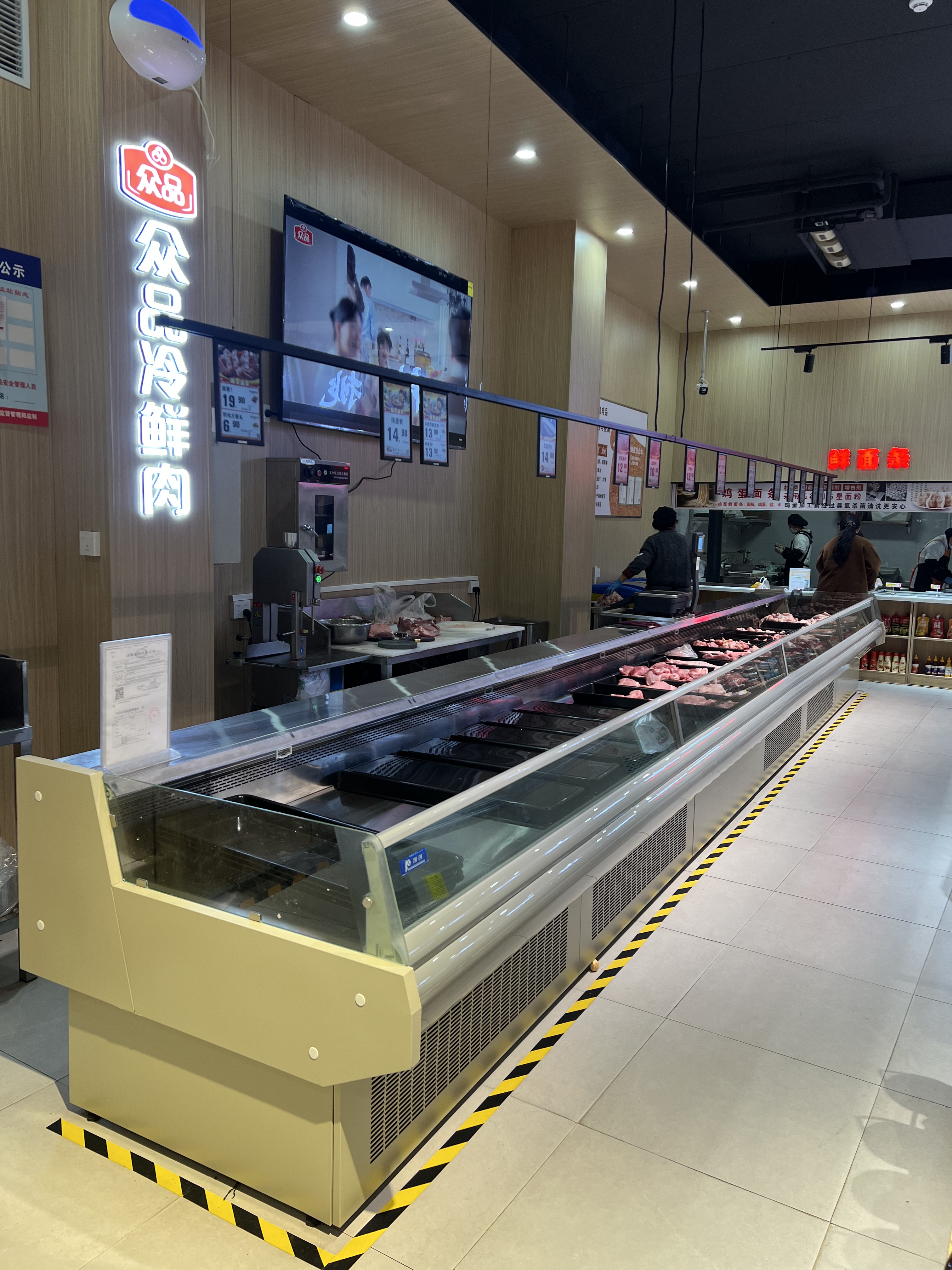
A Supermarket Meat Showcase fridge usually uses a service-counter layout. Customers choose products from the front, while staff access them from the rear for weighing, cutting, packing, or replenishment. This creates a cleaner and more controlled selling process than leaving fresh meat fully exposed.
Key Buying Points for Meat Showcase Projects
Before choosing a counter, buyers should consider the full working process: product display, customer viewing, staff service, cleaning, replenishment, and storage. The right model should fit the actual sales method rather than only matching a cabinet length.
Temperature Control and Airflow
Stable temperature is the first requirement. The counter should maintain suitable chilled conditions and reduce uneven temperature zones along the display area. Airflow must be balanced because strong direct wind may dry the meat surface, while weak cooling may leave some positions warmer than expected.
For long counters or connected lines, buyers should ask how cold air is distributed. In busy supermarkets, staff may open the rear side and refill trays frequently, so the equipment should recover temperature quickly after operation.
Glass, Lighting, and Color Presentation
Front glass affects both product visibility and the feeling of hygiene. Curved glass and straight glass can both work, but the surface should be easy to clean and clear from the customer side. Foggy or stained glass can make the meat section look poorly managed.
Lighting is also important because color is one of the first things customers notice. Proper lighting should present meat naturally without excessive heat or unrealistic color. Buyers should consider how the light works with tray color, counter depth, and store ceiling lighting.
Service Layout and Storage Space
A meat showcase must support how staff work. Counter height, rear access, working surface, scale position, and packing area should be planned together. If the service side is inconvenient, employees may spend more time bending, walking, or rearranging trays.
Some counters include refrigerated storage below the display area, which can help staff refill products during peak hours. However, storage design should not make cleaning difficult. The best design supports both attractive display and practical daily operation.
Comparison with Upright Chillers and Open Display Cabinets
A Supermarket Meat Showcase fridge is usually better for assisted meat service than an upright chiller. Upright chillers suit packaged products that customers take by themselves, such as drinks, dairy, or sealed fresh food. Meat showcases are more suitable for fresh cuts, butcher service, and products that require staff management.
Compared with open display cabinets, a glass meat showcase offers better separation between customers and exposed fresh meat. Open displays can work for some packaged fresh foods, but loose meat, poultry, and deli products often need a more controlled service counter. Many supermarkets combine different formats according to product category.
How to Select the Right Counter
Buyers should calculate counter length according to product variety and daily sales volume. A short counter creates crowded trays, while an oversized counter wastes floor space and energy. Beef, pork, poultry, sausages, marinated products, and deli items may need separate display zones.
Installation conditions also matter. Buyers should check power supply, drainage, ventilation space, floor level, cleaning access, and whether several counters will be connected. The counter should not block customer movement or make staff service routes inefficient.
Cleaning and maintenance should be considered before purchase. Meat display requires regular cleaning of trays, glass, drains, and work surfaces. Removable parts and smooth interior surfaces can reduce daily workload and help the fresh food section maintain a clean image.
Dashang Solutions for Fresh Food Retail
Dashang provides commercial refrigeration equipment for supermarkets and food retail stores, including display cabinets, refrigerated showcases, upright cabinets, island freezers, and fresh food counters. A Supermarket Meat Showcase fridge can be selected according to product category, service method, counter length, and store style.
In a real supermarket project, the meat area may also need storage cabinets, preparation-room refrigeration, and nearby chilled displays for packaged products. Matching these units together helps the fresh food zone work more efficiently and look more consistent.
FAQ
Q1: What is a Supermarket Meat Showcase fridge used for?
A Supermarket Meat Showcase fridge is used to display and chill fresh meat, poultry, processed meat, deli products, and similar fresh food items.
Q2: What temperature should it maintain?
The required range depends on local food safety rules and product type. Buyers should confirm the target chilled range before ordering.
Q3: Is curved glass or straight glass better?
Both can work. Curved glass gives a softer appearance, while straight glass creates a modern line. The choice depends on store design and cleaning preference.
Q4: What details should buyers provide before ordering?
Buyers should provide counter length, product categories, store layout, service method, power conditions, storage needs, and installation environment.
Post time: Jul-07-2026


