
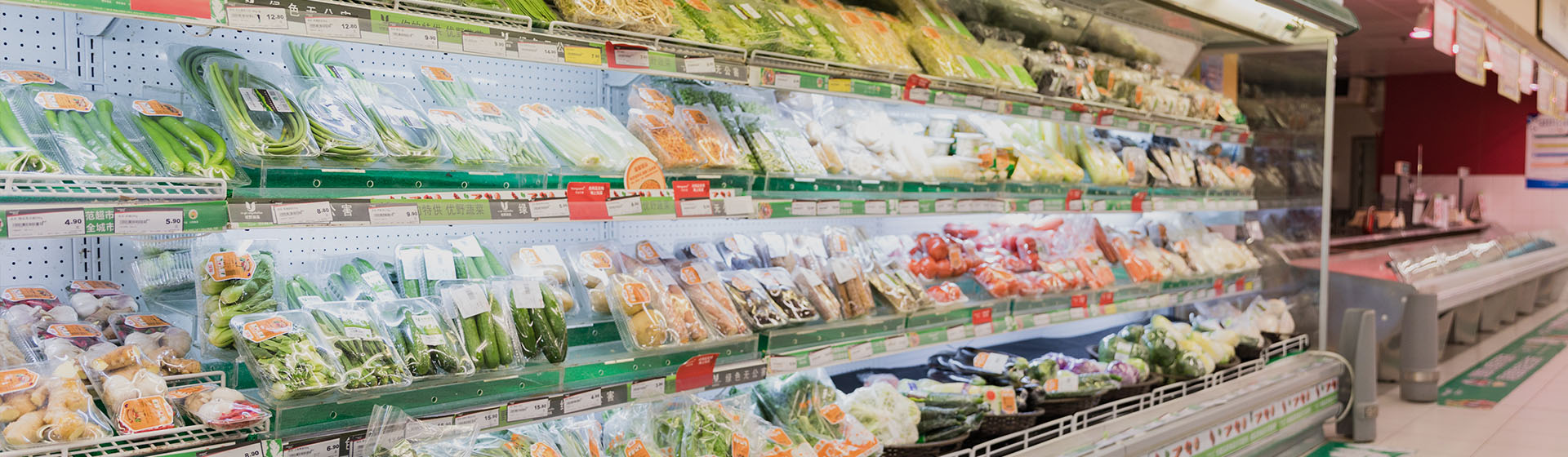
A Commercial Refrigerator is a core piece of equipment for stores that sell chilled food, drinks, dairy products, desserts, fresh meals, or ingredients that must remain at a safe and attractive temperature. For supermarket owners, restaurant operators, and food retail designers, it affects product freshness, customer trust, store layout, energy cost, and the speed of daily replenishment.
The first step is to understand the real business purpose. Some buyers need a glass door unit for drinks and dairy, some need a service counter for deli or bakery items, and others need a back-of-house cabinet for stable storage. Starting from the product category and store workflow makes selection more accurate than comparing only size and price.
Product structure should match the goods being displayed
Glass door, open front, service counter, or storage type
A Commercial Refrigerator can be built in many forms. A glass door model improves visibility while reducing cold air loss. An open chiller supports quick self-service for drinks, yogurt, sandwiches, and ready-to-eat foods. A refrigerated showcase presents meat, cakes, deli items, or prepared food with stronger focus on lighting and viewing angle. A storage refrigerator is usually placed in a kitchen or stockroom, where durability and temperature recovery matter most.
- For beverage and dairy areas, buyers usually need clear doors, bright lighting, adjustable shelves, and fast temperature recovery after frequent opening.
- For fresh food and deli counters, the cabinet should support good product visibility, hygienic surfaces, and convenient staff access from the back.
- For kitchen or restaurant storage, the cabinet should focus on insulation, easy cleaning, shelf strength, and stable operation during heavy use.
- For chain stores, the appearance, dimensions, and display height should also remain consistent across different locations.
The correct structure helps the store sell products instead of merely storing them. If the opening, shelf depth, lighting, and loading height are unsuitable, staff may overfill shelves or block air circulation.
Cooling performance decides whether products stay consistent
Temperature stability is more important than a low number on the controller
Many buyers ask only about the temperature range, but a good Commercial Refrigerator must stay stable under real store conditions. Doors are opened repeatedly, new products are loaded at different temperatures, and room temperature changes during the day. The cabinet must recover quickly without hot spots or excessive frost.
Airflow design is a key factor. Cold air must move evenly across the display area, but it should not damage sensitive food surfaces. In display models, the air curtain, fan position, shelf spacing, return air path, and loading line all influence performance. If products are placed beyond the recommended loading line, cold air may be blocked and the front area may become warmer than the back. This is why a refrigeration cabinet should be evaluated together with the way staff will actually stock it.
Insulation and door design also matter
Good insulation reduces energy loss and helps the compressor work efficiently. For glass door models, anti-fog glass, reliable gaskets, and smooth closing performance improve visibility and temperature control. For open front models, a night curtain can reduce loss when the store is closed.
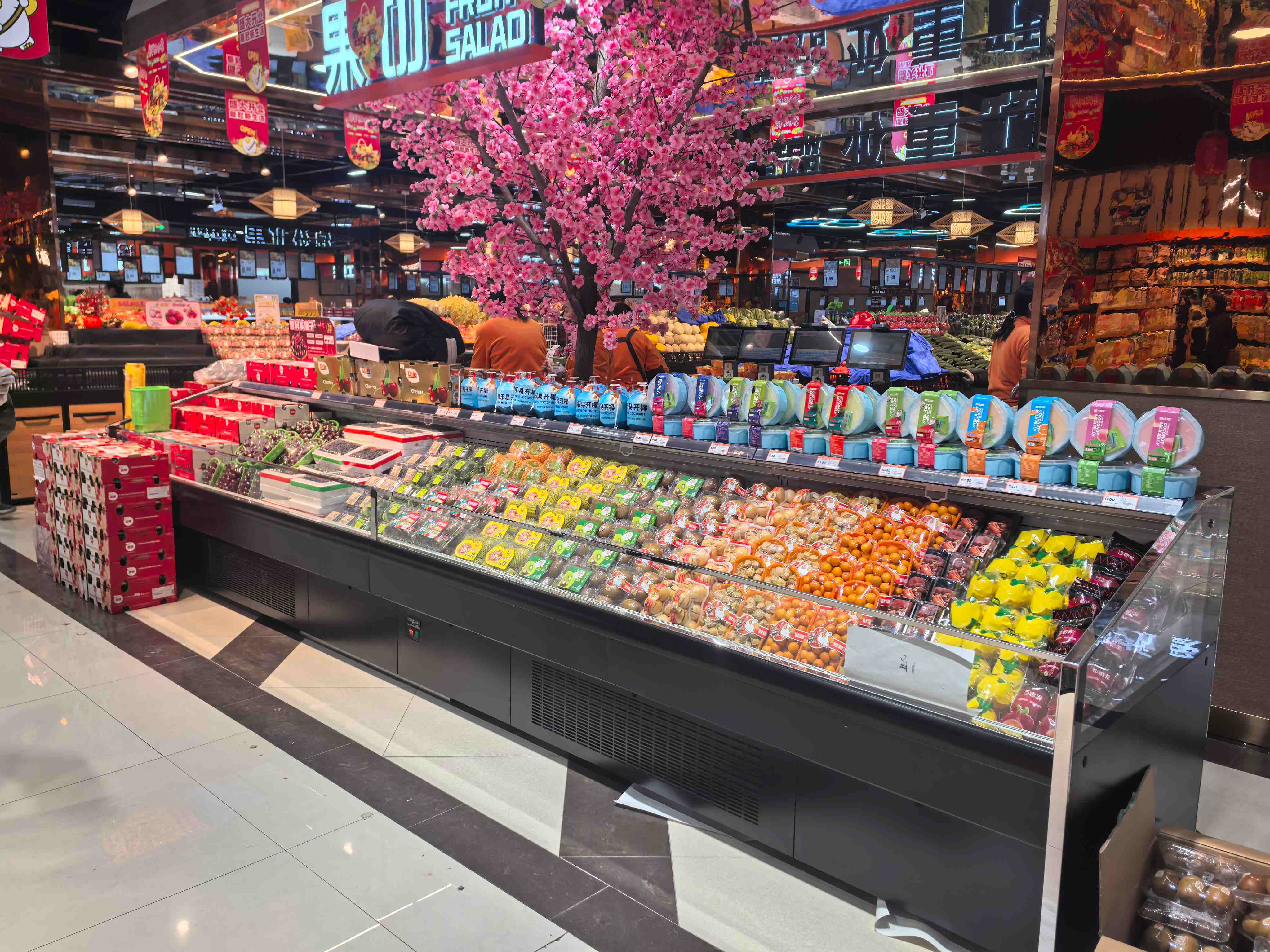
A practical refrigerator should make daily work easier
A store refrigerator is used every day by different people. Staff open doors, clean shelves, refill stock, adjust product positions, and handle spills. If the design is inconvenient, the store may lose time every day. For example, shelves that are difficult to remove make cleaning slower. Poor lighting makes the display look flat. A cabinet with insufficient rear access slows service counters during busy hours. Small design problems can become real operating costs after installation.
- Adjustable shelves help stores change product layout for seasonal promotions and different package sizes.
- Easy-clean surfaces support better hygiene in food areas and reduce the time needed for daily maintenance.
- Clear product visibility helps customers find items faster and improves the overall impression of freshness.
- Reasonable service access helps staff replenish products without disturbing customers or damaging the display.
Dashang commercial refrigeration equipment is designed for retail, food service, and supermarket environments where display, cooling, and usability must work together. The goal is not only to keep products cold, but also to make the refrigerator part of a stable sales system.
How buyers can compare different models before ordering
Start with store layout and installation conditions
Before choosing a Commercial Refrigerator, buyers should confirm the installation position. Equipment near a door, window, oven, air conditioner outlet, or high-traffic aisle may face harder working conditions. The store should also check space, ventilation, floor level, power supply, drainage, delivery access, and maintenance access.
Check display capacity instead of only external size
External length and depth are not enough. Buyers should compare usable display area, shelf number, shelf load, internal height, and the customer viewing angle. A compact model with well-planned shelves may sell better than a larger cabinet that wastes space.
Consider service life and parts support
Commercial refrigeration is a long-term investment. Buyers should ask about cabinet materials, compressor configuration, glass quality, lighting, controller, defrost method, and service support. A cheaper unit may become expensive if it consumes more energy or does not match the product category.
Conclusion
The best Commercial Refrigerator is not always the largest or the coldest model. It is the model that matches the products, supports clear display, maintains stable cooling, fits the store layout, and remains easy to clean and operate. When product category, customer behavior, installation environment, and maintenance are considered together, refrigeration equipment becomes a tool for protecting product value and improving store performance.
FAQ
What products can a commercial refrigerator be used for?
A Commercial Refrigerator can be used for beverages, dairy products, packaged fresh meals, deli food, bakery products, chilled ingredients, fruit, vegetables, and other products that require stable refrigerated storage or display.
Is a glass door refrigerator better than an open chiller?
It depends on the sales purpose. Glass door models reduce cold air loss and keep products visible, while open chillers support fast self-service picking and stronger impulse buying in high-traffic areas.
What should I check before installation?
Check store space, ventilation distance, power supply, drainage, room temperature, sunlight exposure, air-conditioning direction, delivery route, and maintenance access before confirming the model.
How can a store reduce refrigerator energy consumption?
Choose suitable cabinet size, avoid overloading, keep doors and gaskets clean, use night curtains where applicable, maintain airflow, and install the unit away from heat sources.
Post time: Jul-09-2026


