
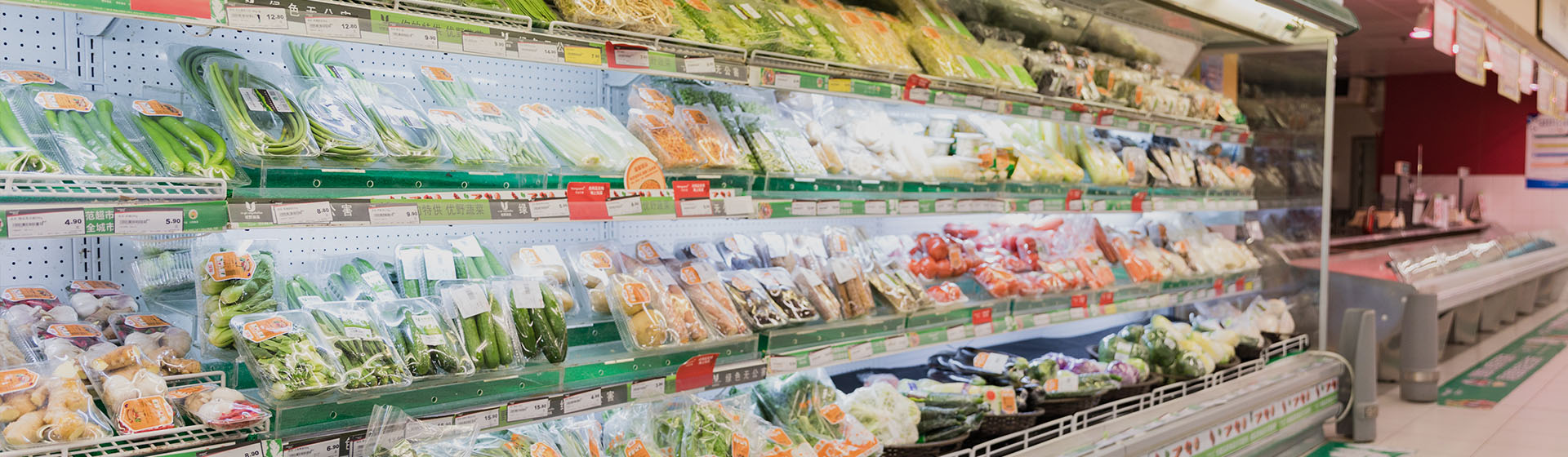
A Serve Counter with Large Storage Room combines three functions in one cabinet: a front-facing refrigerated display, a practical service worktop, and a high-capacity chilled storage compartment. Instead of using one cabinet for presentation and another unit for reserve products, the counter keeps displayed food and backup trays within the same working zone. This makes the equipment especially suitable for delicatessens, bakeries, cafés, meat counters, dairy sections, prepared-food areas, and other commercial spaces where products need to remain visible, organized, and consistently chilled.
A Closer Look at the Product Structure
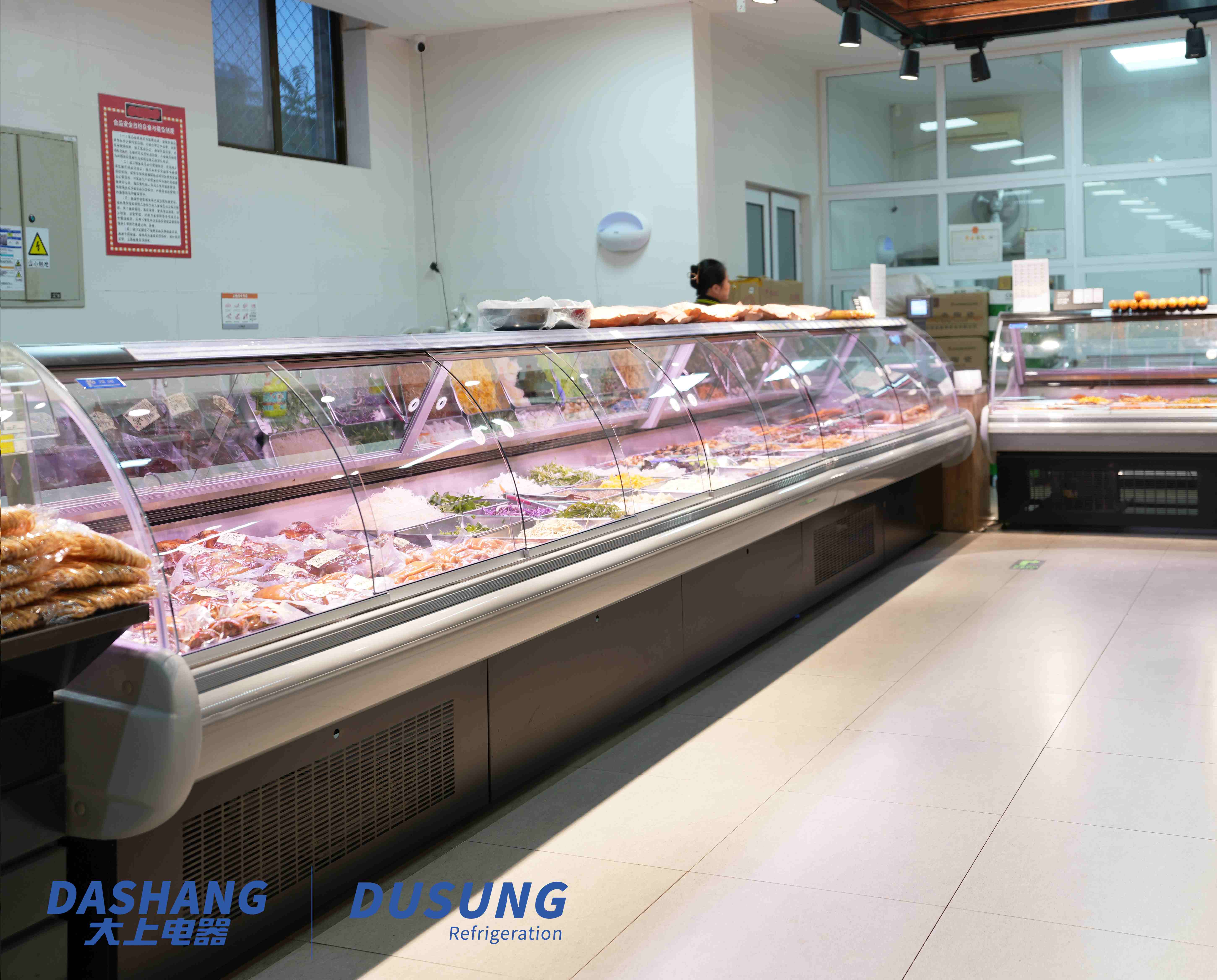
The upper part of the counter is designed to present chilled products clearly while keeping them within the required temperature range. Depending on the product category and project layout, the display area may use curved glass, straight glass, front-opening glass, or lift-up glass for easier cleaning and product arrangement. The visible deck can be configured for trays, plates, packaged foods, desserts, deli products, dairy items, or fresh meat.
Below or behind the display is the large refrigerated storage room. This section provides space for reserve trays, sealed packages, ingredients, and additional product volume. Compared with a standard serve counter with limited lower storage, the larger compartment can reduce the need for separate under-counter cabinets and keep more chilled stock close to the service position.
Typical structural elements may include:
- a stainless-steel or food-contact display deck;
- tempered glass panels for a clear viewing area;
- internal LED lighting for labels and product color;
- adjustable shelves or tray supports;
- insulated lower storage doors;
- removable storage shelves;
- drainage for cleaning and defrost water;
- optional rear working surfaces and service accessories.
The Display Area Is Designed Around Product Presentation
A commercial deli display counter needs to show food from the normal aisle or service position, not only from directly above. Glass height, viewing angle, shelf depth, lighting position, and tray arrangement all influence how clearly products can be seen.
For bakery, deli, meat, dairy, and prepared-food applications, the display deck and shelves can be arranged around different tray sizes and package formats.
Good presentation depends on several practical design choices:
- The glass should provide a broad view without excessive reflection.
- Lighting should improve visibility without adding unnecessary heat.
- Trays should remain inside the recommended loading boundary.
- Product labels should stay readable from the service side.
- The front edge should not hide low-profile products.
- Cleaning access should allow glass and deck surfaces to remain clear.
The result is a display that helps each product category look organized rather than crowded.
What the Large Storage Room Adds to the Product
The lower compartment is not merely an empty refrigerated box. Its value depends on usable volume, shelf layout, door width, and temperature distribution.
A large storage serve counter can be configured with multiple doors or divided compartments so different products remain separated. Adjustable shelves allow the space to handle trays, cartons, ingredient containers, and packaged products of different heights. Wide-opening doors improve access to the rear area, while strong shelf supports help carry heavier trays.
The storage room keeps refill trays close to the display, separates reserve products from active display stock, supports category changes during the day, and can reduce the need for additional refrigeration equipment near the counter.
For this reason, internal dimensions are as important as external cabinet length. A long counter with poorly arranged storage may offer less practical capacity than a shorter model with well-planned doors and shelves.
Refrigeration Design Must Support Both Zones
The display deck and lower storage room have different access patterns. The upper area is exposed more frequently during service, while the lower compartment remains closed for longer periods and may carry denser loads. The refrigeration system must maintain stable conditions across both areas.
Depending on the cabinet design, cooling may be provided by static refrigeration, fan-assisted circulation, or a combined airflow arrangement. The selected system should match the product’s sensitivity to airflow and surface drying. Fresh meat, prepared dishes, dairy products, and packaged desserts do not always require the same airflow pattern.
Important product considerations include:
- even air distribution across the display deck;
- adequate cooling in the rear and lower storage sections;
- insulation thickness suited to the operating environment;
- door gaskets that remain flexible and aligned;
- defrost control that limits unnecessary temperature fluctuation;
- a refrigeration unit matched to cabinet length and product load;
- clear air-return paths after trays and packages are loaded.
Plug-in and remote refrigeration configurations may be considered according to the installation. Plug-in designs simplify placement, while remote systems can move condenser heat and noise away from the display area.
Product Configuration Should Match the Application
A Serve Counter with Large Storage Room can be planned around different food categories, service styles, and room layouts. The cabinet may be configured as a straight counter, a continuous line, a corner arrangement, or part of a larger refrigerated display area.
Key options may include:
- cabinet length and module combination;
- straight or curved glass;
- lift-up or fixed front glass;
- display deck depth;
- number and width of lower doors;
- shelf quantity and spacing;
- interior and exterior finish;
- LED lighting position;
- plug-in or remote refrigeration;
- temperature control and defrost arrangement;
- voltage and electrical configuration for the installation region.
The correct combination depends on tray dimensions, daily volume, required temperature, staff access, and available aisle space.
Why This Product Is More Than a Standard Display Counter
A standard refrigerated counter may provide a good display but only minimal reserve space. A separate storage cabinet then becomes necessary, increasing the distance between presentation and replenishment. The Serve Counter with Large Storage Room addresses this limitation by integrating larger chilled storage into the same product footprint.
This integrated design can create a cleaner service area, reduce equipment duplication, and keep product categories easier to manage, especially where wall space is limited.
Dashang Product Configuration for Different Projects
Dashang commercial refrigeration products can be configured according to the food category, display depth, counter length, storage volume, glass style, refrigeration arrangement, and installation environment. For projects that require a refrigerated serve-over counter with substantial lower capacity, the internal door layout and shelf arrangement can be planned around actual tray and package dimensions.
Providing the required temperature range, product type, cabinet dimensions, site conditions, voltage, and preferred glass design helps determine a more suitable configuration. The aim is to create a counter that presents products clearly, keeps reserve volume close to the service area, and remains practical for cleaning and daily operation.
FAQ
1. What products are suitable for a Serve Counter with Large Storage Room?
It can be configured for deli food, chilled bakery products, desserts, dairy products, prepared dishes, meat, packaged ingredients, and other products that match the selected temperature range and hygiene requirements.
2. Can the lower storage compartment use adjustable shelves?
Yes. Adjustable or removable shelves can be used to match different tray heights, cartons, containers, and packaged products, depending on the cabinet design.
3. Is plug-in or remote refrigeration more suitable?
A plug-in system is practical for simpler installation and smaller layouts. A remote system is often considered for longer counter lines or projects that need to move heat and noise away from the display area.
4. Which information is needed to configure the counter?
Useful information includes product type, temperature requirement, tray or package dimensions, desired counter length, storage capacity, glass style, installation space, voltage, and preferred refrigeration arrangement.
Post time: Aug-04-2026


