
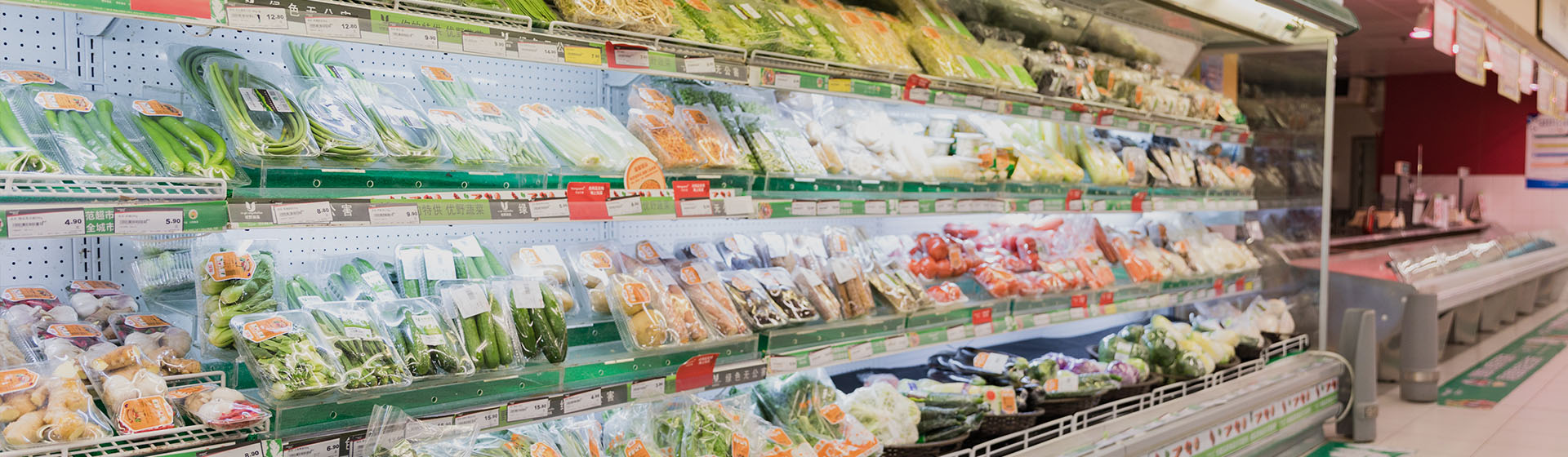
A Refrigerated Cabinet for fresh-food service is both a cooling cabinet and a working display counter. The Refrigerated Cabinet has to keep food visible from the front, provide a practical service side for staff, support repeated tray movement, and maintain a controlled chilled zone across an open display area. Because the front remains open, the Refrigerated Cabinet depends heavily on cabinet geometry, airflow paths, display depth and the materials used in the working area.
These product details determine whether the cabinet can present fresh food clearly without losing the refrigeration performance expected from a commercial Refrigerated Cabinet.
The Open Front Changes How a Refrigerated Cabinet Works
A closed refrigerator isolates products behind doors, while an open Refrigerated Cabinet keeps the display directly visible. An open service Refrigerated Cabinet does something different: it keeps food visible and accessible while the refrigeration system has to maintain a suitable chilled zone across the display deck.
The benefit of the open front is clear presentation. Fresh meat, prepared foods, chilled dishes and other displayed items can be seen without a door frame interrupting the view. The display surface becomes part of the counter rather than a storage compartment hidden behind glass.
But the open structure also means the cabinet geometry matters. Air must move through the display area in a controlled way, the return path should remain clear, and products should stay within the intended loading zone. The cabinet therefore depends on the relationship between the display deck and the refrigerated airflow.
A Refrigerated Cabinet Needs Durable Working Surfaces
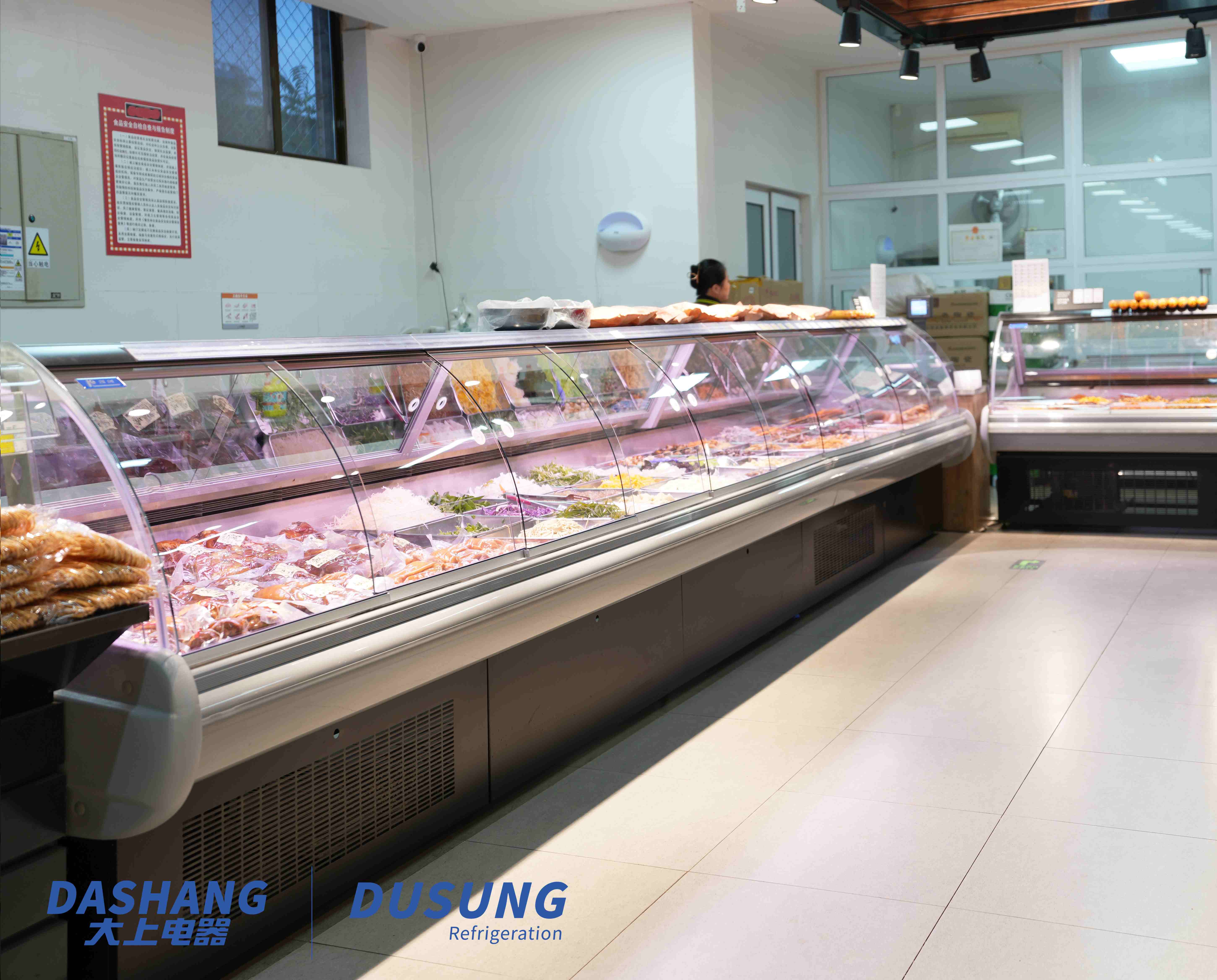
This Refrigerated Cabinet uses stainless steel shelves and a stainless steel back plate in the main working area. In this product, stainless steel is not merely an exterior design choice. It is placed where trays, containers and routine cleaning create repeated contact.
A service counter may be replenished many times during a day. Containers are set down, removed, reorganized and wiped around. A durable surface helps the Refrigerated Cabinet remain practical under this repeated handling.
The back plate is also visually important because it sits behind the displayed food. A clean, uniform background prevents the interior from looking visually busy and can make the food itself easier to distinguish. In other words, the material supports both working durability and presentation.
Removable Side Glass Gives the Display a Different Kind of Flexibility
The product includes removable glass side panels. This feature matters when cabinets are combined into longer counter runs.
A side panel is useful when a cabinet stands at the end of a line because it closes the display and preserves a finished appearance. When two compatible sections are joined, however, a permanent side wall can interrupt the visual continuity between them. A removable panel allows the configuration to change without making every cabinet a completely different product.
This is a practical example of how a Refrigerated Cabinet can be designed for modular use. The same basic section can function independently or become part of a longer arrangement depending on how the side boundary is handled.
Double-Layer End Glass Supports a Clearer Display Edge
also specifies double-layer glass end panels. The end of a service cabinet has to do two jobs: define the refrigerated zone and keep the products visible from an angle.
A solid end panel creates a strong visual stop. Glass keeps the display open to customers approaching from the side. The double-layer construction also gives the end boundary more thermal separation than a single exposed sheet.
The result is a cabinet that remains visually light while the end section still forms part of the refrigerated enclosure. This is especially useful when the counter is positioned where customers can approach from more than one direction.
Flexible Combination Is More Than a Length Option
Several cabinet sizes and flexible combination options allow the Refrigerated Cabinet to form longer service-counter runs. The point is not simply to increase length; different sections can follow the available frontage while keeping the same fresh-food display concept.
A shorter section can work as a focused fresh-food display. Several sections can form a long straight run. End glass can be retained where the line finishes, while internal side boundaries can be reduced where compatible cabinets connect.
This modular approach also helps keep the visual language consistent. Instead of mixing unrelated display cases with different heights, glass lines and work surfaces, the counter can use repeated cabinet sections that look like one system.
The Air-Suction Grille Deserves More Attention Than It Usually Gets
The Fresh Food Cabinet Plus includes an anti-corrosion air-suction grille. This is a small component compared with the full glass and stainless steel display, but it plays an important role in the refrigeration circuit.
The return-air area helps the cabinet complete its airflow path. If that area is blocked by products, labels, packaging or debris, the intended air movement can be disturbed. The grille therefore has to remain open and physically durable.
Anti-corrosion construction is relevant because fresh-food environments can involve moisture, cleaning and repeated exposure to a demanding service area. Protecting this component supports the long-term function of the airflow system rather than simply improving appearance.
Product Value Comes from Keeping Service and Display in the Same Structure
A fresh-food counter can become inefficient if display, work surface and refrigerated support are treated as separate pieces. The Fresh Food Cabinet Plus brings these functions into one Refrigerated Cabinet body.
Its most important product characteristics work together:
- an open front keeps the displayed food easy to see;
- stainless steel shelves and back plate support repeated handling;
- removable side glass helps cabinets combine into longer runs;
- double-layer end glass preserves side visibility;
- an anti-corrosion return-air grille supports the refrigeration path;
- multiple cabinet lengths make the same product family adaptable to different counter layouts.
None of these features is unusual on its own. Their value comes from the fact that they all support the same type of fresh-food service.
FAQ
1. What type of food is a Refrigerated Cabinet like Fresh Food Cabinet Plus designed to display?
It is intended for chilled fresh-food presentation such as meat, prepared foods and other products that fit the cabinet’s temperature and handling requirements.
2. Why are removable side glass panels useful?
They allow the cabinet to work as a finished standalone section or connect more cleanly with compatible sections in a longer counter line.
3. What temperature range is listed for Fresh Food Cabinet Plus?
The listed operating range is -2 to 5°C.
4. Why should the air-suction grille remain clear?
The grille is part of the return-air path. Keeping it unobstructed helps the cabinet maintain the airflow pattern used to refrigerate the display area.
Post time: Aug-26-2026


