
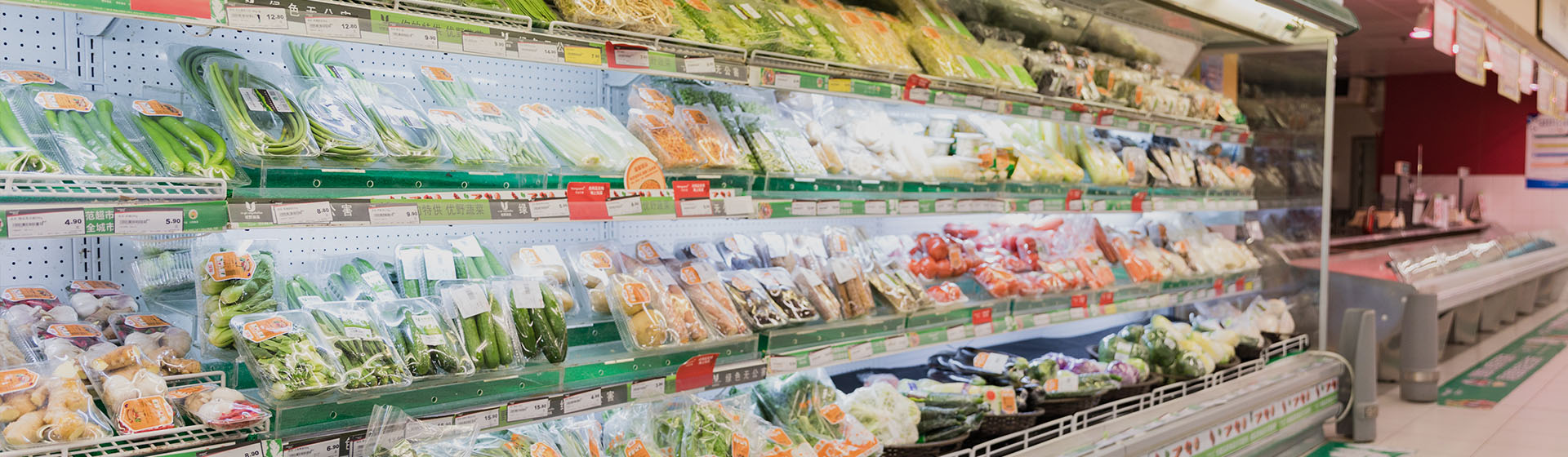
When people hear the term deli showcase, many still think of a simple glass fridge placed in supermarkets to hold cold cuts or cheese. However, in modern retail and food service environments, a deli showcase has evolved into a highly engineered merchandising system that combines refrigeration, product psychology, energy efficiency, and store layout strategy.
Instead of just “keeping food cold,” today’s deli showcases are designed to influence buying behavior, reduce operational cost, and support fast-paced retail environments where visual impact matters as much as food quality.
Why Are Deli Showcases Becoming a Core Investment in Food Retail Instead of Optional Equipment?
In traditional food stores, refrigeration equipment was chosen mainly based on capacity and price. The goal was simple: store as much food as possible and keep it cold.
Modern retail works differently.
Customers now make decisions within seconds, often based on what they see first, not what they plan to buy. This means food presentation has become a direct sales driver.
A deli showcase is now considered a revenue-generating fixture, not just a storage appliance, because it:
- Creates immediate visual attraction at the front of food categories
- Encourages impulse purchases through lighting and layout
- Organizes high-margin fresh food products in a structured way
- Enhances perceived freshness and hygiene of the store
In many supermarkets, deli sections are strategically placed near entrances because they influence overall store traffic behavior.
How Has Deli Showcase Technology Evolved in Recent Years?
Earlier deli cabinets were mostly mechanical cooling boxes with basic glass doors. Today’s systems integrate multiple engineering improvements that directly impact performance and energy consumption.
1. Intelligent temperature zoning systems
Modern units are designed with multiple cooling zones instead of a single uniform temperature area. This allows different products—such as dairy, meat, and prepared meals—to be stored under slightly adjusted conditions for better preservation.
2. Low-energy compressor integration
New-generation compressors are designed to reduce power consumption during low-demand periods, which significantly lowers long-term operating costs for supermarkets running 24/7.
3. Anti-condensation glass engineering
Instead of simply using thicker glass, many systems now use heated glass layers or air-curtain technology to eliminate fogging, ensuring constant product visibility.
4. Modular structure design
Instead of fixed-size units, modern deli showcases are often modular, allowing supermarkets to expand or reconfigure layouts without replacing the entire system.
What Role Does Product Psychology Play in Deli Showcase Design?
A deli showcase is not only a refrigeration system—it is a behavioral marketing tool.
Retail designers carefully study how customers look at food displays, how long they pause, and what colors trigger appetite responses.
For example:
- Warm lighting makes roasted or cooked foods appear more appetizing
- Angled shelving increases visibility of lower-positioned products
- Glass curvature subtly improves perception of freshness and premium value
- Product layering creates a “full and abundant” visual effect that increases purchase likelihood
In practice, these design decisions can significantly influence revenue per square meter in a supermarket.
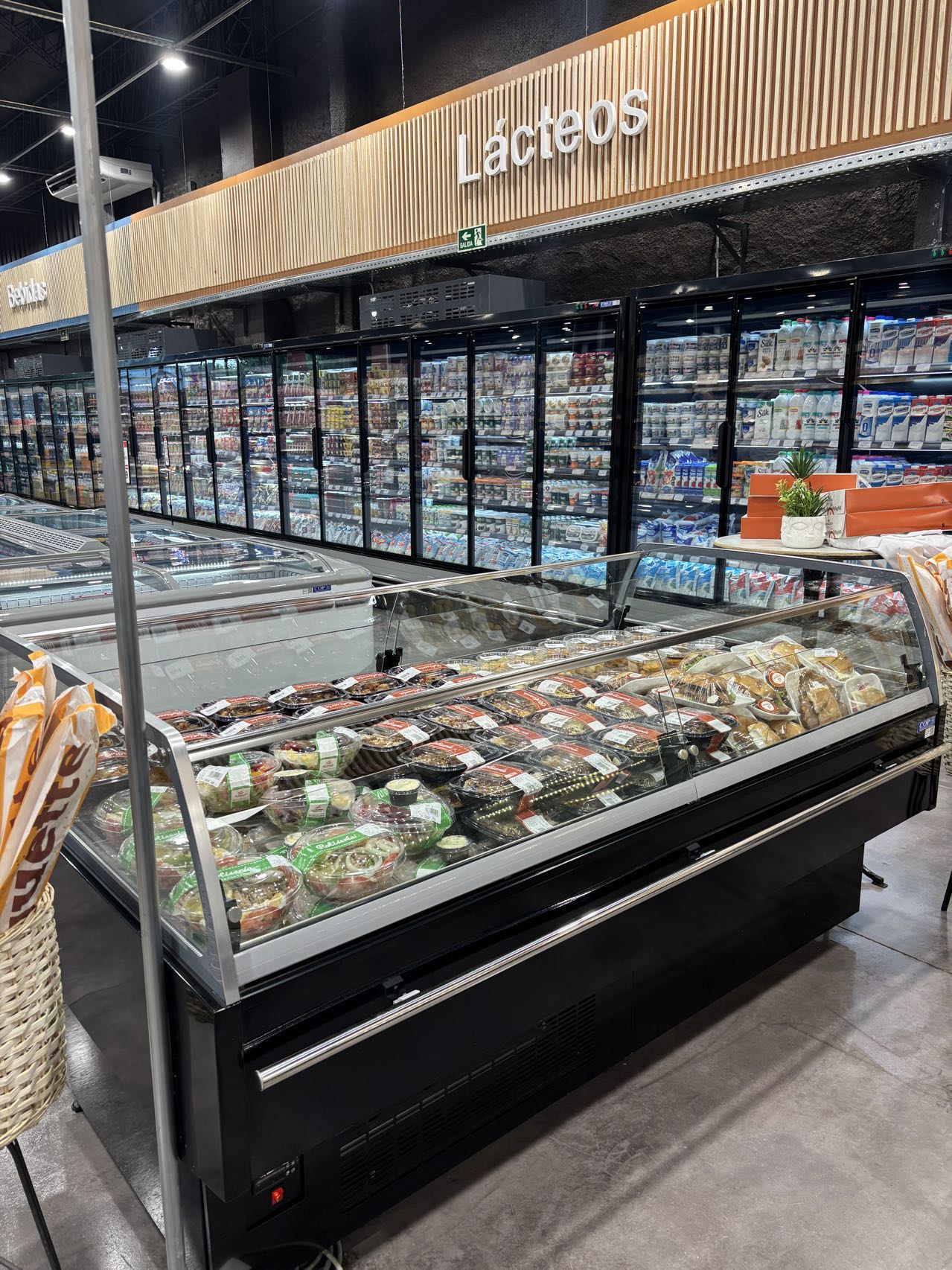
Why Do Different Retail Formats Require Different Deli Showcase Structures?
Not every store operates the same way, so deli showcases must adapt to business models rather than forcing a one-size-fits-all solution.
High-volume supermarkets
These stores prioritize fast turnover and large product variety. Their deli showcases are usually long linear units that maximize display length and allow multiple staff members to serve customers simultaneously.
Convenience stores
Space efficiency is more important than capacity. Compact vertical or countertop deli units are commonly used to highlight ready-to-eat items.
Premium grocery stores
These stores focus on aesthetics and customer experience. Curved glass, soft lighting, and minimalist framing are often used to create a luxury food presentation environment.
Food service businesses
Restaurants and buffets use deli showcases more as holding and display stations, ensuring food remains visually appealing before serving.
What Operational Challenges Does a Poor-Quality Deli Showcase Create?
Choosing low-quality refrigeration equipment can create problems that are not immediately visible but become costly over time.
One major issue is temperature inconsistency, which leads to uneven food quality. Some items may freeze slightly while others warm up, affecting texture and safety.
Another problem is condensation buildup. When glass fogs repeatedly, staff must constantly clean it, increasing labor workload and reducing display effectiveness.
Energy inefficiency is also a hidden cost. Older systems often run at full power continuously, leading to significantly higher electricity bills.
Finally, poor layout design can slow down staff operations, especially during peak hours when fast service is critical.
How to Evaluate a Deli Showcase Before Purchasing
Instead of focusing only on appearance or price, professional buyers usually evaluate deli showcases based on performance and long-term operation cost.
Cooling stability under continuous operation
A reliable unit should maintain consistent temperature even during frequent door opening in peak hours.
Airflow design efficiency
Good airflow prevents hot spots inside the cabinet and ensures all products remain evenly chilled.
Structural durability in high-traffic environments
Frames, hinges, and glass must withstand daily commercial use without deformation or leakage.
Maintenance accessibility
Units designed with easy-access panels reduce service downtime and simplify cleaning procedures.
Compatibility with store layout
The shape and size should match store traffic flow rather than forcing redesign of the entire space.
Where Is the Deli Showcase Market Heading in the Future?
The future of deli showcases is closely connected to smart retail development.
We are already seeing trends such as:
- Digital temperature monitoring systems with remote control
- Smart inventory tracking integrated into display units
- Energy recovery systems that reuse heat from compressors
- AI-driven layout optimization for product placement
- Fully glass-integrated minimal frame designs for better visibility
As retail competition increases, the deli showcase is becoming part of a larger “smart store ecosystem” rather than a standalone appliance.
FAQ
1. Is a deli showcase only used in supermarkets?
No. It is widely used in supermarkets, convenience stores, bakeries, restaurants, and catering businesses where chilled food display is required.
2. What is the main advantage of a deli showcase over a normal refrigerator?
A deli showcase is designed for visual merchandising and customer interaction, while a normal refrigerator is mainly for storage purposes.
3. How does lighting affect deli showcase performance?
Lighting directly influences product attractiveness. Proper LED lighting enhances color, texture, and perceived freshness, which increases sales potential.
4. Can deli showcases reduce food waste?
Yes. By maintaining stable temperature and improving product visibility, businesses can better manage stock rotation and reduce spoilage-related losses.
A modern deli showcase is no longer just a cooling machine. It is a strategic retail tool that combines engineering, marketing psychology, and operational efficiency. For any food business aiming to increase sales performance and improve customer experience, it has become a foundational investment rather than an optional upgrade.
Post time: Jun-18-2026


