
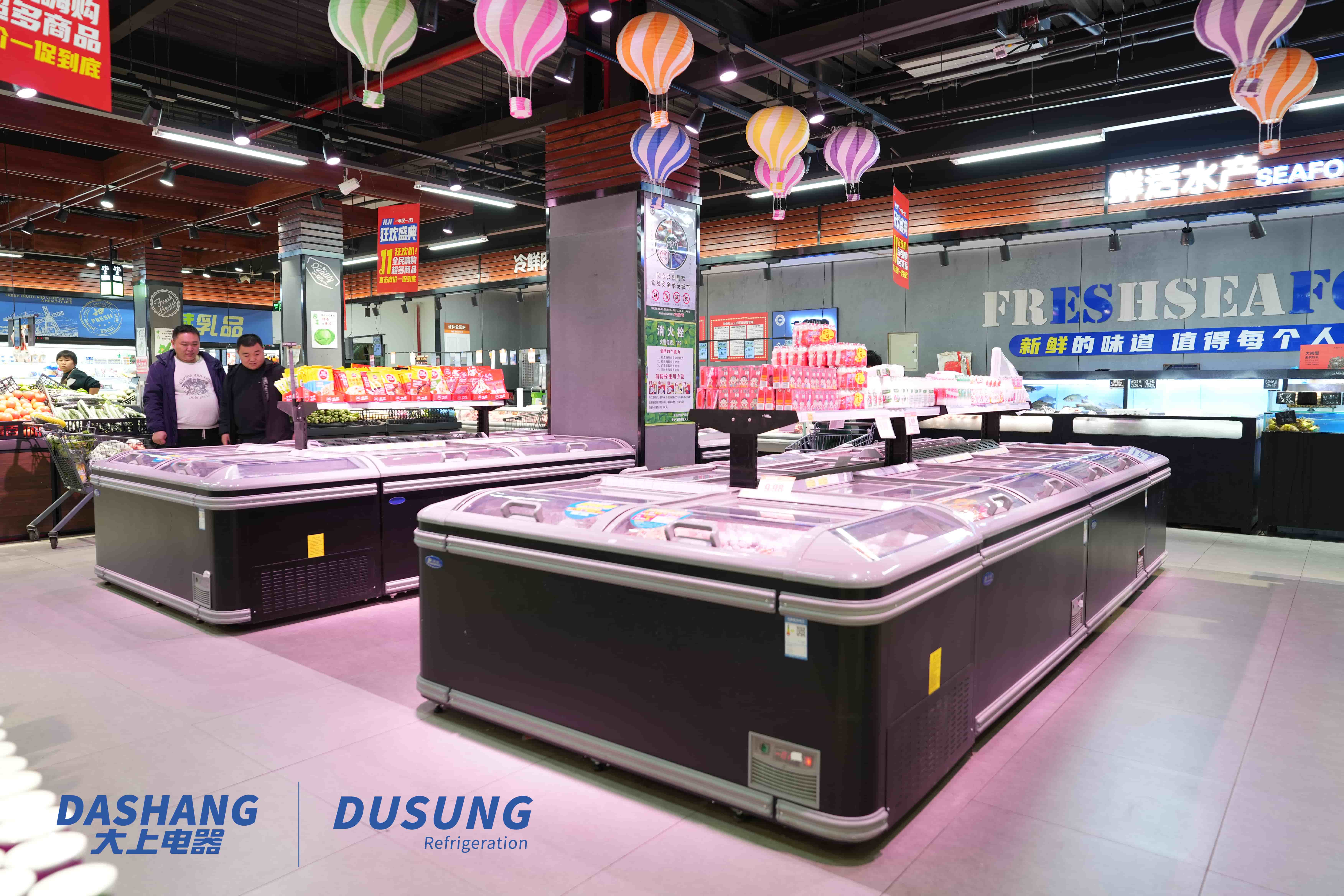
A Flat-top Service Freezer combines frozen holding with a flat upper surface that can become part of a service counter or work zone. This is a different product concept from a basic chest freezer, where the lid itself is normally the main access point. In a flat-top service design, the freezer is intended to sit within a working environment where the top surface, cabinet height, frozen compartment, staff access, and refrigeration system all need to cooperate.
The product is useful when frozen foods need to remain close to a service position without turning the working area into a row of top-opening storage boxes. It can support organized frozen stock while giving the upper part of the cabinet a cleaner, more continuous counter profile.
The Flat Top Changes How the Cabinet Fits into the Work Area
The most obvious feature of a Flat-top Service Freezer is the top surface. Because the upper plane is flat, the cabinet can align more naturally with nearby counters or service equipment. It visually behaves more like part of a workstation than a standalone chest freezer.
That does not mean the top should automatically be used for any heavy equipment or hot appliance. The allowable load and intended use depend on the product design. The important point is that the flat top creates a stable horizontal boundary while access to the frozen compartment is arranged separately.
This separation can help keep the service area more orderly. The counter surface remains visually clean, while frozen stock is held below or behind the working zone rather than exposed through a large hinged lid.
Frozen Storage Below the Work Surface Needs Clear Internal Organization
A freezer located in a service position is often opened many times during the day. Staff may retrieve frozen ingredients, packaged products, desserts, or reserve stock in small quantities rather than unloading a large batch at once.
For that reason, the inside of the Flat-top Service Freezer should be organized around access frequency. Frequently used items belong in the easiest-to-reach zones. Reserve stock can be placed deeper or in lower-priority areas. Mixed cartons should not be allowed to turn the cabinet into an unstructured cold box.
Practical organization may include:
- Separating product groups by basket, shelf, or compartment.
- Keeping labels visible from the access side.
- Avoiding stacks that block internal air movement where applicable.
- Keeping high-turnover items close to the normal staff position.
- Leaving enough clearance for doors, drawers, or service openings to close fully.
The physical volume is only useful when the contents can be found and removed quickly.
A Service Freezer Is Mainly for Holding, Not Rapid Pull-Down
The Flat-top Service Freezer should be understood first as a frozen holding product. Loading a large quantity of warm or only partially chilled food creates a very different refrigeration demand from maintaining products that already arrive at the correct frozen condition.
The refrigeration system must remove any heat that enters through access openings, cabinet surfaces, lighting or surrounding air. If it is also expected to freeze large warm loads, recovery time can become long and product temperature may vary across the cabinet.
A better operating pattern is to load products at the appropriate entering condition and use the freezer to maintain them. This keeps the cabinet focused on its intended duty and helps the internal temperature recover more predictably after access.
Cabinet Height and Access Should Match the Staff Position
A service freezer may be installed behind a food counter, inside a preparation area, or as part of a longer equipment line. The cabinet height influences both the appearance of the work surface and the way staff reach the frozen compartment.
If the freezer is too low, the top may interrupt the surrounding counter line and repeated access may require excessive bending. If it is too high, the surface may become uncomfortable to use and the interior may be harder to reach.
The access side also needs enough clearance. Handles, doors, drawers, or panels should open without hitting another cabinet, wall, or staff traffic route. These are product-use questions, not merely installation details.
Flat Surfaces Make Cleaning More Visible
A flat top collects anything placed on it, so cleaning discipline is especially important. Packaging fragments, water, food residue, labels, and tools should not remain on the surface around a refrigerated service cabinet.
The exterior should be wiped in a way that does not force water into electrical or ventilation openings. Inside the freezer, spills and ice build-up should be handled according to the product’s cleaning and defrost procedure. Door seals, corners, baskets, drainage areas, and service openings should remain free of debris.
For plug-in versions, the condenser ventilation zone also needs routine inspection. A clean worktop does not guarantee good refrigeration if the heat exchanger is blocked by dust.
The Product Works Best as a Frozen Support Unit inside a Service Line
The strongest role of the Flat-top Service Freezer is not simply “more freezer capacity.” Its value comes from putting frozen products close to the point where they are needed while keeping the upper profile compatible with a working counter.
That can reduce unnecessary movement between a service position and a separate back-room freezer. It can also make the visible equipment line more consistent because the cabinet top does not depend on a large opening lid.
The product therefore combines three ideas: frozen holding, service access, and work-area integration. When the internal layout, cabinet height, access direction, and refrigeration format match the actual products and staff routine, the Flat-top Service Freezer becomes a practical part of the workstation rather than just a freezer placed nearby.
FAQ
1. Is a Flat-top Service Freezer the same as a chest freezer?
No. Both can hold frozen products, but a flat-top service model is designed around a service-counter format with a stable top surface and separate access arrangement.
2. Can warm food be loaded directly into the freezer?
It should not be assumed. Service freezers are normally most effective when holding products that already enter at the required condition unless the product is specifically designed for pull-down.
3. What is the difference between plug-in and remote refrigeration?
Plug-in models contain the main refrigeration components in the cabinet, while remote versions connect to an external refrigeration system.
4. Why does counter height matter?
The cabinet height affects working comfort, access to the frozen compartment, and how smoothly the freezer aligns with surrounding service equipment.
Post time: Sep-01-2026


