
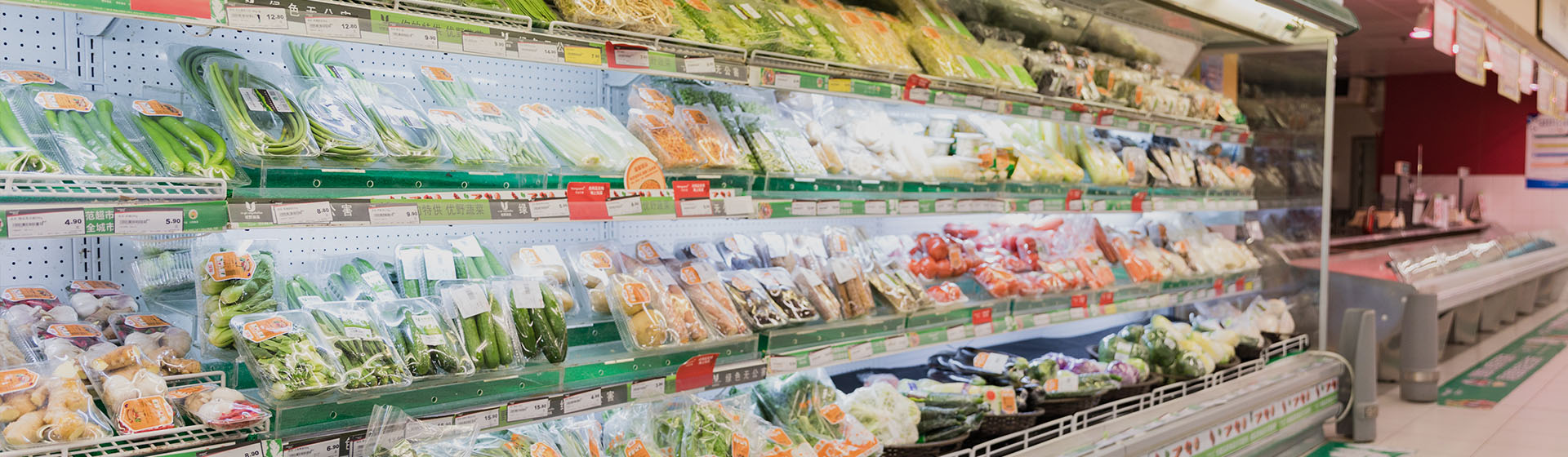
Fresh food retail is no longer only about storage and refrigeration, it has become a full-scale visual and operational strategy where temperature control, product presentation, and customer experience all work together to influence purchasing behavior. In this environment, retailers are constantly searching for equipment that can support both operational stability and commercial performance without unnecessary complexity.
The Classic Fresh Food Cabinet has remained one of the most widely adopted solutions in supermarkets, grocery stores, and food service environments because it delivers a balanced combination of refrigeration reliability, flexible merchandising structure, and long-term durability. Instead of focusing on overly specialized features, it prioritizes practical performance that directly supports daily retail operations and consistent product visibility.
How Does a Classic Fresh Food Cabinet Support Daily Retail Workflow?
Retail environments require equipment that can operate continuously while supporting frequent product rotation, fast restocking, and consistent cleanliness standards. The Classic Fresh Food Cabinet is designed to integrate smoothly into this workflow without creating operational bottlenecks or unnecessary maintenance challenges.
Its structure is built around usability and efficiency, which allows staff to manage products more effectively throughout the business day while maintaining a stable display condition for customers.
● Continuous refrigeration performance ensures that food products remain within safe temperature ranges even during peak store traffic conditions
● Ergonomic display access allows staff to restock and reorganize products without disrupting the overall layout
● Modular internal structure supports quick adaptation to changing inventory demands and seasonal product shifts
● Stable airflow design reduces temperature imbalance caused by frequent door opening or customer interaction
● Durable materials support long-term use in high-frequency commercial environments without performance degradation
These operational advantages make it easier for retailers to maintain consistent product quality while reducing the workload required for daily management.
Why Is Display Stability More Important Than Display Complexity?
In modern retail design, there is a growing shift away from overly complex equipment toward stable, predictable systems that deliver consistent performance. A Classic Fresh Food Cabinet focuses on maintaining visual order and temperature consistency rather than introducing unnecessary mechanical complexity.
This stability plays a critical role in both customer perception and operational efficiency, especially in environments where product turnover is high and display conditions change frequently throughout the day.
● Stable shelving layouts help maintain a structured visual presentation regardless of stock variation
● Consistent lighting distribution reduces visual distortion and improves product recognition
● Controlled temperature zones prevent uneven cooling that may affect product appearance or texture
● Predictable airflow patterns ensure that all displayed items receive uniform refrigeration exposure
● Simplified structure reduces mechanical failure risks and improves long-term operational reliability
By prioritizing stability, the cabinet helps retailers maintain a consistent brand image and dependable product presentation throughout the entire sales cycle.
How Does It Influence Customer Buying Behavior Without Direct Interaction?
Customer purchasing decisions in fresh food environments are heavily influenced by subconscious visual and sensory cues rather than direct marketing messages. The Classic Fresh Food Cabinet is designed to enhance these cues through controlled presentation rather than aggressive promotion.
Instead of forcing attention through complex displays, it creates a clean and organized environment that naturally guides customer focus toward product quality and freshness perception.
● Structured visual layering improves product recognition speed and reduces decision hesitation
● Balanced illumination enhances natural color tones of food products, improving perceived freshness
● Transparent viewing surfaces allow customers to evaluate products without physical contact
● Organized spacing reduces visual clutter and supports easier comparison between items
● Clean presentation environment strengthens trust in hygiene and food safety standards
This type of passive influence is especially effective in high-traffic retail environments where customers make quick decisions based on visual impression.
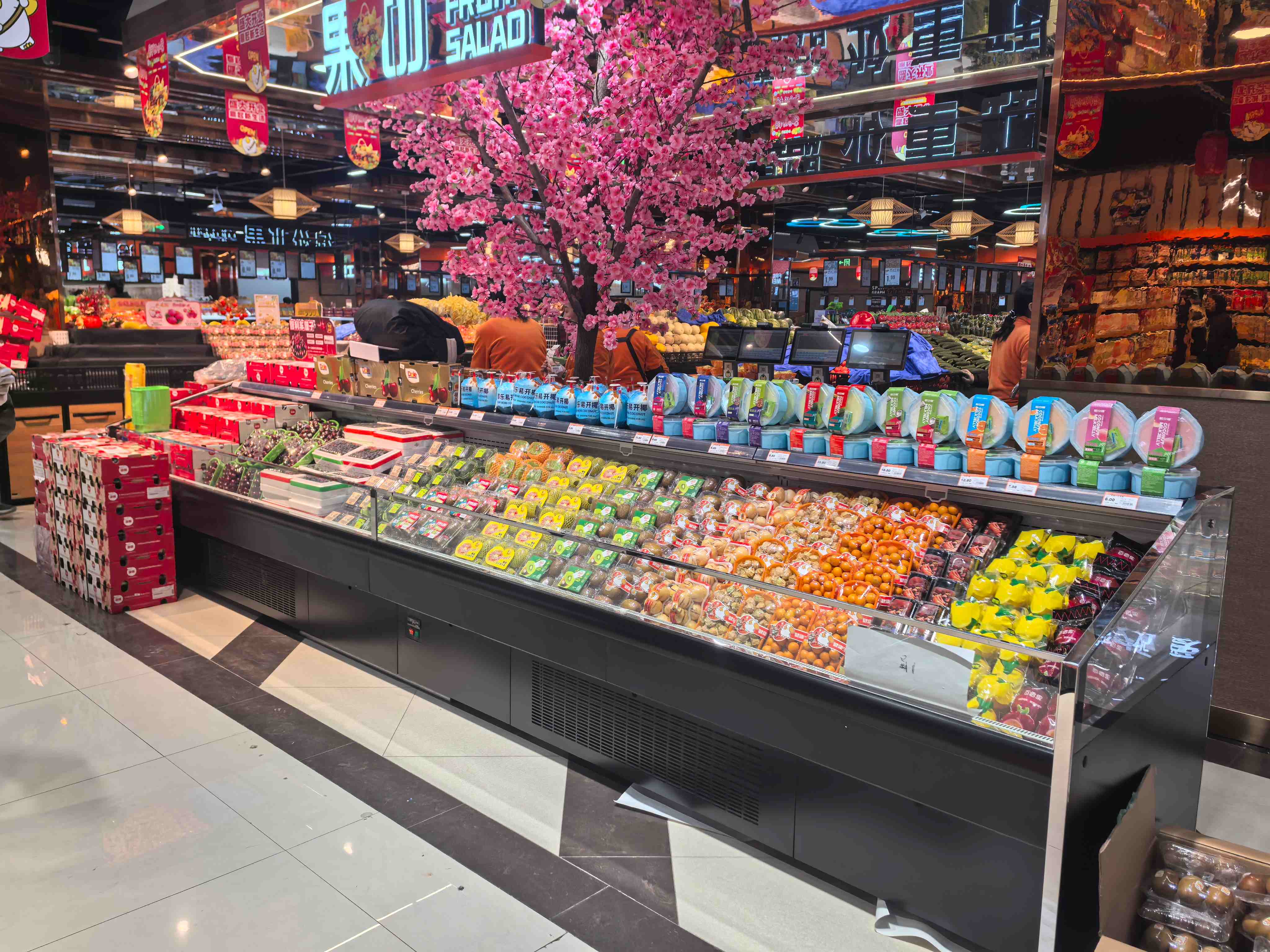
What Role Does Temperature Consistency Play in Product Value Retention?
Fresh food products are highly sensitive to environmental changes, and even minor fluctuations in temperature can affect texture, shelf life, and overall product appeal. The Classic Fresh Food Cabinet is engineered to maintain stable cooling conditions that protect product value from the moment it is displayed.
This consistency is not only important for food safety compliance but also for maintaining commercial value across the entire product range.
● Continuous temperature regulation helps prevent premature spoilage of perishable goods
● Uniform cooling distribution protects product texture and prevents surface dehydration
● Reduced thermal fluctuation preserves packaging integrity and visual appearance
● Stable refrigeration cycles support longer display duration without quality loss
● Improved product retention reduces operational waste and replacement frequency
By protecting product value, the cabinet directly contributes to improved profit margins and reduced inventory loss.
Why Do Retailers Rely on It for Long-Term Equipment Strategy?
Retail equipment is often evaluated not only by performance but also by lifecycle cost, maintenance demand, and adaptability to business expansion. The Classic Fresh Food Cabinet remains a preferred choice because it offers predictable long-term performance without requiring frequent upgrades or technical intervention.
Its design philosophy focuses on longevity and adaptability, making it suitable for both small-scale stores and large retail chains.
● Long service life reduces replacement frequency and capital expenditure pressure
● Low maintenance design minimizes downtime and operational disruption
● Flexible configuration supports store layout changes without full system replacement
● Standardized components simplify repair processes and spare part availability
● Scalable design allows integration into larger refrigeration systems if required
This long-term reliability makes it a strategic asset rather than a short-term operational tool.
How Does It Support Energy Management in Retail Operations?
Energy consumption is one of the most significant operational costs in fresh food retailing, particularly in environments where refrigeration systems run continuously. The Classic Fresh Food Cabinet incorporates design elements that help optimize energy usage while maintaining stable performance.
Instead of relying on complex automation systems, it improves efficiency through structural optimization and thermal control engineering.
● Efficient compressor systems reduce energy consumption during continuous operation
● High-density insulation materials minimize external heat exchange
● Optimized airflow channels reduce cooling workload and improve efficiency
● LED lighting systems lower electricity usage while maintaining visual clarity
● Intelligent temperature balance reduces unnecessary compressor cycling
These improvements help retailers manage operational costs while maintaining consistent product quality standards.
Conclusion
The Classic Fresh Food Cabinet continues to play a central role in modern fresh food retail because it combines operational reliability, stable refrigeration performance, and effective visual merchandising within a single system. Rather than focusing on complexity, it delivers consistent functionality that supports daily store operations while enhancing customer perception of freshness and quality. In a competitive retail environment where efficiency and trust are essential, this type of equipment remains a practical and strategic choice for long-term business success.
FAQ
1. What types of retail environments are most suitable for a Classic Fresh Food Cabinet?
It is suitable for supermarkets, neighborhood grocery stores, food halls, and specialty fresh food retailers that require consistent refrigeration and structured product display.
2. How does this cabinet help improve operational efficiency in stores?
It simplifies restocking, reduces cleaning complexity, stabilizes product layout, and minimizes temperature fluctuation during daily operations.
3. Does it require frequent technical maintenance?
No, it is designed with a simplified refrigeration structure that reduces maintenance frequency and supports long-term stable operation with minimal intervention.
4. Can it support different product categories at the same time?
Yes, its flexible shelving and stable cooling environment allow it to display multiple fresh food categories simultaneously without compromising product quality.
Post time: Jun-03-2026


