
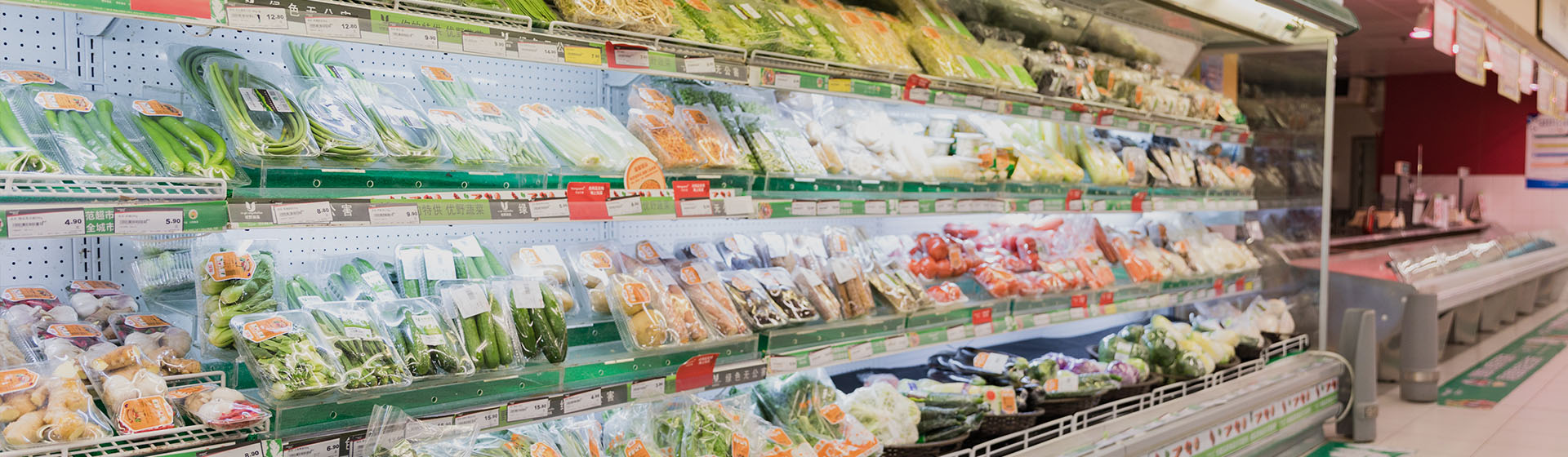
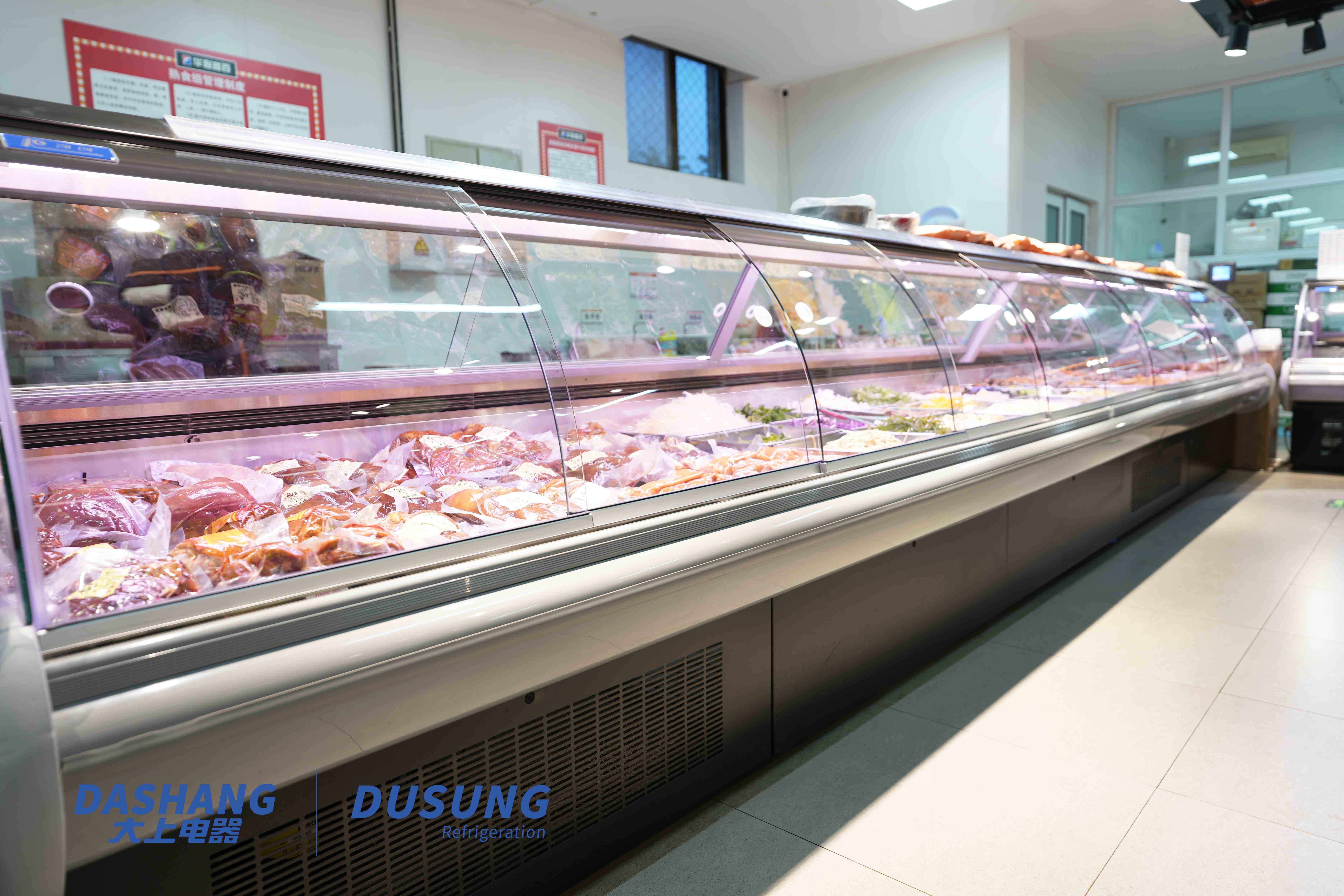
In modern supermarket and food retail environments, maintaining the freshness, safety, and visual appeal of perishable food products is essential for both customer satisfaction and business profitability. A deli cabinet is a specialized refrigeration display unit designed specifically for storing and showcasing fresh meat, cheese, deli products, and ready-to-eat foods in a controlled temperature environment that supports both preservation and merchandising.
Unlike standard refrigeration units that focus primarily on storage, deli cabinets are engineered to combine precise temperature control with high-visibility product presentation, making them a critical component in modern food retail operations where display quality directly influences purchasing decisions.
Understanding the Role of a Deli Cabinet in Food Retail Environments
A deli cabinet is a refrigerated display system commonly found in supermarkets, butcher shops, delicatessens, and gourmet food stores. It is designed to maintain low and stable temperatures while presenting food in an attractive and accessible way that encourages customer interaction and purchasing behavior.
These cabinets typically feature curved or straight glass fronts, internal lighting systems, and controlled airflow designs that ensure consistent cooling across all display areas. The primary goal is not only to preserve food quality but also to enhance visual merchandising, making products appear fresh, organized, and appealing.
How Deli Cabinets Maintain Freshness Through Temperature and Airflow Control
The freshness of deli products depends heavily on maintaining stable temperature conditions and minimizing exposure to warm air. Deli cabinets achieve this through a combination of refrigeration technology and airflow engineering that works continuously to protect food quality.
● High-precision temperature control systems that maintain consistent cooling levels suitable for meat, cheese, and prepared foods, preventing bacterial growth and spoilage
● Optimized air circulation design that ensures even cooling across all display surfaces, eliminating hot spots and temperature inconsistencies
● Insulated glass panels that reduce external heat transfer while maintaining clear product visibility for customers
● Continuous refrigeration cycle systems that automatically adjust compressor activity based on internal temperature fluctuations
● Humidity control mechanisms that help maintain optimal moisture levels, preventing food from drying out or losing texture quality
● Strategic airflow direction design that minimizes direct cold air impact on products while maintaining uniform cooling conditions
● Energy-efficient cooling components that balance performance with operational cost control in continuous-use retail environments
● Integrated defrost systems that prevent ice buildup and ensure stable long-term performance in high-demand settings
These systems work together to ensure that deli cabinets maintain both food safety standards and product quality over extended operating hours.
Why Visual Merchandising Is Critical in Deli Cabinet Design
In food retail, presentation plays a direct role in influencing customer purchasing decisions. Deli cabinets are specifically designed to maximize product visibility and highlight freshness, which can significantly impact sales performance.
The transparent glass structure allows customers to view products clearly from multiple angles, while internal lighting systems enhance color and texture visibility, making meats, cheeses, and prepared foods appear more appealing.
This visual optimization encourages impulse buying behavior, especially in high-traffic supermarket environments where customers make quick decisions based on appearance and perceived freshness.
Operational Benefits of Using Deli Cabinets in Supermarkets
Beyond food preservation and display, deli cabinets provide a wide range of operational advantages that support retail efficiency and profitability.
● Improved product organization that allows staff to categorize and arrange items based on type, freshness level, or pricing strategy
● Enhanced customer interaction experience through easy product viewing and access without disrupting storage conditions
● Reduced food waste due to stable temperature control and extended shelf life of perishable products
● Increased sales performance driven by better product visibility and attractive presentation
● Streamlined restocking process that allows staff to quickly replace items without affecting cooling stability
● Better inventory turnover management through clear visibility of stock levels
● Support for diverse product categories including meats, cheeses, salads, and prepared meals
● Improved hygiene control due to enclosed yet accessible display structure
These benefits make deli cabinets an essential tool for modern food retail operations focused on both efficiency and customer satisfaction.
Key Design Features That Enhance Performance and Reliability
The performance of a deli cabinet depends heavily on its structural design and refrigeration components. Manufacturers focus on several key engineering aspects to ensure long-term reliability and consistent performance in demanding retail environments.
One important factor is glass design, which must provide both insulation and visibility. High-quality tempered glass reduces heat transfer while maintaining clear product presentation.
Lighting systems also play a significant role, with LED lighting being widely used to enhance product appearance without generating excess heat. This ensures that food remains at optimal temperature while still being visually attractive.
Additionally, shelving systems are designed to support flexible product arrangements, allowing retailers to adjust layouts based on product type, size, and seasonal demand.
Energy Efficiency and Sustainability in Modern Deli Cabinets
Energy efficiency is an increasingly important consideration in commercial refrigeration systems due to rising operational costs and environmental concerns. Modern deli cabinets are designed with advanced energy-saving technologies that reduce electricity consumption while maintaining optimal performance.
● High-efficiency compressors that adjust cooling output based on real-time temperature demand
● Improved insulation materials that reduce heat infiltration and energy loss
● LED lighting systems that consume less power while improving product visibility
● Smart temperature control systems that optimize compressor cycling for efficiency
● Eco-friendly refrigerants designed to reduce environmental impact
● Automated defrost systems that minimize unnecessary energy usage
● Optimized airflow design that reduces cooling load fluctuations
● Energy monitoring systems that help operators track and manage consumption
These technologies ensure that deli cabinets remain both cost-effective and environmentally responsible in modern retail operations.
Application Scenarios in Food Retail and Supermarket Environments
Deli cabinets are widely used across different food retail sectors due to their versatility and effectiveness in preserving and displaying perishable goods.
● Supermarkets for fresh meat, poultry, seafood, and deli counter displays
● Specialty food stores for cheese, gourmet products, and prepared meals
● Butcher shops requiring precise temperature control for raw meat products
● Delicatessens focusing on ready-to-eat foods and specialty items
● Catering and food service businesses for temporary storage and display
● Convenience stores offering pre-packaged fresh food options
In all these environments, deli cabinets serve both functional and commercial purposes by combining preservation with presentation.
Maintenance and Long-Term Operational Considerations
Proper maintenance is essential to ensure that deli cabinets continue to operate efficiently and safely over time. Regular cleaning of internal surfaces, inspection of refrigeration components, and calibration of temperature controls are all necessary to maintain performance.
Air circulation systems should be checked periodically to prevent blockage, while glass surfaces must be kept clean to ensure optimal product visibility. Preventive maintenance helps extend equipment lifespan and reduces the risk of unexpected failures that could impact food safety.
FAQ
1. What is the difference between a deli cabinet and a standard refrigeration unit?
A deli cabinet is designed for both display and preservation, combining stable low-temperature storage with glass structure, lighting, and merchandising design to enhance product visibility, while a standard refrigeration unit mainly focuses on basic storage functions.
2. Does a deli cabinet affect cooling performance during peak traffic hours?
It does not significantly affect performance, but during frequent customer access or high-traffic periods, the system uses automatic temperature control and continuous cooling circulation to quickly restore the set temperature and maintain food safety.
3. Can a deli cabinet be used to display different types of food together?
Yes, but it is generally recommended to separate different food categories such as meat, cheese, and ready-to-eat products to avoid odor mixing and maintain better product quality and display performance.
Post time: May-28-2026


