
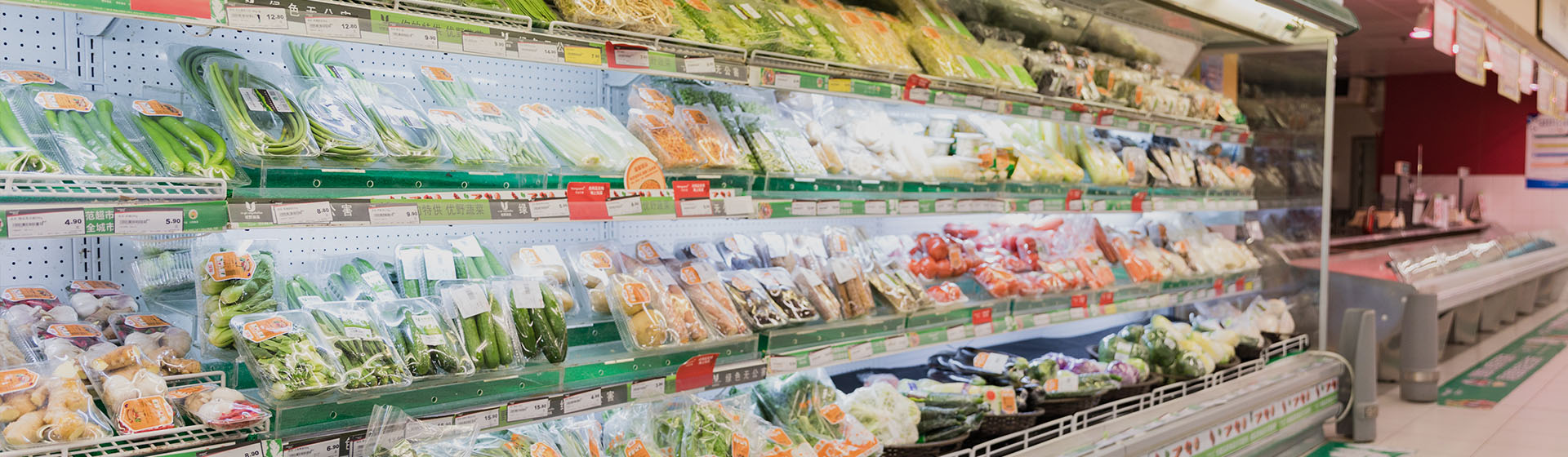
A vegetable showcase has a role that goes beyond refrigeration. It needs to keep fresh vegetables in a suitable display environment while making their color, shape, and overall appearance easy for customers to see.
Fresh produce is highly visual. Customers often judge vegetables before touching or buying them, looking for signs of freshness, firmness, cleanliness, and attractive color. This means the design of the display equipment can influence both how products are preserved and how they are perceived.
A successful vegetable showcase brings together refrigeration, presentation, product arrangement, accessibility, and daily maintenance without allowing one function to undermine another.
Why Is Vegetable Display Different From Ordinary Cold Storage?
Vegetables are living plant products, so they continue to change after harvesting. Different varieties also respond differently to temperature, humidity, airflow, and storage time.
This means a vegetable showcase should not be treated as a generic cold cabinet where every product is exposed to exactly the same conditions without consideration.
Leafy vegetables, root vegetables, tomatoes, peppers, and other produce can have different storage characteristics. A mixed display therefore benefits from thoughtful product grouping and a suitable refrigeration environment.
The equipment should support the products rather than forcing every product into the same storage pattern.
How Does the Showcase Structure Affect Product Presentation?
The structure of a vegetable showcase determines how customers see and reach the products.
An open display can create a direct visual connection between customers and fresh produce. Customers can see the vegetables from a distance and select products without opening a door.
The depth and height of the display are also important. Products that are too low may be difficult to see, while excessive depth can make the back of the display difficult to access.
A practical showcase should provide enough space for a full-looking display without making products difficult to reach.
Why Does Airflow Need Careful Control?
Refrigeration requires air movement, but fresh vegetables can be sensitive to excessive direct airflow.
For some products, continuous exposure to strong cold air can contribute to moisture loss. At the same time, insufficient circulation may make it difficult to maintain the intended refrigerated environment.
The goal is therefore balanced airflow rather than simply maximum airflow.
This is particularly relevant for open vegetable showcases because the produce is exposed to the surrounding store environment.
How Should Different Vegetables Be Arranged?
Product organization affects both appearance and daily operation.
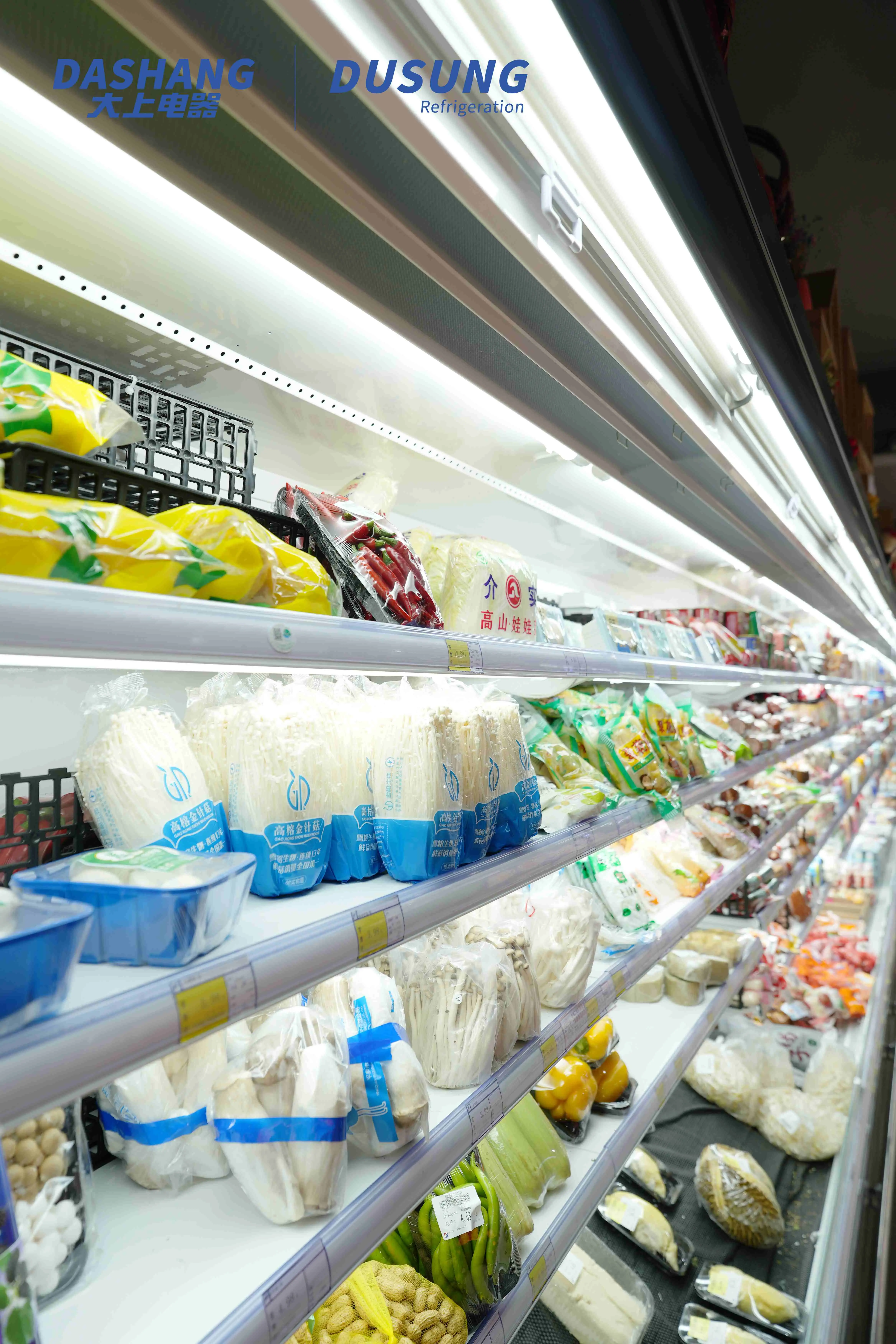
A useful arrangement can group products according to type, size, color, or customer shopping habits. It can also place visually attractive or frequently purchased vegetables in prominent areas.
Common groups may include:
- Leafy vegetables: Often benefit from arrangements that keep them easy to see and handle.
- Root vegetables: Can require deeper or more stable display areas depending on packaging and presentation.
- Tomatoes and peppers: Their strong colors can contribute to visual merchandising.
- Packaged fresh vegetables: May need clear labeling and organized shelf placement.
- Seasonal produce: Can be given more visible areas when demand changes.
The goal is not simply to fill the showcase. It is to create a display that remains attractive while allowing staff to rotate and replenish products efficiently.
Can a Vegetable Showcase Help Customers Judge Freshness?
It can certainly influence first impressions.
Customers often associate bright color, clean surfaces, organized displays, and full product presentation with freshness.
However, refrigeration equipment cannot compensate for poor product quality. Vegetables that are already damaged, overripe, or improperly handled will not become fresh simply because they are displayed in a refrigerated showcase.
The role of the equipment is to provide an environment and presentation system that helps maintain the condition of suitable fresh produce.
What Role Does Humidity Play?
Humidity is important because fresh vegetables can lose moisture during storage and display.
Too much moisture can also create undesirable surface conditions in some situations, so the goal is not simply to maximize humidity.
The appropriate environment depends on the product mix and the operating conditions of the store.
This is another reason why a vegetable showcase should be evaluated according to the type of produce being displayed rather than as a generic refrigeration unit.
Why Does the Display Need to Be Easy to Clean?
Fresh vegetables can introduce leaves, soil, water, and other residue into the display area. Even when products are clean, regular handling can create small amounts of debris.
A showcase with accessible surfaces and practical drainage can make daily cleaning easier.
Clean glass or display surfaces are also important for customer perception. A refrigerated display that looks dirty can make otherwise attractive produce appear less fresh.
Maintenance therefore contributes to both hygiene and merchandising.
How Does Lighting Affect Fresh Produce?
Fresh vegetables are highly dependent on visual presentation, which makes lighting an important part of the display environment.
Green leafy vegetables, red peppers, tomatoes, carrots, and other colorful products can benefit from lighting that allows their natural colors to remain clear.
At the same time, lighting should be considered alongside the refrigeration system because lighting can contribute heat to the display area.
Good design aims to improve visibility without creating an unnecessary refrigeration load.
Where Should a Vegetable Showcase Be Positioned?
The location of the showcase can influence how many customers notice and interact with the produce.
Fresh produce is often positioned along natural shopping routes because it can create a strong visual impression when customers enter or move through a food section.
Staff also need enough space to replenish the display without blocking customers.
Therefore, the position of the equipment should be considered together with store traffic, product turnover, available floor space, and staff movement.
What Makes a Vegetable Showcase Work Well?
The most useful vegetable showcases balance several functions at the same time:
- · Suitable refrigeration
- · Clear product visibility
- · Easy customer access
- · Practical replenishment
- · Balanced airflow
- · Logical product grouping
- · Simple cleaning
- · A display environment that supports fresh-product presentation
When these elements work together, the showcase becomes more than refrigerated storage. It becomes part of the way a store presents and manages fresh produce.
FAQs
Why can vegetables lose quality even when they are refrigerated?
Refrigeration slows many quality changes but does not stop them. Different vegetables respond differently to temperature, humidity, airflow, and storage duration, so an unsuitable environment can still affect product condition.
Is an open vegetable showcase suitable for every type of produce?
Not necessarily. The suitability depends on the vegetables being displayed and the surrounding store environment. Products that are more sensitive to moisture loss or temperature changes may require different display conditions.
Why should airflow not simply be made as strong as possible?
Air movement is necessary for refrigeration, but excessive direct airflow can increase moisture loss for some fresh products. Balanced air distribution is generally more useful than maximum airflow.
Can the design of a vegetable showcase affect merchandising?
Yes. Display height, depth, product visibility, lighting, and internal organization can influence how customers see and interact with fresh produce. The equipment therefore contributes to both refrigeration and presentation.
Post time: Aug-20-2026


