
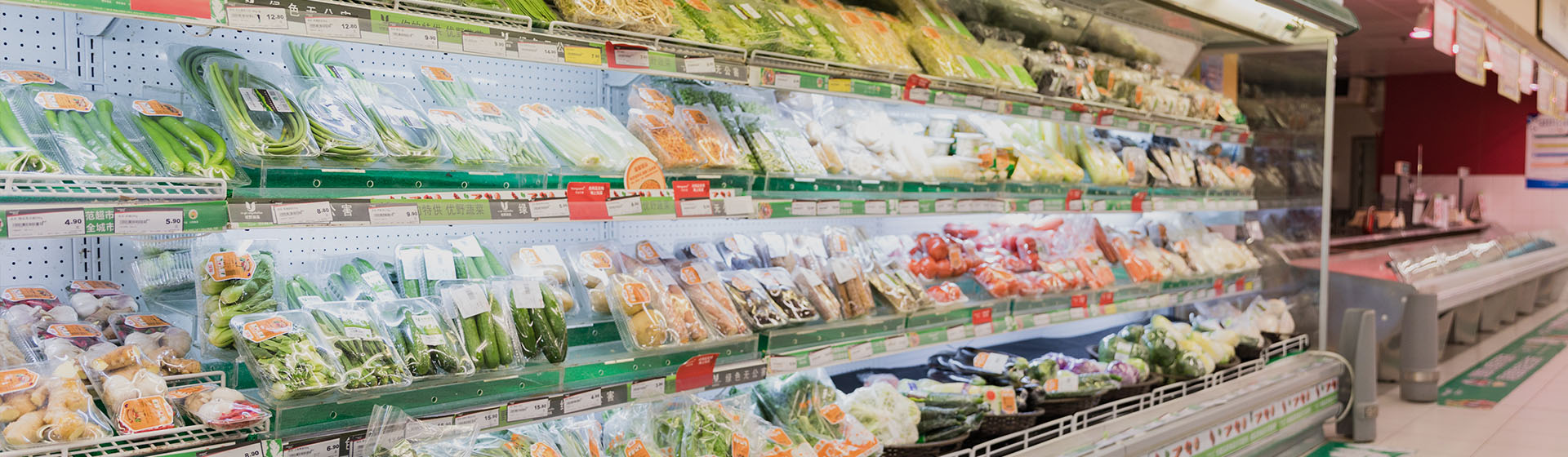
In modern food retail and commercial refrigeration systems, maintaining vegetable freshness while ensuring efficient storage and attractive presentation has become a key priority for supermarkets, grocery stores, and food distributors. A Vegetable Refrigerator is specifically designed to preserve the quality, texture, and nutritional value of fresh vegetables while supporting high-volume commercial operations.
As consumer demand for fresh and healthy food continues to rise, businesses must invest in refrigeration systems that can maintain optimal humidity and temperature conditions. A well-designed vegetable refrigerator not only extends shelf life but also reduces food waste, improves inventory management, and enhances product display efficiency in retail environments.
This article provides a comprehensive overview of vegetable refrigerators, including their structure, working principles, applications, advantages, and selection criteria for B2B buyers.
What Is a Vegetable Refrigerator
A Vegetable Refrigerator is a commercial refrigeration unit designed to store and preserve vegetables under controlled temperature and humidity conditions. Unlike standard refrigeration equipment, it focuses on maintaining freshness by preventing dehydration, wilting, and nutrient loss.
These refrigerators are commonly used in supermarkets, distribution centers, restaurants, and food processing facilities where fresh produce must be stored for short or medium-term use.
Typical stored items include leafy greens, root vegetables, herbs, and other perishable produce that requires stable cooling and moisture retention.
Why Vegetable Refrigeration Is Important in the Food Industry
Vegetables are highly sensitive to temperature fluctuations and moisture loss. Without proper storage conditions, they can quickly lose freshness, texture, and nutritional value. A Vegetable Refrigerator solves these challenges by providing a controlled environment tailored specifically for produce preservation.
Key importance includes:
● Extending shelf life of fresh vegetables
● Reducing food waste in retail and supply chains
● Maintaining nutritional value and visual appeal
● Supporting consistent product availability in stores
● Improving customer satisfaction through fresh presentation
For commercial operators, this directly impacts profitability and operational efficiency.
How a Vegetable Refrigerator Works
A Vegetable Refrigerator operates using a combination of cooling systems and humidity control mechanisms. The goal is to maintain an ideal environment that slows down respiration and dehydration in fresh produce.
Core working principles include:
● Temperature control typically between 0°C and 10°C depending on product type
● Humidity regulation to prevent moisture loss and wilting
● Air circulation system to ensure even cooling distribution
● Insulated cabinet design to reduce external heat influence
● Adjustable shelving to accommodate different vegetable sizes
These systems work together to create a stable preservation environment that keeps vegetables fresh for longer periods.
Key Features of a Commercial Vegetable Refrigerator
Modern Vegetable Refrigerators are designed with advanced refrigeration technology to meet commercial demands.
● High-efficiency compressor for continuous cooling performance
● Humidity control system to maintain optimal moisture levels
● Multi-layer storage shelves for organized product display
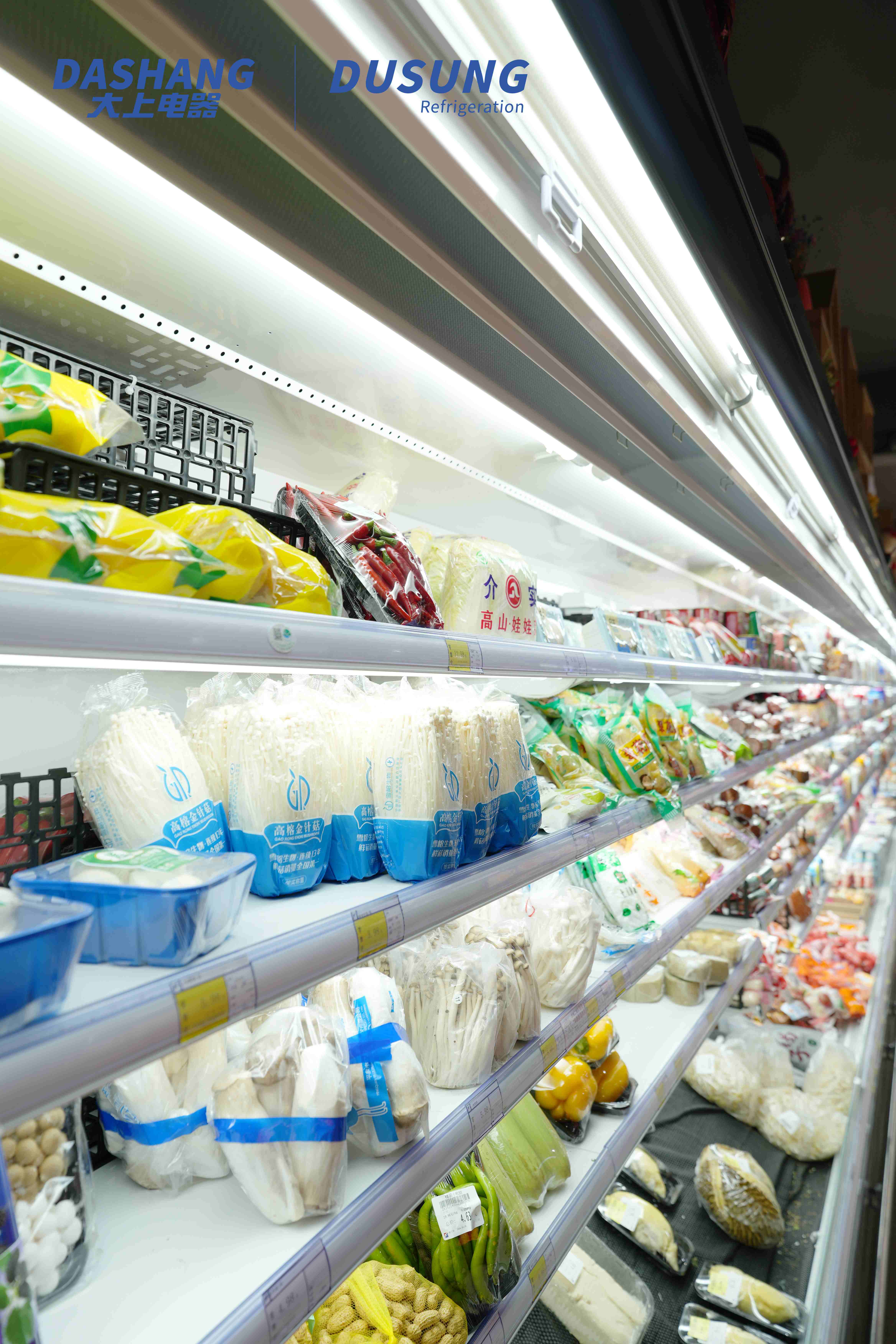
● Transparent glass door options for retail visibility
● LED interior lighting for improved product presentation
● Digital temperature control system for precision management
● Anti-fog and anti-condensation technology
● Heavy-duty shelving for bulk vegetable storage
These features ensure both preservation quality and operational convenience.
Commercial Applications of Vegetable Refrigerators
Vegetable Refrigerators are widely used across multiple sectors in the food industry due to their versatility and reliability.
● Supermarkets for fresh produce display and storage
● Grocery stores for daily vegetable inventory management
● Restaurants for ingredient preparation storage
● Hotels and catering services for bulk food storage
● Food distribution centers for cold chain management
● Agricultural supply chains for post-harvest preservation
Their ability to maintain freshness makes them essential in any business dealing with perishable produce.
Advantages of Using a Vegetable Refrigerator
For B2B buyers, investing in a Vegetable Refrigerator provides both operational and commercial benefits.
● Improved freshness and extended shelf life of vegetables
● Reduced spoilage and food waste
● Better inventory control and stock rotation
● Enhanced visual appeal for retail customers
● Stable temperature and humidity control for consistent quality
● Increased customer trust in product freshness
● Higher sales performance due to better product presentation
These advantages make it a valuable investment for food-related businesses.
How to Choose the Right Vegetable Refrigerator
Selecting the right model depends on business size, product type, and operational requirements.
● Storage capacity based on daily vegetable turnover
● Humidity control precision for different produce types
● Temperature stability and cooling performance
● Shelf design flexibility for various vegetable sizes
● Energy efficiency rating to reduce operational costs
● Door type selection (glass door or solid door)
● Ease of cleaning and maintenance accessibility
● Noise level suitability for retail environments
Careful evaluation ensures long-term efficiency and cost-effectiveness.
Energy Efficiency and Modern Technology Trends
Modern Vegetable Refrigerators are increasingly designed with sustainability and energy efficiency in mind.
● High-efficiency compressors reduce electricity consumption
● Improved insulation materials minimize temperature loss
● Eco-friendly refrigerants support environmental compliance
● LED lighting reduces heat generation and energy use
● Smart temperature control systems optimize performance cycles
These advancements help businesses reduce operational costs while supporting environmental goals.
Maintenance and Operational Best Practices
Proper maintenance is essential to ensure consistent performance and long equipment lifespan.
● Regular cleaning of cooling coils to maintain efficiency
● Monitoring humidity levels for optimal vegetable preservation
● Checking door seals to prevent cold air leakage
● Ensuring proper airflow circulation inside the cabinet
● Routine inspection of temperature control systems
Well-maintained equipment ensures stable performance and reduces unexpected breakdowns.
Conclusion
A Vegetable Refrigerator is a critical component in modern food retail and cold storage systems. It provides the ideal environment for preserving freshness, maintaining nutritional value, and reducing waste across the supply chain.
For B2B buyers, choosing the right model involves evaluating capacity, humidity control, energy efficiency, and operational design. As demand for fresh produce continues to grow globally, vegetable refrigeration technology will remain essential for improving food quality and retail performance.
FAQ
1. What is a vegetable refrigerator used for?
It is used to store and preserve fresh vegetables under controlled temperature and humidity conditions.
2. What temperature is ideal for vegetable storage?
Most vegetables are stored between 0°C and 10°C depending on type.
3. Does a vegetable refrigerator require humidity control?
Yes, humidity control is essential to prevent dehydration and maintain freshness.
4. Where is it commonly used?
It is widely used in supermarkets, restaurants, hotels, and food distribution centers.
Post time: Apr-15-2026


