

An Upright Refrigerator is designed to make better use of vertical space while providing a dedicated refrigerated environment for food and other temperature-sensitive products. Compared with horizontal refrigeration equipment, its tall cabinet structure allows products to be organized across multiple levels without requiring a large floor area.
This design is particularly useful when refrigeration capacity needs to increase but available floor space is limited. However, the value of an Upright Refrigerator is not simply its height. Internal organization, door configuration, airflow, insulation, shelf arrangement, and cabinet dimensions all affect how effectively the available space can be used.
Why Choose an Upright Refrigerator for Limited Floor Space?
Floor space is often one of the main limitations when planning commercial refrigeration equipment. A wider refrigerator can provide additional storage, but increasing the footprint is not always practical.
An Upright Refrigerator takes a different approach by extending storage vertically. Multiple shelves allow products to be distributed from the lower section of the cabinet to the upper section, creating more usable refrigerated volume within a relatively compact footprint.
This makes vertical refrigeration particularly suitable for environments where:
- Floor space is limited
- Different products need to be separated
- Frequent product access is required
- Refrigerated storage needs to be organized by category
- More storage capacity is needed without significantly increasing cabinet width
The key advantage is therefore not simply “more shelves,” but a more efficient relationship between cabinet volume and occupied floor area.
Internal Organization Determines Usable Capacity
A refrigerator may have a large stated capacity, but that does not automatically mean the space will be easy to use.
The internal dimensions need to correspond with the products being stored. If shelves are too shallow, bulky packages may not fit properly. If the vertical spacing is too small, taller containers cannot be accommodated. On the other hand, excessive shelf spacing can leave unused areas inside the cabinet.
For an Upright Refrigerator, useful internal planning should consider:
- Product height and depth
- Shelf width
- Vertical clearance
- Number of storage levels
- Shelf adjustability
- Frequency of product access
Adjustable shelves can be particularly useful when the cabinet needs to store products with different dimensions. The internal space can then be reorganized without changing the overall cabinet.
One Door or Multiple Doors?
Door configuration can change how an upright refrigerator is used.A single-door cabinet provides access to the entire refrigerated area through one opening. This can work well for smaller storage requirements or applications where the internal space is relatively compact.
Multi-door configurations divide the cabinet into several access areas. This can make product organization easier and may reduce the need to open the entire refrigerated space when retrieving a particular product.For example, products can be arranged according to category, size, or frequency of access. A frequently used section can be separated from products that are accessed less often.
The appropriate door configuration therefore depends on cabinet size, storage organization, and the way products are handled during daily operation.
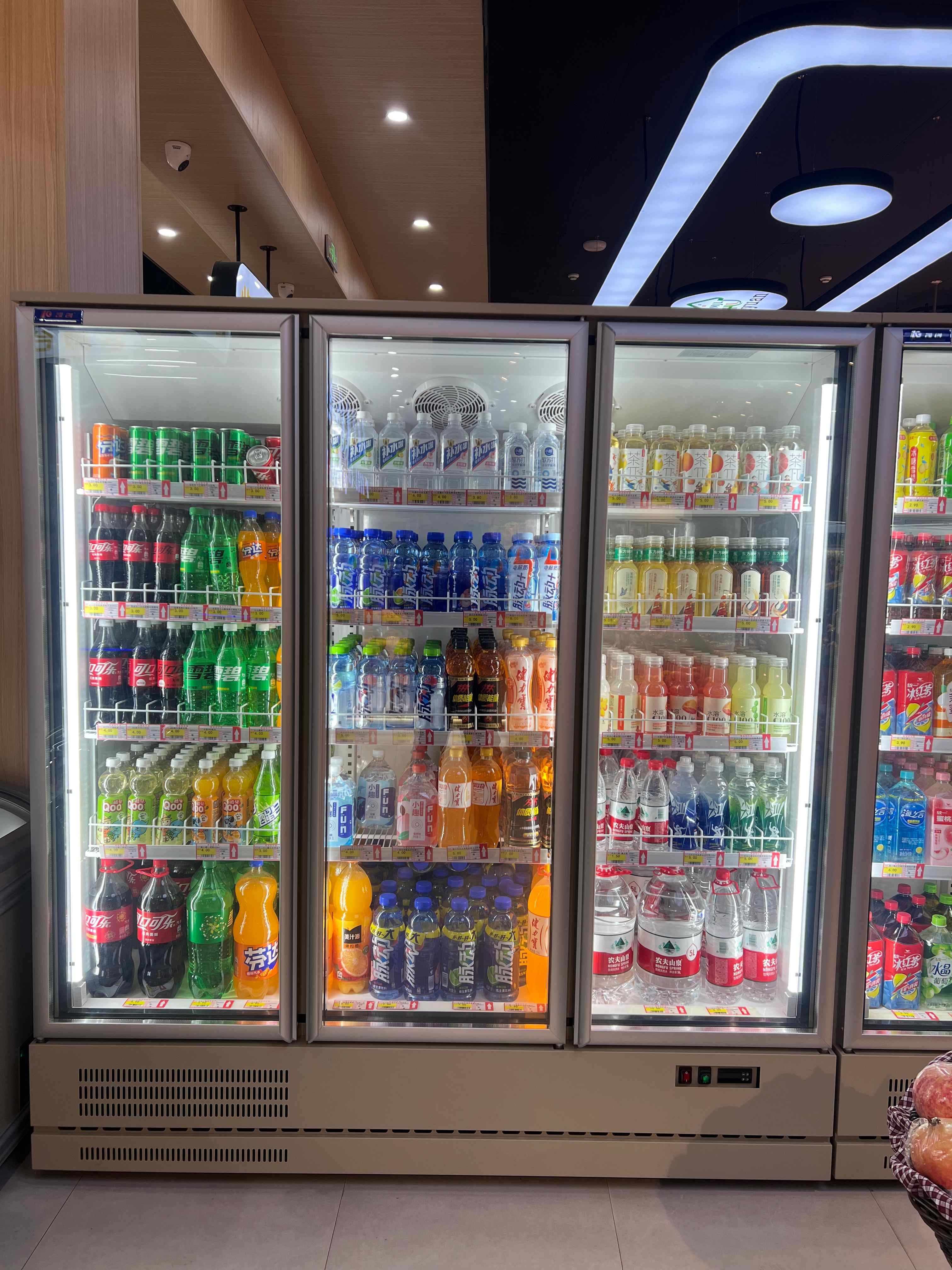
How Airflow Works Inside a Vertical Cabinet
Vertical cabinet design also creates specific requirements for temperature distribution.
Cold air needs to circulate through the refrigerated space so that different storage levels remain within the intended operating range. The internal layout should therefore work with the refrigeration system rather than obstructing airflow.
Product loading is important here. If packages are placed directly against areas intended for air circulation or shelves are overloaded, the movement of refrigerated air can be restricted.
This is why usable storage capacity should always be considered together with loading conditions. Filling every available space may increase the quantity of stored products, but it does not necessarily improve refrigeration efficiency.
A well-organized cabinet provides sufficient space for products while allowing the refrigeration system to maintain the intended cooling environment.
Door Design and Insulation Also Matter
Every time a refrigerated cabinet is opened, warmer surrounding air can enter the storage area. The frequency and duration of door opening can therefore affect the refrigeration load.
Door design, sealing performance, insulation, and cabinet construction all contribute to reducing unnecessary heat exchange.
For applications with frequent access, these factors become particularly relevant. A refrigerator that is opened many times during operation needs to be designed for that type of use rather than evaluated only under ideal closed-door conditions.
The same principle applies to insulation. A well-insulated cabinet helps separate the refrigerated interior from surrounding temperatures and supports more stable operating conditions.
How to Choose the Right Upright Refrigerator
Selecting an Upright Refrigerator should begin with the products and available space rather than the cabinet model.
1. Start with the available floor area
Measure the installation area carefully, including the space required for door movement and surrounding equipment. A tall cabinet may save floor space, but sufficient clearance is still necessary for practical operation.
2. Calculate the actual storage requirements
Consider the quantity and dimensions of the products that need to be refrigerated. Product measurements are more useful than relying only on total cabinet volume.
3. Consider shelf flexibility
If different products will be stored at different times, adjustable shelving can provide greater flexibility and help reduce unused space.
4. Select the appropriate door configuration
Single-door and multi-door designs can serve different storage and access requirements. The choice should reflect cabinet size and how frequently different sections need to be opened.
5. Consider the operating environment
Ambient temperature, installation location, expected loading, and frequency of door opening can all affect refrigeration requirements. Equipment should be matched to its intended operating conditions.
Vertical Refrigeration Is About Space Efficiency, Not Just Height
The main advantage of an Upright Refrigerator is its ability to use vertical space efficiently. However, simply making a cabinet taller does not automatically create a better refrigeration solution.
The internal layout must match product dimensions, shelves need to provide practical storage levels, doors should correspond with access requirements, and the refrigeration system needs to maintain suitable conditions throughout the cabinet.
For commercial refrigeration projects, manufacturers may also offer different cabinet sizes, shelf configurations, door arrangements, temperature ranges, and other specifications. These options make it possible to adapt vertical refrigeration equipment to different storage requirements and installation conditions.
The best configuration is therefore the one that makes the available space useful while maintaining appropriate refrigeration performance.
FAQ
1. What is an Upright Refrigerator?
An Upright Refrigerator is a vertical commercial refrigeration cabinet designed to provide refrigerated storage across multiple shelf levels while occupying relatively limited floor space.
2. What is the main advantage of an Upright Refrigerator?
Its main advantage is efficient use of vertical space. It can provide substantial refrigerated storage without requiring the same floor area as a wider horizontal cabinet with similar storage requirements.
3. Can the shelves inside an Upright Refrigerator be adjusted?
Many models use adjustable shelves, allowing the internal space to be adapted to products with different heights and dimensions. The available adjustment range depends on the specific design.
4. Is a multi-door Upright Refrigerator better for product organization?
A multi-door configuration can make it easier to divide products into different sections and access specific areas without opening the entire cabinet. Whether it is suitable depends on the storage volume and operating requirements.
5. What should be considered when selecting an Upright Refrigerator?
Important factors include available floor space, cabinet dimensions, product size, storage volume, shelf configuration, door arrangement, ambient conditions, and expected frequency of access. These factors should be evaluated together rather than relying on capacity alone.
Post time: Sep-23-2026


