
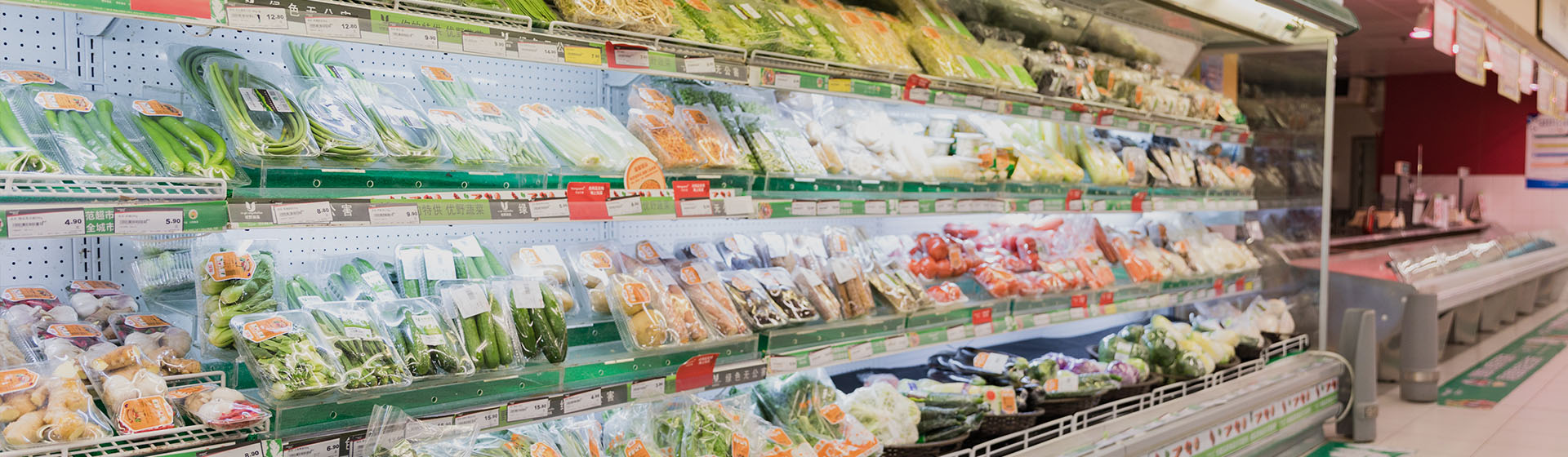
In modern commercial refrigeration equipment, requirements continue to evolve beyond simple temperature control. Factors such as product visibility, uniform cooling, and structural durability have become increasingly important. For this reason, the upright glass door refrigerator has become a key solution that combines storage and display in a single unit.
With its transparent door design, this type of refrigerator allows users to view the contents without opening the door, which reduces cold air loss and helps maintain a stable internal temperature. This makes it a highly efficient and versatile option for various commercial applications.
What Is an Upright Glass Door Refrigerator?
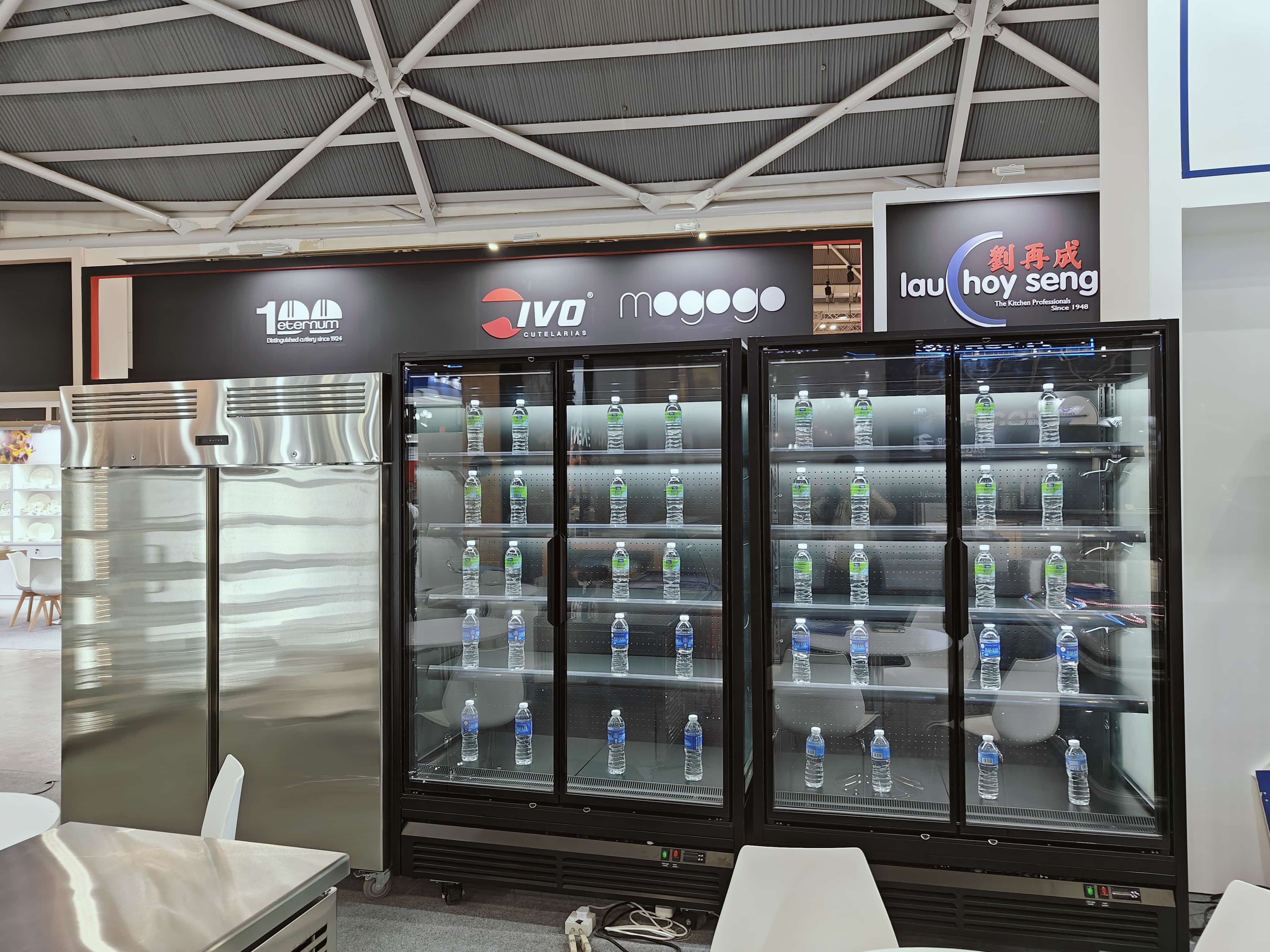
An upright glass door refrigerator is a vertical refrigeration unit equipped with a transparent door, designed for both storing and displaying chilled products. Its structure maximizes vertical space, allowing for greater storage capacity while occupying a relatively small footprint.
These refrigerators are widely used for beverages, dairy products, ready-to-eat meals, and packaged foods where both preservation and visibility are essential.
Types and Structural Variations
There are several configurations of upright glass door refrigerators, primarily distinguished by door quantity and opening mechanisms. Single-door models are typically used in compact spaces, while double-door and multi-door units are suitable for larger storage requirements.
In terms of door operation, models are available with swing doors or sliding doors. Swing doors provide full access to the interior, while sliding doors are more suitable for environments with limited aisle space.
The internal layout may also vary, including the number of shelves, their depth, and adjustability, allowing the unit to accommodate different types of products.
Core Functions and Technical Features
The performance of the unit is determined by its cooling system, structural design, and supporting features.
● Forced Air Circulation System
Ensures even distribution of cold air throughout the cabinet
● Electronic Temperature Control System
Provides precise adjustment and monitoring of internal conditions
● Multi-Layer Glass Door Construction
Enhances insulation and structural strength
● Anti-Fog Technology
Maintains clear visibility even in humid environments
● Integrated LED Lighting
Provides uniform illumination with minimal heat output
● Adjustable Shelving System
Allows flexible configuration based on product size
Cooling Performance and Temperature Stability
Maintaining a stable temperature is essential for preserving product quality. The upright glass door refrigerator typically operates within a temperature range of 0°C to 8°C, suitable for most chilled products.
The air circulation system helps eliminate temperature variations between different levels, ensuring consistent cooling performance. Additionally, the unit is designed to recover quickly after door openings, maintaining stable internal conditions even during frequent use.
Materials and Durability
To support long-term commercial use, high-quality materials are used in construction. The interior is often made of stainless steel, which is resistant to corrosion and easy to clean.
The cabinet is insulated with high-density foam materials to reduce thermal loss and improve energy efficiency. Reinforced door frames and sealing systems further enhance durability and maintain consistent cooling performance.
Application Range
Due to its versatility, the upright glass door refrigerator is widely used across different industries. It is suitable for supermarkets, convenience stores, restaurants, cafés, hotels, and other environments where chilled products need to be both stored and displayed.
Its design allows for efficient product organization while maintaining easy access and clear visibility.
Advantages Compared to Solid Door Refrigerators
One of the key advantages is the ability to visually monitor contents without opening the door, which helps reduce cold air loss and maintain internal temperature stability. This contributes to improved energy efficiency.
Additionally, the vertical design optimizes space usage, while the transparent door enhances product presentation.
Selection Considerations
When choosing an upright glass door refrigerator, it is important to consider storage capacity, available space, and temperature requirements. The type of cooling system, material quality, and shelf adjustability should also be evaluated.
Energy efficiency and ease of maintenance are equally important factors for long-term operation.
Conclusion
The upright glass door refrigerator is a modern refrigeration solution that integrates storage and display functions. Its design ensures stable cooling performance while providing excellent product visibility.
With continuous advancements in refrigeration technology, these units are becoming more efficient, durable, and adaptable, making them a reliable choice for a wide range of commercial applications.
FAQ
1. What is the typical temperature range?
It usually operates between 0°C and 8°C.
2. Does the glass door affect insulation performance?
No, multi-layer glass construction provides effective insulation.
3. How does the air circulation system work?
It distributes cold air evenly throughout the cabinet.
4. Is it suitable for continuous operation?
Yes, it is designed for long-term commercial use.
5. Can the internal layout be adjusted?
Yes, the shelves can be repositioned according to user needs.
Post time: Apr-09-2026


