
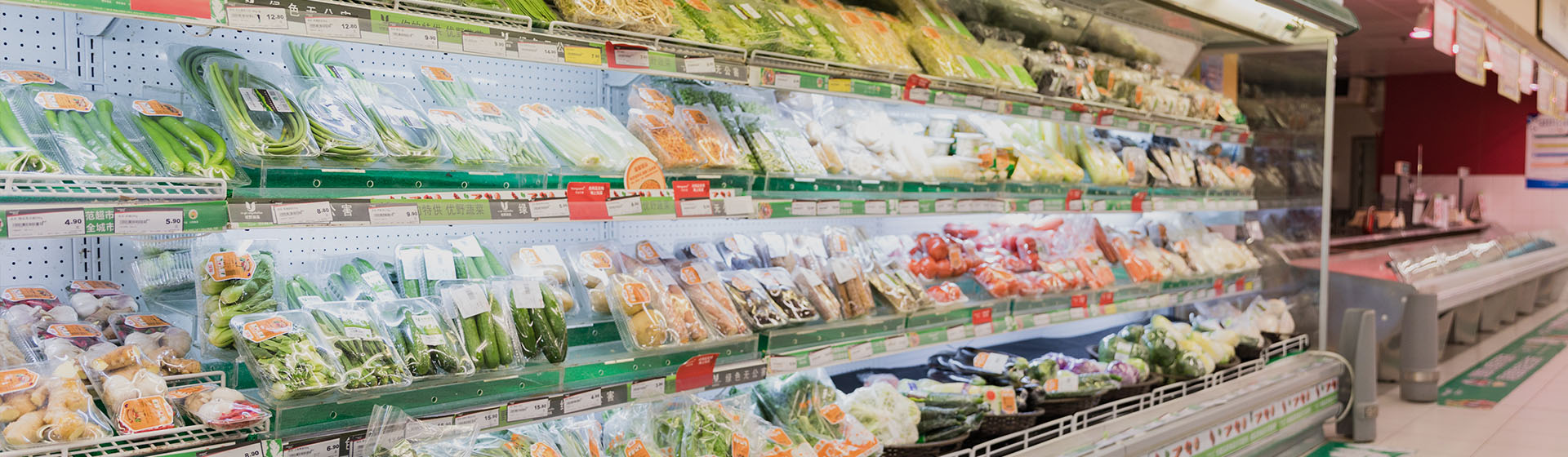
In commercial refrigeration, product structure and temperature stability directly determine performance and durability. The Triple up and down glass door freezer is designed as a high-capacity, multi-access freezing solution that combines vertical storage efficiency with segmented door operation. This configuration allows precise temperature retention while maintaining clear product visibility, making it a specialized product for demanding frozen storage requirements.
What Is a Triple Up and Down Glass Door Freezer?
A Triple up and down glass door freezer is a vertical freezing unit equipped with three independent glass door sections arranged in an upper and lower configuration. Each section can be opened separately, allowing controlled access to different storage zones without exposing the entire cabinet to external temperature changes.
This design is particularly focused on reducing cold air loss while improving internal organization. Compared to single-door or full-height glass door freezers, the segmented structure enhances both thermal efficiency and usability at the product level.
Structural Design and Cabinet Configuration
The structural framework of a triple up and down glass door freezer is engineered to support durability, insulation, and efficient compartmentalization.
● Multi-section door layout
The cabinet is divided into three vertical sections, each with upper and lower glass doors, allowing independent operation and better temperature control.
● Reinforced cabinet body
Constructed using heavy-duty coated steel or stainless materials, ensuring resistance to corrosion and deformation over long-term use.
● High-density insulation
Thick polyurethane insulation layers reduce heat transfer and maintain stable freezing conditions throughout the cabinet.
● Internal compartment division
The interior is segmented to support organized storage while minimizing temperature disturbance when accessing specific sections.
Glass Door System and Visibility Performance
The glass door system is a defining feature of this freezer type, combining visibility with thermal protection.
● Double or triple-pane tempered glass
Improves insulation while ensuring safety and durability.
● Anti-condensation technology
Prevents fogging on glass surfaces, maintaining clear product visibility even in humid environments.
● Up and down split-door design
Allows partial access to stored products, reducing cold air loss compared to full-door opening.
● Magnetic sealing system
Ensures tight closure to prevent temperature fluctuations and energy loss.
Cooling System and Temperature Stability
The cooling system in a Triple up and down glass door freezer is optimized for consistent low-temperature operation across multiple compartments.
● High-efficiency compressor
Provides continuous cooling performance with rapid temperature recovery after door openings.
● Fan-assisted air circulation
Ensures uniform temperature distribution across all shelves and compartments.
● Multi-point temperature sensors
Monitor temperature variations in different sections for precise control.
● Low-temperature range
Typically maintains -18°C or lower, ensuring proper preservation of frozen goods.
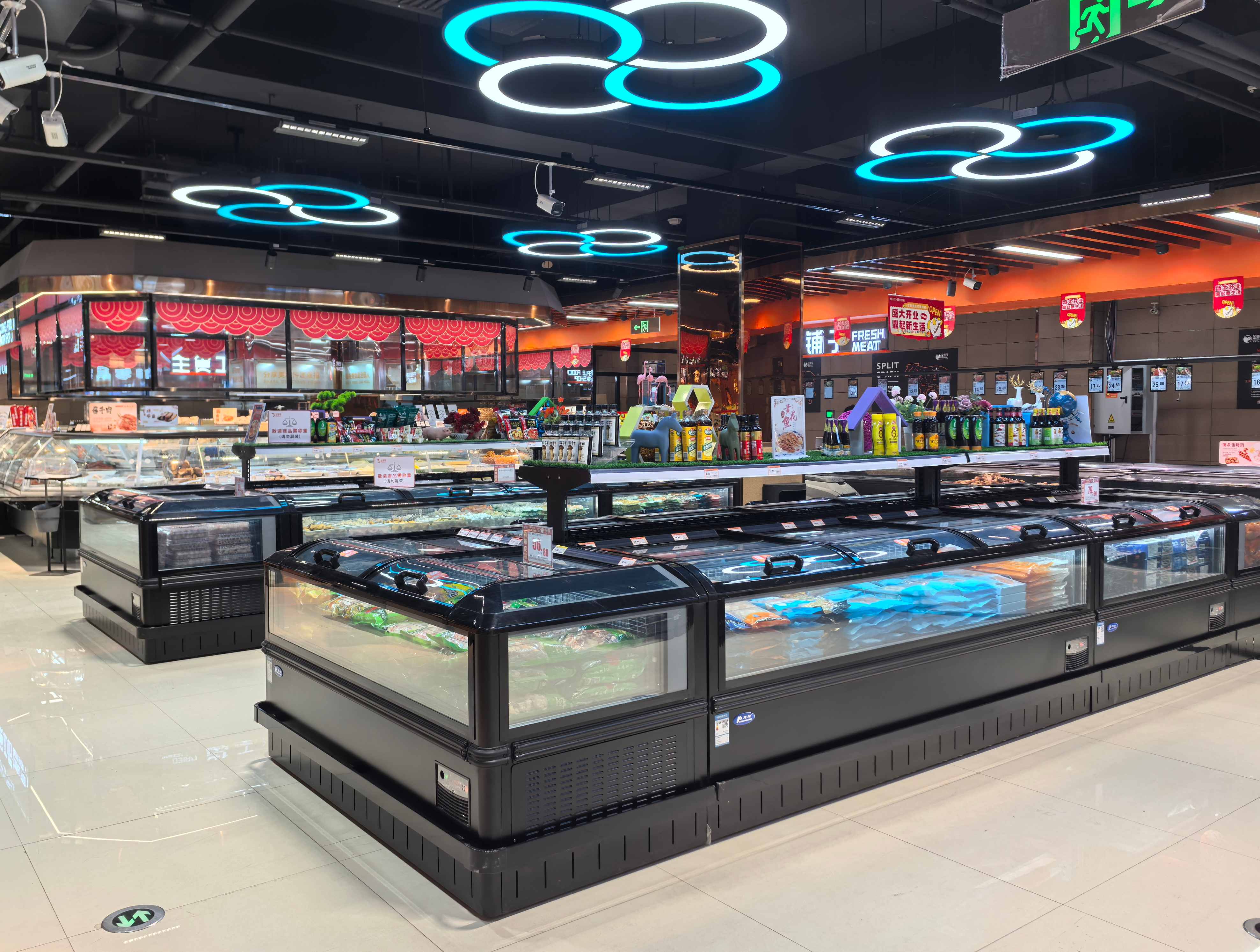
Internal Storage and Shelf Configuration
The internal design focuses on maximizing storage flexibility while maintaining airflow efficiency.
● Adjustable shelving system
Shelves can be repositioned to accommodate products of different sizes and packaging formats.
● Heavy-duty shelf construction
Supports high load capacity without bending or instability.
● Zoned storage layout
Different sections can be used for categorized storage, improving organization.
● Open airflow channels
Ensure that cold air circulates freely, preventing temperature inconsistencies.
Energy Efficiency and Thermal Performance
Energy efficiency is achieved through a combination of structural and system-level design elements.
● Segmented door access
Reduces unnecessary cold air loss by limiting exposure to specific sections.
● High-performance insulation materials
Minimize external heat infiltration.
● Efficient refrigerant circulation
Improves cooling performance while controlling energy consumption.
● Optimized airflow system
Reduces energy waste by maintaining balanced internal cooling.
Defrosting and Moisture Management
Maintaining consistent performance requires effective frost and moisture control systems.
● Automatic defrost system
Prevents excessive ice buildup on evaporator surfaces.
● Condensate evaporation system
Reduces manual maintenance by automatically handling moisture.
● Frost-resistant internal design
Minimizes ice accumulation on stored products and surfaces.
Durability and Material Engineering
The durability of a Triple up and down glass door freezer is defined by material quality and mechanical design.
● Corrosion-resistant exterior coating
Protects against environmental exposure and extends service life.
● Impact-resistant glass panels
Ensure safety and long-term usability.
● Heavy-duty hinges and handles
Designed for frequent operation without wear.
● Stable base and frame structure
Maintains alignment and stability under full load conditions.
Noise Control and Operational Stability
Operational consistency is supported by low-noise and vibration-reduction features.
● Low-noise compressor system
Ensures quiet operation suitable for indoor environments.
● Anti-vibration mounting design
Reduces mechanical stress on internal components.
● Balanced airflow system
Maintains stable cooling without turbulence.
Conclusion
The Triple up and down glass door freezer represents a product-focused approach to commercial freezing equipment, combining segmented access, high-efficiency cooling, and durable structural design. Its multi-door configuration enhances temperature stability, reduces cold air loss, and supports organized storage, making it a technically advanced solution for frozen product preservation.
By focusing on structural integrity, cooling performance, and internal configuration, this type of freezer delivers consistent operation and long-term reliability. Understanding these product-level features allows for better evaluation and selection of equipment suited to precise freezing requirements.
FAQ
- What is the advantage of the up and down split-door design?
It allows partial access to the freezer, reducing cold air loss and improving temperature stability. - How does this freezer maintain uniform temperature across sections?
Through fan-assisted airflow and multi-point temperature monitoring systems. - Is the glass door structure energy efficient?
Yes, multi-layer insulated glass combined with tight sealing helps minimize energy loss. - What temperature range does this freezer typically operate in?
It generally maintains temperatures at or below -18°C for effective frozen storage.
Post time: Apr-29-2026


