
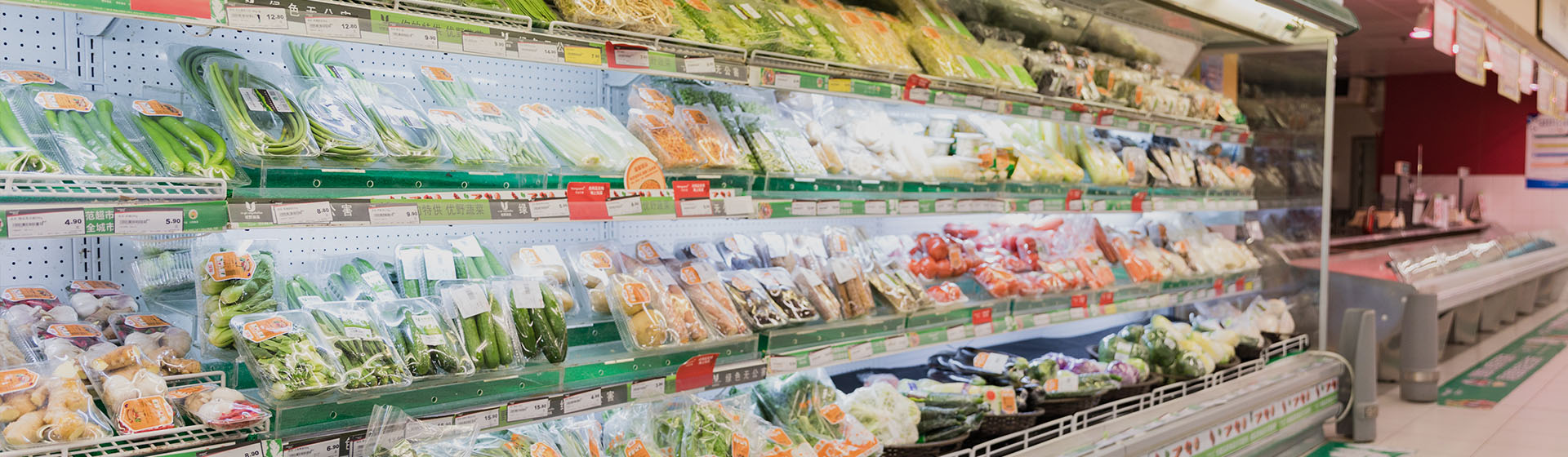
In today’s competitive retail environment, supermarket glass door fridges have become indispensable tools for both product presentation and operational management. Beyond simple refrigeration, these units enable supermarkets to maximize product visibility, enhance energy efficiency, and streamline daily operations. For B2B buyers in the retail, hospitality, and foodservice sectors, understanding the diverse applications and technical specifications of supermarket glass door fridges is key to choosing solutions that support profitability and customer satisfaction.
With increasing consumer expectations for product availability and presentation, glass door fridges are no longer just functional appliances—they are strategic assets that directly impact sales, customer experience, and store branding. Businesses that invest in high-quality glass door refrigeration can achieve a balance between operational efficiency and superior in-store merchandising.
Varieties of Supermarket Glass Door Fridges
Supermarkets and commercial retailers face varying challenges in product display and space management. Understanding the different types of supermarket glass door fridges can help B2B buyers select the most appropriate solutions:
● Single-section upright fridges – Compact units for aisles with limited space, ideal for beverages, dairy, and prepackaged snacks.
● Multi-section upright fridges – Designed for larger stores, allowing multiple categories of products to be stored and displayed efficiently.
● Sliding glass door units – Perfect for narrow aisles or high-traffic areas, minimizing cold air loss while providing easy access.
● Open-front display fridges with glass panels – Enable quick customer access in high-demand retail areas, commonly used for ready-to-eat meals and grab-and-go items.
● Customized modular fridges – Tailored to store layout, lighting preferences, and branding requirements, offering flexibility for unique retail needs.
Advanced Features of Supermarket Glass Door Fridges
High-quality supermarket glass door fridges are equipped with advanced features to improve performance, energy efficiency, and usability:
● Durable tempered or laminated glass – Withstands frequent opening and high customer traffic.
● Insulated door panels – Maintain consistent internal temperatures while reducing energy consumption.
● LED illumination – Provides bright, uniform lighting to highlight products and attract customer attention.
● Anti-fog coating – Ensures clear visibility even in high-humidity or heavily refrigerated environments.
● Adjustable shelving and compartments – Accommodates varying product sizes, maximizing storage potential.
● Digital temperature controls – Facilitate precise monitoring and ensure consistent cooling across all units.
● Lockable doors – Protect high-value or limited-stock items, enhancing security and loss prevention.
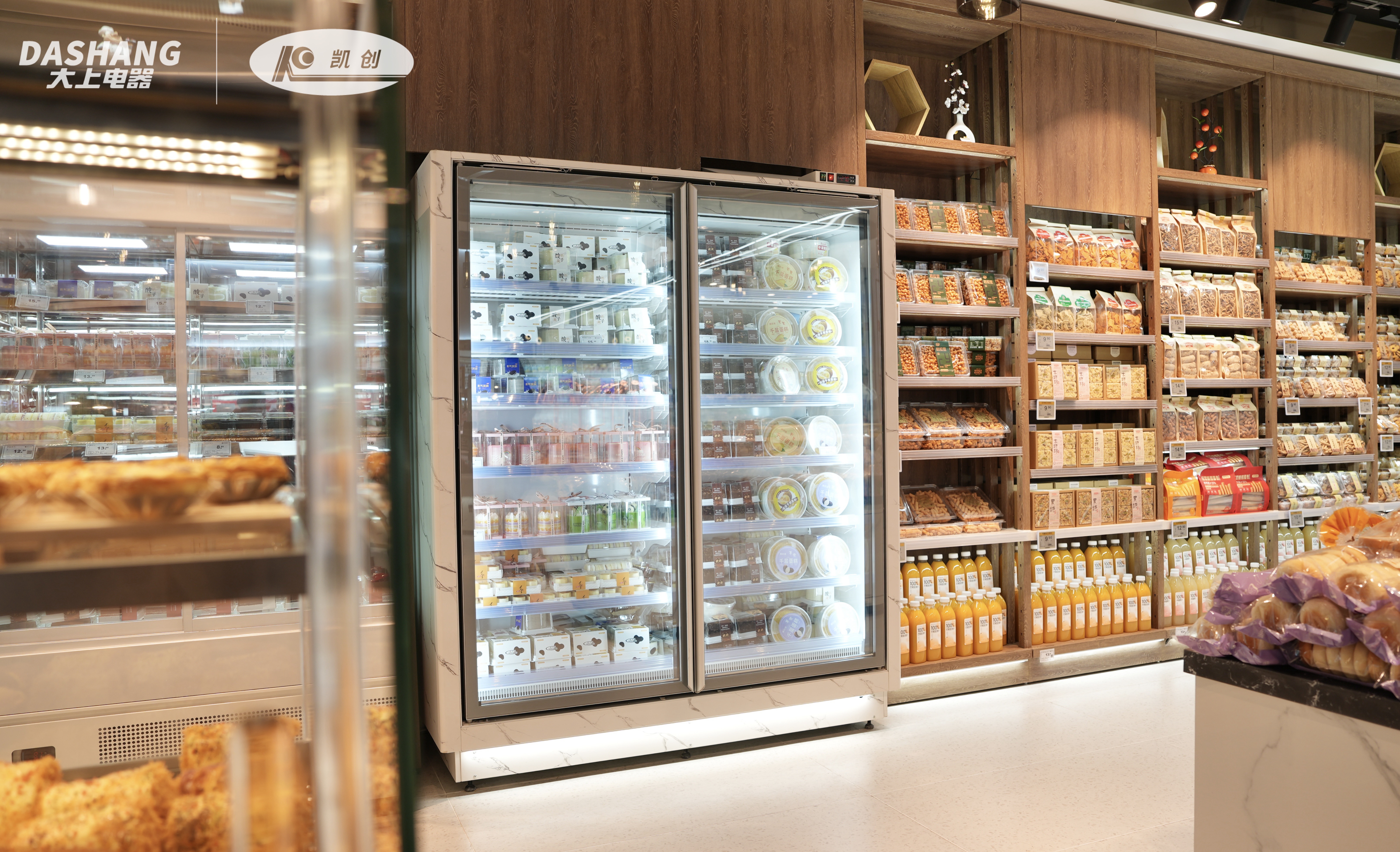
B2B Applications Across Retail and Foodservice
Supermarket glass door fridges serve a wide range of B2B use cases, supporting retailers and businesses in multiple sectors:
● Supermarkets and hypermarkets – Ideal for displaying beverages, dairy, frozen foods, and fresh produce, facilitating customer choice.
● Convenience stores – Quick access to cold drinks and snacks enhances convenience for time-conscious shoppers.
● Cafés and bakeries – Maintain product freshness while providing visually appealing displays for desserts, drinks, and packaged goods.
● Hotels and resorts – Mini-markets and guest lounges benefit from sleek, self-service refrigeration with consistent temperature control.
● Corporate cafeterias and catering facilities – Centralized cooling solutions for employee meals and beverages, ensuring easy management and distribution.
● Retail chains and franchise stores – Standardized glass door fridges allow consistency across multiple locations, simplifying maintenance and branding.
Benefits of Investing in Supermarket Glass Door Fridges
● Enhanced customer engagement – Transparent doors allow shoppers to instantly locate products, speeding up purchase decisions and improving satisfaction.
● Energy cost savings – Modern insulation and door technologies minimize energy loss, reducing operating expenses.
● Reduced product waste – Maintains consistent temperatures to prevent spoilage and optimize inventory turnover.
● Professional retail appearance – Clean glass doors and well-lit interiors create an inviting shopping environment.
● Operational efficiency – Easy-to-use controls, modular design, and low-maintenance construction streamline daily store operations.
● Durability and long-term reliability – High-quality materials and robust design ensure longevity in high-traffic retail spaces.
Procurement Considerations for B2B Buyers
When sourcing supermarket glass door fridges, buyers should evaluate the following factors:
● Glass durability – Tempered or laminated glass ensures safety and longevity.
● Door seals and insulation – Quality sealing prevents cold air leakage and maximizes energy efficiency.
● Refrigeration technology – Efficient compressors and cooling systems maintain consistent temperatures across all compartments.
● Lighting and shelf configuration – Adjustable LED lighting and modular shelving enhance product display and flexibility.
● Custom branding and aesthetics – Options for logos, colors, and signage can align the unit with store branding.
● After-sales support – Reliable supplier services for installation, maintenance, and spare parts are crucial for long-term operational stability.
By carefully selecting energy-efficient, durable, and customizable supermarket glass door fridges, B2B buyers can optimize store operations, enhance in-store merchandising, and improve customer satisfaction. Partnering with experienced suppliers ensures access to high-quality products, timely delivery, and ongoing technical support.
Conclusion
Supermarket glass door fridges are more than refrigeration units—they are strategic assets that enhance product visibility, improve energy efficiency, and elevate the customer experience. B2B buyers who understand the diverse types, advanced features, and applications can make informed decisions that boost operational efficiency, reduce costs, and support sustainable growth. Investing in premium, customizable glass door fridges ensures consistent performance, aligns with brand identity, and delivers long-term value across retail environments.
FAQ
1. What defines a supermarket glass door fridge?
A supermarket glass door fridge is a commercial refrigeration unit featuring transparent doors that allow customers to view products while maintaining consistent cooling efficiency.
2. How do glass door fridges benefit retail operations?
They improve product visibility, reduce energy consumption, lower product waste, enhance store aesthetics, and streamline daily operations.
3. Which types of businesses typically use supermarket glass door fridges?
Supermarkets, convenience stores, cafés, bakeries, hotels, corporate cafeterias, and retail chains commonly use these units.
4. What factors should B2B buyers consider when choosing a glass door fridge?
Consider store size, product types, space constraints, energy efficiency, customer convenience, and door style (swing, sliding, or multi-door).
Post time: Dec-08-2025


