
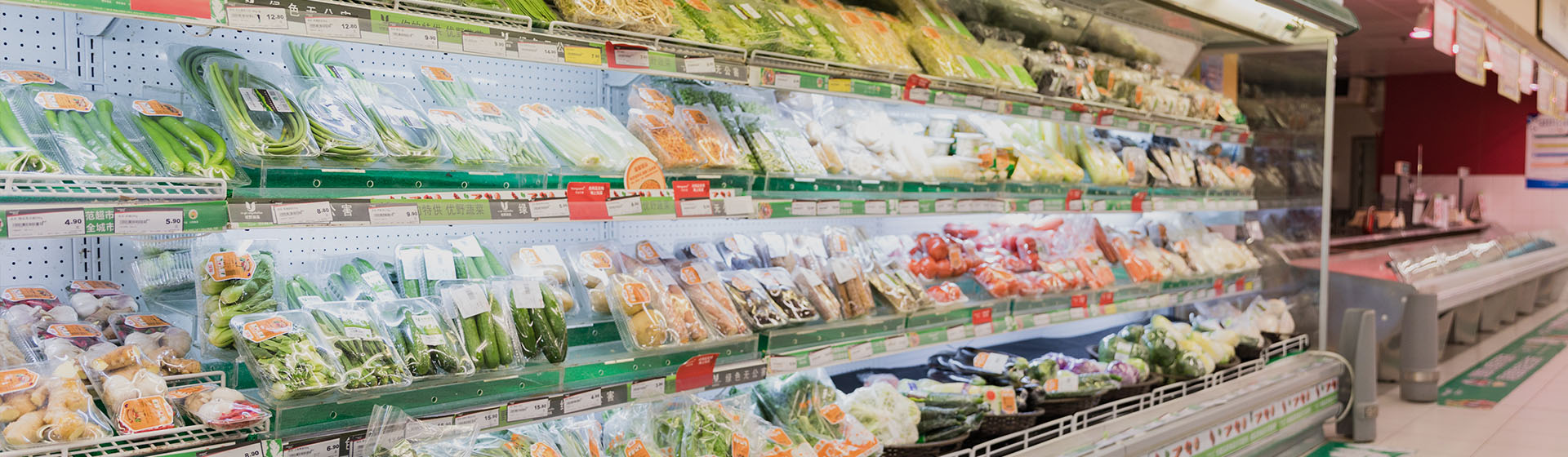
A supermarket fridge is not a single type of refrigerator. In a modern supermarket, refrigerated equipment may include upright display refrigerators, glass-door cabinets, open refrigerated cases, horizontal glass top coolers, and other specialized configurations.
Each serves a different role because supermarkets sell products with different storage requirements and different customer behaviors.
The purpose of supermarket refrigeration is therefore not simply to keep products cold. It is to create a practical connection between product preservation, product display, customer access, staff replenishment, and store layout.
Why Do Supermarkets Need Different Refrigeration Formats?
A supermarket may sell beverages, dairy products, fresh vegetables, packaged chilled foods, meat, seafood, frozen meals, and desserts within the same building. These products cannot always be displayed or stored effectively using one refrigeration format.
Upright refrigerators are often useful where products need to be presented vertically. Glass-door cabinets can provide visibility while keeping products enclosed. Open refrigerated cases allow fast access to selected products, while glass top freezers can provide dense horizontal storage for frozen foods.
The equipment mix should therefore reflect the product categories rather than forcing every department into the same cabinet design.
How Does a Supermarket Fridge Influence Product Presentation?
Refrigeration equipment is part of the visual merchandising environment.
Customers notice whether products are easy to find, whether shelves appear organized, whether glass is clean, and whether products are clearly visible.
The cabinet itself can influence how much of the product is visible. Shelf height, cabinet depth, lighting, door configuration, and product arrangement all contribute to the final display.
This is particularly important for products where packaging and appearance influence customer decisions.
What Role Does the Product Category Play?
Different supermarket departments may use refrigeration in different ways.
Dairy products often benefit from organized vertical shelving and easy label visibility.
Beverages may require high-capacity display with frequent customer access.
Fresh vegetables need a display environment that supports product appearance and moisture management.
Fresh meat and seafood require careful organization and appropriate refrigerated conditions.
Frozen foods often benefit from horizontal storage where many packages can be displayed together.
The refrigeration system should therefore follow the characteristics of the merchandise.
How Do Customers Interact With Different Supermarket Fridges?
Customer behavior changes according to the equipment design.
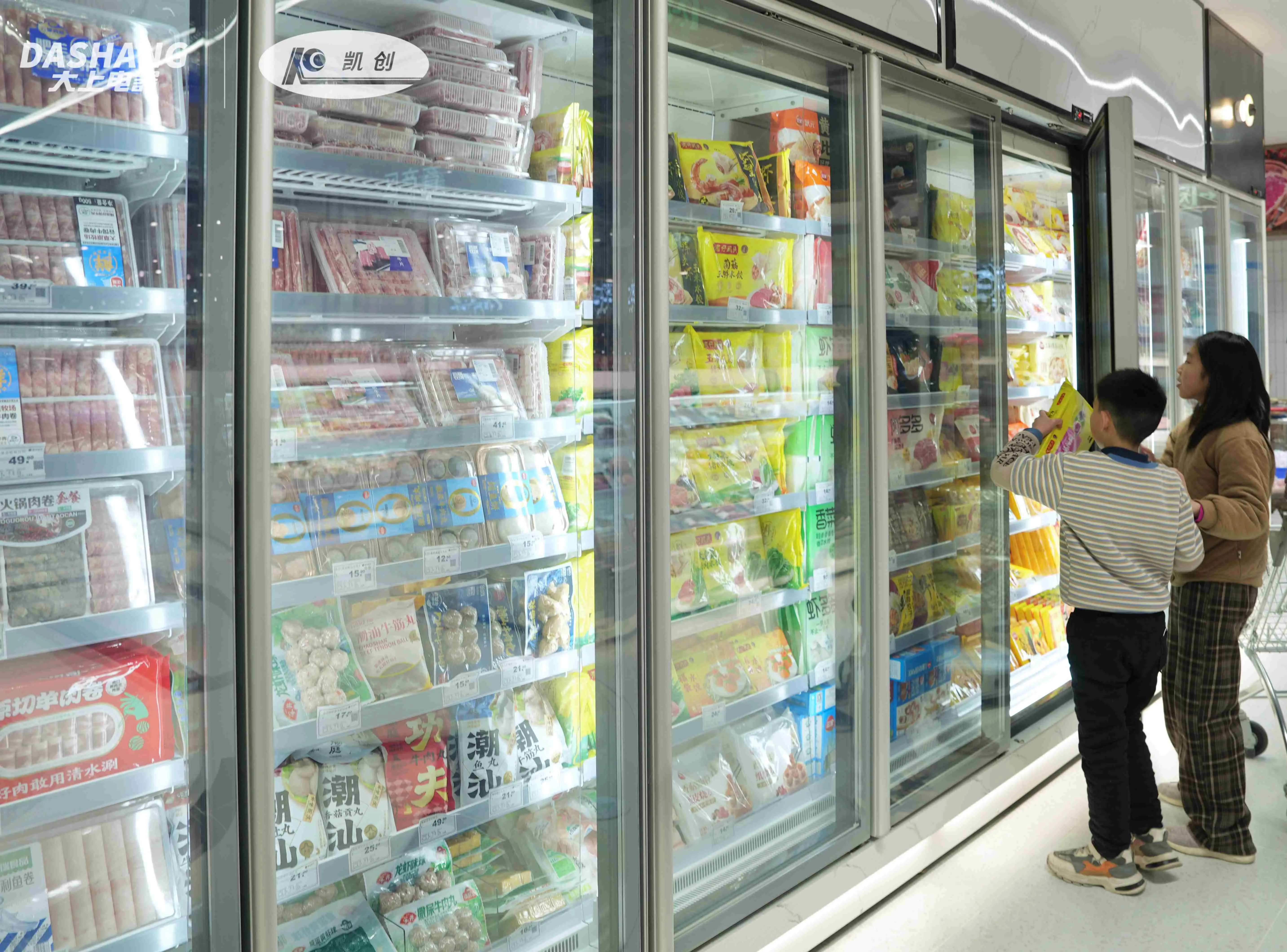
A glass-door refrigerator encourages customers to browse products through the door before opening it. An open display provides immediate access, while a glass top cooler encourages customers to look downward into the cabinet.
These differences may seem small, but they affect how products are noticed and selected.
Equipment should therefore be positioned and arranged according to how customers naturally move through the store.
Why Is Replenishment Part of Refrigeration Planning?
Supermarket refrigeration needs to work after the initial display is created.
Products are removed throughout the day, and staff need to refill the display while customers continue shopping.
If shelves are difficult to access or the cabinet is positioned in a narrow aisle, replenishment can become disruptive.
A practical supermarket fridge should provide enough working space for staff to restock efficiently while maintaining a clear shopping path.
This is one reason why equipment depth and surrounding aisle space matter almost as much as internal capacity.
How Does Store Layout Affect Refrigerated Equipment?
The position of a supermarket fridge influences both customer behavior and operating conditions.
Equipment near entrances may be exposed to more frequent changes in ambient temperature. Cabinets in high-traffic areas may be opened more frequently. Large units can also influence the width and movement of customer aisles.
For this reason, refrigeration equipment should be integrated into the store layout from the beginning.
A good refrigeration plan considers not only where the cabinet fits physically, but also how customers move around it and how staff access it from the back of the store.
What Makes Glass-Door Refrigeration Useful?
Glass-door refrigerators provide a balance between product visibility and physical separation.
Customers can see the available products without opening the cabinet, while the products remain inside an enclosed refrigerated space.
This can be particularly useful for dairy, beverages, chilled packaged foods, and other products where customers benefit from browsing before selecting.
However, glass doors also need to remain clean and clear. A poorly maintained display can reduce the visual advantage that the glass provides.
Where Do Glass Top Coolers Fit Into a Supermarket?
Glass top coolers are often useful in frozen food areas because they combine dense horizontal storage with product visibility.
Customers can look down into the cabinet and compare multiple products without needing to open a vertical door.
Their effectiveness depends heavily on internal organization. Products at the bottom need to remain accessible, while different categories should be separated clearly enough for customers to understand the selection.
They are therefore most useful when the product range and store layout support horizontal merchandising.
How Can Refrigeration Support a More Efficient Store?
Supermarket refrigeration can affect daily efficiency through both equipment design and operating habits.
Organized products can be found more quickly. Frequently used or frequently purchased items can be positioned where they are easy to access. Doors can be kept closed when products do not need to be retrieved.
Regular cleaning and maintenance also help keep displays functional and visually attractive.
These practices may appear simple, but they matter because supermarket refrigeration operates continuously and small inefficiencies can accumulate over time.
Why Should Supermarkets Consider Future Product Changes?
Supermarket merchandise is not fixed.
Seasonal products, promotions, changing customer preferences, and new product categories can all alter the way refrigerated space is used.
A flexible refrigerator layout can make these changes easier to manage. Adjustable shelves, adaptable product sections, and practical internal access can allow the same equipment to support different merchandise arrangements over time.
This flexibility can be particularly valuable in stores that frequently change their product mix.
Building a Supermarket Refrigeration System Around the Store
A supermarket fridge works best when it is considered as part of a larger system.
Product requirements determine the refrigeration environment. Cabinet design influences product visibility. Store layout determines customer access. Internal configuration affects staff replenishment. Maintenance affects long-term presentation and operation.
When these factors are considered together, supermarket refrigeration becomes more than a collection of individual cabinets.
It becomes part of the way the store organizes products, guides customers, and manages everyday food operations.
FAQs
Why can’t one type of supermarket fridge be used for every product category?
Different products have different storage, display, and access requirements. A beverage display, fresh vegetable case, dairy cabinet, and frozen food freezer may therefore need completely different configurations.
How does refrigerator depth affect supermarket operation?
Greater depth can increase storage volume, but it can also make products harder to reach and reduce available aisle space. The practical value of depth depends on both product turnover and store layout.
Why are glass doors useful in supermarket refrigeration?
Glass allows customers to view products before opening the cabinet, which can make browsing easier and reduce the need to open the door simply to check what is available.
Why is flexibility important when planning supermarket refrigeration?
Product ranges and merchandising strategies can change over time. Flexible shelving and adaptable layouts allow refrigerated areas to respond more easily to seasonal products, promotions, and changes in customer demand.
Post time: Aug-21-2026


