
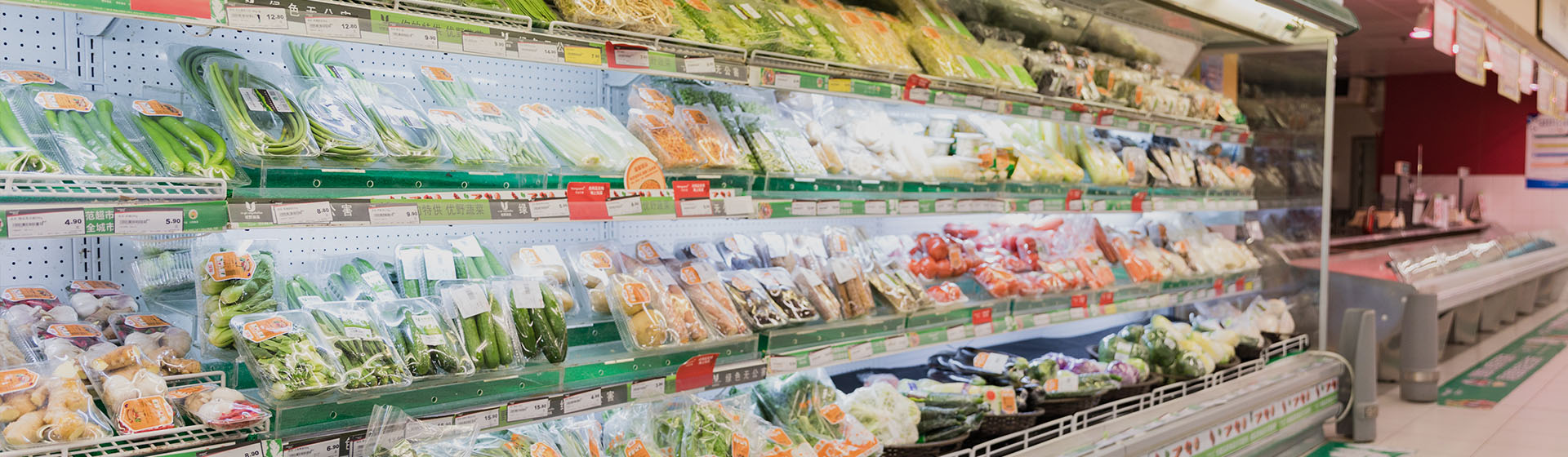
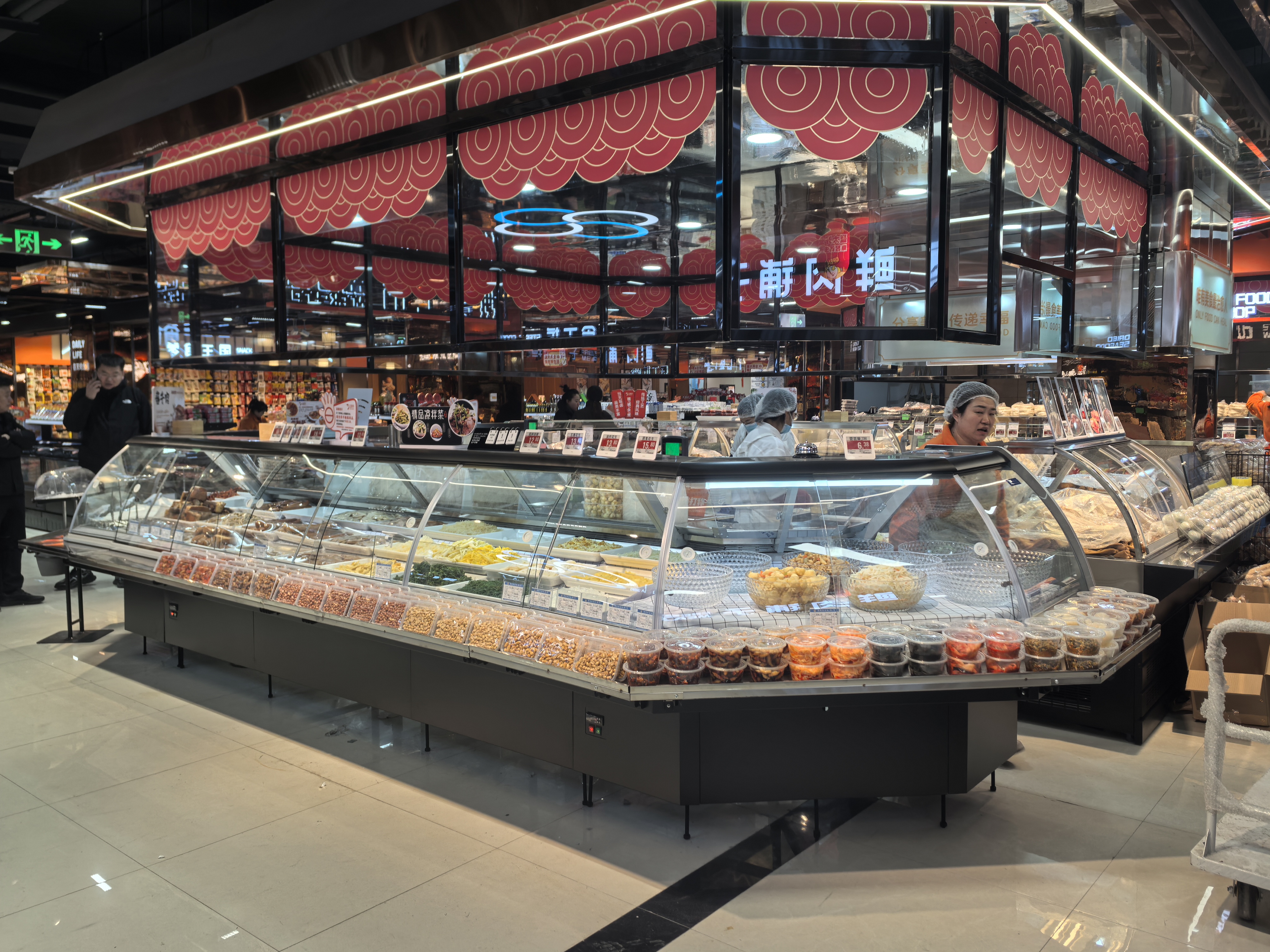
A service deli display case for supermarkets is designed to present fresh prepared foods, sliced meats, cheeses, salads, and deli products in a clean, attractive, and temperature-controlled environment. In supermarket fresh food departments, the display case plays an important role in both product preservation and customer confidence.
Unlike self-service refrigerated shelves, a service deli case usually supports staff-assisted sales. Customers view the food through the front glass, ask questions, select portions, and receive products from trained staff. This interaction makes the display case part of the supermarket’s fresh food service experience.
The Role of Deli Display Cases in Fresh Food Retail
Fresh food departments often shape how customers judge the quality of a supermarket. A well-presented deli counter can make the store feel more professional, more trustworthy, and more focused on food freshness. For this reason, the service deli display case is not only refrigeration equipment but also a visual communication tool.
Customers are more likely to buy deli products when they can clearly see color, texture, portion size, and product arrangement. Transparent glass, proper lighting, and neat tray layouts help products look more appealing. At the same time, stable refrigeration helps protect freshness during display hours.
A good deli case should balance presentation and preservation. If products look attractive but are not kept at suitable temperatures, quality may decline. If cooling is stable but the display is poorly arranged, products may not attract customers. The best result comes from combining reliable refrigeration with thoughtful merchandising.
Suitable Products for a Service Deli Display Case
A service deli display case can be used for a wide range of fresh and prepared foods. Supermarkets may use different zones within the case to separate product categories and create a cleaner shopping experience.
Typical applications include:
● Sliced ham, turkey, roast beef, salami, and other deli meats
● Cheese blocks, sliced cheese, soft cheese, and specialty cheese products
● Prepared salads, pasta salads, coleslaw, and cold side dishes
● Cooked seafood, marinated foods, and chilled ready-to-serve items
● Fresh sandwiches, wraps, antipasti, and premium deli selections
● Seasonal fresh food promotions and local specialty products
Because these products often have different textures, moisture levels, and presentation needs, supermarkets should arrange them carefully. Strong-smelling items should not be placed too close to delicate products, and high-moisture foods should be displayed in suitable trays to maintain appearance.
How Display Design Influences Customer Trust
Deli products are closely connected with freshness perception. Customers often judge quality before speaking to staff, and their first impression comes from the display case. Clean glass, balanced lighting, neat trays, and organized product labels all help build trust.
A service deli case should allow customers to view products comfortably from the front. The glass design should reduce visual barriers and make food look accessible. Lighting should enhance product visibility without making colors look unnatural. If the case appears dim, crowded, or messy, even good products may seem less attractive.
Clear product separation is another important part of trust. Customers want to understand what they are looking at. Meat, cheese, salads, and ready-to-eat foods should be divided into logical sections. This helps customers compare options more easily and also supports staff efficiency during service.
Refrigeration Performance for Fresh Deli Products
Fresh deli products require careful temperature management. Unlike packaged drinks or frozen products, many deli foods are exposed in trays during display. This means airflow, humidity, and temperature stability can directly affect product appearance and quality.
A service deli display case should provide consistent cooling across the display area. Uneven temperature may cause some products to dry out while others do not remain sufficiently chilled. Good airflow design helps maintain stable conditions, but it should not blow too harshly across uncovered foods, as this may affect texture and surface moisture.
Supermarkets should also consider how often the case is opened from the service side. During busy periods, staff may access products repeatedly. The refrigeration system should recover effectively after service activity, helping maintain product condition throughout the day.
Operational Benefits for Supermarket Staff
A deli display case should make daily work easier for staff, not only improve the customer-facing display. Staff need to load products, remove trays, clean surfaces, serve customers, check dates, and maintain the visual arrangement during business hours.
A practical service deli display case can support better operation in several ways:
● Easy access from the staff side for quick serving and restocking
● Organized tray layout that reduces search time during customer service
● Smooth surfaces that make daily cleaning more efficient
● Good lighting that helps staff check product condition clearly
● Reliable cooling that reduces quality concerns during display hours
● Flexible layout for changing menus, promotions, or seasonal products
When equipment is convenient for staff, service becomes faster and more consistent. This is especially important during busy shopping periods when several customers may be waiting at the deli counter.
Cleaning and Hygiene Management
Hygiene is one of the most important concerns for deli display. Since many products are ready-to-eat or minimally processed, the display area must be maintained carefully. Customers also notice cleanliness immediately, especially when food is displayed openly behind glass.
Daily cleaning should include glass panels, trays, handles, service surfaces, and interior display areas. Food residue should be removed promptly, and products should be checked regularly to ensure they remain fresh and visually acceptable. Staff should avoid mixing tools between product categories, especially when handling meats, cheeses, seafood, or allergen-sensitive products.
The design of the display case can make cleaning easier. Smooth surfaces, removable trays, and accessible service areas help reduce cleaning time and support better hygiene routines. For supermarkets, this contributes to both food safety and customer confidence.
Merchandising Ideas for Better Deli Sales
A service deli display case can support stronger sales when products are arranged with a clear merchandising plan. Instead of simply filling trays, supermarkets should consider customer needs, meal occasions, and product combinations.
For example, sliced meats and cheeses can be displayed together for sandwich-making customers. Salads and cold side dishes can be grouped for quick lunch or dinner solutions. Premium deli products can be placed in a more visible section to highlight quality and encourage higher-value purchases.
Seasonal displays can also improve customer interest. During holidays or weekends, supermarkets may promote party platters, specialty cheeses, marinated foods, or ready-to-serve meal options. A flexible deli case layout allows the store to adjust presentation based on sales trends and customer demand.
Energy Use and Long-Term Equipment Value
Commercial refrigeration equipment runs for long hours, so supermarkets should consider energy use when planning deli department equipment. A service deli display case must maintain stable cooling while supporting customer visibility and staff access.
Energy performance can be influenced by insulation, refrigeration system design, lighting, airflow, and store environment. Proper installation is also important. If the case is placed near heat sources, direct sunlight, or strong air movement, it may need to work harder to maintain the correct temperature.
Long-term value is not only about energy use. A durable display case can reduce maintenance concerns, support consistent product quality, and help the deli department maintain a professional appearance. For supermarkets, equipment reliability directly affects daily service and fresh food sales.
Conclusion
A service deli display case for supermarkets is a key part of fresh food retail. It helps present deli meats, cheeses, salads, prepared foods, and specialty items in a way that supports freshness, visibility, hygiene, and customer trust. When designed and managed well, it can improve both the shopping experience and the efficiency of supermarket staff.
For supermarkets that want to strengthen fresh food departments, the right deli display case can support better merchandising, cleaner presentation, and more reliable product care throughout daily operation.
FAQ
1、What is a service deli display case used for?
It is used to display chilled deli meats, cheeses, salads, prepared foods, seafood items, sandwiches, and other fresh products for staff-assisted sales.
2、Why is temperature stability important in deli display?
Stable cooling helps protect product freshness, appearance, texture, and food quality during display hours.
3、How can supermarkets improve deli display presentation?
They can organize products by category, keep trays neat, use clear labels, maintain clean glass, and refresh the display regularly.
4、What should supermarkets consider when choosing a deli display case?
They should consider cooling performance, display visibility, hygiene design, staff access, cleaning convenience, capacity, and long-term commercial durability.
Post time: May-15-2026


