
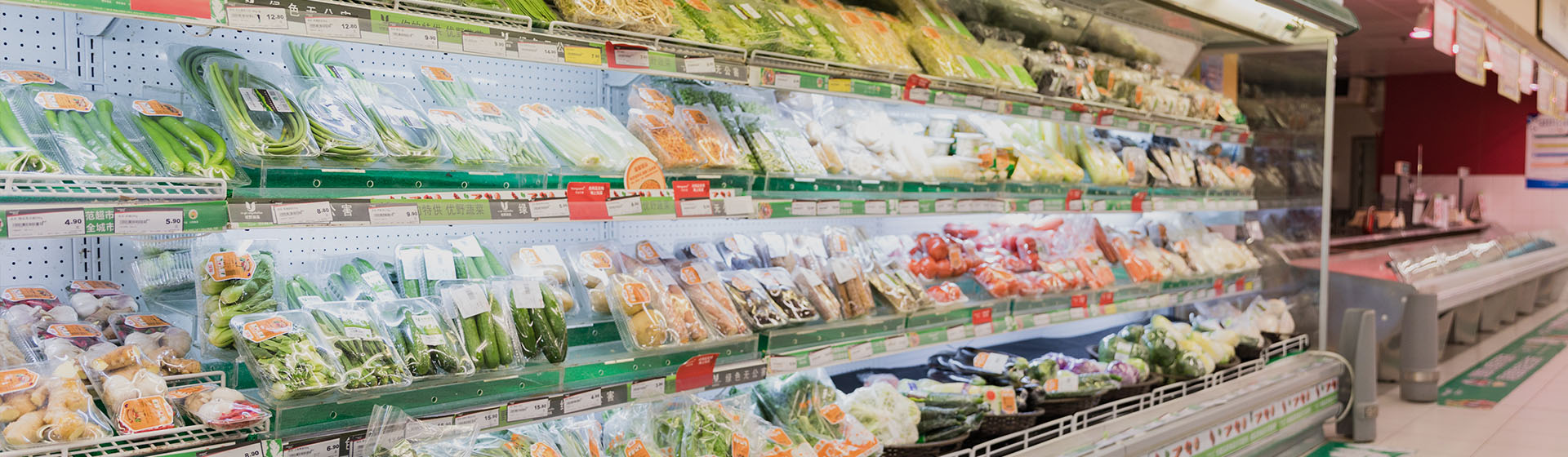
A meat freezer is designed for the long-term frozen storage of meat products in environments where stable low-temperature conditions, organized storage, and frequent product handling all need to work together. But the effectiveness of a meat freezer depends on more than simply reaching a low temperature.
Frozen beef, pork, poultry, processed meat, and other products may arrive in different package sizes and move through storage at different rates. A practical freezer therefore needs to accommodate the way meat is packaged, loaded, rotated, and retrieved.
The best refrigeration setup is one that supports product quality while making everyday inventory management straightforward.
What Makes Meat Freezing Different From Ordinary Refrigeration?
Fresh meat and frozen meat have different storage requirements. Once meat is frozen, maintaining a stable frozen environment becomes the priority, particularly during long storage periods.
Temperature fluctuations can occur when freezer doors are frequently opened, when large quantities of warmer products are loaded, or when the cabinet is heavily used. These changes can affect the stability of the storage environment.
For commercial meat operations, the freezer should therefore be considered as part of a continuous process that includes loading, storage, retrieval, and replenishment.
Why Does Packaging Matter Inside a Meat Freezer?
Freezing does not remove the importance of packaging. Meat that is poorly protected can lose moisture during storage and may be more vulnerable to freezer burn or the absorption of unwanted odors.
Packaging also affects how efficiently the freezer can be organized. Individually packed portions, large cuts, cartons, and bulk-packed meat occupy space differently and may require different storage arrangements.
A well-organized freezer should make it possible to separate products without creating excessive unused space. Packaging should protect the meat while also allowing staff to identify and retrieve products efficiently.
How Does Internal Organization Affect Frozen Meat Storage?
A meat freezer can become difficult to manage when products are stacked without a clear system. Larger cartons can hide smaller packages, while frequently requested products may end up underneath slower-moving inventory.
Organizing products according to category and turnover can make a significant difference. For example, beef, pork, poultry, and processed meat can be separated into recognizable areas.
Product labels should also remain easy to find. Useful information may include product type, batch, storage date, quantity, and relevant use-by information.
Good organization reduces the amount of time the freezer remains open and makes stock rotation easier.
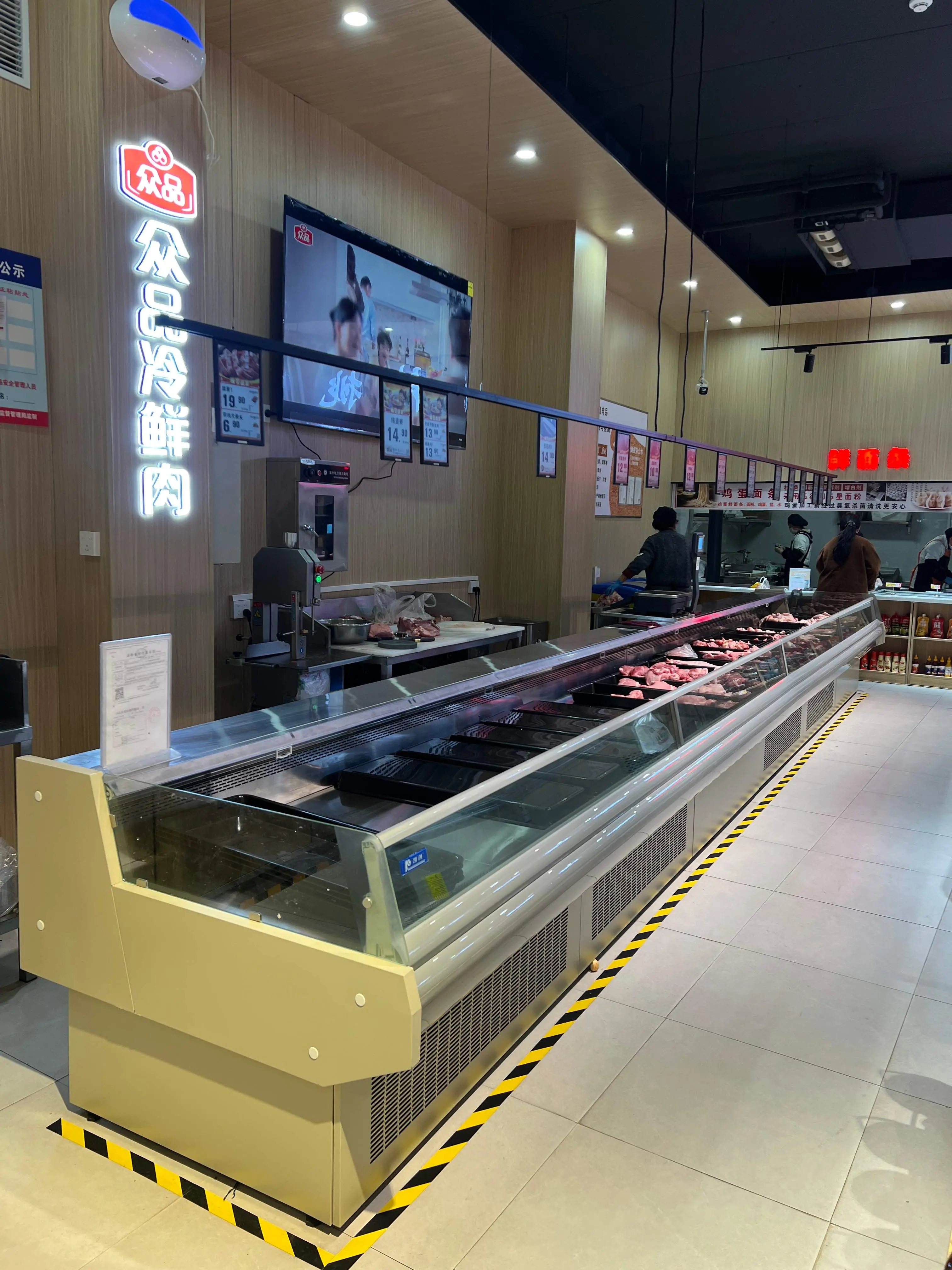
Why Is Temperature Stability More Useful Than a Single Temperature Reading?
A freezer’s displayed temperature represents a particular point in time. It does not necessarily show how the cabinet behaves throughout a busy working day.
Frequent door opening, loading activity, ambient heat, and defrost cycles can all influence internal conditions.
This is why commercial meat storage should consider the freezer’s overall ability to maintain stable conditions during normal operation rather than focusing only on a single temperature value.
The operating environment matters just as much as the nominal refrigeration setting.
How Should Different Meat Products Be Stored?
The product mix should determine the internal arrangement. Common categories may include:
- · Beef: Often stored in a variety of package sizes, from individual cuts to larger cartons.
- · Pork: May require separate organization according to cut and packaging format.
- · Poultry: Often needs clear separation because of its packaging and handling requirements.
- · Processed meat: May include smaller packaged products with faster turnover.
- · Bulk frozen meat: Requires a layout that supports both storage density and practical movement.
The purpose of these categories is not simply to make the freezer look organized. Clear separation makes inventory easier to control and reduces unnecessary product handling.
How Does Door Access Affect a Meat Freezer?
Every opening introduces warmer ambient air into the freezer. In a busy commercial environment, repeated access can increase the refrigeration workload.
The effect becomes more noticeable when staff need to search for products.
A clear internal arrangement can shorten the time needed to locate specific items. Frequently accessed products can be placed in convenient areas, while reserve inventory can remain deeper in the storage area.
This simple relationship between organization and access can improve the daily use of the freezer.
What Size of Meat Freezer Is Practical?
The ideal capacity depends on how the meat operation actually works.
A butcher shop with relatively fast inventory turnover may need compact equipment close to the preparation area. A supermarket may require a combination of customer-facing frozen displays and back-room storage. A distribution facility may prioritize larger capacity and efficient movement of cartons.
Capacity planning should consider:
- · Average inventory
- · Peak inventory
- · Delivery frequency
- · Product turnover
- · Storage duration
- · Available installation space
- · Loading and unloading methods
Peak periods deserve particular attention because equipment that works well under normal conditions may become difficult to manage when inventory suddenly increases.
Maintenance Protects Long-Term Freezer Performance
A commercial meat freezer needs routine maintenance even though it operates at low temperatures.
Ice buildup can interfere with storage space and access. Damaged door seals can allow warm air to enter continuously. Blocked airflow areas and dirty external components can also increase operating pressure.
Regular inspection helps identify these issues before they become larger operational problems.
Maintenance should therefore be treated as part of normal freezer management rather than something that only happens after a failure.
FAQs
Can different types of meat share the same freezer?
They can be stored within the same frozen refrigeration system when appropriate packaging, separation, labeling, and food-handling procedures are maintained. Clear organization is important for inventory control.
Why can poorly packaged meat develop freezer burn?
Freezer burn is associated with moisture loss from frozen food. Packaging that limits exposure to air can help protect the surface of the meat and reduce moisture loss during storage.
Is maximum freezer capacity the same as practical capacity?
No. Physical capacity describes how much space is available, while practical capacity also needs to account for airflow, product organization, accessibility, and stock rotation.
How can freezer organization improve daily operation?
Clear product categories and accessible placement reduce searching time and unnecessary door opening. This makes inventory easier to manage and can make routine handling more efficient.
Post time: Aug-20-2026


