
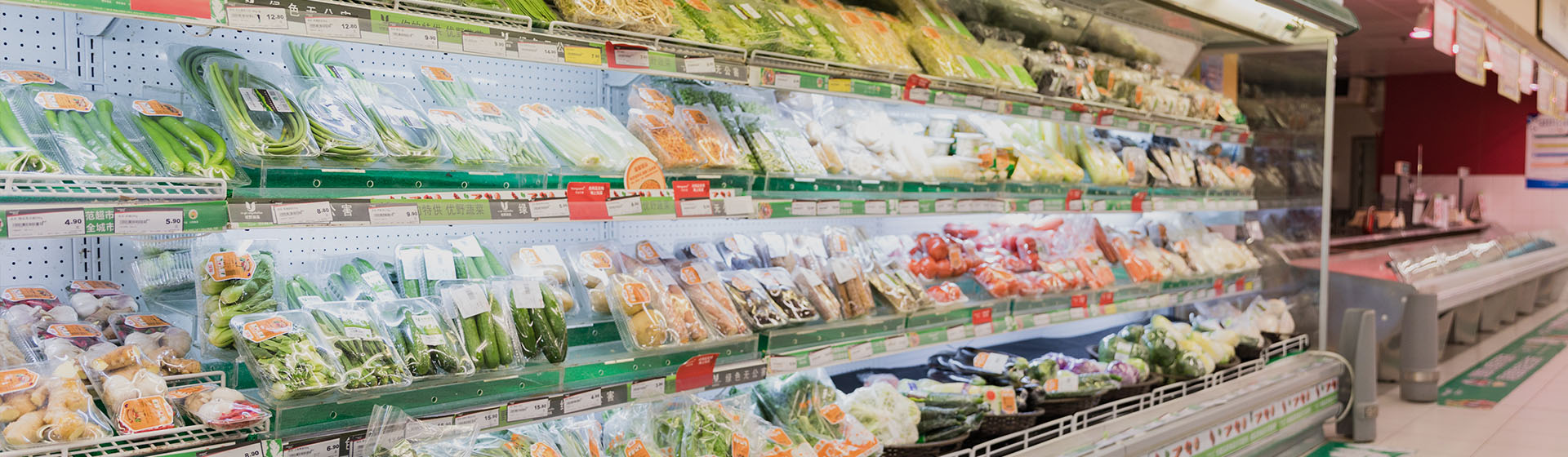
An ice cream display freezer is a specialized refrigeration unit designed to store and present ice cream under strict low-temperature conditions. Unlike general-purpose freezers, this equipment is engineered to maintain ultra-stable freezing environments while ensuring that products remain clearly visible and easily accessible. From a product standpoint, every structural and technical detail is optimized to protect the texture, consistency, and quality of frozen desserts.
Rather than focusing on commercial usage scenarios, this guide concentrates purely on product design, construction, and functional characteristics that define the performance of an ice cream display freezer.
Structural Design and Cabinet Configuration
The structural design of an ice cream display freezer is built to achieve a balance between insulation, durability, and visibility. Each component is developed with low-temperature retention and internal organization in mind.
● High-density insulation layers
The cabinet walls are filled with high-density polyurethane foam, which significantly reduces heat transfer from the external environment. This insulation ensures that internal temperatures remain stable even under varying ambient conditions.
● Sliding or hinged glass lids
Tempered glass lids provide clear product visibility while minimizing cold air loss. Sliding mechanisms are engineered for smooth operation and durability, ensuring consistent performance over time.
● Reinforced cabinet body
The outer shell is typically constructed from coated steel or aluminum, offering corrosion resistance and structural strength. This design supports long-term usage without deformation.
● Integrated drainage system
A built-in drainage structure allows condensed water to be removed efficiently during defrost cycles, simplifying maintenance and preventing internal moisture accumulation.
Cooling System and Temperature Stability
The cooling system is the most critical aspect of an ice cream display freezer, as ice cream requires precise and consistent low temperatures to maintain its original texture and quality.
● High-performance compressor
Designed for continuous low-temperature operation, the compressor ensures rapid cooling response and stable performance under varying load conditions.
● Static or assisted cooling system
Static cooling creates a stable internal environment, while fan-assisted cooling improves temperature uniformity throughout the cabinet.
● Multi-point temperature sensing
Temperature sensors positioned at different locations inside the freezer monitor variations and support accurate temperature control.
● Low-temperature operating range
The typical operating range of -18°C to -25°C prevents softening, melting, and ice crystal formation, preserving product integrity.
Internal Storage and Organization Design
The internal configuration of an ice cream display freezer is carefully designed to improve accessibility and organization without disrupting airflow.
● Removable wire baskets
These baskets allow flexible arrangement of different products and simplify restocking and cleaning processes.
● Divider systems
Internal dividers help separate flavors or product categories, maintaining a structured layout inside the cabinet.
● Optimized dimensions
The depth and width are designed to ensure that products are easily reachable without excessive stacking, which could interfere with cooling efficiency.
● Smooth interior surfaces
The interior finish is designed for easy cleaning and to prevent residue buildup, supporting hygiene maintenance.
Glass Lid Design and Visibility Performance
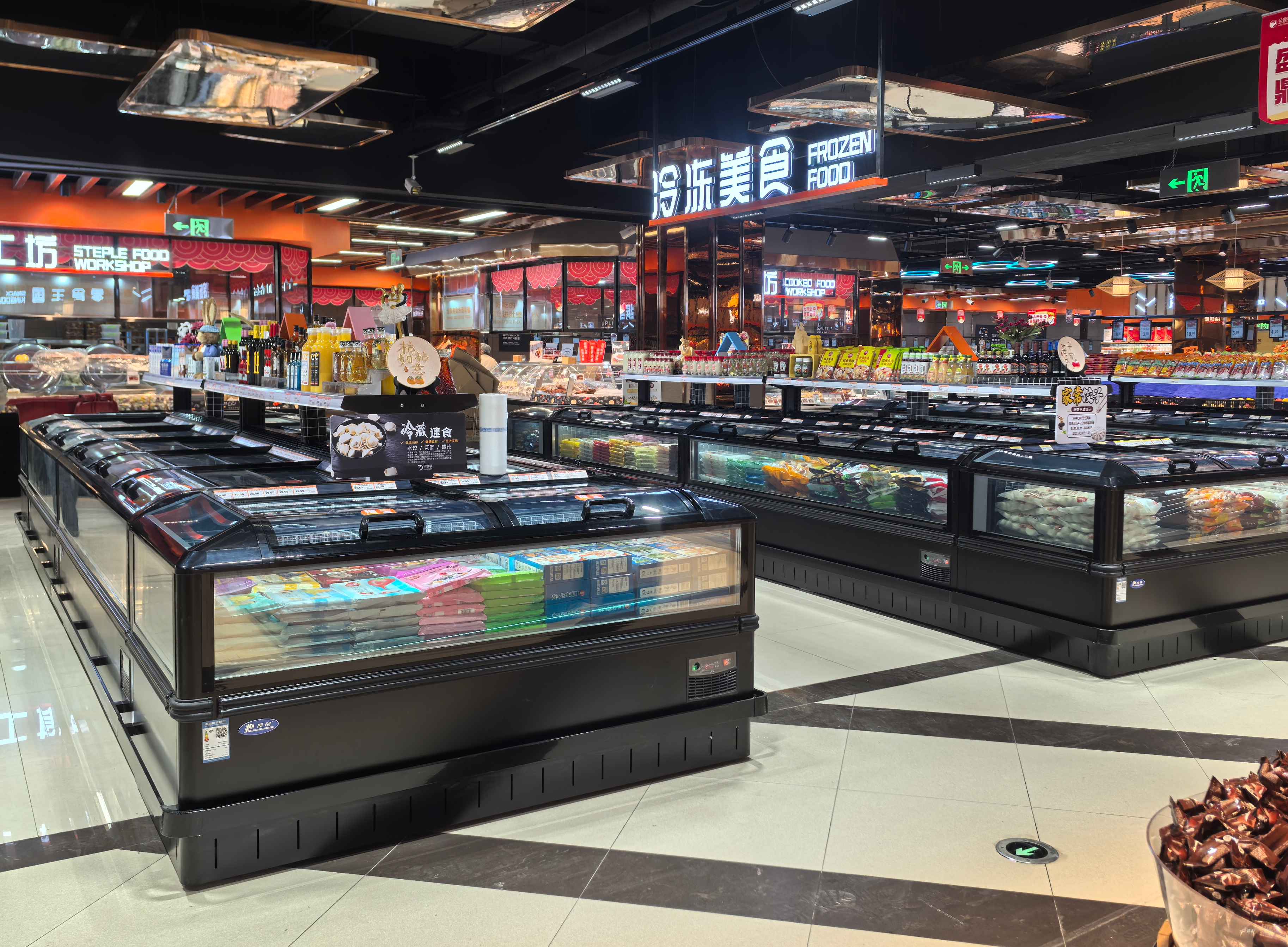
The glass lid plays a dual role in both insulation and product display.
● Double-layer tempered glass
Provides improved insulation while ensuring durability and safety during operation.
● Anti-fog coating
Prevents condensation buildup on the glass surface, maintaining clear visibility under different humidity conditions.
● Curved or flat glass options
Curved glass enhances visual presentation and attracts attention, while flat glass offers a more compact and space-efficient design.
● UV-resistant treatment
Helps protect product packaging from fading due to prolonged light exposure.
Energy and Thermal Efficiency Features
Although this guide focuses on product design, thermal efficiency is closely linked to structural and material choices.
● Tight sealing system
A well-designed sealing structure reduces cold air leakage and maintains stable internal temperatures.
● Low heat-transfer materials
Cabinet construction minimizes the influence of external temperatures on internal conditions.
● Optimized refrigerant flow
Efficient refrigerant circulation improves cooling performance without unnecessary energy consumption.
● Balanced airflow design
Ensures even temperature distribution throughout the cabinet.
Defrosting and Moisture Control
Ice buildup and internal moisture can affect both performance and product condition, making defrost and moisture management essential.
● Manual or automatic defrost systems
Different models offer controlled defrosting options to maintain operational efficiency.
● Evaporation tray system
Collected condensation water is automatically evaporated, reducing maintenance requirements.
● Moisture-resistant interior design
Prevents condensation from affecting stored products.
Durability and Material Selection
Long-term performance depends heavily on the quality of materials and construction details.
● Corrosion-resistant exterior
Powder-coated or stainless steel materials protect the unit from environmental wear and extend service life.
● Impact-resistant glass
Tempered glass lids are designed to withstand repeated use and external impact.
● Heavy-duty hinges and sliding rails
Ensure smooth opening and closing over extended periods.
● Stable base structure
Provides reliable support and stability even when fully loaded.
Noise and Operational Stability
Operational noise and vibration are important indicators of product quality and engineering precision.
● Low-noise compressor design
Ensures quiet operation suitable for various environments.
● Vibration reduction system
Minimizes mechanical stress and enhances overall durability.
● Smooth airflow channels
Reduce turbulence and maintain consistent cooling performance.
Conclusion
An ice cream display freezer is a highly specialized refrigeration product designed with a strong focus on temperature stability, structural integrity, and internal organization. From insulation thickness and compressor performance to glass lid design and airflow management, every component contributes to reliable operation and long-term durability.
Understanding these product-level characteristics allows for more accurate evaluation of different models, ensuring the selection of equipment that delivers consistent performance, preserves product quality, and supports efficient long-term use.
FAQ
- What is the standard operating temperature for an ice cream display freezer?
It typically operates between -18°C and -25°C to maintain product stability and prevent melting or recrystallization. - What is the difference between static cooling and fan-assisted cooling?
Static cooling provides a more stable environment, while fan-assisted cooling offers faster temperature distribution and greater uniformity. - Why is anti-fog glass important?
It prevents condensation from blocking visibility, ensuring products remain clearly displayed at all times. - How can frost buildup be minimized?
Regular defrosting, minimizing lid openings, and maintaining proper sealing can effectively reduce frost accumulation.
Post time: Apr-29-2026


