
Choosing the right Glass-Door Upright Fridge for a Convenience Store is not only about buying a refrigerator with a transparent door. For store owners, this equipment affects product display, customer shopping speed, electricity costs, shelf organization, and daily operation efficiency. A convenience store usually has limited space, high product turnover, and long business hours, so refrigeration equipment must be both practical and visually effective.
Many store buyers make the mistake of choosing a fridge only by size or price. However, a glass-door upright fridge should match the store’s product categories, customer traffic, interior layout, and energy-saving requirements. If the fridge is too small, staff need to restock frequently. If it is too large, it may waste electricity and occupy valuable floor space. If the cooling system is unstable, drinks and chilled foods may not stay in ideal condition.
This guide explains how convenience store owners and procurement managers can choose a suitable glass-door upright fridge from a practical business perspective.
Start with the Products You Need to Display
Before comparing different models, the first step is to understand what products will be stored inside the fridge. A convenience store may sell bottled drinks, dairy products, sandwiches, salads, desserts, ready-to-eat meals, energy drinks, yogurt, juice, and chilled snacks. These products may look similar from a display perspective, but their storage needs are not always the same.
For example, bottled beverages mainly require strong display visibility and large capacity, while dairy products and ready-to-eat meals need more stable temperature control. Desserts and premium chilled foods may require better lighting and cleaner shelf presentation. If the fridge is used for mixed product categories, adjustable shelves become especially important because they allow operators to change the layout according to product size and seasonal sales.
A good purchasing decision should begin with this question: will the fridge mainly display drinks, food, or a mixed range of chilled products? Once this is clear, it becomes easier to decide capacity, shelf structure, door number, and temperature requirements.
Match the Fridge Size with Store Layout
Convenience stores often need to use every square meter carefully. A glass-door upright fridge has a vertical structure, which makes it suitable for stores that want large storage volume without using too much floor area. However, the fridge still needs to fit naturally into the customer walking route.
If the fridge is placed near the entrance, it can attract customers looking for drinks or quick food. If it is placed near the checkout area, it can encourage impulse purchases. If it is placed against the wall in a beverage zone, it can support organized category display.
Buyers should measure the available installation space before choosing a model. They should also consider door opening direction, ventilation distance, aisle width, and restocking convenience. A fridge that looks suitable on paper may cause problems if it blocks movement, makes cleaning difficult, or creates a crowded shopping area.
Pay Attention to Cooling Performance
A convenience store fridge usually runs for long hours every day, so stable cooling performance is essential. The equipment should maintain consistent temperature across different shelves, not only in one area of the cabinet. Uneven cooling may lead to product quality problems, especially for milk, yogurt, sandwiches, and other chilled foods.
When evaluating cooling performance, buyers should consider the refrigeration system, airflow design, digital temperature control, and defrost method. A well-designed airflow system helps cold air circulate evenly, while accurate temperature control allows store staff to monitor conditions more easily.
For stores that operate in warm regions or have frequent door openings, stronger cooling recovery is also important. The fridge must return to the target temperature quickly after customers open and close the door. This helps protect product freshness and reduces the risk of temperature fluctuation.
Check Energy-Saving Features Carefully
Electricity cost is one of the long-term expenses that store owners cannot ignore. A cheaper fridge may not be the best choice if it consumes too much power. Since convenience stores often operate from early morning to late night, or even 24 hours a day, energy efficiency can make a big difference over time.
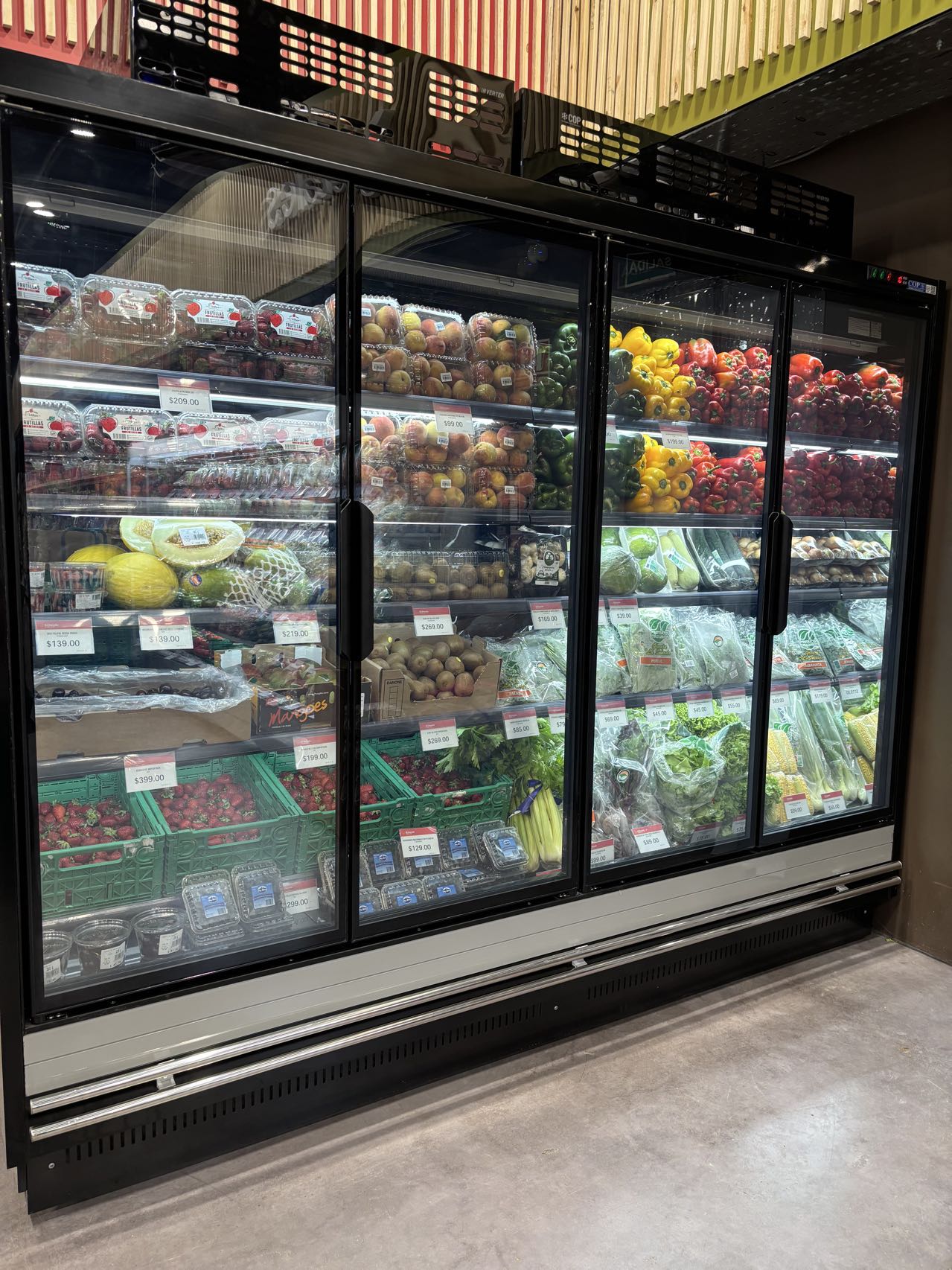
Useful energy-saving features include insulated glass doors, high-efficiency compressors, LED lighting, good door sealing, automatic defrost, and optimized cabinet insulation. These features help reduce cold air loss and lower the workload of the refrigeration system.
Glass doors also help customers see products before opening the fridge, which can reduce unnecessary door opening. This is important in convenience stores where many customers browse quickly but do not always buy immediately.
Think About Display and Sales Conversion
A glass-door upright fridge is also a merchandising tool. The way products are displayed inside the fridge can influence customer decisions. Bright but comfortable lighting, clear shelf arrangement, and good visibility can make products look more attractive.
For beverage sales, popular drinks should be placed at eye level. For food items, clean organization and clear grouping are more important. For promotional products, the fridge should allow front-facing display so customers can quickly notice the brand and package.
Store owners should choose a fridge that supports easy product organization. Adjustable shelves, transparent door design, and suitable lighting can help create a more professional retail image.
Maintenance and Daily Operation Should Be Simple
Convenience store staff need equipment that is easy to clean, restock, and inspect. If a fridge requires complicated daily maintenance, it may create extra workload and increase operating costs.
Buyers should look at whether the shelves are easy to remove, whether the interior is simple to clean, whether the door seal can be inspected conveniently, and whether the temperature display is easy to read. Reliable after-sales support and spare parts availability are also important for long-term use.
Conclusion
Choosing a Glass-Door Upright Fridge for a Convenience Store requires more than comparing prices. Store owners should consider product type, store layout, cooling stability, energy efficiency, display needs, and maintenance convenience. A suitable fridge can help improve product visibility, reduce energy waste, protect chilled food quality, and support better retail sales.
For convenience stores that want practical refrigeration and stronger product display in one solution, a well-selected glass-door upright fridge can become an important part of daily business performance.
FAQ
1. What size glass-door upright fridge is suitable for a convenience store?
The right size depends on store area, product category, and daily sales volume. Small stores may choose single-door or double-door models, while larger stores may need multi-door units for beverage and food display.
2. Can one fridge display both drinks and chilled food?
Yes, but the fridge should have stable temperature control and adjustable shelves. Mixed product display requires better organization to avoid overcrowding and uneven cooling.
3. How can a glass-door fridge help increase sales?
It allows customers to see products clearly before opening the door, which improves product visibility and can encourage faster buying decisions, especially for drinks and ready-to-eat foods.
4. What should buyers check before purchasing?
Buyers should check capacity, temperature range, energy consumption, glass insulation, shelf flexibility, door sealing, cleaning convenience, and after-sales support.
Post time: Jun-24-2026


