
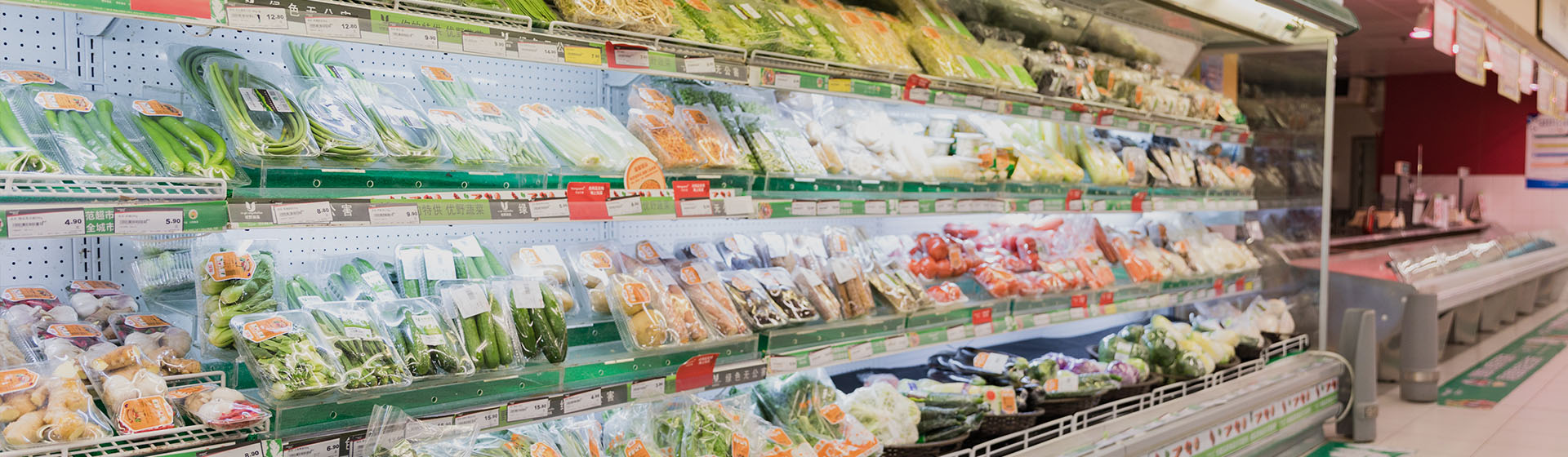
Refrigeration Equipment in a supermarket is not one product category performing one task. Frozen food, chilled drinks, fresh meat, dairy products, bakery products, prepared food, and impulse items all require different combinations of temperature, visibility, access, and display depth. A strong refrigeration plan therefore starts by matching each food zone with the equipment format designed for that job.
The practical question is broader: what types of commercial refrigeration equipment are used in supermarkets, and how does each product type differ? The clearest answer is to compare the cabinets by the food zone and display task they are designed to handle.
A Supermarket Refrigeration Plan Can Be Read as Five Product Zones
A typical food retail space can be divided into five refrigeration tasks:
1. frozen product storage and display;
2. open self-service chilled display;
3. glass-door chilled or frozen display;
4. service-counter presentation;
5. specialized product display such as bakery, meat, or ice cream.
Each zone points to a different equipment family.
| Food zone | Suitable refrigeration product | Main product function |
| Frozen packaged foods | Island freezer / chest freezer | High frozen capacity with top viewing and access |
| Drinks, dairy, prepared chilled foods | Open chiller / multideck | Multi-level open access and wide front display |
| Boxed frozen foods or beverages | Glass-door freezer / cooler | Front visibility with enclosed temperature control |
| Fresh meat and deli | Refrigerated showcase / serve counter | Product presentation with staff-side service access |
| Ice cream and frozen snacks | Ice cream display freezer / sliding-door freezer | Clear top or front viewing with controlled access |
The value of the system comes from using the right cabinet in the right zone.
Frozen Food Needs Equipment That Converts Volume into Order
For frozen products, the choice is often between horizontal and vertical display.
An island freezer or supermarket chest freezer uses deep storage volume and can handle large bags, family packs, seafood, vegetables, and mixed frozen categories. Glass lids or widened transparent windows keep products visible from above.
A vertical freezer or glass door freezer uses height to create many shelf rows. It is more suitable when the frozen assortment contains many small boxes or when labels need to face the aisle.
This means the frozen zone may use both formats. The product family is not competing with itself; each cabinet solves a different packaging problem.
Chilled Self-Service Products Need a Different Front Structure
Beverages, dairy products, salads, sandwiches, fruit, vegetables, and prepared chilled foods often depend on fast access. For these products, an open chiller or multideck fridge creates several shelves behind an open front.
The key product features are:
- multiple adjustable shelves;
- wide front visibility;
- air curtain at the open face;
- lighting across several levels;
- night curtain option;
- plug-in or remote refrigeration configuration;
- end panels for continuous cabinet lines.
This product type turns a wall section into a high-density chilled display.
Glass-Door Cabinets Balance Visibility and Enclosure
A glass door cooler or glass door freezer provides a different solution. Products remain visible, but the door forms a physical barrier between the refrigerated interior and the room.
For beverages, dairy products, frozen meals, desserts, or other packaged goods, glass-door cabinets can be organized with:
- one or multiple doors;
- adjustable shelves;
- vertical lighting;
- different door widths;
- anti-condensation glass options;
- built-in or remote refrigeration;
- different cabinet heights and depths.
Multi-door choices also allow the display to be divided into product groups.
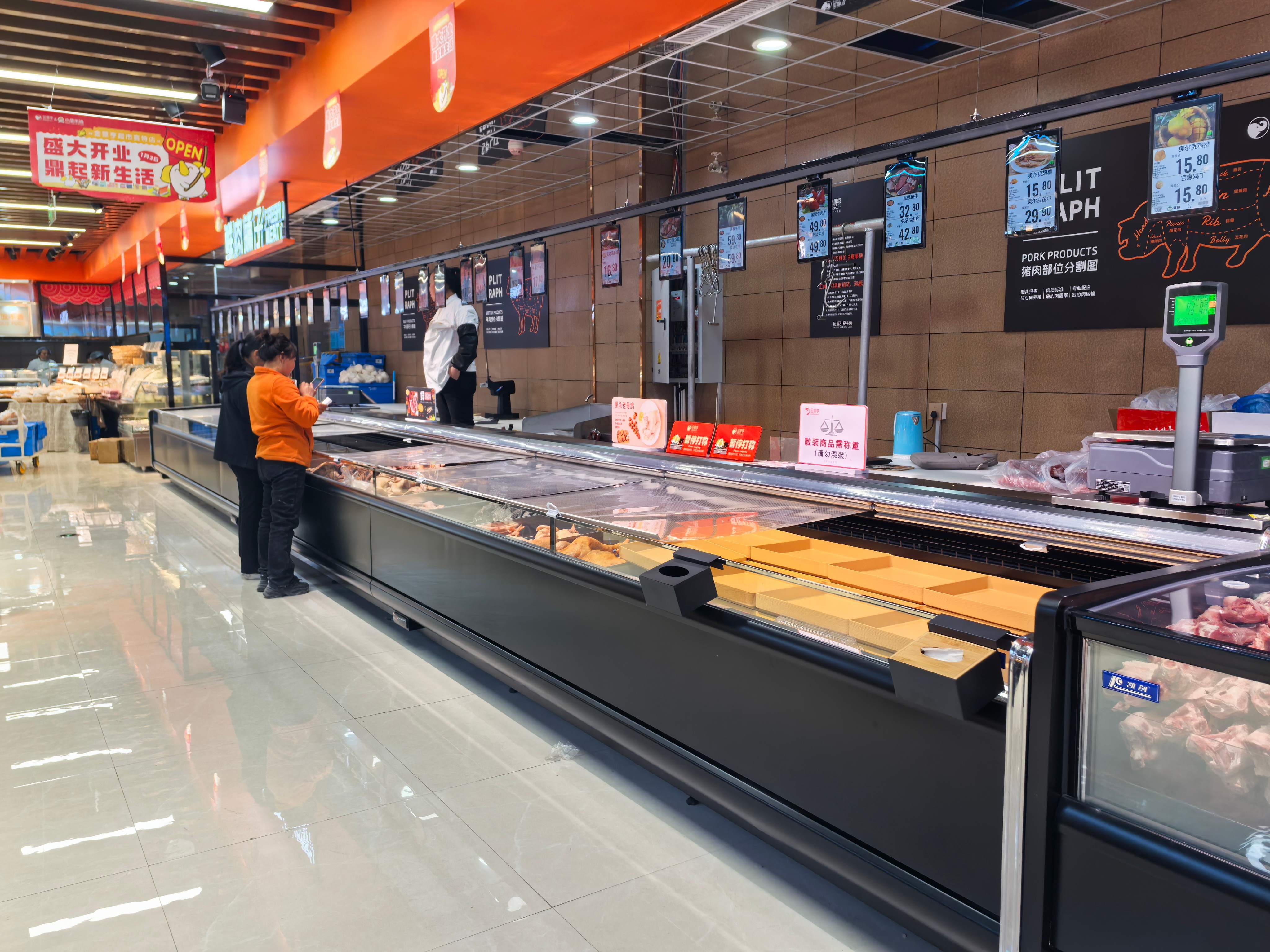
Service Counters Change the Direction of Access
Not every refrigerated product is taken directly from the cabinet by the shopper. Fresh meat, deli foods, prepared dishes, and some bakery products may be displayed at the front while staff access the product from the service side.
A refrigerated showcase, meat showcase, or serve counter therefore uses a different body structure.
Instead of focusing only on front access, these products may include:
- wide front glass for presentation;
- service-side sliding doors;
- trays or display decks;
- lower refrigerated storage;
- worktop surfaces;
- lighting positioned toward the displayed food;
- continuous counter combinations.
The refrigeration equipment becomes part display case and part working station.
Specialized Products Need Specialized Cabinet Geometry
Some food categories need a more specific cabinet form.
Bakery Products
A bakery display cabinet may combine shelves, transparent panels, and controlled chilled zones depending on the product. The display geometry is built around cakes, desserts, pastries, and packaged bakery items.
Ice Cream
An ice cream display freezer needs strong frozen storage and clear product visibility. Sliding glass tops, baskets, or front glass can be used depending on whether the products are cups, bars, tubs, or frozen desserts.
Fresh Meat
A double-layer meat showcase or meat display cabinet may create more visible product area within the same counter length, while maintaining a service-side working layout.
Plug-In and Remote Systems Are Product Configuration Choices
The refrigeration source also changes how the cabinet fits into a project.
A plug-in cooler or freezer integrates the main refrigeration components into the cabinet. This can support independent installation and flexible placement.
A remote cabinet connects to a separate refrigeration system. It can be useful when several cabinets are installed as one larger supermarket refrigeration line.
The choice affects:
- cabinet depth;
- heat released into the store;
- installation work;
- service access;
- refrigeration capacity planning;
- electrical requirements.
It should therefore be treated as part of product configuration, not as a separate technical topic.
A Consistent Product Family Can Build a More Unified Store
When several types of Refrigeration Equipment are used in the same project, visual and dimensional consistency becomes important.
Matching cabinet heights, end panels, exterior colors, glass styles, lighting temperature, and base lines can make different product families look like one planned refrigeration system.
For example, an open chiller wall can connect visually with a glass-door cooler section; an island freezer can use end cabinets that match the overall store finish; a service counter can use the same exterior color as nearby refrigerated showcases.
This creates a refrigeration environment in which different cabinets perform different jobs without appearing unrelated.
Product Configuration Should Begin with the Food Map
Before deciding cabinet specifications, a project can be divided by product:
- Which foods require frozen storage?
- Which chilled products need open access?
- Which products need glass-door protection?
- Which foods require staff-side service?
- Which zones need top-view display?
- Which sections need continuous cabinet combinations?
From that map, cabinet length, shelf quantity, glass structure, refrigeration type, voltage, finish, lighting, end panels, baskets, dividers, and storage options can be configured.
Dashang’s commercial refrigeration equipment portfolio can be organized around these different retail tasks, allowing each cabinet to remain product-specific while the full store uses a coordinated refrigeration plan.
FAQ
1. What types of refrigeration equipment are commonly used in supermarkets?
Common categories include island freezers, chest freezers, vertical freezers, open chillers, multidecks, glass-door coolers, refrigerated showcases, meat counters, bakery display cabinets, and ice cream display freezers.
2. What is the difference between an open chiller and a glass-door cooler?
An open chiller provides direct access through an open front and uses an air curtain. A glass-door cooler keeps the front enclosed while still allowing products to remain visible.
3. When is a remote refrigeration cabinet more suitable?
Remote cabinets can be useful for larger projects with several connected display cases or when heat and major refrigeration components need to be managed away from the display area.
4. Can different refrigeration equipment types share the same store design?
Yes. Cabinet dimensions, exterior finishes, glass styles, lighting, and end panels can be coordinated so different product families form a consistent refrigeration environment.
Post time: Aug-11-2026


