
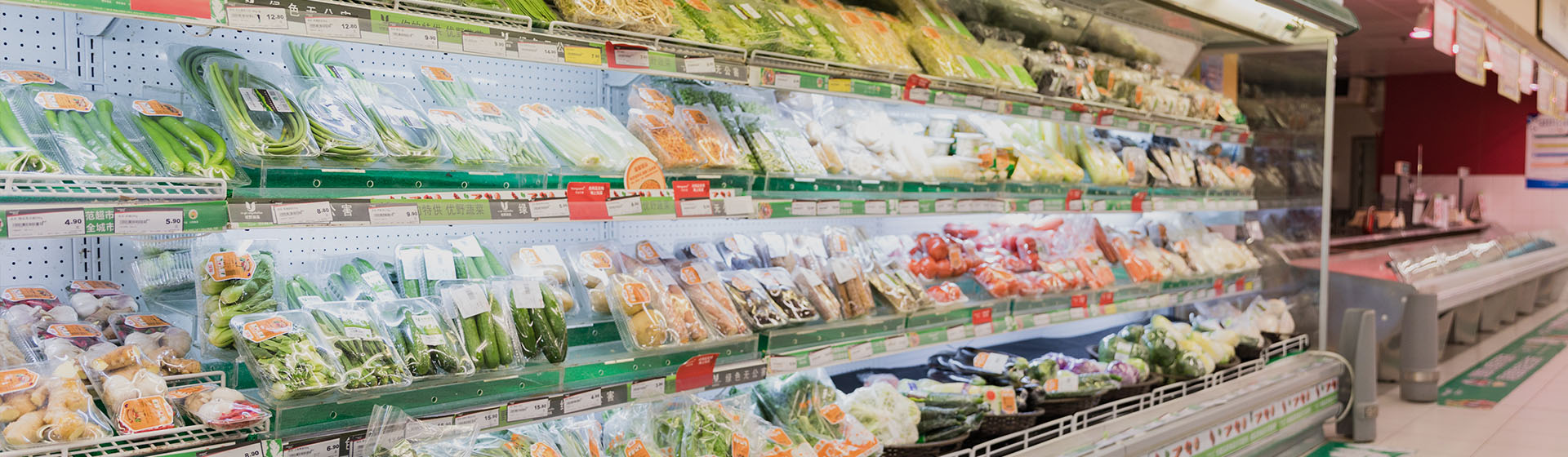
A Vertical Refrigerated Display Cabinet uses wall height to create several visible shelves for chilled products. It can hold beverages, dairy products, packaged meals, desserts, fruit, vegetables, and other goods that need controlled refrigeration rather than frozen storage. The vertical format is efficient, but cabinet height alone does not guarantee useful capacity or stable product temperature.
Reliable performance depends on shelf spacing, loading depth, airflow, doors, lighting, and room conditions. Filling a cabinet without a loading plan can block air channels, hide products, slow stock rotation, and create temperature differences between shelves.
Begin with Product Temperature Requirements, Not Shelf Count
The first planning step is to define what will be stored. Chilled beverages may tolerate a different operating range from dairy products, fresh prepared meals, or delicate desserts. Products placed in the same cabinet should have compatible temperature requirements, and the selected setting should follow the most temperature-sensitive category.
The displayed controller value represents air temperature near a sensor, not automatically the temperature of every product. Packages near the front, top, or door may respond differently from those near the back panel. Temperature checks should therefore include several shelf levels and representative product locations.
- · Group products with similar storage requirements
- · Pre-chill products before loading them into the display cabinet
- · Avoid using the cabinet to rapidly cool large quantities of warm goods
- · Monitor temperatures during busy periods and after restocking
- · Record repeated differences between shelves instead of adjusting the setting immediately
Shelf Spacing Determines Usable Capacity
A tall refrigerated display cabinet may contain many shelf positions, but adding the maximum number of shelves is not always efficient. If the gap is too small, packaging becomes difficult to remove and air circulation can be restricted. If the gap is too large, vertical space is wasted and fewer product facings are created.
Shelf spacing should be based on the tallest package in each category plus enough clearance for lighting, labels, safe handling, and airflow. Adjustable shelves make it possible to change the layout when the product range changes.
Plan by Package Height and Depth
Bottles require enough height to remain upright, while shallow trays and dessert cups can use closer shelf spacing. Package depth is equally important. Products should not extend beyond the recommended loading boundary or press against the back wall, because both conditions can disturb the designed air path.
Match Shelf Strength to Product Weight
Bottled drinks, dairy containers, and large packaged meals can create substantial loads. Confirm shelf capacity, supports, and cabinet leveling before full stocking, because bending shelves can affect access and airflow.
The Airflow Path Must Remain Visible in the Loading Plan
Many vertical display chillers use fan-assisted circulation. Cold air is distributed through outlets and returns through designated grilles. The exact path varies by cabinet design, but it must remain open. Price strips, promotional cards, hanging labels, and product packaging can all obstruct airflow if they are placed without considering the cabinet structure.
Blocked airflow may create a misleading situation: the control panel appears normal while products in one zone become warmer. For this reason, loading lines and ventilation openings should be treated as functional boundaries, not optional recommendations.
- · Do not cover supply-air outlets with tall packages
- · Keep return-air grilles free from labels and packaging fragments
- · Leave small gaps between tightly grouped products
- · Avoid pressing products directly against the rear air panel
- · Check that shelf liners do not block designed ventilation openings
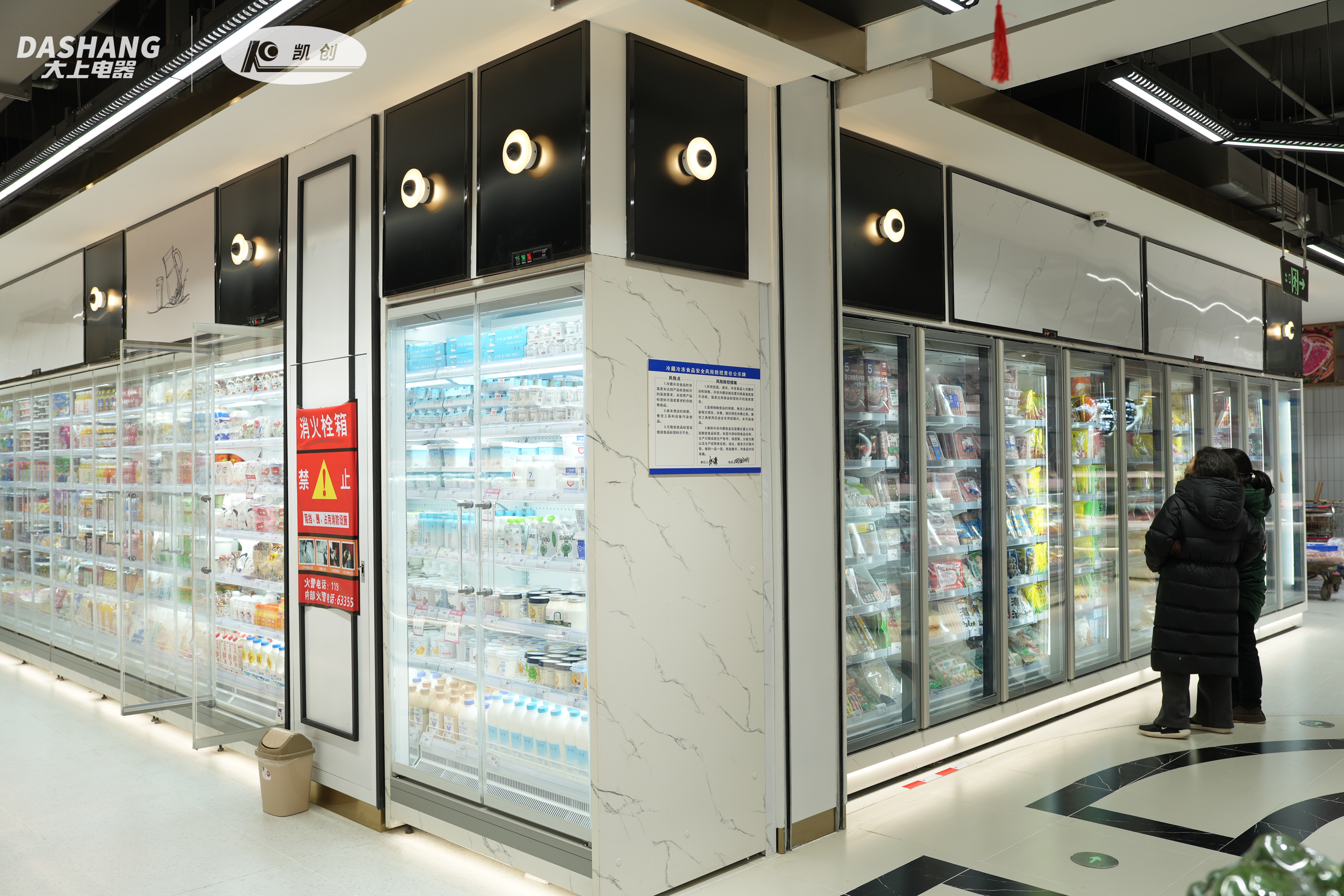
Glass Doors Change Access and Temperature Recovery
A glass door refrigerated cabinet allows products to be inspected before opening. This can reduce search time and cold-air loss compared with repeated opening of solid doors. Door number and width should match the way the cabinet is used. Several narrower doors may limit the exposed area during access, while one wide door provides easier loading for large packages.
Door Seals and Closing Force
Gaskets must remain flexible and contact the frame evenly. A door that appears closed but leaves a small gap can introduce warm, humid air continuously. Self-closing hinges can help, but they still require correct adjustment and a level cabinet.
Condensation Control
Glass fogging may be caused by high humidity, low glass temperature, frequent opening, damaged seals, or insufficient anti-condensation performance. The solution is not always stronger glass heating. Installation conditions, air-conditioning direction, door alignment, and ambient humidity should be reviewed first.
Open-Front Models Require a Different Room Strategy
Some vertical refrigerated display cabinets use an open front rather than glass doors. They provide fast access and uninterrupted visibility but depend on a stable air curtain. Strong drafts from entrances, fans, or air-conditioning outlets can disturb the curtain and increase temperature variation.
Open models also require suitable room temperature, humidity, and airflow. Night covers may reduce air exchange and energy loss during closed periods.
Lighting Should Support Labels Without Adding Unnecessary Heat
Vertical cabinets use multiple shelves, so lighting must reach more than the top row. Side lighting or shelf lighting can improve visibility, but placement should avoid glare on glass doors and shadows beneath packages. Light sources should also be efficient because heat added inside the cabinet becomes an additional refrigeration load.
Plan labels, price strips, and lighting together. Oversized signs can block airflow or hide products, while poorly positioned lights make glossy packaging difficult to read.
Cleaning, Drainage, and Service Access
A refrigerated display cabinet handles packaged food but still accumulates dust, label fragments, spills, and condensation. Removable shelves, smooth internal surfaces, and accessible drainage simplify routine cleaning. Door tracks, gaskets, fan covers, and return-air grilles require regular inspection.
Keep the condenser and ventilation area clean, because dust reduces heat rejection. Preserve service clearance so maintenance does not require moving loaded equipment.
How to Select the Right Vertical Refrigerated Display Cabinet
Selection should begin with product type and required temperature, followed by available wall width, cabinet height, door or open-front configuration, shelf load, package dimensions, ambient conditions, and refrigeration arrangement. The external volume shown in specifications should not be confused with usable display capacity.
A suitable Vertical Refrigerated Display Cabinet keeps products visible, accessible, and within the required temperature range. Effective layouts balance shelf density with airflow, display quality with opening time, and capacity with practical restocking.
FAQ
1. What products are suitable for a vertical refrigerated display cabinet?
It can be used for beverages, dairy products, packaged meals, desserts, fruit, vegetables, and other chilled products with compatible storage temperatures.
2. Why are products on one shelf warmer than products on another?
Possible causes include blocked airflow, overloaded shelves, products extending beyond the loading line, frequent door opening, or unsuitable installation conditions.
3. Should warm products be placed directly into the cabinet?
Large quantities of warm products should be pre-chilled. The cabinet is mainly designed to maintain product temperature rather than perform rapid pull-down cooling.
4. How can glass door fogging be reduced?
Check room humidity, door seals, door alignment, opening frequency, air-conditioning direction, and the cabinet’s anti-condensation system. The cause should be identified before changing control settings.
Post time: Jul-30-2026


