
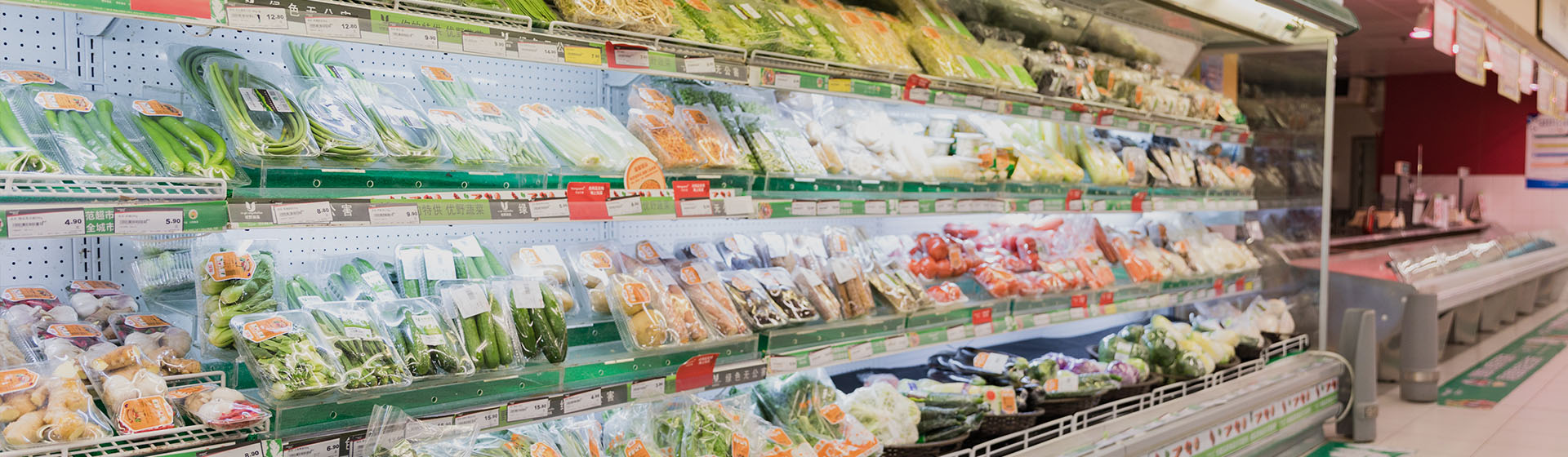
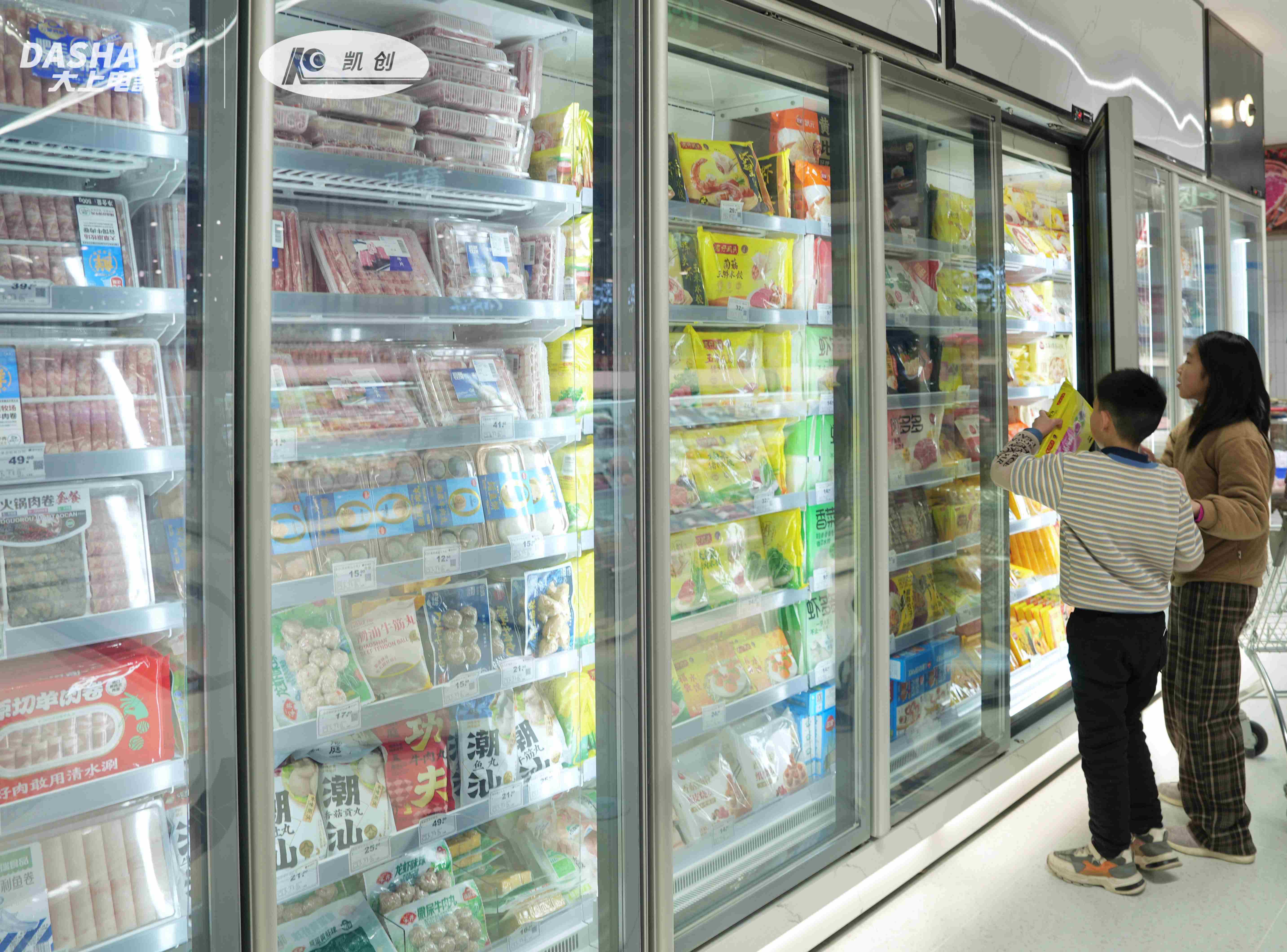
A Transparent Glass Door Cooler is designed for packaged chilled products that need to remain visible while the refrigerated space stays enclosed. The glass door gives a full front view of drinks, dairy products, desserts, prepared foods, and other chilled items before the door is opened. This changes the role of the cooler: the door is not only an insulated boundary, but also part of the display system.
The useful product questions are practical: how does the transparent door affect display, how should shelves be arranged behind it, how many doors suit different assortments, and which details keep the view clear during long operating hours?
The Door Creates a Display Zone Before It Creates an Opening
In a solid-door refrigerator, the interior is hidden until the door opens. In a glass door display cooler, the product can be recognized first and accessed second. That sequence matters because it reduces unnecessary searching inside the cabinet and makes the entire front surface useful for presentation.
A well-planned door module should allow three things at the same time:
- · clear viewing from normal aisle distance;
- · easy access to the product zone behind that door;
- · stable door closing after the product is removed.
Door width, glass area, frame thickness, hinges, handles, and gasket fit therefore contribute to product performance.
One Door Should Represent One Logical Product Zone
The number of doors is not simply a question of cabinet size. Each door can become a separate visual category.
A single-door commercial glass door cooler suits a compact range. Two-door and larger cabinets can divide drinks, dairy, desserts, or prepared food into clearer zones.
A practical door-zone plan may look like this:
1. Door 1: bottled water and soft drinks;
2. Door 2: juice, milk, and dairy drinks;
3. Door 3: yogurt, desserts, and packaged chilled snacks;
4. Door 4: sandwiches or ready-to-eat products.
The grouping changes with the assortment, but door divisions should always make the product map easier to understand.
Transparent Glass Works Only When the View Stays Clear
The glass itself has to perform in a low-temperature environment. When room air is warm or humid, condensation can form on colder surfaces and reduce visibility.
Depending on the cooler design and operating climate, the door system may use insulated glass, heated frame areas, or other anti-condensation measures. The aim is not simply to add technology; it is to protect the main product advantage of the cabinet – the ability to see the products without opening the door.
Frame design also affects the transparent viewing area and must balance door strength, sealing, and appearance.
Shelf Geometry Should Be Designed Behind the Door, Not Independently
A Transparent Glass Door Cooler can have excellent glass and still present products poorly if the shelf layout does not match the door opening.
Shelf width should relate to the door module. Shelves that are too shallow lose capacity, while overly deep shelves hide back-row products.
Shelf pitch also matters:
- · tall bottles require more vertical clearance;
- · cans can use tighter spacing;
- · yogurt cups and desserts can create several compact rows;
- · prepared-food boxes may need wider and shallower shelf zones.
Adjustable shelves allow the internal structure to change with the product range.
Lighting Should Follow the Door Modules
Because the cabinet is viewed through glass, lighting must support the same front-facing logic as the doors.
Vertical lighting near the door frame can help illuminate several shelf levels at once. Shelf lighting can make small labels easier to see, but it should not produce strong reflections on the glass. Dark corners behind a transparent door reduce the benefit of the display surface.
A lighting plan should consider:
- · brightness across upper and lower shelves;
- · reflections on the glass;
- · label readability;
- · heat output;
- · moisture protection;
- · service access for the light components.
Door Width Changes Access Time and Product Grouping
A very wide glass door gives access to a large section, but opening it also exposes a larger front area. Narrower doors can divide the cabinet into smaller zones, which may be useful when only one category needs access at a time.
A multi-door glass door cooler therefore balances visibility, product grouping, and access size.
Beverage-heavy displays may use wider door modules, while mixed chilled-food displays may benefit from more door divisions.
High-Turnover Products Should Have the Shortest Access Path
Product placement behind the glass can reduce unnecessary door-open time. Frequently accessed items should be easy to identify and reach immediately after the door opens.
This often means placing high-turnover products at comfortable hand height and keeping slower-moving items on upper or lower shelves. Heavy bottles should also remain on shelves with suitable load capacity and safe access.
The door and shelf plan should make frequently handled products quick to reach.
Three Product Layouts Show How the Same Cooler Can Be Configured Differently
Beverage-Focused Layout
This version prioritizes strong shelves, taller shelf spacing, and wide front visibility. Door zones can separate water, soft drinks, juice, and dairy drinks.
Dairy and Dessert Layout
Closer shelf spacing can create more rows for yogurt, cheese, desserts, and smaller packages. Clear front lighting becomes more important because many packages are compact.
Mixed Ready-to-Eat Layout
A combination of shallow shelves and several door zones can separate sandwiches, salads, desserts, and chilled snacks. The product map becomes easier to understand through the glass before any door is opened.
A Transparent Glass Door Cooler Should Be Configured Around the Product Map
For Dashang project planning, a Transparent Glass Door Cooler can be matched to the actual chilled assortment rather than treated as a fixed cabinet with only one standard layout. Door quantity, shelf pitch, shelf depth, lighting, glass structure, refrigeration type, voltage, exterior finish, and cabinet dimensions can all change according to the products and installation environment.
Useful configuration information includes package dimensions, product categories, shelf load, total display length, site conditions, and refrigeration type.
The door, shelf structure, lighting, and refrigeration system should work together as one controlled chilled display.
FAQ
1. What products are suitable for a Transparent Glass Door Cooler?
It is commonly used for beverages, dairy products, desserts, packaged chilled food, sandwiches, salads, and other products that match the cabinet temperature range.
2. Why does glass-door cooler glass sometimes fog?
Fogging can occur when warm, humid air meets a colder glass surface. Glass structure, frame heating, sealing, room humidity, and operating conditions can all affect condensation.
3. Is a multi-door cooler better than a single-door cooler?
Neither format is automatically better. Multi-door designs are useful for larger assortments and clearer product zoning, while single-door cabinets can suit compact displays.
4. Can transparent glass door coolers be installed as a continuous refrigerated wall?
Yes. Multiple units can be coordinated into a longer line when door modules, cabinet height, refrigeration configuration, lighting, and exterior finish are planned together.
Post time: Aug-12-2026


