
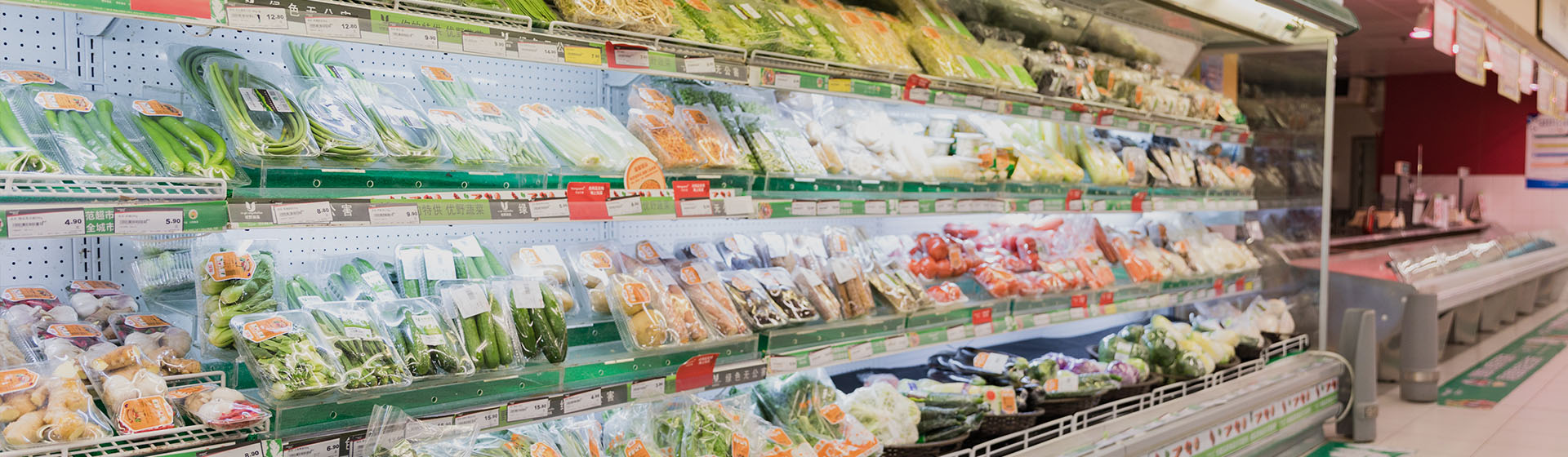
A Supermarket Meat Showcase Fridge is one of the most common refrigeration display systems used in fresh meat sections. Unlike an ordinary refrigerator, it must perform two different functions at the same time: maintain a stable low-temperature environment while providing a large, open display area that keeps products clearly visible and easily accessible.
For this reason, the value of a Supermarket Meat Showcase Fridge is not simply that it can generate cold air. The real challenge is balancing open display, temperature stability, display capacity, continuous operation, and cabinet structure.
This is also why a meat showcase should not be evaluated in the same way as an ordinary refrigerated storage cabinet. Refrigeration capacity is only the foundation. How effectively that cooling capacity is controlled within an open display space is what largely determines the actual performance of the equipment.
Why Does a Supermarket Meat Showcase Fridge Usually Use a Low-Profile Open Design?
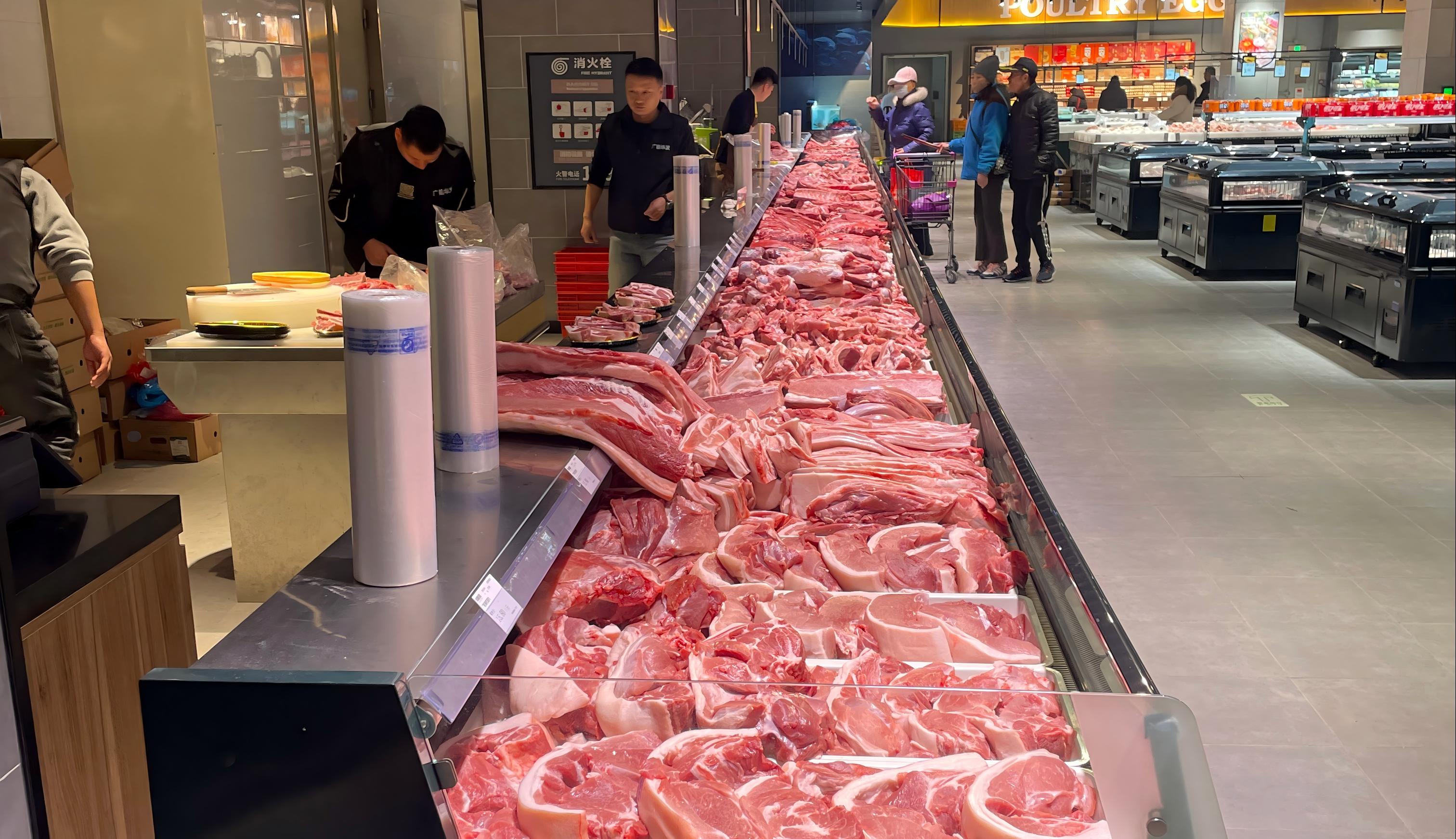
One of the most recognizable characteristics of a Supermarket Meat Showcase Fridge is its relatively low cabinet height combined with a large open front or top display area.
This structure is not designed purely for appearance.
A lower cabinet allows the entire display area to remain within a natural viewing range while reducing visual obstruction across the store. Compared with a closed upright refrigerator, an open Supermarket Meat Showcase Fridge can create a wider horizontal display surface, especially when multiple units are installed in a continuous line.
For commercial refrigeration equipment, this configuration offers another advantage: several cabinets can be connected to form a long refrigerated display section, creating a more consistent visual layout throughout the meat department.
However, a larger open area also creates a greater refrigeration challenge.
A closed refrigerator uses glass doors or solid doors to isolate the refrigerated space from ambient air. An open meat showcase must limit cold-air loss without relying on a complete physical barrier. Its performance therefore depends heavily on the internal air duct, discharge position, return-air structure, and refrigeration capacity working together.
For this reason, the open structure itself is a critical part of Supermarket Meat Showcase Fridge design rather than simply an external styling difference.
A Larger Display Area Is Not Simply a Matter of Increasing Cabinet Size
At first glance, increasing the width or depth of a meat showcase may appear to be an easy way to gain more display space. In practice, however, every increase in cabinet dimensions also changes the volume that the refrigeration system must control.
For example, a deeper display means refrigerated air must travel farther across the cabinet, while a longer unit requires more consistent air distribution along its entire length.
If the cabinet is simply enlarged without corresponding improvements to airflow and refrigeration design, operating conditions may become inconsistent between different sections.
Therefore, the display capability of a Supermarket Meat Showcase Fridge should not be judged only by external dimensions or internal volume. What matters is whether the cabinet can maintain a stable refrigerated environment throughout the entire usable display area.
This is one of the major differences between commercial refrigerated showcases and ordinary storage refrigerators.
A conventional refrigerator mainly answers the question: “How much can it hold?” A meat showcase also needs to consider:
- whether the effective display surface is sufficiently wide;
- whether the front-to-back depth provides good visibility;
- whether cooling remains consistent along a long cabinet;
- whether connected units create a continuous display;
- whether refrigeration capacity remains sufficient as cabinet dimensions increase.
Together, these factors determine whether physical cabinet size can actually be converted into effective refrigerated display space.
Air Curtain Design Is Critical to an Open Supermarket Meat Showcase Fridge
For an open Supermarket Meat Showcase Fridge, the air curtain is one of the most important parts of the operating principle.
During operation, cooled air enters the display area through a controlled airflow path and forms a relatively stable air barrier across the open front. The air curtain does not completely prevent ambient air from entering. Instead, it is designed to reduce excessive air exchange between the refrigerated display area and the surrounding store environment.
If the air curtain is poorly designed, cold air can escape rapidly even when the refrigeration system itself provides sufficient cooling capacity.
Air curtain design therefore needs to account for several factors.
Air velocity.
If the air velocity is too low, a stable barrier is difficult to maintain. If it is too high, excessive turbulence may occur and system load can increase.
Air direction.
Refrigerated air should cover the effective display area rather than concentrating in only one section.
Return-air path.
Air that has passed through the display area must return smoothly to the refrigeration circuit so that stable circulation can be maintained.
Cabinet geometry.
Front-edge height, rear structure, display depth, and outlet position all influence airflow behavior.
From a product-design perspective, a Supermarket Meat Showcase Fridge is therefore not simply a refrigeration system installed inside an open cabinet. It is an integrated system in which refrigeration, airflow, and cabinet structure work together.
Why Is Continuous Operation More Important Than Short-Term Pull-Down Speed?
One of the biggest differences between commercial refrigeration equipment and a household refrigerator is the operating environment.
A Supermarket Meat Showcase Fridge may remain open throughout business hours while being exposed to store lighting, changing ambient temperatures, customer activity, and long periods of continuous operation.
For this reason, evaluating this equipment solely by how quickly it reaches the set temperature does not provide a complete picture.
More important is whether the cabinet can maintain stable conditions over long operating periods.
This places several demands on the refrigeration system:
- compressor capacity must match the actual refrigeration load;
- the evaporator must support continuous heat exchange;
- fans must maintain stable airflow over long operating periods;
- defrost cycles should minimize disruption to refrigeration;
- the control system should respond effectively to changing operating conditions.
In other words, a Supermarket Meat Showcase Fridge depends more on sustained refrigeration performance than on short-term cooling power.
This is also why compressor capacity alone is not enough to judge the overall performance of a meat display cabinet.
Forced-Air and Static Cooling Create Different Product Characteristics
Commercial meat display equipment can use different refrigeration approaches, and each creates different operating characteristics.
A forced-air Supermarket Meat Showcase Fridge uses controlled airflow to distribute cooling throughout the display area. This makes it suitable for relatively uniform cooling over a larger space and allows it to work effectively with open-display configurations.
Its main advantage is the ability to actively organize refrigerated airflow across the cabinet.
Static cooling, by contrast, relies more heavily on natural heat transfer from cold surfaces and involves less active air movement.
Neither system can simply be described as universally better. Overall performance still depends on cabinet structure, operating conditions, and display format.
However, in large open meat display areas, controlled air circulation plays an especially important role. This is one reason airflow engineering is a central part of modern supermarket meat showcase design.
Why Must a Supermarket Meat Showcase Fridge Balance Display Height and Working Height?
The height of a meat showcase is not a case of “lower is always better” or “higher means more capacity.”
If the cabinet is too high, it may provide more internal space but reduce visibility and weaken the visual advantages of an open display.
If the cabinet is too low, effective internal volume may become limited while also affecting airflow design and the placement of refrigeration components.
A well-designed product therefore needs to balance display performance, internal equipment space, and practical operating height.
From the store aisle, customers should be able to see the full display area naturally without excessive bending or changing their viewing angle.
At the same time, the cabinet must still provide sufficient internal space for evaporators, fans, air ducts, insulation, and other refrigeration components.
This explains why two Supermarket Meat Showcase Fridge models with similar external dimensions can have noticeably different usable display areas.
The objective is not to turn every centimeter into storage space. Instead, available cabinet dimensions must be allocated intelligently between display space, refrigeration space, and structural space.
Plug-In and Remote Designs Suit Different Operating Conditions
Meat showcase refrigerators can also be divided according to the location of their refrigeration systems.
Plug-In Supermarket Meat Showcase Fridge
A plug-in Supermarket Meat Showcase Fridge integrates the main refrigeration components directly into the cabinet. Installation is relatively straightforward, and each unit can operate independently.
This configuration is often suitable for individual cabinets or smaller groups of refrigerated showcases and allows different units to be controlled separately.
Remote Supermarket Meat Showcase Fridge
A remote cabinet connects to an external centralized refrigeration system rather than housing all major refrigeration components within the showcase itself.
This arrangement can reduce some heat and noise around the display cabinet and is often better suited to larger continuous refrigeration installations.
Neither configuration is inherently superior.
The appropriate Supermarket Meat Showcase Fridge design depends on the number of cabinets, store size, installation conditions, and overall refrigeration system planning.
What Problems Should a Well-Designed Supermarket Meat Showcase Fridge Solve?
If a meat showcase is viewed simply as “a refrigerated cabinet for meat,” evaluation tends to focus only on temperature range, dimensions, and power.
But from a complete product perspective, a mature Supermarket Meat Showcase Fridge should address several challenges at the same time:
- balancing open presentation with low-temperature retention;
- combining a large display area with uniform refrigeration;
- maintaining continuous performance throughout long business hours;
- balancing cabinet dimensions with genuinely usable display space;
- supporting modular combinations for different store layouts;
- coordinating insulation, airflow, and refrigeration systems.
This is why a well-designed meat showcase cannot rely solely on higher refrigeration power.
The refrigeration system is only one part of the complete product.
Cabinet structure, air curtain design, heat-exchange efficiency, usable display dimensions, and system control together determine the overall performance of a Supermarket Meat Showcase Fridge.
In the development of commercial refrigerated display equipment, Dashang can configure products according to different store layouts, cabinet lengths, refrigeration formats, and display requirements. This allows meat showcase systems to meet refrigeration requirements while also supporting continuous display lines, modular installation, and long-term commercial operation.
FAQ
1. Why do Supermarket Meat Showcase Fridges often use an open design?
An open structure provides a wider and more direct display surface while reducing barriers to product access. The key is to use properly designed air curtains and airflow circulation to control refrigeration loss while the cabinet remains open.
2. Is a higher refrigeration capacity always better for a meat showcase?
No. Refrigeration capacity needs to match cabinet dimensions, display area, airflow design, and ambient operating conditions. Simply increasing refrigeration power cannot correct poor airflow organization or insufficient cabinet insulation.
3. What is the difference between plug-in and remote Supermarket Meat Showcase Fridge systems?
A plug-in model integrates the main refrigeration system into the cabinet and operates relatively independently. A remote model connects to an external centralized refrigeration system and is often more suitable for larger continuous display areas. The appropriate configuration depends on project scale and installation conditions.
Post time: Aug-14-2026


