
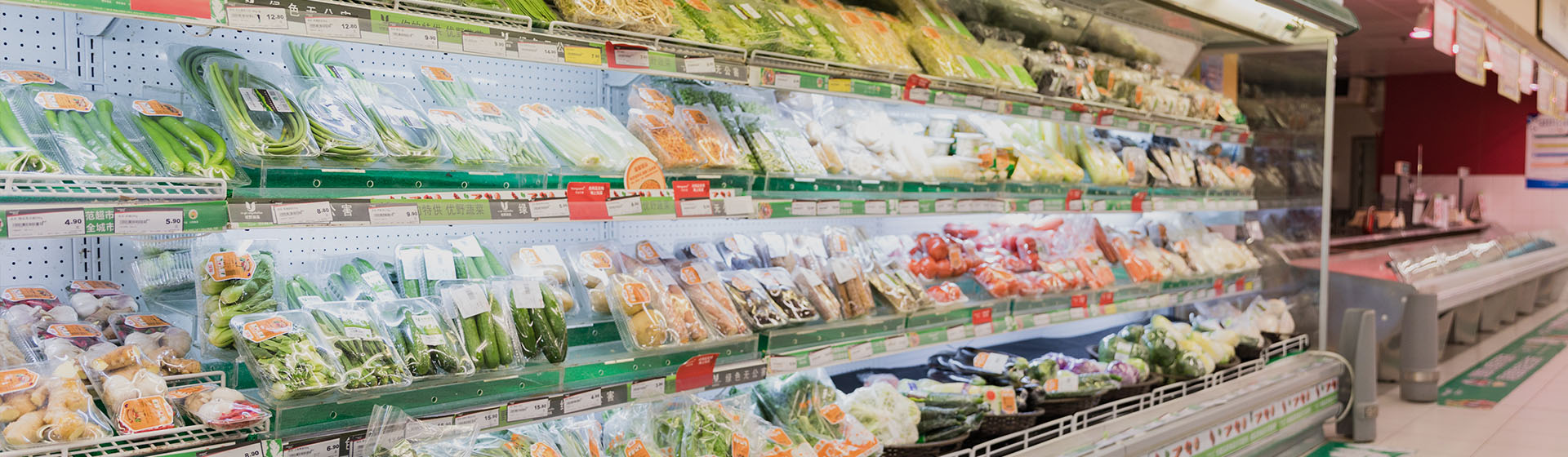
A Remote Double Air Curtain Display Fridge is designed for locations that need chilled products to remain fully visible and easy to reach without installing front glass doors. The open front creates a direct viewing area for beverages, dairy products, packaged meals, fruit, vegetables and other refrigerated goods. The technical challenge is obvious: the cabinet must keep cold air inside while warm room air continuously moves across the open face. A basic open cabinet can lose temperature quickly, especially in busy locations with high ambient temperature, strong lighting or frequent customer movement. The double air curtain structure is developed to solve this conflict between open access and stable refrigeration. Instead
Why Two Air Curtains Perform Differently from One
A single air curtain can separate cold cabinet air from the surrounding room, but it may become unstable when the opening is tall, the aisle is busy or the indoor air movement is strong. A Remote Double Air Curtain Display Fridge adds a second stream so the front boundary is more resistant to disturbance. The inner curtain mainly protects the refrigerated product zone, while the outer curtain acts as an additional buffer against warm and humid ambient air. The two streams must be carefully balanced. If airflow is too weak, warm air enters the cabinet. If it is too strong, products may dry out, lightweight packaging may move and energy use may increase. Good cabinet engineering therefore depends on fan arrangement, outlet angle, return-air design, evaporator capacity and the shape of the display opening. The goal is not simply to blow more air, but to create a stable, continuous barrier that works across the full width and height of the cabinet.
Remote Refrigeration Reduces Heat and Noise Around the Cabinet
The word remote means that the main condensing unit is installed away from the display cabinet, often in a machine room, service area or external technical zone. This arrangement changes how the display area feels and how the refrigeration system is managed. Because the compressor and condenser are not built into the cabinet base, less heat is released into the sales or service area. Noise around the display can also be reduced, which is useful in large stores, premium food areas and projects that use several cabinets in one line. Remote systems can be connected to a centralized refrigeration plant, allowing multiple cabinets to share coordinated cooling capacity. This is especially practical for large commercial projects where equipment must operate for long hours and service access needs to be organized. However, remote installation requires correct pipe sizing, refrigerant planning, drainage, electrical coordination and commissioning. The cabinet and the remote system must be matched as one complete solution rather than selected as separate parts.
Stable Airflow Protects Every Shelf
Temperature performance is not determined only by the lowest reading near the evaporator. A reliable cabinet must protect products across the full display area. The airflow design therefore needs to account for several practical factors:
- Top shelves, bottom decks, front edges and rear sections should remain within the intended temperature range.
- Shelf depth, price strips, package height and product density must not block the supply and return air paths.
- Products should remain below the specified load line so the two air curtains can stay continuous.
- Air velocity should be strong enough to protect the opening without drying exposed products or creating uncomfortable drafts.
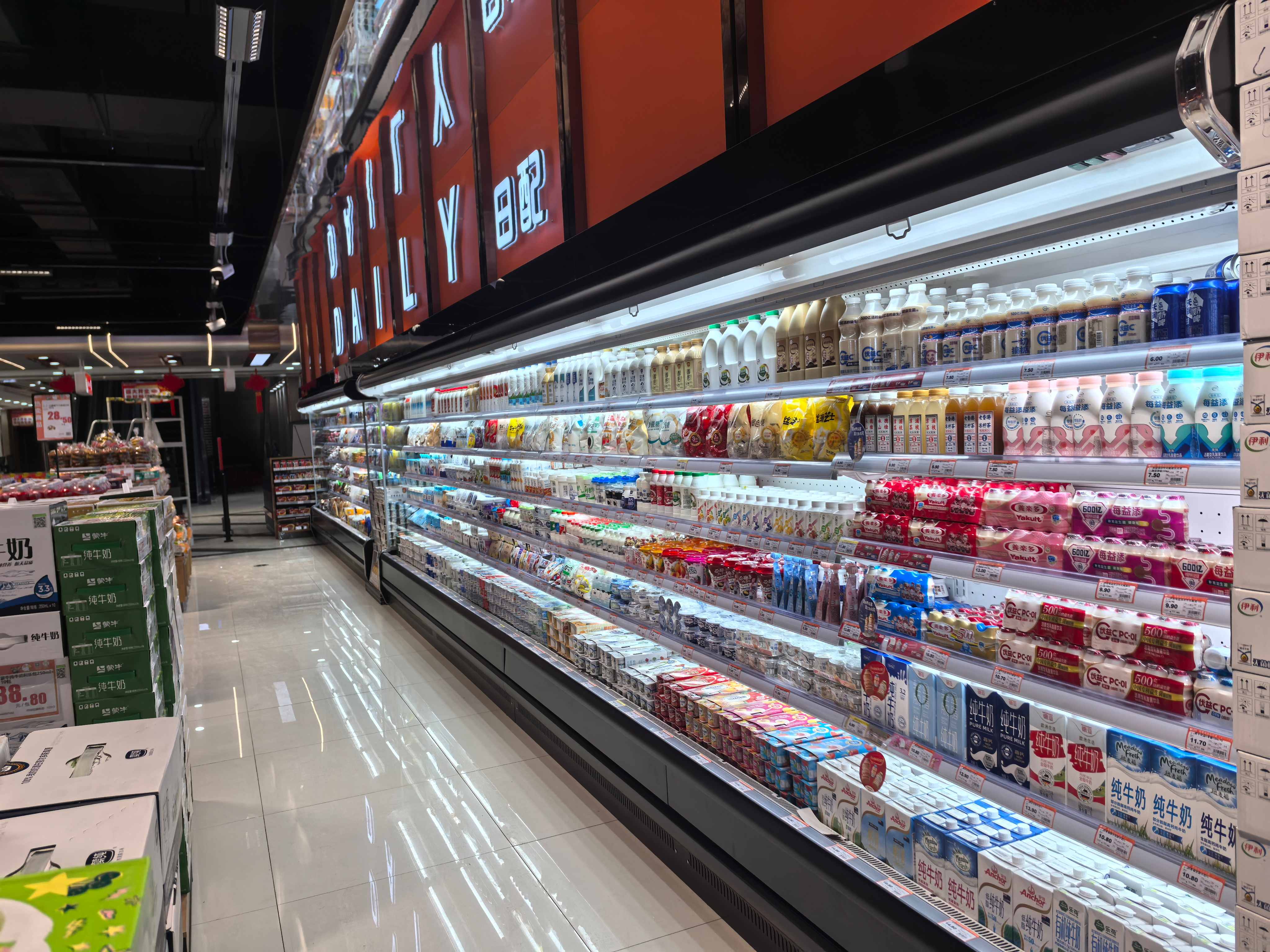
Reducing Condensation and Glass-Free Visibility Problems
An open cabinet avoids fingerprints, door opening resistance and fogging on front glass, but it faces another humidity challenge. Warm, moist air can enter the display and create condensation around metal edges, price rails or lower return-air sections. The outer air curtain helps limit this moisture entry, while correct drainage and defrost design remove water created during operation. Store conditions still matter. A cabinet installed near an entrance, kitchen exhaust, direct sunlight or a strong air-conditioning outlet may experience unstable airflow. For this reason, project planning should include room temperature, relative humidity, ceiling air movement and cabinet position. The best result comes from combining cabinet engineering with a suitable installation environment. The equipment should not be expected to overcome uncontrolled drafts or excessive heat without affecting energy use.
Energy Control Depends on the Whole System
Open display naturally requires more refrigeration work than a closed glass-door cabinet because there is no solid barrier. The double air curtain is intended to reduce unnecessary cold-air loss, but energy performance also depends on evaporator design, fan efficiency, lighting, insulation, control strategy and the remote condensing system. LED lighting can improve product visibility with less heat than older lamps. Night blinds can reduce the open area after business hours. Electronic controls can coordinate temperature, fan operation and defrost cycles more accurately. In a centralized project, compressor capacity can be adjusted according to the combined load of several cabinets. Buyers should therefore compare systems by expected operating conditions rather than by one nominal power figure. Ambient temperature, humidity, cabinet length, product load and daily opening hours all influence actual consumption.
What to Confirm Before Selecting the Cabinet
Before ordering a Remote Double Air Curtain Display Fridge, the project team should confirm the operating conditions instead of selecting the cabinet only by external dimensions. Key information includes:
- Cabinet length, height, depth and the number of shelves required for the planned display line.
- Target temperature range and the product categories that will be placed on each shelf.
- Design ambient temperature, relative humidity, nearby entrances, air-conditioning outlets and heat sources.
- Remote refrigeration system type, refrigerant, piping distance, drainage position and electrical requirements.
- Lighting, controller, night curtain, end panel, joining method and maintenance access for continuous cabinet lines.
FAQ
What is the main advantage of a double air curtain?
It creates two controlled airflow layers across the open front, helping reduce warm-air entry and improve temperature stability compared with a basic single-curtain open display.
Why use a remote refrigeration system?
A remote system moves the main condensing equipment away from the display area, reducing local heat and noise while supporting centralized cooling for multiple cabinets.
Can this cabinet be used for every chilled product?
No. Beverages, dairy products, produce and prepared foods may require different temperature, humidity, shelf and airflow settings. The product category must be confirmed before configuration.
What installation conditions affect performance most?
Ambient temperature, humidity, direct drafts, sunlight, nearby heat sources, pipe design, drainage and product loading all influence real operating performance.
Post time: Jul-21-2026


