
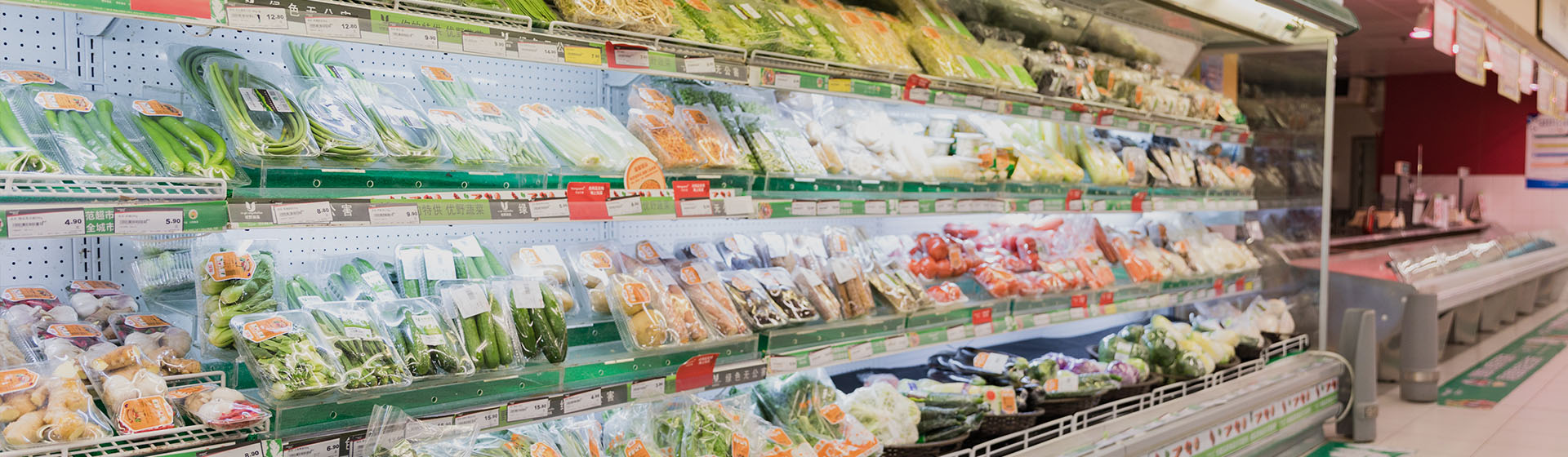
A Multideck Fridge for Fruit and Vegetable provides a highly visible display while maintaining a controlled chilled environment. Unlike a glass-door cabinet, customers and staff can reach products directly. This supports selection and restocking, but it also creates a challenge: the cabinet must retain cold air while the front remains open to the room.
Fruit and vegetables continue to respire after harvest. They release heat and moisture, and varieties respond differently to cold, dry air, and temperature fluctuation. A useful produce display therefore needs stable airflow, suitable humidity, correct loading depth, organized product zones, and installation conditions that protect the air curtain.
Fresh Produce Is Still Biologically Active
Produce is not an inert packaged product. After harvest, fruit and vegetables continue using oxygen and releasing carbon dioxide, heat, and water vapor. The rate changes with temperature and product type.
Leafy vegetables can lose water quickly and wilt. Some tropical fruits may suffer chilling damage if the temperature is too low. Root vegetables often tolerate cooler conditions but may dry at exposed surfaces. Cut produce needs stricter temperature control than whole products.
The cabinet should support the product mix, with sensitive categories placed in suitable zones. Common groups include:
- leafy greens and herbs;
- apples, pears, and citrus fruit;
- berries and soft fruit;
- tomatoes, peppers, and cucumbers;
- root vegetables;
- packaged salads;
- cut fruit and prepared vegetable packs.
Separating these groups simplifies management and reduces the chance of one category affecting another.
The Air Curtain Replaces a Physical Door
The open front of a Multideck Fridge for Fruit and Vegetable is protected by a downward-moving curtain of cold air. Air usually leaves outlets near the top, passes across the opening, and returns through a grille near the bottom.
When this path remains stable, it limits exchange between chilled cabinet air and warmer room air. It can be disturbed by:
- air-conditioning vents directed toward the cabinet;
- entrance doors and outdoor drafts;
- electric fans;
- products extending beyond the loading line;
- blocked return-air grilles;
- incorrect shelf positions;
- excessive room temperature or humidity.
The cabinet should be treated as part of the room’s airflow plan, not in isolation.
Shelf Depth and Loading Lines Protect Temperature
Multideck cabinets provide several display levels, but the usable area is not the same as the full shelf depth. Products placed too far forward can interrupt the air curtain and move into a warmer zone.
The loading line indicates the safe display boundary. A routine should include:
1. Keeping the lower return-air grille clear.
2. Leaving space around rear air channels.
3. Keeping tall packaging away from upper outlets.
4. Avoiding product piles extending toward the aisle.
5. Ensuring signs and price strips do not block airflow.
6. Restocking in smaller batches.
Overloading may make the display look full, but it can create temperature differences and increase product loss. A controlled arrangement is more useful than maximum packing density.
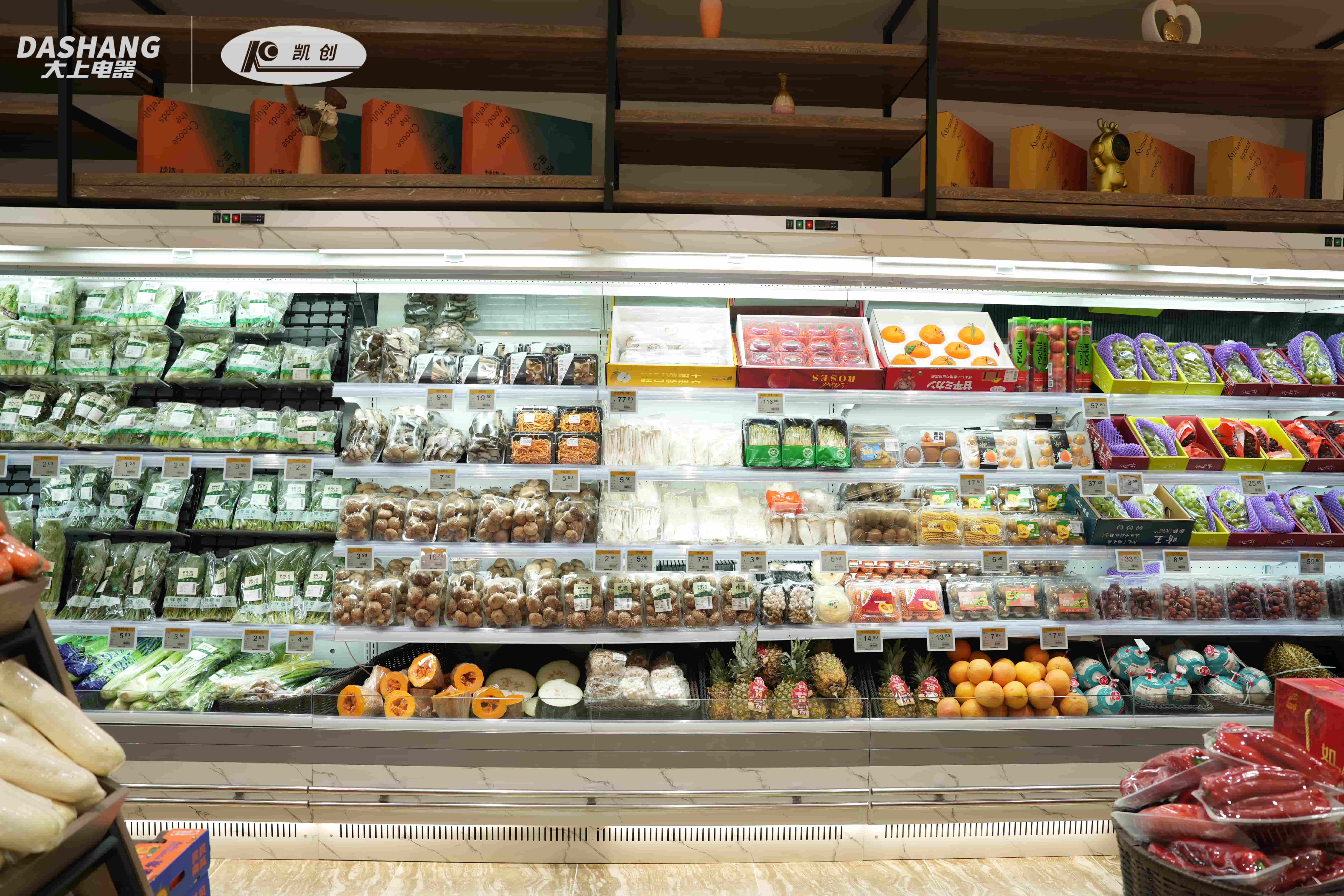
Different Shelves Can Serve Different Produce Groups
Temperature and airflow are not always identical from top to bottom. The upper area may be more exposed to ambient air, while rear and lower zones may remain colder. The pattern depends on cabinet design and room conditions.
Product placement should follow measured performance. Leafy vegetables may need a location away from direct drying airflow. Packaged salads and cut produce should remain in stable zones. Larger fruits should not block smaller products or air channels.
Slightly tilted shelves improve visibility, but the front edge must prevent round fruit from rolling forward. Shelf depth should fit crates, trays, or retail packs without forcing products beyond the loading limit.
Humidity Must Be Managed, Not Maximized
High humidity can reduce water loss from leafy vegetables, but too much moisture may encourage condensation, slippery surfaces, and packaging damage. Low humidity reduces condensation but accelerates wilting.
The correct balance depends on produce type, packaging, turnover time, and room climate. Operating choices that influence humidity include:
- loading warm or wet produce;
- misting without a suitable system;
- blocking airflow with liners;
- leaving damaged leaves and water on shelves;
- exposure to humid entrance air;
- incorrect defrost or drain operation.
The objective is stable product condition, not the highest possible humidity.
Rotation Should Follow Condition as Well as Date
Fresh produce can change visibly before a date label becomes relevant. Staff should check color, firmness, moisture loss, bruising, and packaging during restocking.
A useful rotation process includes:
- moving earlier stock toward the front;
- removing damaged items;
- separating overripe fruit;
- keeping wet leaves away from dry packaging;
- checking packaged salads for condensation;
- cleaning soil and plant debris promptly.
Ethylene-producing fruit also requires attention. Apples, pears, bananas, and some other fruit release ethylene, which can accelerate ripening or deterioration in sensitive vegetables. Layout and turnover time should reduce prolonged exposure between incompatible groups.
Night Blinds Improve Conditions Outside Operating Hours
When the display is not being accessed, a night blind can cover the open front. This reduces air exchange, supports temperature stability, and can lower refrigeration demand.
The blind should be fully opened before normal operation so the air curtain can flow correctly. It should also be cleaned and checked for damage. A night blind cannot compensate for blocked air channels or incorrect loading, but it is useful in daily operation.
Defrost, Drainage, and Cleaning Support Airflow
Moisture entering the cabinet can freeze on the evaporator. As frost builds, airflow decreases and the refrigeration system works harder. Automatic defrost removes frost, while drainage carries away meltwater.
Poor drainage may cause water to collect or freeze near air channels. Produce debris can also block drains and return-air grilles.
Routine care should include:
- checking drains and removing leaves or labels;
- cleaning shelves and price strips;
- keeping return-air grilles open;
- observing fan operation;
- checking for unusual ice;
- wiping standing water;
- cleaning night blinds and lighting covers.
Cleaning should follow the operating instructions to protect electrical parts, sensors, coatings, and fans.
Selecting the Right Multideck Produce Display
Before choosing a Multideck Fridge for Fruit and Vegetable, define the produce categories, package formats, daily turnover, room climate, and restocking method.
Key points include:
- cabinet width and shelf number;
- shelf depth and load capacity;
- operating temperature range;
- airflow and air curtain design;
- lighting position;
- night blind configuration;
- defrost and drainage method;
- remote or self-contained refrigeration;
- cleaning access;
- maintenance space.
The correct cabinet supports visibility and access without sacrificing produce condition. Performance depends on loading, placement, and management as much as on the refrigeration system.
FAQ
1. Can all fruit and vegetables be displayed at the same temperature?
No. Tropical fruit, leafy vegetables, root crops, and prepared produce have different sensitivities and should be grouped according to their storage needs.
2. Why do vegetables wilt inside an open multideck fridge?
Wilting may result from excessive airflow, low humidity, long display time, warm loading, or placement in a drying zone. Packaging and shelf position should be reviewed.
3. Why should products stay behind the loading line?
The loading line protects the air curtain path. Products beyond it may enter warmer air, block circulation, and create uneven temperatures.
4. Does a night blind replace proper loading?
No. It reduces air exchange when the cabinet is not in use, but airflow openings, return grilles, and loading limits must still remain clear.
Post time: Aug-03-2026


