
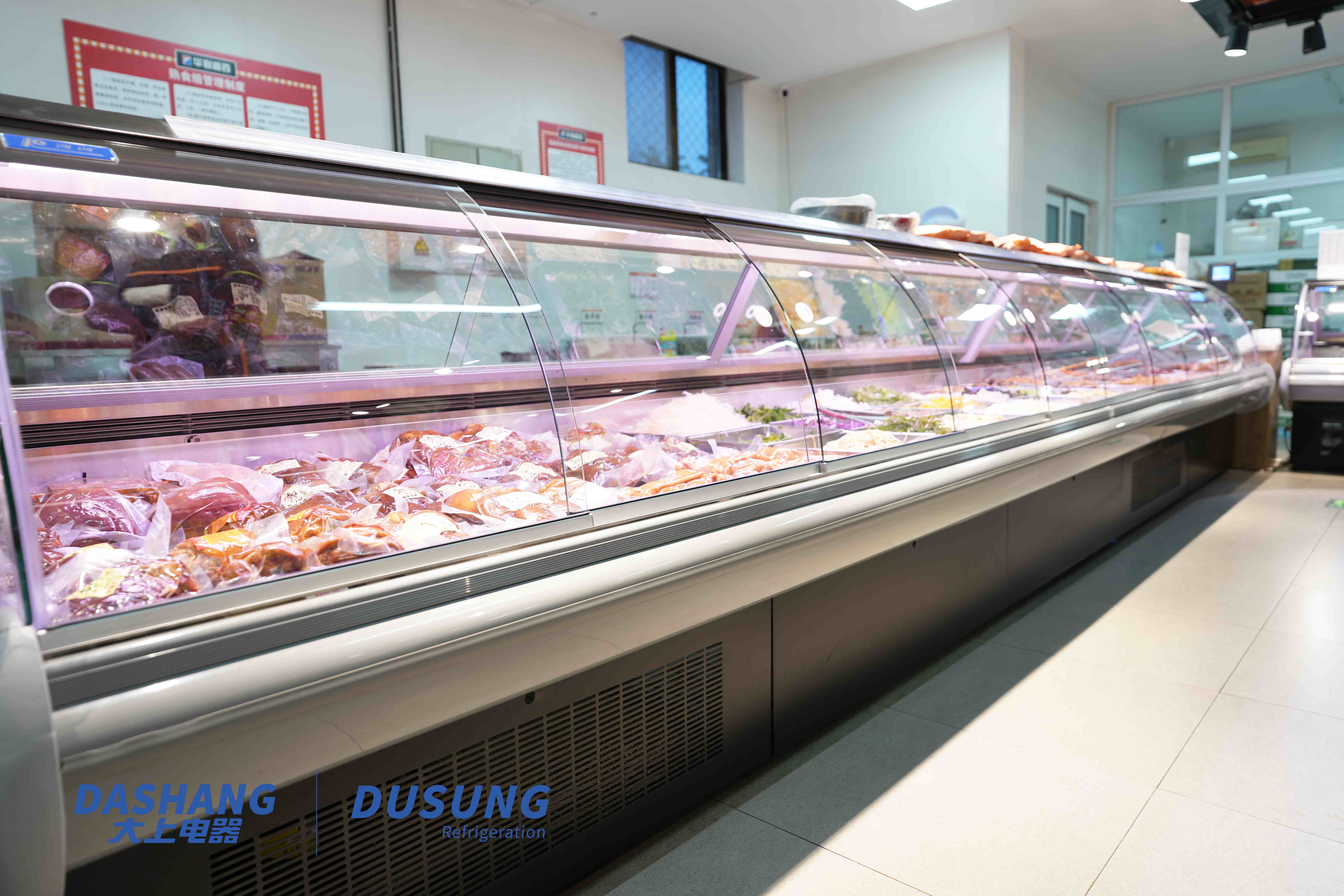
A Left-Right Open Deluxe Deli Cabinet is built for chilled deli products that need continuous visibility from the customer side and practical access from the service side. Its defining feature is not simply the glass shape or the cabinet width. The way the access panels open changes how staff reach the display deck, how the glass line remains visually continuous, and how the cabinet can be cleaned and replenished during service.
This type of deli cabinet is used for chilled prepared foods, sliced meats, cheese, salads, packaged deli items, and other products that suit the cabinet’s operating range. The product must keep these foods visible while providing enough working access for daily arrangement. That makes the opening structure part of the cabinet’s function rather than a decorative detail.
The Opening Direction Changes the Staff Working Area
In a conventional fixed-glass counter, access can be limited to rear doors or a large lift-up front glass section. A Left-Right Open Deluxe Deli Cabinet uses a different access concept. The opening arrangement allows sections of the display to be reached without requiring the entire front to move as one large panel.
This can make routine work more controlled. Staff may need to replace one tray, wipe one section of glass, adjust one price label, or add products to one part of the display. Localized access reduces the need to disturb the whole cabinet.
The practical benefit depends on how the opening zones align with the internal display deck. Door or glass divisions should match the sections where products are actually placed. If a frame falls directly in front of a key product group, the cabinet may remain easy to open but become less effective as a display.
Transparent Glass Keeps the Product Visible from Several Angles
A deli cabinet is judged visually before it is touched. Customers see the front glass, the product surface, the lighting, and the arrangement of trays as one complete presentation. The Left-Right Open Deluxe Deli Cabinet uses transparent viewing surfaces to keep the food visible across a long horizontal line.
All-side transparency can be especially valuable at the ends of the cabinet. A solid side panel creates a hard visual boundary, while glass keeps the product visible to customers approaching from an angle. When several cabinets form a longer run, consistent glass height and frame alignment help the complete counter look like one system.
The display should support that visibility:
- Product trays should stay below the intended sightline.
- Labels should not cover large areas of glass.
- Lighting should reach the front and rear of the deck.
- Packages should not be stacked high enough to hide products behind them.
- The glass should remain clear during normal service conditions.
Internal Lighting Supports Product Color and Label Readability
The cabinet includes internal LED lighting as part of the display system. For deli products, lighting has two jobs. It makes the food easier to see and helps customers read product names, prices, and package labels without leaning close to the glass.
The lighting should be even rather than extremely bright. Strong reflections can make transparent glass harder to look through, especially when the surrounding store already has powerful ceiling lights. A balanced lighting layout reduces dark corners and keeps the whole display surface visually consistent.
Heat from lighting is also relevant in a refrigerated cabinet. Efficient light sources help limit unnecessary heat load inside the product zone. The refrigeration system then spends more of its capacity dealing with room heat, access, and product load rather than compensating for excessive internal lighting.
The Display Deck Should Be Planned Around Deli Product Shapes
A Left-Right Open Deluxe Deli Cabinet may hold many types of chilled food, but the internal arrangement should not treat every product as the same shape. Flat meat trays, deep salad pans, cheese blocks, packaged meals, and prepared dishes use the display depth differently.
The deck is easier to manage when products are grouped by tray size and service frequency. High-turnover foods should remain easy to reach from the normal staff position. Large containers should not block the view of smaller items, and products should remain within the intended refrigeration zone.
A useful arrangement may separate:
- Sliced meat and cheese into shallow, clearly labeled rows.
- Prepared salads into compatible pans.
- Packaged deli food into front-facing groups.
- Reserve display quantities from the products currently being served.
The goal is not maximum physical loading. The goal is a display that remains readable, reachable, and properly refrigerated.
Plug-In and Remote Refrigeration Change Installation, Not the Basic Product Role
The Left-Right Open Deluxe Deli Cabinet can be offered in plug-in or remote refrigeration forms. These two arrangements affect the installation and heat-rejection strategy, but they do not change the basic job of the cabinet: chilled deli display with clear service access.
A plug-in cabinet contains the main refrigeration components within the unit. This can simplify installation where an external refrigeration plant is not available, but the cabinet needs enough surrounding ventilation to release condenser heat.
A remote cabinet connects to an external refrigeration system. This can reduce local mechanical heat and noise around a long service counter, but correct piping, system capacity, controls, and commissioning become part of the installation.
The product layout should therefore be decided first, followed by the refrigeration arrangement that fits the site.
Access Features Also Affect Cleaning
Deli cabinets require frequent cleaning because food trays, packaging, labels, moisture, and handling all occur close to the display surface. An opening design that improves access can also make glass edges, deck corners, and internal surfaces easier to reach.
Cleaning should include more than the visible front glass. Staff need practical access to:
- The display deck and tray supports.
- Glass joints and opening hardware.
- Return-air grilles and visible air passages.
- Stainless surfaces.
- Drainage areas where applicable.
- Door or glass seals.
The cabinet should be returned to its correct operating arrangement after cleaning. Panels must close completely, airflow paths should remain open, and removable parts should be fitted in their intended positions.
The Product Is Most Effective When Access and Display Follow the Same Geometry
The Left-Right Open Deluxe Deli Cabinet works well because its access concept and display concept can be aligned. The glass sections define what the customer sees, while the opening sections define how staff reach the same product zones.
When those two patterns match, replenishment becomes easier and the counter looks more organized. When they do not match, staff may need to reach across neighboring products or open a larger area than necessary.
For that reason, the best use of this cabinet is product-centered: choose tray sizes, categories, display depth, and working positions first, then use the opening structure to support them. The result is a deli cabinet that does not simply look transparent but remains practical throughout a full day of service.
FAQ
1. What is the main benefit of a Left-Right Open Deluxe Deli Cabinet?
Its opening arrangement can provide localized access to the display while preserving a continuous transparent presentation for customers.
2. What products can be displayed in the cabinet?
It can be used for suitable chilled deli foods such as sliced meat, cheese, salads, prepared foods, and packaged chilled products, subject to the required storage condition.
3. Is plug-in refrigeration always easier?
Plug-in refrigeration can simplify installation because the refrigeration system is integrated, but ventilation, power, heat rejection, and service access still need to be planned.
4. Why should the glass opening zones align with product groups?
When access sections match the internal product zones, staff can replenish or clean one area without disturbing the entire display.
Post time: Aug-31-2026


