
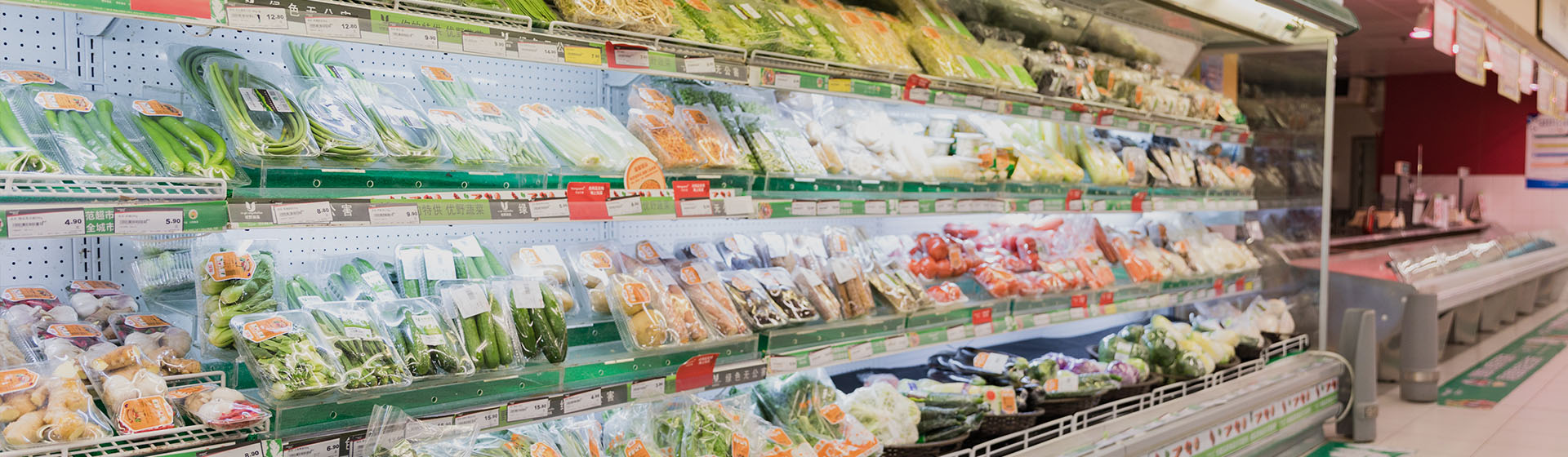
A Vertical Freezer solves a different problem from a chest freezer or island freezer. Instead of using depth across the floor, it uses height. Multiple shelves place frozen products from lower level to eye level, creating a dense display wall within a relatively narrow footprint. For stores that carry many frozen SKUs, this can make product organization easier while keeping valuable aisle space available.
Vertical capacity works only when package size, door access, shelf load, and airflow are planned together. A commercial vertical freezer should turn height into organized, visible capacity rather than simply stacking products upward.
Think in Shelf Zones, Not Total Liters
Total volume does not show how easily products can be displayed. A vertical cabinet works best when each shelf zone has a purpose.
For example, eye-level shelves can hold high-visibility products, while lower shelves can be used for heavier family packs. Narrow boxes can be grouped vertically, and larger bags can use wider shelf spacing.
A practical frozen-product map may divide the cabinet into:
- upper shelves for light or small packages;
- eye-level shelves for frequently selected products;
- middle shelves for core frozen-food categories;
- lower shelves for heavier or larger packs;
- separate door sections for different product families.
This shelf-by-shelf approach makes a supermarket vertical freezer easier to navigate.
Door Architecture Determines How the Capacity Is Accessed
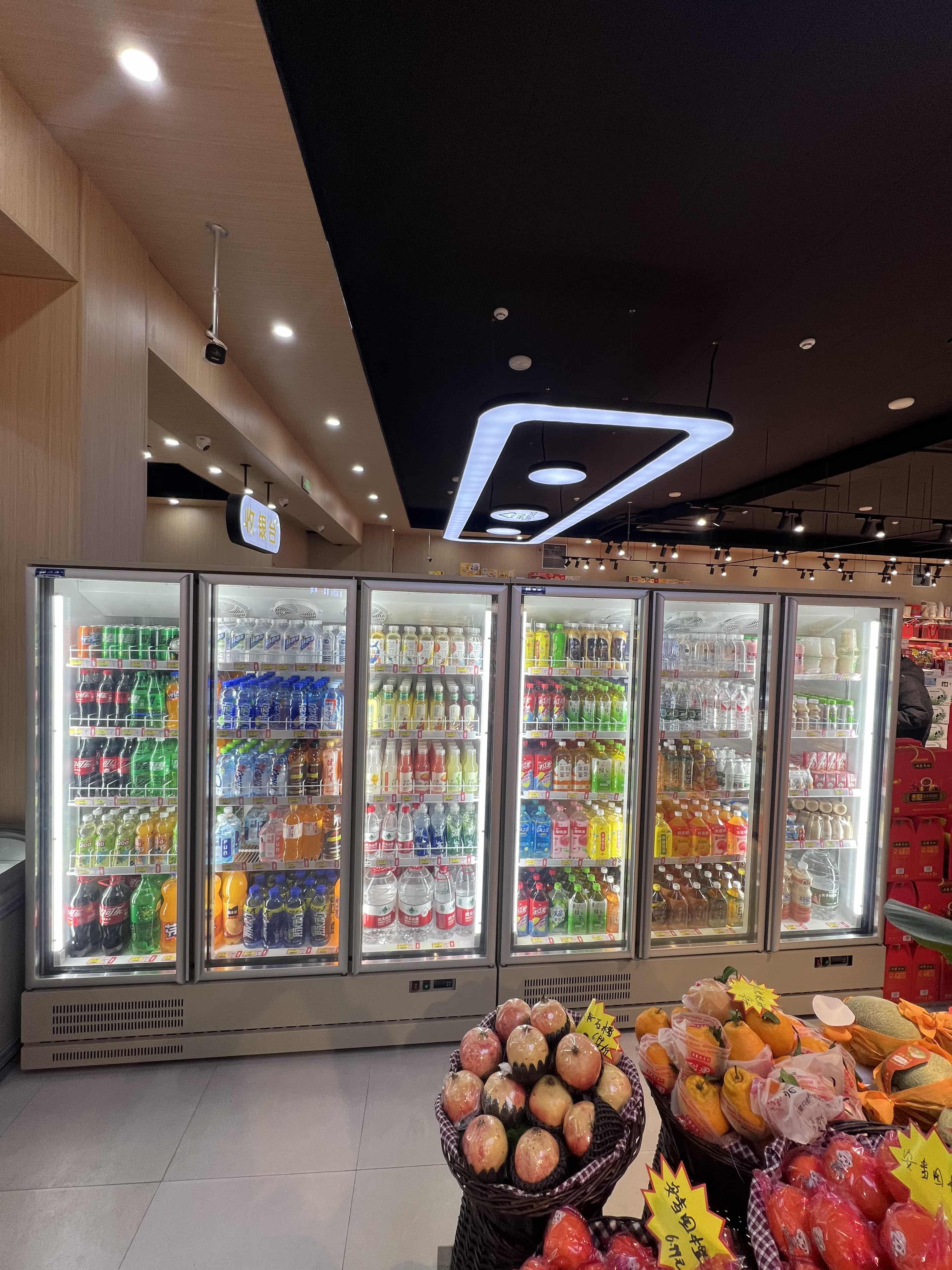
The number and size of doors strongly influence how a vertical freezer feels in daily use. A single wide door creates a large opening, while multiple narrower doors divide the cabinet into more controlled access zones.
Glass doors add another function: the product can be identified before the door is opened. This supports faster selection and reduces the need to expose an entire cabinet section simply to search for one item.
Depending on the product line, a glass door vertical freezer may use:
- one, two, three, or multiple door sections;
- full-height doors;
- upper and lower split doors;
- heated or anti-condensation glass structures;
- self-closing hinges or controlled closing systems.
The correct door format should match the width of product categories and the expected access frequency.
A Narrow Footprint Changes Store Layout Possibilities
A key advantage of vertical refrigeration is the ability to build capacity along a wall or back-to-back line. This is useful when floor area is limited but wall height is available.
A tall upright freezer can create several meters of shelf length in a shallower footprint than an island arrangement, keeping more aisle space open.
Vertical freezers can also be installed as a continuous lineup. In that case, cabinet width, door rhythm, kickplate height, top signage area, lighting, and end panels can be coordinated so the full wall looks intentional rather than assembled from unrelated units.
Shelf Strength Matters Because Frozen Products Can Be Dense
Shelf planning is not only about height. Frozen meat, seafood, prepared meals, and multipacks can create substantial shelf loads. The support structure should therefore match the intended product weight.
Adjustable shelves help accommodate changing package dimensions, but the bracket system, shelf material, and spacing must remain stable when the cabinet is fully loaded.
Useful questions include:
1. What is the heaviest product category?
2. How many packs are expected on one shelf?
3. Does the shelf need to be flat or slightly tilted for presentation?
4. Will package height change seasonally?
5. Are shelf labels or front retainers required?
These details turn an empty cabinet into a practical frozen food display freezer.
Vertical Airflow Has to Reach Both the Top and Bottom
A tall cabinet introduces a refrigeration challenge: cold conditions have to remain stable across several shelf levels. If airflow is poorly balanced, upper and lower zones can behave differently.
Fan-assisted circulation is commonly used to distribute cold air through the cabinet. Products should remain within the recommended loading boundary and should not block supply or return channels.
Shelf spacing also affects airflow. Filling every gap with packages may increase visual density but can reduce circulation. A good layout preserves product capacity without turning the shelves into an air barrier.
Temperature checking should therefore include multiple heights rather than relying only on one controller reading.
Different Frozen Categories Need Different Vertical Space
One benefit of a vertical format is the ability to dedicate shelf zones to different package types.
Frozen Meals
Boxes and trays can be arranged in clear horizontal rows, making flavor or recipe variations easier to compare.
Meat and Seafood
Heavier packages can be placed on reinforced middle or lower shelves, with enough front clearance for labels and easy removal.
Ice Cream and Desserts
Smaller cups, bars, multipacks, and frozen desserts can use baskets, shelf dividers, or closer shelf spacing to prevent mixed presentation.
Frozen Vegetables and Family Packs
Large bags and family packs benefit from wider shelf spacing and deeper product retainers so packages remain upright.
The cabinet can therefore be organized by package behavior rather than forcing every product into identical shelf spacing.
When Is a Vertical Freezer Better Than a Horizontal Freezer?
The answer depends on the layout and the product mix. A vertical freezer is particularly useful when product variety is high, labels need to remain visible, and floor width is limited. A horizontal freezer can be more suitable for deep bulk storage, large bags, or products that are handled from above.
A useful comparison is not “which freezer is better?” but “which format fits the display task?”
A commercial vertical freezer is generally stronger when the project needs:
- many product categories in one wall section;
- clear front-facing labels;
- faster visual scanning;
- adjustable shelf heights;
- narrow use of floor depth;
- several access zones through multiple doors.
This comparison also helps avoid using a vertical cabinet for products that would be more practical in deep horizontal storage.
Cabinet Configuration Can Be Matched to a Full Freezer Wall
For larger installations, multiple cabinets can form a continuous supermarket freezer wall. The product line can be coordinated by door width, cabinet height, lighting, exterior finish, top panels, end panels, and refrigeration planning.
For Dashang project configurations, options can be matched to the frozen product range and site conditions, including cabinet width, number of doors, door type, shelf quantity, temperature range, glass structure, built-in or remote refrigeration, voltage, color, and lineup arrangement.
This makes it possible to design the freezer wall around product categories rather than filling the wall with identical empty boxes.
FAQ
1. What is the main advantage of a Vertical Freezer?
Its main advantage is using vertical space to create multiple visible shelf levels while keeping the cabinet footprint relatively narrow.
2. Is a vertical freezer suitable for heavy frozen meat products?
Yes, if the shelf load, support structure, shelf spacing, and refrigeration conditions are configured for the expected weight and package size.
3. Are glass doors useful on a supermarket vertical freezer?
Yes. Glass doors allow products and labels to be viewed before opening, which supports faster product identification and more organized display sections.
4. Can several vertical freezers be installed as one continuous wall?
Yes. Cabinet width, door pattern, height, lighting, end panels, exterior finish, and refrigeration system can be coordinated to create a continuous frozen display wall.
Post time: Aug-10-2026


