
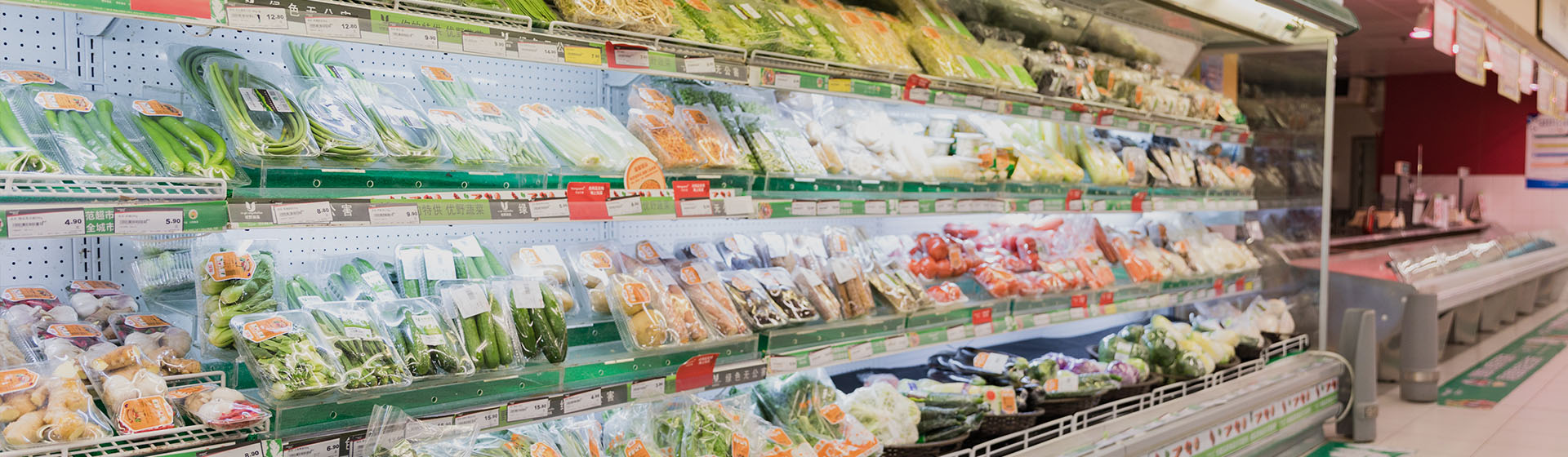
A Supermarket Chest Freezer is often chosen when a store needs substantial frozen-food capacity without turning the display area into a wall of tall cabinets. Its low, horizontal body can hold large quantities of packaged frozen products while keeping the top surface open to customer view. When combined with glass lids, baskets, dividers, and a well-planned internal layout, the cabinet becomes both a storage zone and a visible frozen-food display.
Its value is not simply “more space.” A deep cabinet works best when products remain visible, organized, and easy to replenish. The structure of a commercial chest freezer, its lid, internal baskets, insulation, defrost method, and installation position all affect daily performance.
Deep Storage Works Best When the Interior Is Divided into Clear Zones
The main strength of a chest freezer is depth. That depth can hold family-size packs, frozen meat, seafood, vegetables, prepared food, ice cream, and seasonal items. However, depth can also create a problem: products at the bottom may disappear behind faster-moving items.
A practical supermarket frozen food freezer therefore needs internal organization. Depending on the model, removable baskets, wire dividers, or adjustable sections can separate categories and keep smaller packages near the viewing area.
A useful layout may include:
- top baskets for smaller or faster-moving products;
- deeper zones for large bags and family packs;
- separate sections for meat, seafood, vegetables, and desserts;
- clear gaps around circulation or cooling areas;
- labels positioned so the product type can be recognized from above.
The goal is to use the full cabinet volume without turning it into one deep mixed storage box.
Glass Lids Change the Way the Cabinet Is Used
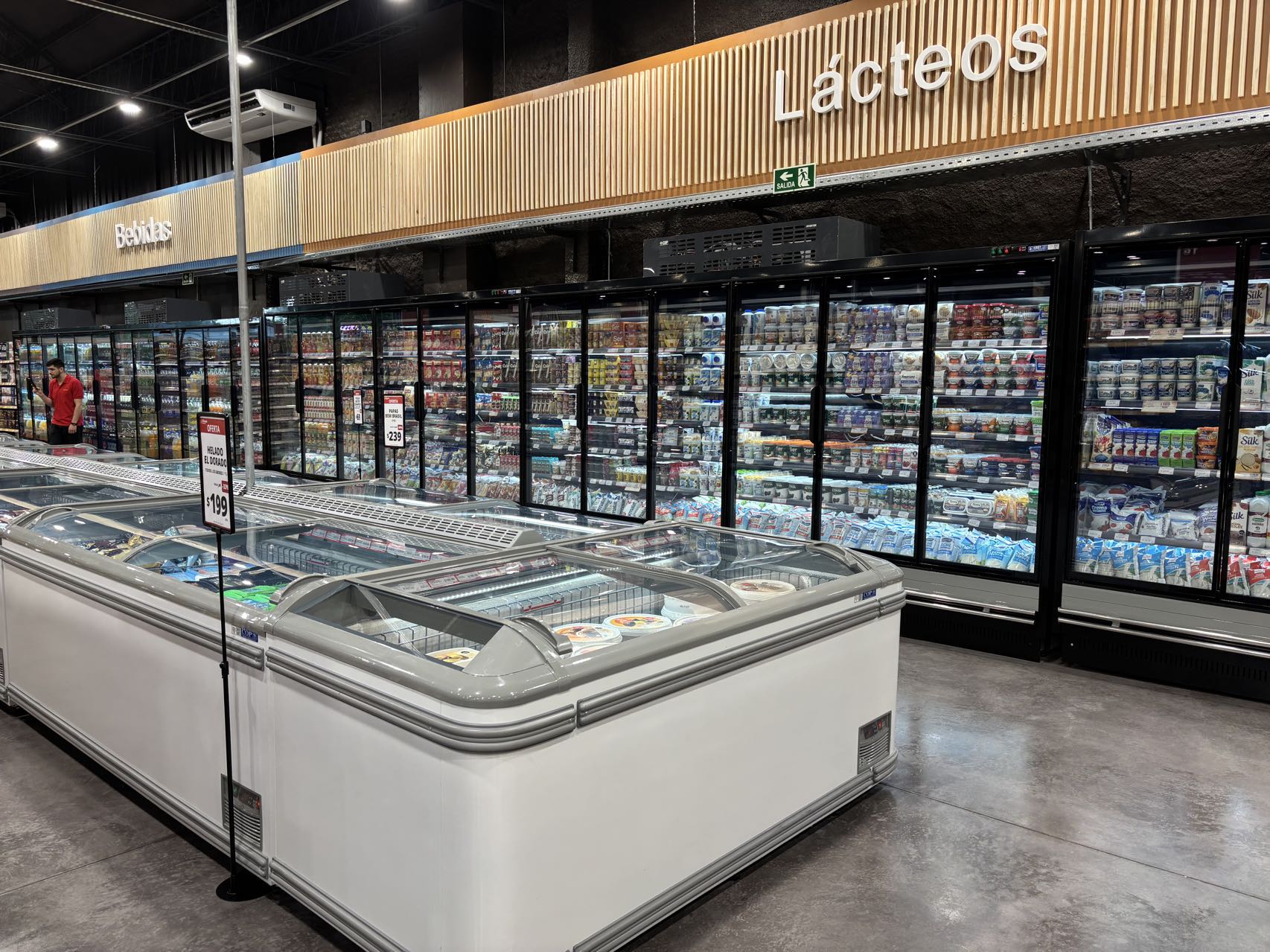
Many supermarket chest freezers use sliding or curved glass lids. The glass surface allows products to remain visible while the cabinet stays closed, which reduces the need to open the freezer only to check what is inside.
A glass top chest freezer can support a clearer display when several details are considered together.
Wide Viewing Area
A larger transparent area makes it easier to identify products from the aisle. This is especially useful for cabinets installed as islands, because customers may approach from more than one side.
Sliding Access
Sliding lids allow one section to be opened while the rest of the cabinet remains covered. Compared with lifting a large top panel, this can reduce the amount of warm room air entering at one time.
Anti-Condensation Design
In humid environments, temperature differences can cause condensation on the glass. Insulated glass, frame heating, or other anti-condensation measures may be used depending on the cabinet configuration and local climate.
The Cabinet Body Has to Protect Temperature from Every Side
A deep freezer is exposed to room heat through its walls, lid, frame, and openings. High-density insulation in the cabinet body helps slow this heat transfer and reduce the load on the refrigeration system.
Door or lid seals are equally important. A worn gasket may allow humid air to enter continuously, leading to more frost around the frame and more frequent refrigeration cycles.
For long operating hours, the cabinet should combine:
- effective insulation;
- close-fitting lid seals;
- stable temperature control;
- suitable refrigeration capacity;
- a defrost method matched to the environment;
- easy-to-clean internal surfaces.
Product Height Matters More Than It First Appears
One common loading mistake is filling a chest freezer above the recommended load line. The cabinet may physically hold the products, but the upper packages can sit in a warmer zone or interfere with the intended cooling pattern.
Product height also affects visibility. If large bags are stacked above smaller items, the lower categories become difficult to see even through a clear lid.
Before deciding the internal arrangement, it helps to compare:
1. the largest package dimensions;
2. the average daily stock level;
3. the number of product categories;
4. the height of baskets or dividers;
5. the recommended loading line;
6. the way the cabinet will be accessed from the aisle.
Island Placement Can Turn the Freezer into a Central Frozen-Food Zone
A chest cabinet is not limited to placement against a wall. Many layouts use one or more units in an island arrangement. This creates a central frozen-food zone that can be approached from both sides and integrated into wider aisle planning.
For island use, cabinet width and lid opening direction should be considered together with aisle space. The freezer should not force customers into a narrow passage, and the glass surface should remain visible from common approach angles.
Cleaning Access Is Part of Product Design
Frozen-food packaging can tear, frost can build up around edges, and small debris can fall into the bottom of the cabinet. If baskets are difficult to remove or corners are hard to reach, routine cleaning becomes slower.
A practical chest freezer should make it possible to remove internal accessories, wipe the liner, inspect drainage areas where applicable, and check seals without dismantling major components.
Regular care should include cleaning the glass, checking lid movement and gaskets, and keeping ventilation areas clear.
A Better Chest Freezer Combines Capacity with Visibility
The value of a Supermarket Chest Freezer comes from the combination of deep storage and controlled presentation. Capacity is useful only when the frozen products remain visible, organized, and easy to reach.
For a project, cabinet size can be matched with package dimensions, product categories, aisle width, refrigeration configuration, electrical requirements, and preferred internal organization. Options such as glass-lid form, baskets, dividers, exterior finish, and cabinet combination can then be selected around the actual display plan.
This product-focused approach makes the freezer easier to integrate into the frozen-food area instead of treating it as a generic storage box.
FAQ
1. What products can be placed in a Supermarket Chest Freezer?
It can be used for packaged frozen meat, seafood, vegetables, ready meals, ice cream, desserts, and other products that require a compatible frozen-storage temperature.
2. Is a glass top useful on a chest freezer?
Yes. A transparent lid allows products to be viewed while the cabinet remains closed, helping reduce unnecessary opening and improving product visibility.
3. Why should products stay below the loading line?
Products placed too high may enter a warmer area or interfere with the intended cooling pattern. Keeping stock below the recommended line supports more stable storage.
4. Can several chest freezers be arranged as an island?
Yes. Multiple units can be planned as a central island or continuous frozen-food zone when aisle width, lid access, cabinet dimensions, and refrigeration requirements are considered together.
Post time: Aug-04-2026


