
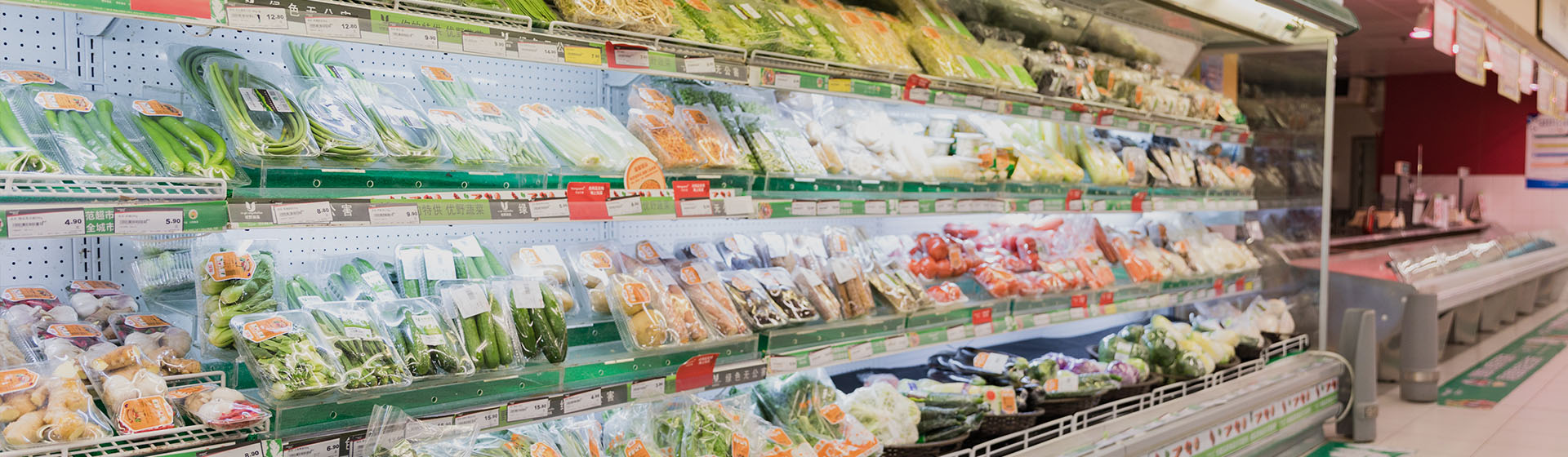
A Service Counter is a refrigerated fresh-food cabinet designed around direct presentation and staff-assisted service. It uses an open display area, transparent viewing surfaces, stainless-steel product supports, and a refrigerated air path to keep suitable chilled foods visible while staff work from the service side. The cabinet is therefore different from both a closed storage refrigerator and a self-service glass-door merchandiser.
The product is most useful where the food itself needs to remain part of the customer experience. Fresh foods, prepared dishes, fruit in suitable conditions, deli products, and other chilled items can be arranged across the display area so customers can see them before staff portion, pack, or hand over the product.
An Open Service Counter Is Designed Around Visibility First
The open format removes a front door from the customer-facing side. This gives the display a clear, uninterrupted appearance and allows products to be seen without reflections from multiple door frames.
The open front also means the refrigerated zone has to be controlled carefully. The cabinet cannot rely on a closed glass door to separate chilled air from room air. Its air-distribution system, return-air grille, cabinet height, glass boundaries, and loading zone must work together to protect the displayed products.
The operating principle is therefore different from a storage fridge. The Service Counter maintains a defined refrigerated presentation zone rather than simply cooling an enclosed box.
Transparent Glass Helps Define the Display without Hiding It
Transparent glass around the cabinet can provide a physical boundary while keeping the product visible from the front and sides. Side visibility is especially valuable at the end of a counter line or where customers approach from more than one direction.
The glass should frame the display rather than dominate it. Product trays should remain below the intended glass line, and labels should not cover large viewing areas. Clean edges and consistent height make several counter sections look connected.
Transparency also places more emphasis on the condition of the interior. Stainless surfaces, tray arrangement, lighting, and cleaning become part of what the customer sees.
Stainless-steel Shelves Suit Repeated Service
A Service Counter may be replenished many times during the day. Trays are moved, labels are changed, food pans are replaced, and the display is wiped between service periods. Stainless-steel shelves and surfaces are useful in this environment because they provide a durable, cleanable working area.
The shelves still need to be used according to the intended load. Heavy trays should be distributed evenly, and containers should fit the shelf depth without projecting into air openings or the customer-side boundary.
A practical product arrangement may divide the counter into:
- Chilled fresh-food trays.
- Prepared dishes in compatible food pans.
- Packaged items grouped by size.
- Fruit or other products only when the selected operating condition is suitable.
- High-turnover items closest to the main service position.
This keeps the cabinet organized around the actual work performed at the counter.
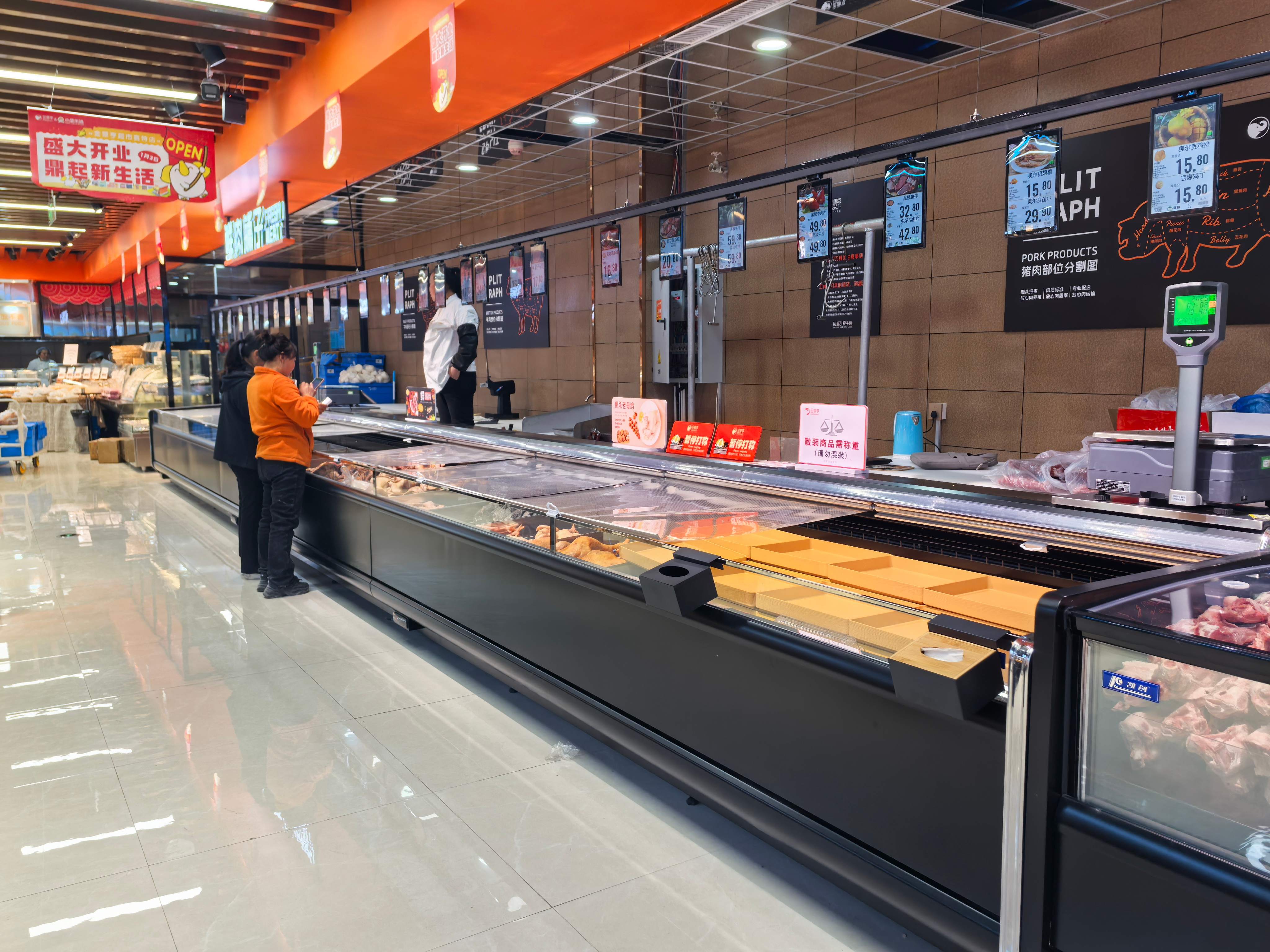
Temperature Flexibility Does Not Mean Every Product Uses the Same Setting
Some Service Counter configurations can support different chilled duties. The published model range for standard sections is around -2 to 5°C, while other application notes may refer to different product conditions such as fruit display. These figures should be treated as product configuration information, not as permission to place every food in one setting.
Each product category has its own handling requirement. Fresh meat, prepared foods, cheese, fruit, and packaged chilled products do not automatically share the same ideal temperature. The cabinet setting should therefore follow the intended use of the specific counter section.
If a long counter carries products with clearly different requirements, separate zones or separate cabinets may be more appropriate than forcing one temperature to serve everything.
The Return-air Grille Is a Small Part with a Large Job
The Service Counter includes an air-suction or return-air area as part of its refrigeration path. This component is easy to overlook because it is much smaller than the glass or stainless display deck, but blocking it can change the whole cabinet’s airflow.
Labels, tray edges, decorative liners, loose packaging, or food debris should not cover the grille. If return air cannot move correctly, one part of the display may become warmer while another receives more direct cold air.
Keeping the grille clear should therefore be part of daily loading and cleaning. The anti-corrosion construction used on this component is relevant because fresh-food service can involve moisture and frequent wiping.
Counter Height Influences Both Display and Staff Comfort
The height of a Service Counter affects two users at the same time. Customers need a clear view of the products, while staff need to reach across or into the display without awkward movement.
A very high front edge can hide products. A very low deck may provide good visibility but create uncomfortable working posture or reduce the usable internal volume. The final cabinet geometry needs to balance sightline, product depth, working reach, and refrigeration structure.
This is one reason service counters are usually offered in several lengths but maintain a consistent depth and height. Different modules can extend the counter while preserving the same working relationship between customer, food, and staff.
A Good Service Counter Keeps the Display Stable during Repeated Handling
Fresh-food service is not static. Trays are removed, portions are served, new products are added, and the cabinet is cleaned. The Service Counter must maintain its function through these repeated changes.
Daily operation is more stable when staff follow a few product-based rules:
- Keep displayed products within the intended loading boundary.
- Prepare replacement trays before disturbing the display.
- Avoid covering air-suction areas.
- Keep glass and stainless surfaces clean.
- Check product condition at more than one point on long counters.
- Restore shelves and panels to their correct position after cleaning.
These actions do not replace the refrigeration system. They allow the cabinet to operate as it was designed.
The Product Connects Refrigeration with Staff-assisted Presentation
The Service Counter is most useful when the store wants food to remain visible but still served by staff. Its open display, transparent boundaries, stainless supports, controlled air path, and counter geometry all support that working method.
The value of the product is therefore not simply that it becomes cold. It creates a refrigerated presentation surface that customers can read and staff can manage. When the product type, temperature condition, tray layout, counter height, and airflow remain aligned, the Service Counter can support a clean and consistent fresh-food display throughout the day.
FAQ
1. What is a Service Counter used for?
It is used for staff-assisted presentation of suitable chilled fresh foods, prepared dishes, deli items, and other products that match the cabinet’s approved condition.
2. Why does an open counter need a clear return-air grille?
The open display depends on controlled air circulation. Blocking the return path can create uneven conditions across the display.
3. Can the same counter hold meat and fruit at one temperature?
Not automatically. Different foods have different temperature and handling requirements. The setting and zoning should follow the actual product categories.
4. Why is stainless steel common in service counters?
It provides a durable, cleanable surface for trays, repeated handling, and routine fresh-food service.
Post time: Sep-03-2026


