
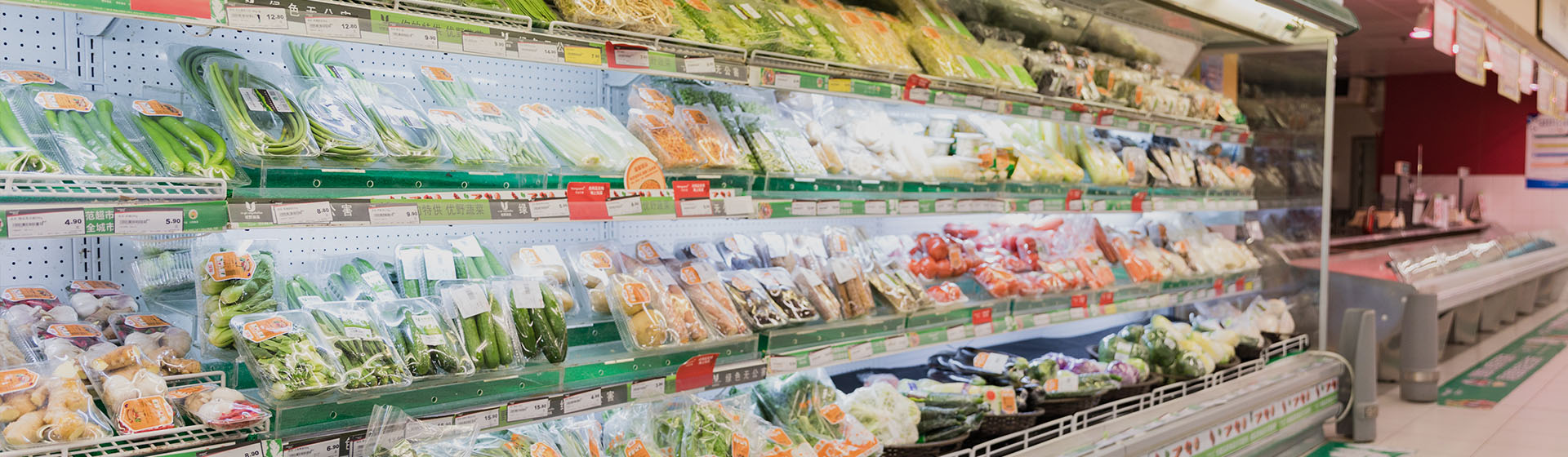
A Glass Door Freezer is a commercial freezing cabinet used to keep frozen products at a safe low temperature while presenting them clearly to shoppers. It is widely used in supermarkets, convenience stores, grocery chains, frozen food shops, and food retail areas where the cabinet must work as both storage equipment and a display tool. Unlike a closed storage freezer in a back room, this cabinet faces customers directly and influences how quickly they understand the product selection.
Common products include ice cream, frozen meat, seafood, frozen vegetables, dumplings, prepared meals, and packaged frozen snacks. Customers can see the packaging, flavor, size, and price before opening the door, which reduces unnecessary door opening and helps the frozen food area look cleaner. For store managers, the value of a Glass Door Freezer is not only freezing capacity, but also better category organization and easier daily inspection.
Why Visibility Matters in Frozen Food Sales
Frozen products are often selected after a quick comparison. If the product is hidden in a deep cabinet or blocked by frost, customers may skip the section or open several cabinets to search. Clear glass doors and internal lighting allow shoppers to identify products from the aisle, so the shopping process becomes faster and more comfortable.
Visibility also helps staff. Empty shelves, wrong labels, and fast-moving products can be noticed without opening the cabinet. In chain supermarkets, vertical glass-door display also makes it easier to keep a consistent layout across different stores.
Key Points Buyers Should Check
When buyers search for a Glass Door Freezer, they usually need more than a low price. They want stable temperature, reliable doors, strong shelves, attractive display, and easy maintenance. The following points are useful before choosing equipment for a new store or a frozen section upgrade.
Temperature Stability
A commercial freezer should hold a stable low temperature even when doors are opened frequently. Compressor performance, insulation, airflow, door gaskets, and defrost control all affect the result. If temperature fluctuates too much, packaging may collect frost and product quality may decline.
Buyers should confirm the temperature range according to the product. Ice cream is usually more sensitive than many frozen packaged foods, so the cabinet should maintain stable conditions across different shelf levels.
Glass Door and Anti-Fog Design
The door must provide a clear view and close tightly after repeated use. In humid stores, poor glass design may cause fogging, water marks, and extra cleaning work. Multi-layer glass, reliable sealing, and suitable anti-fog design help keep the product view clear.
Handles, hinges, door frames, and gaskets should also be durable because supermarket freezer doors may be opened many times each day. A loose door increases energy use and makes temperature control harder.
Shelves, Lighting, and Product Layout
Shelf spacing and load capacity should match the products being sold. Adjustable shelves help stores display different package heights, while strong shelves are necessary for heavy frozen meat, seafood, and bulk packages.
Lighting should make products easy to see without creating glare or unnecessary heat. A good layout allows the store to separate brands, categories, and promotions while keeping the aisle neat.
Comparison with Open Freezers and Chest Freezers
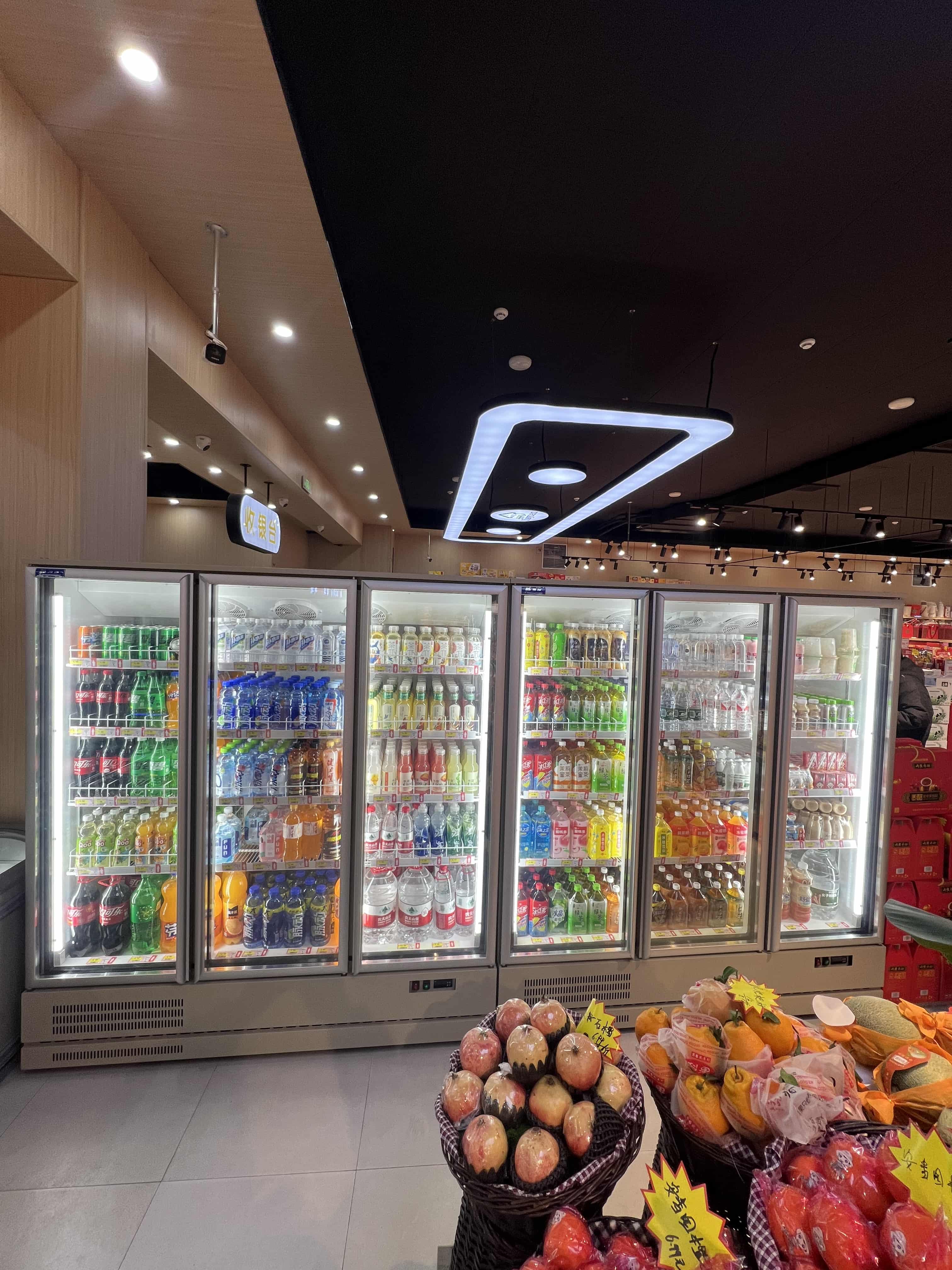
An open freezer gives fast access, but it often requires more careful energy control. A chest freezer offers large storage volume, but customers may need to bend down and search through layers of products. A Glass Door Freezer provides vertical display, controlled door access, and clearer product browsing.
For packaged frozen foods, glass-door upright cabinets usually make the frozen area look more organized. Chest freezers can still work well for bulk promotions, while open freezers may suit high-turnover self-service zones. Many supermarkets combine several freezer types to balance display, storage, and traffic flow.
Selection Guide for Store Projects
Before ordering, buyers should confirm floor space, aisle width, product categories, customer traffic, power supply, store temperature, humidity, and cleaning routine. Door quantity and cabinet width should match the assortment. A small convenience store may need one compact unit, while a large supermarket may need a full row of multi-door freezers.
Energy use should also be considered because the equipment runs every day. Insulation, door sealing, lighting efficiency, and cooling system design affect long-term cost. Cleaning access, drainage, spare parts, and service support are also important, especially for chain stores that require stable operation across many locations.
Dashang Support for Frozen Display Areas
Dashang provides commercial refrigeration equipment for supermarkets and food retail environments. A Glass Door Freezer can be matched with island freezers, upright chillers, refrigerated showcases, and other display cabinets to create a complete retail refrigeration layout.
For project buyers, equipment should be selected according to product type, store space, installation conditions, and display standards. A suitable glass-door freezer protects product quality, reduces staff workload, and helps customers choose frozen products more quickly.
FAQ
Q1: What products can be placed in a Glass Door Freezer?
A Glass Door Freezer is suitable for ice cream, frozen meat, seafood, frozen vegetables, dumplings, prepared meals, and packaged frozen snacks.
Q2: Is it better than a chest freezer?
It depends on the use. A glass-door model is better for vertical display and product viewing, while a chest freezer is useful for bulk storage and promotional goods.
Q3: How can supermarkets reduce fog on the glass door?
Good door sealing, suitable glass structure, store humidity control, and proper door closing habits can help reduce fogging.
Q4: What should buyers confirm before ordering?
Buyers should confirm size, door quantity, product category, temperature range, shelf load, power conditions, installation space, and maintenance needs.
Post time: Jul-07-2026


