
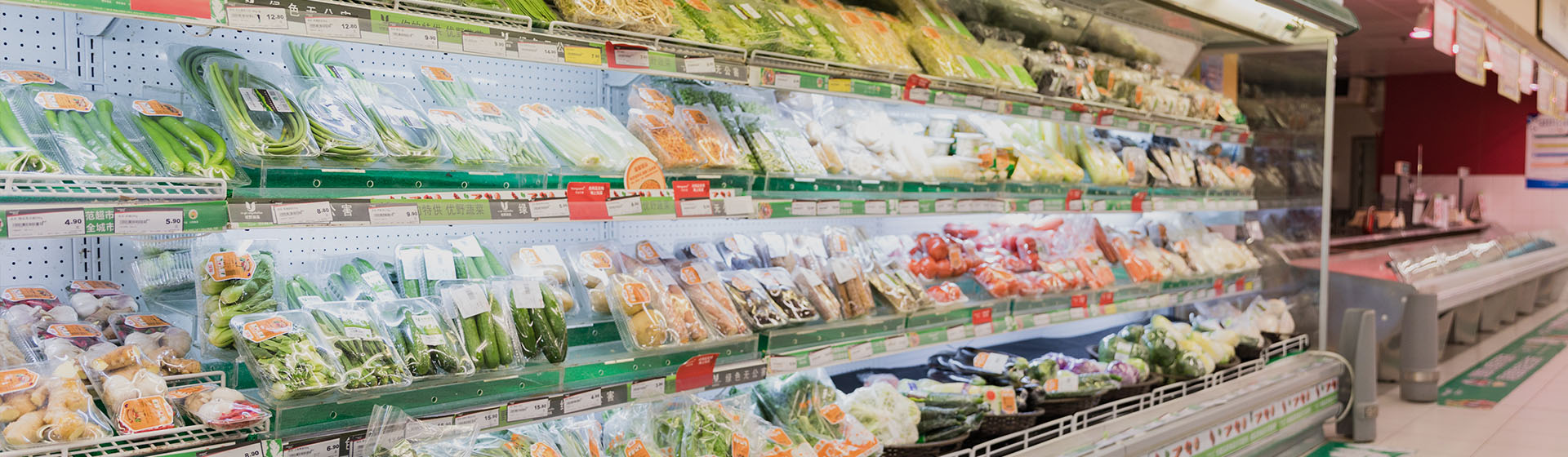
A Fresh-food Cabinet is a commercial refrigerated display cabinet used in fresh food retail environments, including supermarket produce areas, seafood sections, meat sections, fruit shops, grocery stores, and fresh food markets. It is mainly used for displaying fruit, vegetables, cut fruit, chilled seafood, meat products, salads, cold dishes, and packaged fresh foods.
Unlike frozen products, fresh foods rely more strongly on the first visual impression. When customers buy fruit, vegetables, seafood, or meat, they directly look at color, moisture, arrangement, cleanliness, and overall freshness. The value of a Fresh-food Cabinet is not only refrigeration. It helps stores present fresh products in a way that looks trustworthy, orderly, and easier for customers to accept.
The Fresh Food Area Shapes Customer First Impressions
Many customers judge a store’s professionalism by its fresh food area. Full-looking vegetables, clean seafood displays, clearly separated meat products, and neatly arranged prepared foods all influence customer trust.
A Fresh-food Cabinet helps stores place different fresh products in a more suitable display environment. Products are no longer simply placed on ordinary shelves. Instead, refrigeration, lighting, separation, and visual presentation work together to create a clearer sales area.
A well-managed Fresh-food Cabinet often gives customers three direct impressions:
- Products look fresher.
- The store appears more organized.
- The food area looks cleaner and more trustworthy.
This is what makes it different from a simple refrigerated storage unit.
Fruit and Vegetable Display: Color, Layers, and Natural Freshness
Fruit and vegetable display should not focus only on filling the cabinet. Overloading can hide product condition and affect airflow. When a Fresh-food Cabinet is used in the produce area, it should highlight color layers and natural freshness.
Cut fruit, leafy greens, salad vegetables, packaged vegetables, and temperature-sensitive produce are suitable for refrigerated display. Stores can use trays, layered sections, and lighting to help customers see product color and condition clearly.
For fruit and vegetable products, the display focus includes:
- Showing natural colors without excessive lighting distortion.
- Keeping categories separate and avoiding mixed displays.
- Controlling loading height so customers can see product condition.
- Regularly organizing corners and edges to maintain overall freshness.
This display method gives the produce area more structure instead of simply piling products together.
Seafood Display: Low Temperature, Cleanliness, and Clear Separation
Seafood products require a more controlled display environment. When buying seafood, customers care not only about price, but also about cleanliness and freshness. When a Fresh-food Cabinet is used in seafood areas, it should highlight cold storage management and clear separation.
Chilled fish, shrimp, shellfish, seafood packs, and prepared seafood can be displayed in this cabinet. Compared with random stacking, a clearly separated fresh-food display helps customers identify product types more easily and reduces visual confusion.
Seafood display usually needs:
- Clear product separation.
- A clean display surface.
- Clear labels and price information.
- Easy cabinet cleaning.
- Stable temperature conditions.
For seafood stores and supermarket seafood sections, a Fresh-food Cabinet helps the area look more professional and strengthens customer confidence in product handling and freshness.
Meat and Prepared Fresh Food: Separation and Buying Convenience
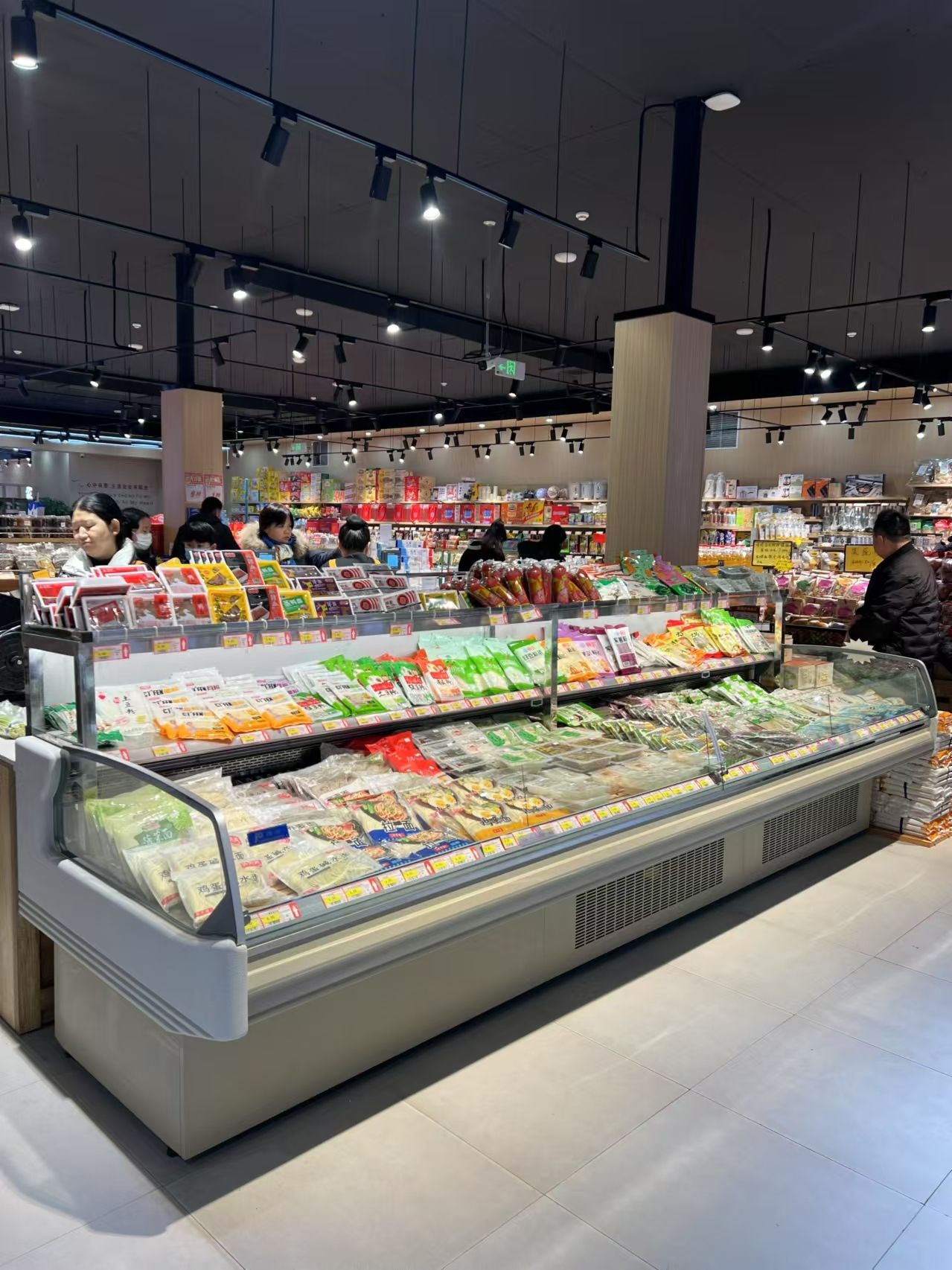
Meat and prepared fresh foods require clear separation and easy-to-read product information. Chilled meat, poultry, cut meat, packaged meat, salads, cold dishes, and ready-to-eat fresh meals need to help customers quickly understand product type, portion size, and price.
A Fresh-food Cabinet can use trays, shelves, and labels to create clear selling zones. Customers do not need to search through mixed products, and they can quickly see the differences between product groups.
For meat products, separation reduces visual confusion. For prepared fresh foods, clear labeling and neat arrangement make selection faster. In dinner-time shopping or ready-meal retail scenes, organized display can directly influence whether customers decide to buy.
Different Roles from the Deli Cabinet
The Fresh-food Cabinet and Deli Cabinet are both refrigerated display products, but they serve different roles inside a store.
A Fresh-food Cabinet is more suitable for fruit, vegetables, seafood, meat, and packaged fresh foods. It focuses on natural freshness, clean presentation, and multi-category separation. It works more like a basic display product for fresh food areas.
A Deli Cabinet is more suitable for cooked meat, cheese, salads, cold dishes, desserts, and prepared meals. It usually has a stronger service-counter function. Customers view products behind glass, and staff weigh, pack, or serve the selected items.
In a supermarket, the Fresh-food Cabinet can serve fruit, seafood, and meat areas, while the Deli Cabinet supports deli and prepared food counters. Clear division between the two helps customers understand different food sections more easily.
Building a Complete Fresh Food Route with Other Dashang Products
In the Dashang commercial refrigeration product system, the Fresh-food Cabinet can work with other products to create a complete food display route.
For example:
- Customers first see fruit, vegetables, seafood, and meat in the Fresh-food Cabinet area.
- They then move to the Deli Cabinet for cooked foods, cheese, salads, and prepared meals.
- They take drinks, yogurt, sandwiches, and ready-to-eat foods from Air-curtain Upright Fridges.
- They notice seasonal chilled promotions in Semi-vertical Promotion Fridges.
- They choose frozen foods from Classic Island Freezers and Glass-Door Upright Freezers.
This layout does not place all products in one type of cabinet. Instead, it gives each food category a more suitable display method. For modern supermarkets, this kind of zoning logic improves the shopping experience more effectively than a single equipment type.
Daily Display Depends on Continuous Organization
The display effect of a Fresh-food Cabinet does not stay perfect after installation. Fresh foods are constantly selected, replenished, and adjusted. Without daily organization, the display can quickly become messy.
When stores use a Fresh-food Cabinet, they should pay attention to:
- Whether products are arranged by category.
- Whether corners and edges remain clean.
- Whether labels are easy to read.
- Whether products are rotated regularly.
- Whether trays and display surfaces stay clean.
- Whether loading height affects product visibility.
These details help the cabinet maintain a good display condition and make the fresh food area look more refined.
Conclusion
A Fresh-food Cabinet is suitable for fruit, vegetable, seafood, meat, and prepared fresh food display. Its value is not only refrigeration, but also helping stores create a clearer, cleaner, and more trustworthy fresh food area.
When used together with Deli Cabinets, Air-curtain Upright Fridges, Semi-vertical Promotion Fridges, Classic Island Freezers, and Glass-Door Upright Freezers, the Fresh-food Cabinet becomes an important part of a complete food retail cold-chain display system. It helps different supermarket food areas form a more natural shopping route.
FAQ
1. What products are suitable for a Fresh-food Cabinet?
It is suitable for fruit, vegetables, cut fruit, seafood, meat, salads, cold dishes, and packaged fresh foods.
2. Can a Fresh-food Cabinet be used in seafood areas?
Yes. It can display chilled fish, shrimp, shellfish, and seafood packs while helping the seafood area look cleaner and more organized.
3. What is the difference between a Fresh-food Cabinet and a Deli Cabinet?
A Fresh-food Cabinet is more suitable for fruit, vegetables, seafood, meat, and packaged fresh foods. A Deli Cabinet is more suitable for cooked meat, cheese, salads, cold dishes, and staff-service prepared foods.
4. How does a Fresh-food Cabinet improve the fresh food area?
It improves product visibility, category separation, lighting presentation, and display cleanliness, helping customers trust the freshness and professionalism of the store.
Post time: Jun-29-2026


