
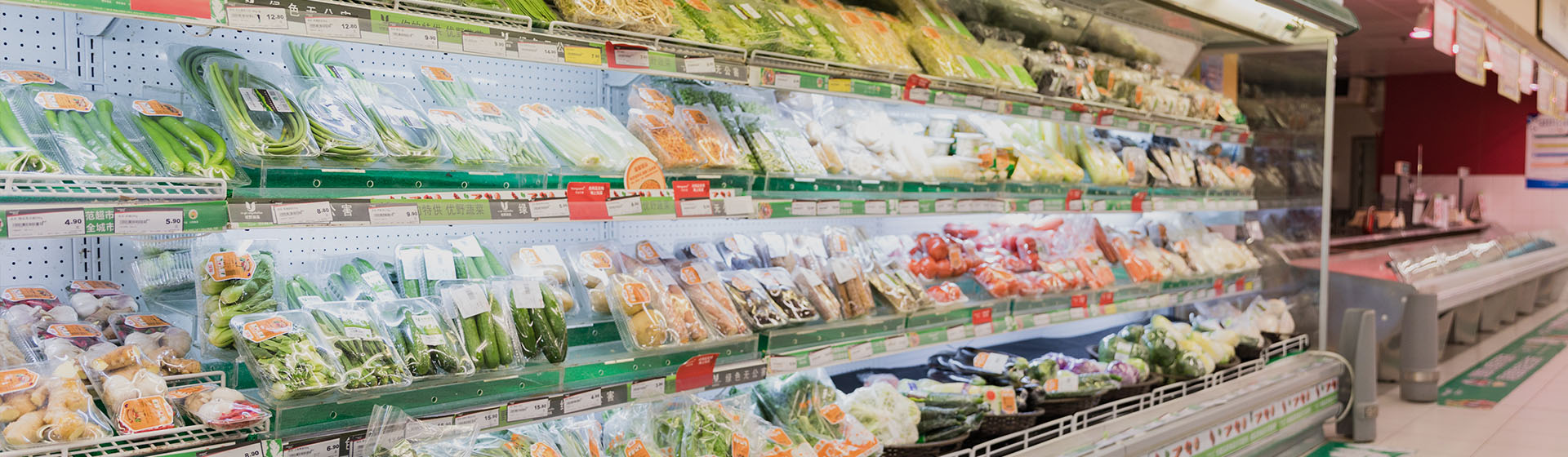
A Double-layer Meat Showcase is designed for fresh-meat counters that need more visible display area without simply making the cabinet deeper or wider. By adding a second presentation level above the main deck, the showcase can separate product groups, improve sight lines, and use vertical space more effectively.
Beef, pork, lamb, poultry, sausages, marinated products, and prepared meat selections can be arranged by category instead of being crowded into one flat display surface. This makes the Fresh Meat Display Cabinet useful for supermarkets, butcher counters, fresh-food stores, delicatessens, and food halls.
Two Display Levels Change the Way Fresh Meat Is Presented
The main advantage of a Double-layer Meat Showcase is not simply “more shelves.” The two levels serve different display functions.
The lower deck provides the primary refrigerated presentation area. It can hold larger trays, heavier cuts, family packs, or products that need deeper display space. The upper tier is positioned closer to eye level and can be used for smaller packs, premium cuts, prepared products, or items that benefit from stronger visual exposure.
This arrangement can help:
- separate raw cuts from processed or marinated products;
- create clearer price and category zones;
- reduce overcrowding on the main deck;
- keep smaller packs from being hidden behind larger trays;
- improve visibility from different viewing angles;
- use vertical space without increasing the cabinet footprint significantly.
Fresh Meat Needs Controlled Cooling, Not Simply Colder Air
Fresh meat display requires careful temperature management. Making the cabinet excessively cold does not automatically improve product condition. Strong or poorly directed airflow can dry exposed surfaces, while uneven cooling can create warmer zones around corners or front edges.
A well-designed Refrigerated Meat Showcase balances refrigeration capacity, air distribution, humidity behavior, and display depth.
Airflow Should Protect the Whole Display Surface
Cold air needs to reach both the lower and upper levels without creating strong direct drafts across the product surface. The airflow path should support an even chilled environment from the rear of the cabinet to the front display edge.
Products should remain within the recommended loading boundary. Blocking discharge or return-air openings can disturb circulation and lead to inconsistent temperatures.
Temperature Recovery Matters during Service
Fresh-meat counters are opened, restocked, and handled throughout the day. Each interaction changes the local air temperature. The refrigeration system should recover efficiently after restocking or periods of heavier service.
For remote cabinets, refrigeration capacity, pipe design, and control settings need to match the showcase length and expected load. For plug-in configurations, ventilation around the condensing section must remain clear.
Glass, Lighting, and Display Depth Decide What Customers See
Meat presentation depends strongly on visual clarity. A cabinet can maintain the correct temperature and still provide a poor display if glass reflections, weak lighting, or an overly deep product deck make the contents difficult to see.
Front Glass Shape
Curved or straight glass can be selected according to the preferred appearance and service style. The glass should provide a broad viewing angle while allowing practical access for cleaning and product arrangement.
Lighting for Natural Product Appearance
Integrated LED lighting can illuminate both display levels. The goal is to make labels, marbling, cut shape, and packaging easy to see without adding unnecessary heat. Lighting placement should avoid heavy shadows from the upper tier onto the lower deck.
Second-tier Position
The upper level should appear integrated into the cabinet rather than added as an obstacle. Its support structure, shelf depth, and spacing should maintain a clear line of sight to the main deck.
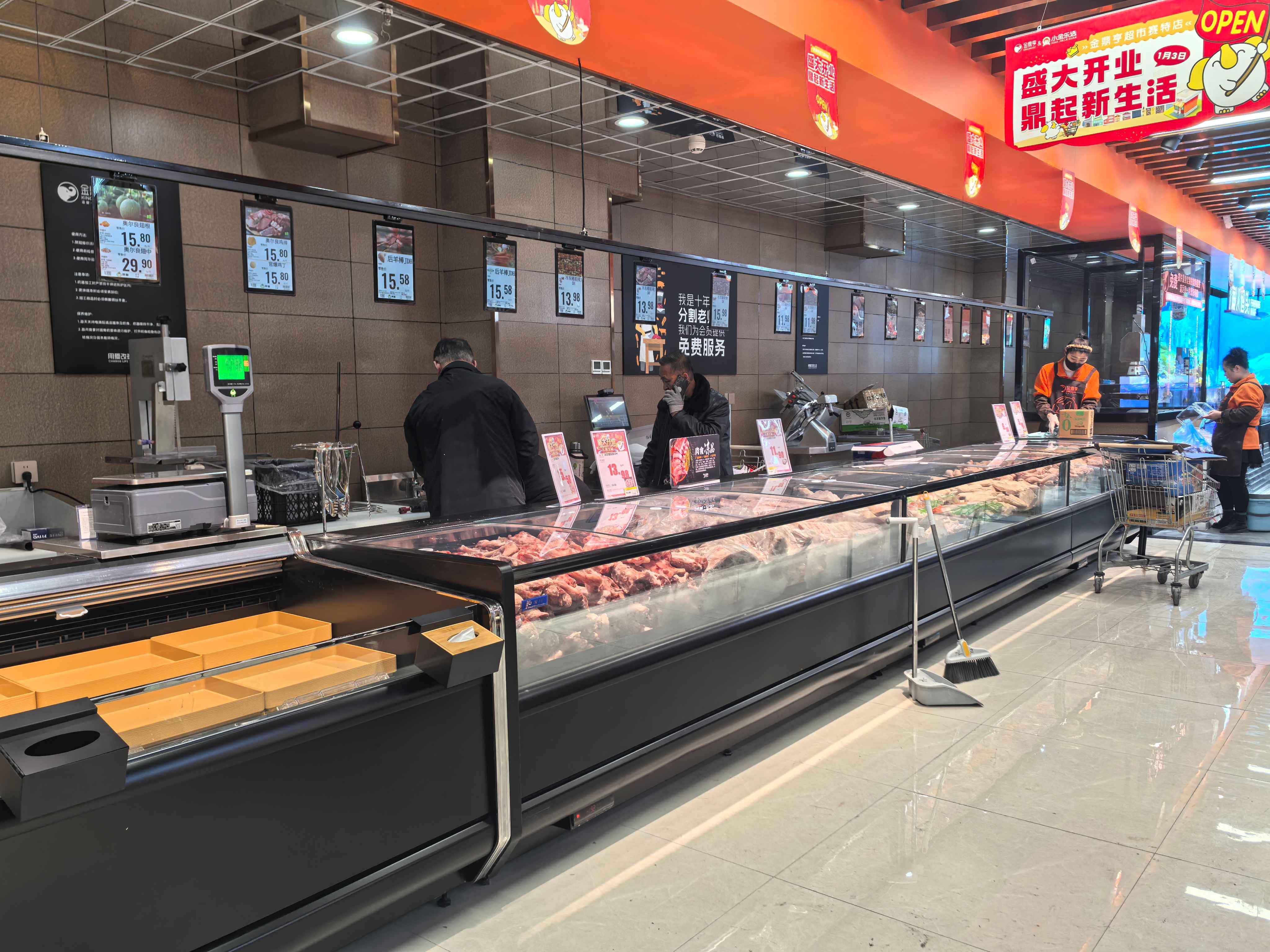
A Service-oriented Layout Makes Daily Work Easier
The product side receives most of the visual attention, but the staff side determines how easy the Meat Display Chiller is to operate throughout the day.
Depending on configuration, a Double-layer Meat Showcase can include rear sliding doors, service openings, storage compartments, work surfaces, or under-counter refrigerated storage.
Useful design details include:
- rear access positioned close to the displayed product;
- smooth work surfaces for temporary tray handling;
- easy-to-remove display trays or grids;
- accessible drainage points;
- removable panels for cleaning;
- under-counter storage where required;
- rounded interior corners that reduce difficult cleaning areas.
These details reduce unnecessary movement and help the display remain organized during busy periods.
The Cabinet Body Must Support Hygiene and Long-term Use
Fresh-meat environments require frequent cleaning. Interior surfaces should resist moisture and allow food residues to be removed without complicated disassembly.
Stainless steel and other easy-clean materials are commonly used in working areas because they provide a smooth, durable surface. Drainage design is also important. Water from cleaning or defrost cycles should move toward a controlled outlet rather than remain in corners.
Door gaskets, glass joints, shelf supports, and tray edges should be included in the cleaning routine because these areas can collect residue over time.
Different Meat Programs Need Different Internal Configurations
A Double-layer Meat Showcase should be configured around the actual product range rather than a generic meat counter layout.
For fresh cuts, a broad lower deck can provide space for multiple tray sizes and larger pieces. For packaged meat, the second tier can hold smaller packs and create category separation. For sausages or marinated products, adjustable shelves and dividers can create more defined display zones.
Cabinet length can also be selected according to the service line. A short unit may suit a compact specialty counter, while several compatible modules can form a continuous fresh-meat presentation.
Color, exterior finish, front decoration, glass shape, shelf arrangement, and lighting can be coordinated with the surrounding store design.
Configuring the Showcase Around the Product
The most effective specification begins with the meat products themselves. Package width, tray depth, average product height, target storage temperature, replenishment frequency, and available counter length all influence the cabinet design.
Dashang can configure showcase length, double-layer shelf dimensions, front glass style, rear access, refrigerated storage, lighting, exterior finish, refrigeration mode, voltage, and other project specifications. This allows the Double-layer Meat Showcase to be matched to both the product range and working space instead of forcing every fresh-meat counter into the same standard layout.
A well-matched showcase should provide more than additional display capacity. It should make products easier to see, keep categories organized, maintain suitable chilled conditions, and support efficient daily service.
FAQ
1. What is the purpose of the second layer in a Double-layer Meat Showcase?
It creates additional visible display space above the main deck and can separate smaller packs, premium cuts, processed meat, or other categories.
2. Can the upper tier affect the cooling of the lower deck?
It can if the structure blocks the designed airflow. Shelf dimensions and positioning should therefore match the cabinet’s refrigeration and air-circulation design.
3. Is a remote refrigeration system required?
No. The showcase can be configured with remote or plug-in refrigeration. The installation environment and project scale determine which format is more suitable.
4. What information is useful when configuring a meat showcase?
Product type, tray and package dimensions, target temperature, cabinet length, service method, desired storage space, glass style, refrigeration format, voltage, and site conditions are all important.
Post time: Aug-07-2026


