
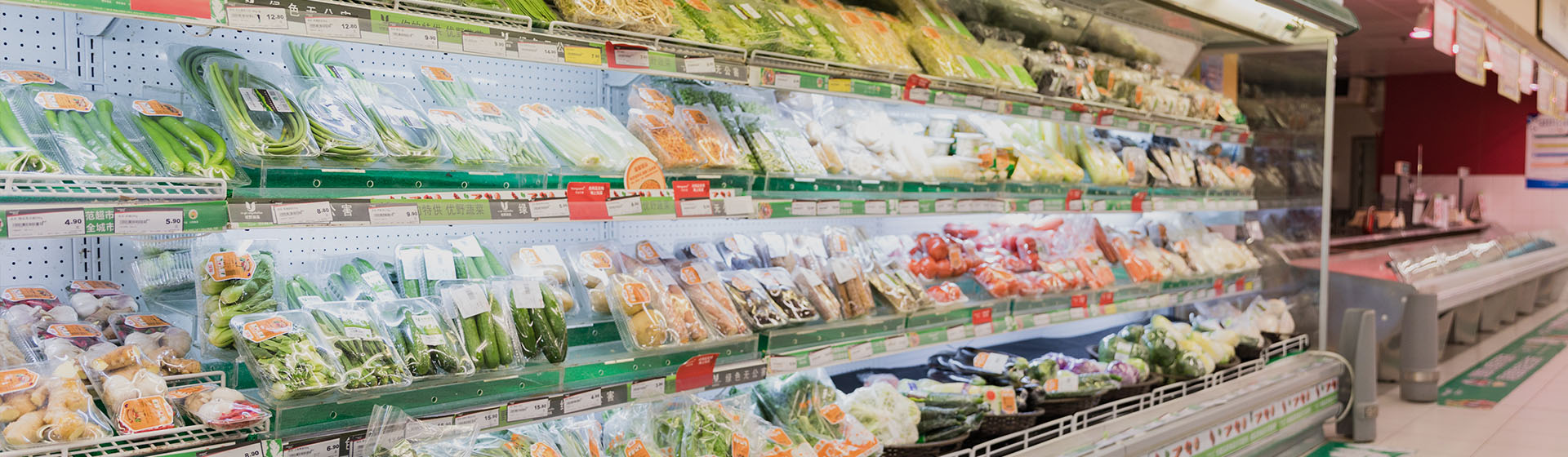
In today’s retail environment, fresh food presentation has become just as important as product quality itself, because consumers increasingly make purchasing decisions based on visual appeal, freshness perception, and product accessibility. A high capacity fresh food cabinet plays a central role in maintaining optimal storage conditions while ensuring that fresh produce remains visually attractive throughout the entire retail day. Modern supermarkets, grocery chains, and convenience stores rely heavily on these systems to balance preservation efficiency with merchandising performance.
Unlike traditional refrigeration units, advanced fresh food cabinets are engineered to support continuous commercial demand while maintaining consistent airflow, stable humidity levels, and precise temperature control. This makes them essential for retailers aiming to reduce food waste, improve operational efficiency, and enhance customer experience in highly competitive markets.
The Role of Fresh Food Cabinets in Modern Retail Operations
Fresh food cabinets are designed to store and display perishable goods in a controlled refrigerated environment while allowing customers easy access and clear product visibility. In modern retail layouts, they are often placed in high-traffic zones where visual engagement directly influences purchasing behavior, particularly for fruits, vegetables, dairy products, and packaged fresh meals.
The importance of these systems lies not only in storage but also in their ability to extend product shelf life while preserving natural appearance and texture. Proper refrigeration ensures that fresh produce retains moisture balance and nutritional value, which is critical for customer trust and brand reputation in retail environments.
Key functional roles of fresh food cabinets include
● Maintaining stable temperature conditions to prevent spoilage and quality degradation
● Supporting high-volume storage without compromising airflow efficiency
● Enhancing product visibility to encourage impulse purchases and customer interaction
● Reducing waste through improved preservation technology and humidity control
● Supporting organized merchandising layouts that improve store aesthetics and navigation
Structural Design and Capacity Advantages
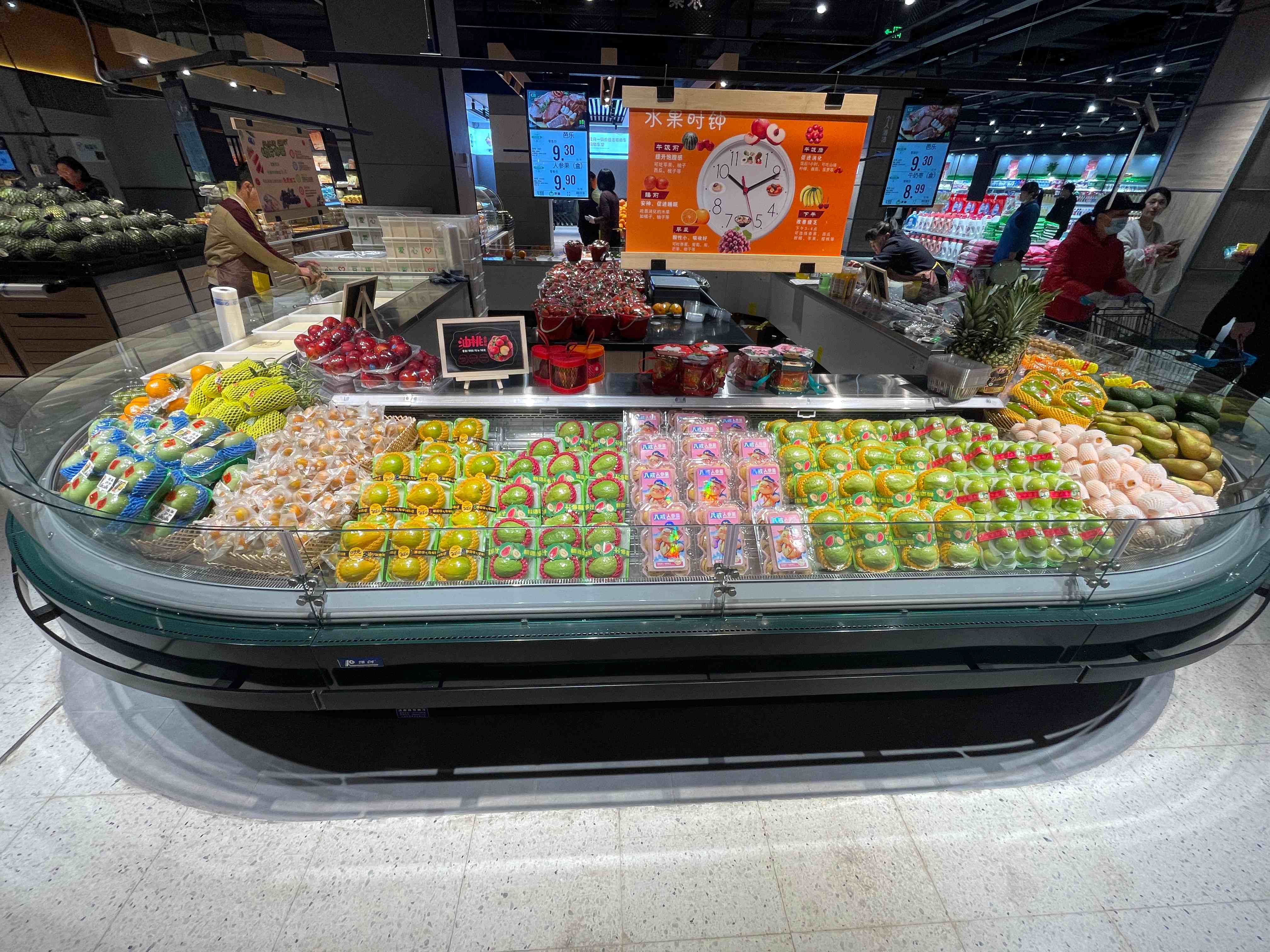
A high capacity fresh food cabinet is specifically engineered for large-scale retail operations where product turnover is high and storage demand fluctuates throughout the day. Its structural design is optimized to maximize internal space while maintaining consistent cooling performance across all storage levels.
The cabinet typically integrates multi-layer shelving systems, reinforced glass panels, and high-efficiency compressor units that work together to ensure stable refrigeration even under frequent door opening conditions. Advanced air circulation systems distribute cold air evenly, preventing temperature inconsistencies that could affect product quality.
Key structural advantages include
● Expanded internal storage volume suitable for bulk retail environments
● Reinforced shelving systems designed to handle heavy produce loads
● Transparent display panels that improve customer visibility and product engagement
● Optimized airflow channels that maintain uniform cooling across all sections
● Durable external materials designed for long-term commercial use
These design elements allow retailers to store large quantities of fresh products while maintaining consistent quality standards throughout the operating day.
Temperature Control and Freshness Preservation Technology
Temperature stability is one of the most critical factors in fresh food storage, and modern fresh food cabinets use advanced refrigeration technologies to ensure precise environmental control. Unlike basic cooling systems, these units incorporate intelligent sensors and adaptive control systems that continuously monitor internal conditions and adjust cooling output accordingly.
This level of precision helps maintain optimal preservation conditions for different types of fresh produce, including leafy greens, fruits, dairy products, and prepared fresh meals. By maintaining stable humidity and minimizing temperature fluctuations, the system significantly reduces spoilage rates and improves overall product longevity.
Key technological features include
● Digital temperature control systems for precise refrigeration adjustment
● Multi-zone airflow management for consistent cooling distribution
● Humidity stabilization systems to prevent dehydration or condensation
● Automatic defrost cycles to maintain long-term operational efficiency
● Smart sensors that detect and correct temperature deviations in real time
These technologies ensure that fresh food remains visually appealing and nutritionally intact, even in high-demand retail environments.
Impact on Retail Merchandising and Customer Experience
Fresh food cabinets are not only functional refrigeration units but also powerful merchandising tools that influence customer behavior. In modern supermarkets, visual presentation plays a major role in driving purchasing decisions, especially in categories such as fruits, vegetables, and ready-to-eat fresh meals.
A well-designed fresh food cabinet enhances product visibility and encourages customers to engage more actively with displayed items. Clear glass panels, organized shelving, and strategic lighting create an attractive display environment that highlights freshness and quality.
Retail benefits include
● Improved product presentation that increases customer attraction and engagement
● Enhanced store layout efficiency through organized and structured display systems
● Increased sales conversion rates due to better product visibility
● Stronger brand perception associated with freshness and quality control
● Reduced product handling damage through controlled access design
By combining functionality with visual merchandising, fresh food cabinets directly contribute to higher revenue generation and improved customer satisfaction.
Energy Efficiency and Operational Sustainability
Energy consumption is a major concern for retail operators, especially in large supermarkets where refrigeration systems run continuously. High capacity fresh food cabinets are designed with energy efficiency in mind, incorporating advanced insulation materials and low-energy components that reduce overall power usage without compromising performance.
Sustainability is achieved through multiple engineering improvements that optimize cooling efficiency and reduce environmental impact. These systems are increasingly aligned with global energy standards and environmental regulations, making them suitable for long-term commercial use.
Key energy-saving features include
● High-density insulation materials that minimize thermal loss
● Low-emissivity glass panels that reduce heat transfer
● Energy-efficient compressors designed for continuous operation
● LED lighting systems that reduce power consumption and heat generation
● Eco-friendly refrigerants with reduced environmental impact
These improvements help retailers reduce operational costs while supporting sustainable business practices.
Maintenance Requirements and Long-Term Performance
Proper maintenance is essential to ensure the long-term reliability and efficiency of fresh food cabinets. Regular servicing helps prevent performance degradation and extends the lifespan of the equipment, especially in high-usage retail environments.
Maintenance procedures typically focus on airflow cleanliness, temperature calibration, and component inspection. Ensuring that seals, compressors, and cooling channels remain in optimal condition is critical for consistent performance.
Key maintenance practices include
● Regular cleaning of condenser coils and airflow channels to maintain cooling efficiency
● Inspection of door seals to prevent cold air leakage and energy loss
● Monitoring of temperature control systems for accuracy and stability
● Routine cleaning of interior surfaces to maintain hygiene standards
● Scheduled professional servicing to ensure long-term operational reliability
With proper maintenance, fresh food cabinets can deliver stable performance for many years while minimizing downtime and repair costs.
Application Scenarios in Modern Retail Environments
High capacity fresh food cabinets are widely used across various retail and food service environments due to their versatility and adaptability. They are particularly valuable in locations where fresh product turnover is high and visual presentation is essential.
Common application scenarios include
● Supermarkets for fruits, vegetables, and dairy product display
● Convenience stores for ready-to-eat meals and packaged fresh food
● Restaurants and food service kitchens for ingredient storage
● Hotel buffets and catering operations for chilled food presentation
● Fresh food specialty stores focusing on premium produce retail
Their flexibility makes them suitable for both large-scale retail chains and smaller independent stores seeking improved refrigeration performance.
Conclusion
A high capacity fresh food cabinet represents an essential investment for modern retail businesses that prioritize product freshness, operational efficiency, and customer experience. By combining advanced refrigeration technology, optimized storage design, and energy-efficient operation, these systems ensure that fresh produce remains in excellent condition while enhancing visual merchandising impact.
As consumer expectations for freshness and quality continue to rise, retailers that adopt advanced fresh food cabinet solutions are better positioned to reduce waste, improve profitability, and strengthen customer loyalty in competitive retail markets.
FAQ
1. What products are suitable for a fresh food cabinet
Fresh food cabinets are suitable for fruits, vegetables, dairy products, ready-to-eat meals, and other perishable refrigerated items that require stable temperature control.
2. How does a high capacity fresh food cabinet improve retail efficiency
It improves efficiency by allowing large-volume storage, reducing restocking frequency, and maintaining consistent product quality throughout the day.
3. Are fresh food cabinets energy efficient
Yes, modern models use energy-efficient compressors, insulation materials, and LED lighting systems to reduce overall power consumption.
4. How often should maintenance be performed
Routine cleaning should be done regularly, while professional maintenance is recommended periodically to ensure long-term stability and performance.
Post time: May-25-2026


