
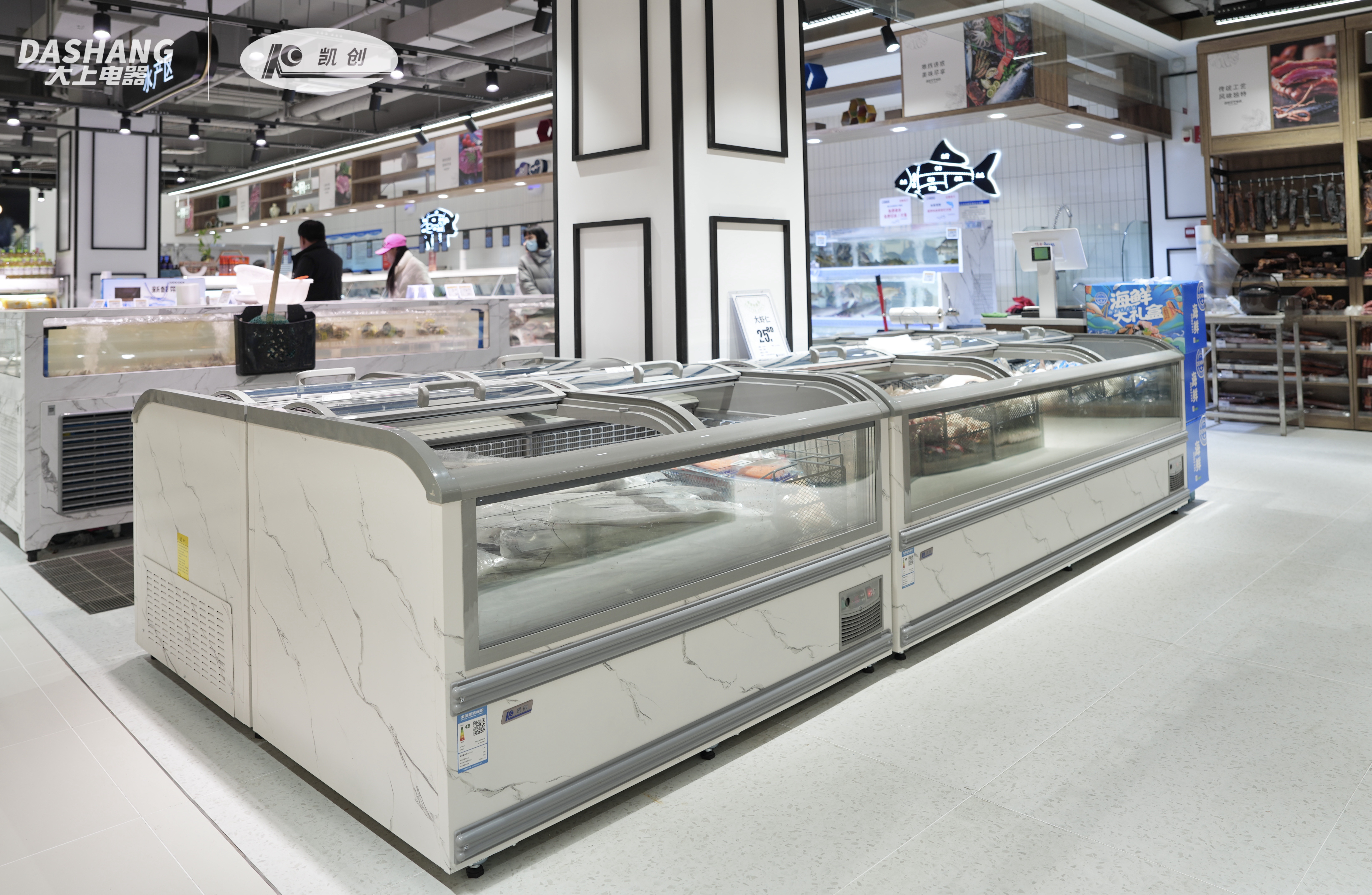
A glass top cooler combines refrigerated or frozen storage with direct product visibility. Its transparent top allows customers to look into the cabinet before opening it, making the design particularly useful for supermarkets, convenience stores, frozen food retailers, and other self-service environments.
The value of this type of cooler is not simply that customers can see through the glass. The horizontal cabinet changes how products are arranged, how customers browse them, and how staff replenish the stock. The design therefore works best when storage capacity and product presentation are considered together.
Why Does a Glass Top Change the Way Products Are Displayed?
A conventional upright refrigerator presents products vertically, while a glass top cooler presents them from above. This creates a different relationship between the customer and the product.
Customers can scan several products without opening the cabinet first. For frozen foods, this can be especially convenient because products are often packaged and stored in groups according to category.
The glass top also creates a large visible area without requiring additional vertical shelving. This can be useful in stores where wall space is limited or where frozen products are better suited to horizontal storage.
However, visibility alone does not guarantee good merchandising. The products still need to be organized so that the items customers are most likely to look for are easy to identify.
What Does the Interior of a Glass Top Cooler Need to Do?
The internal space should support both storage density and product access. Frozen foods often come in different package sizes, so a single undivided space may quickly become difficult to manage.
Baskets, dividers, or other internal arrangements can help separate product categories. Smaller packages should not disappear beneath larger boxes, while frequently accessed products should not be placed where staff need to remove several layers to reach them.
The most effective internal arrangement depends on product turnover. Fast-moving products should generally be positioned where customers and staff can reach them easily, while slower-moving inventory can occupy deeper areas.
This makes internal organization an important part of the cooler’s practical performance.
How Does the Glass Top Influence Product Visibility?
The main attraction of a glass top cooler is its ability to display products from above. Clean, clear glass allows customers to see the contents quickly, which can make self-service browsing easier.
But the glass itself is only one part of the visual experience. Product packaging, internal lighting, cabinet depth, product height, and the cleanliness of the display all affect what customers actually see.
If the glass is covered with fingerprints or condensation, visibility can decline. If products are stacked too high, items underneath may become difficult to identify.
A successful display therefore depends on the relationship between the glass top and the internal merchandising arrangement.
Why Does Cabinet Depth Matter?
Horizontal refrigeration can provide a large storage area, but excessive depth can create an access problem.
A customer may be able to see a product at the bottom of the cabinet but still struggle to reach it. Staff may also need to move several packages when replenishing stock.
For this reason, storage density should be balanced with accessibility. A cooler that holds slightly less product but allows faster browsing and replenishment may be more practical in a high-turnover retail environment.
The internal layout should reflect how customers actually shop rather than simply maximizing the number of products inside.
How Should Different Frozen Products Be Organized?
A glass top cooler can accommodate many types of frozen products, but they should not necessarily be mixed together.
A clear product grouping may include:
- · Frozen vegetables: Often grouped by vegetable type or package size.
- · Ice cream and frozen desserts: Usually benefit from clear product separation because customers often browse multiple varieties.
- · Frozen meals: Can be arranged according to cuisine, product type, or brand.
- · Frozen seafood: May require a dedicated area to simplify identification and stock management.
- · Packaged frozen meat: Can be separated according to product category and package size.
The exact arrangement depends on the store’s merchandise mix, but the general principle remains the same: customers should be able to understand the product selection without searching through an unstructured cabinet.
Does the Glass Top Affect Refrigeration Performance?
A transparent top has to provide visibility without compromising the refrigerated environment. Compared with an opaque insulated surface, glass introduces different thermal considerations.
The quality of the glass, insulation around the cabinet, sealing, refrigeration system, and ambient conditions all influence how effectively the cooler maintains its internal environment.
Condensation can also become noticeable when warm, humid air contacts a cold surface. This is particularly relevant in stores with high humidity or frequent access.
For this reason, glass top design should be evaluated as part of the complete refrigeration system rather than as a decorative feature.
How Does a Glass Top Cooler Affect Customer Behavior?
The design encourages customers to browse products before making a selection. They can look into the cabinet, compare packages, and decide what they want before opening the cooler.
This can make the shopping process more intuitive, especially in frozen food sections where many products have similar packaging.
At the same time, the cabinet needs to be positioned at a practical height and depth. If customers have difficulty reaching products, good visibility alone will not create a convenient shopping experience.
The best results come when product presentation, cabinet dimensions, and store traffic are considered together.
What About Replenishment and Staff Access?
A retail cooler has to work equally well after customers begin removing products.
Staff need to refill the cabinet, reorganize merchandise, check stock, and clean the interior. If the cooler is difficult to access, these routine tasks can take significantly longer.
Frequently replenished products should be placed where they can be refilled without moving large quantities of stock. Product categories should also remain clearly separated after replenishment.
This is one reason why internal layout deserves as much attention as the visible glass surface.
Keeping the Display Clear Over Time
Because the glass is part of the product presentation, its condition matters.
Regular cleaning removes fingerprints, dust, food residue, and other marks that can make products harder to see. Internal cleaning is equally important because packaging damage or spills can gradually affect the appearance of the cabinet.
A glass top cooler works best when refrigeration, merchandising, and maintenance are treated as one system rather than separate tasks.
FAQs
Why might a glass top cooler be preferred over an upright freezer?
A glass top cooler can make efficient use of horizontal space and allows customers to view products from above. It can be particularly useful for dense frozen-food categories where many similar products need to be displayed together.
Can products at the bottom of a glass top cooler be difficult to access?
Yes, especially if the cabinet is very deep or poorly organized. Product visibility and product accessibility are not the same thing, so internal layout and cabinet depth need to be considered together.
Why does condensation appear on some glass top coolers?
Condensation can form when humid ambient air meets a cold glass surface. Environmental humidity, temperature differences, cabinet design, and frequency of access can all influence the amount of condensation.
How can a glass top cooler be organized for faster shopping?
Grouping products by category, package size, and turnover makes the contents easier to understand. Frequently selected items can be positioned in areas that are easier to see and reach.
Post time: Aug-19-2026


